
This article may contain affiliate links. Learn more on our Partner Program page.
One week, one device, and almost every story revolved around it. Since Friday, the iPhone Duo has been in stores, accompanied by reviews, an order limit and the first photos of cracked displays. On top of that, two countries are opening up the iPhone a little further, and Apple's office apps are getting an AI assistant that offers little in German-speaking countries.
The previous issue was all about Apple's home. This week belongs to the iPhone Duo: reviews on Wednesday, the launch on Friday, and the repair manual on the same day.
Beyond that, the week was busier than the headlines suggest. Apple is catching up strongly in China, Australia and the UK are tightening the rules for the iPhone, and the HomePods are getting more with the next software update than Apple had announced.
🔥 Story of the Week: The iPhone Duo Is Now on Sale
Since Friday, October 23, the iPhone Duo has been available in more than 70 countries and regions. Germany, Austria and Switzerland are part of the first wave, with 28 more countries following on October 30. In Austria, every storage tier costs 20 euros more than in Germany.
| Storage | Germany | Austria | Switzerland |
|---|---|---|---|
| 256 GB | 2.299 € | 2.319 € | 1,999 CHF |
| 512 GB | 2.549 € | 2.569 € | 2,199 CHF |
| 1 TB | 3.049 € | 3.069 € | 2,599 CHF |
| 2 TB | 3.799 € | 3.819 € | 3,199 CHF |
According to Apple, Apple Stores had only limited quantities at launch for customers without a pre-order, and online the delivery date for new orders most recently stood at the end of January 2027. There was movement nonetheless: some pre-orders moved up to earlier dates, especially in Japan, while other buyers report later time frames. More than two devices per customer is not possible – the order limit also applies in the German store, but only appears there in the shopping bag.
What the Reviews Praise and What They Criticize
Two days before launch, the first reviews from 9to5Mac, Engadget, TechRadar and CNET were published. All four agree on the hinge, the build quality and the matte inner display, which makes the crease largely disappear in normal use. Engadget gives it 8.8 out of 10, CNET 8.7 along with an Editors' Choice award.
The most criticized point is the missing Face ID, along with the missing telephoto camera, the 254-gram weight and the many apps not yet adapted. Safari also feels cramped on the outer display because the bar along the edge takes up width. According to the WebKit team, Apple is now looking into how websites can use the space behind this bar, but names neither a solution nor a date.
Apps, Pencil and Repairs
Apple has named nearly 60 apps and games that are adapted or will be soon, from Netflix and Instagram to Zoom. Microsoft Word and Outlook will only follow in the coming weeks. In the German App Store, Apple's collections included 37 adapted apps and 20 games on Saturday, recognizable by the label "Entwickelt für: iPhone Duo" on the product page.
The Apple Pencil with USB-C only works on the Duo starting with iOS 27.2. The repair manual released on launch day shows two separate batteries and a hinge that is not available as a separate spare part: in case of defects, Apple replaces the entire inner display unit. Duo parts are still missing from the Self Service Repair Store for Germany, Austria and Switzerland.
First Damage Along the Hinge
As early as Friday, photos of cracked inner displays appeared, almost always along the fold line. A privately owned device from Australia, which its owner had replaced immediately at an Apple Store, stands against a number of damaged demo units from China whose history nobody knows. In Germany, devices bought from Apple can be returned within 14 days of delivery.
📰 What Else Mattered
iOS 27.2 is about to be released. On Monday, Apple distributed the Release Candidate for all its systems. The new Health app is not included, and Siri AI arrives in five more languages, but not German. More noticeable in German-speaking countries is the new tracking prompt: it becomes mandatory in Germany and four other EU countries, in Austria the app provider decides, and Switzerland is not covered.
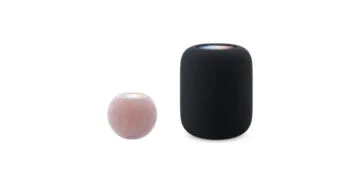
The HomePods are getting more than Apple had announced. With HomePod Software 27.2, Sound Glow comes not only to the HomePod mini 2, but also to the large second-generation HomePod and even to the original HomePod mini from 2020. The lock for touch controls is available for every model. With Sound Glow, the top lights up in colors taken from the album cover and can be turned off in the Home app.
The Mac is losing less than the market. According to Counterpoint, PC shipments fell 21 percent in the third quarter to 57.0 million units, while Apple shipped 5.6 million Macs, eleven percent fewer. The Mac's market share rose from 8.7 to 9.8 percent as a result. For the fourth quarter, however, the market researcher expects a decline of 27 percent.
Apple brings in expertise from Zurich. According to the EU Commission's list of acquisitions under the Digital Markets Act, Apple took over technology and part of the staff of the Zurich AI audio start-up Samplab in June. Its software could change individual notes within a chord without ruining the recording. That is exactly the feature Logic Pro still lacks alongside stem separation and chord detection.
In the US antitrust case, Apple and the Justice Department are arguing over a cutoff date. The plaintiffs want Apple to update its internal documents beyond June 20, 2025, into spring 2027, which Apple rejects. Both sides have reported a deadlock over the cutoff date to the court. Discovery is now expected to end only in late May 2027, ten months later than planned.
Apple TV saw one finale and two looks ahead. The sixth season of "Slow Horses" ended on October 21 with an ending that showrunner Gaby Chiappe explains in an interview, and season 7 is set to follow next year. Jason Sudeikis would like to continue Ted Lasso, but there is no writers' room for a fifth season yet. And the documentary "Fleetwood Mac: The Chain" premieres on January 29, 2027 worldwide, six days before the 50th anniversary of "Rumours".
💡 Rumor of the Week: The iPhone Duo 2 Is Said to Get Face ID
One day before launch, attention had already turned to its successor. According to Mark Gurman on the Bloomberg podcast Power On, Apple is internally testing prototypes of the iPhone Duo 2 with Face ID, with the sensor said to sit under the outer display. Gurman himself cautions that this is not guaranteed: if development is delayed, Face ID could arrive only with the third generation.
In mid-September, Gurman had still expected Face ID only for the third generation, explicitly as a guess. Gurman is one of the most reliable sources on Apple's product plans, but both statements come from him – that is consistency, not independent confirmation. The report names no suppliers or component details.
Apple is already shipping the groundwork: on the iPhone 18 Pro, the infrared camera for Face ID already sits under the display. Anyone who doesn't want to give up Face ID will stick with the iPhone 18 Pro as an alternative to the Duo until then.
📊 Number of the Week: 2
Apple jumped to second place in China in the third quarter, up from sixth place a year earlier. According to Counterpoint Research, Apple reached a 19.5 percent market share, with only Huawei ahead at 21.3 percent. The overall market fell 10 percent to its lowest third-quarter level since 2012.
| Manufacturer | Q3 2025 | Q3 2026 |
|---|---|---|
| Huawei | 16,0 % | 21,3 % |
| Apple | 14,7 % | 19,5 % |
Counterpoint cites the iPhone 18 Pro models as the driver, which sold 23.5 percent better in China in their first three weeks than the 17 Pro models did a year earlier. IDC paints a different picture for the same quarter: the market down 15.4 percent and a slight decline for Apple. Both figures are preliminary; Apple's own numbers for Greater China arrive with its quarterly results on November 2.
👎 Flop of the Week: Apple's Office AI Only Speaks US English
With version 15.4.1 of Pages, Keynote and Numbers, Apple introduced an AI assistant that writes drafts in Pages, builds presentations in Keynote and creates formulas in Numbers. The AI update disappeared from the App Store shortly after release and was back a few hours later; the assistant now runs as a beta.
Little of it reaches German-speaking countries. According to the release notes, the assistant only works in US English and requires an Apple Creator Studio subscription, which costs 12.99 euros a month or 129 euros a year in Germany. That means the strongest argument yet for the subscription in the office apps cannot be used in German, of all things.
For all users, the update at least brings an open interchange format to Keynote as a beta. Anyone considering Creator Studio is better off deciding based on what the subscription delivers in German and where its AI limits lie.
🔭 What's Coming Next Week
Tuesday and Wednesday, October 27 and 28: Marketing chief Greg Joswiak has announced "Pro and tell" for the week. According to reports, Apple is inviting media to Los Angeles on October 28, where a MacBook Pro with an OLED touchscreen, Macs with M6 and an iPad mini with OLED are expected. If the press releases go out at 10 a.m. local time, they will be online at 6 p.m. in Germany, Austria and Switzerland.
iOS 27.2: The Release Candidate has been available since Monday. I expect the final version to arrive in the coming week, together with the HomePod software for Sound Glow. For Duo owners, it unlocks the Apple Pencil.
Friday, October 30: The HomePod mini 2 goes on sale for 169 euros, and the iPhone Duo launches in 28 more countries. On Apple TV, the Kepler crime thriller "Nocturne" premieres with a double episode.
💬 My Take
For a long time, opening up the iPhone could be dismissed as a European peculiarity. This week brought two counterexamples from countries outside the EU. In Australia, a federal court is requiring Apple to allow alternative app stores, downloads from websites and third-party payment methods from March 1, 2027. In the UK, the competition authority CMA wants to open the NFC chip to competing payment apps, on significantly better terms than before.
After the EU, Japan and Brazil, Australia is the fourth market with alternative app marketplaces and, after the EU, the second with downloads directly from websites. What I find remarkable is that the court explicitly prohibits two conditions that Apple itself chose in Japan and Brazil: the obligation to report third-party payments and the requirement to offer Apple's own payment system alongside them. Apple plans to appeal.
I see this as the real shift. Every market sets its own conditions, and a solution Apple pushes through in one country no longer serves as a template for the next. The British back their push with numbers: in two years, not a single third-party NFC payment app has launched there, while in the EEA PayPal, Curve and Klarna, among others, followed.
Nothing changes for Germany and Austria, where the EU rules have applied since iOS 17.4. Switzerland stands out: there are neither alternative app stores nor apps from websites, and NFC access is subject to the same conditions that have applied in the UK so far, which no Swiss provider had accepted as of December 2025. I expect Switzerland to become the exception as long as the Competition Commission's preliminary investigation reaches no result – not because of stricter rules, but because none apply there.
📚 From Our Archive
- HomePod stereo pair: Setup and use with Apple TV
- Setting up Apple TV: Here's how it works with iPhone and tvOS 27
The week showed how much a single device can set in motion: reviews, an order limit, a repair manual and the first damage reports, all within four days.
Did you pick up the iPhone Duo on Friday – or, after the reports of cracked displays and the missing Face ID, would you rather wait for the second generation? Tell us in the comments what tips the scales for you: the new form factor or the gaps in the first model.
Until next Sunday, Apfelpatient wishes you a relaxing read and a great start to the week.