
This article may contain affiliate links. Learn more on our Partner Program page.
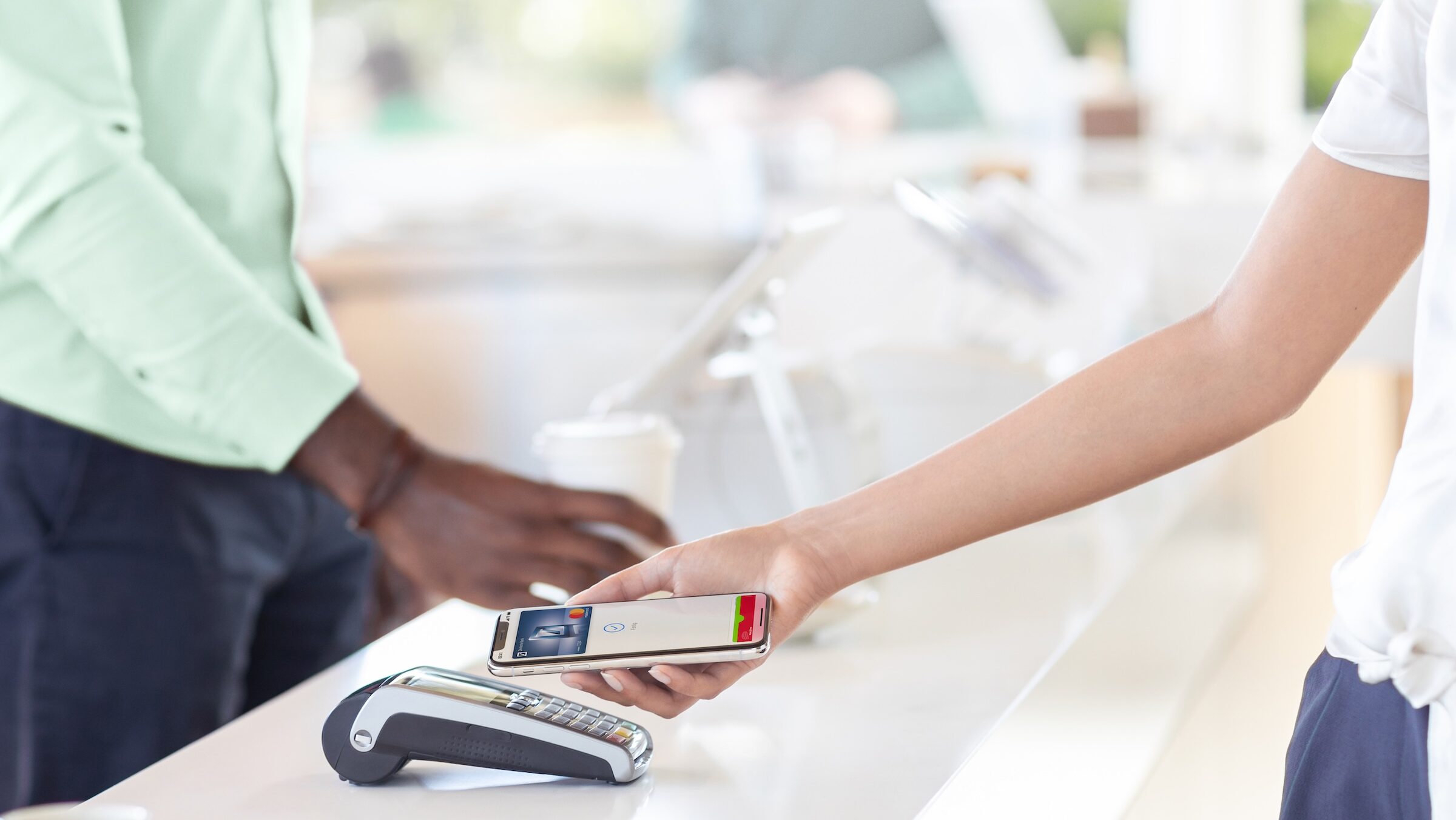
For two years, British banks and fintech companies have been allowed to use the NFC chip in the iPhone for their own payment apps, yet no such app has launched there to date. The British competition authority therefore wants to compel Apple to accept significantly more favorable terms. Switzerland currently has the same regulations as the UK.
On October 20, the Competition and Markets Authority (CMA) launched a consultation on a code of conduct for NFC access on the iPhone. This is based on the strategic market status the authority assigned to Apple's mobile platform in October 2025. This allows the CMA to impose specific requirements on Apple under the UK's Digital Markets Act.
The move had been anticipated in the summer. At the end of June, the CMA presented its plans to open Apple's App Store according to the EU model, already indicating the possibility of opening the NFC interface. On the same day, the authority launched an investigation into access for competitors of Apple Pay.
Key Facts at a Glance
- The CMA wants to require Apple to enable NFC payments via Host Card Emulation (HCE) or Secure Element, depending on the provider's preference.
- The authority considers Apple's access fees too high; future fees should be significantly lower.
- In two years, not a single third-party NFC payment app has been launched in Great Britain.
- Apple rejects the proposals, citing data protection and security concerns.
- Access has been free in the EEA since 2024, while Switzerland is in the same situation as Great Britain today.
What the CMA proposes
Apple is to grant third-party providers NFC access under "fair, reasonable, transparent, and non-discriminatory" conditions. The core issue is the choice of technology: providers should be able to use either the Secure Element in the iPhone or HCE, where the payment function runs within the app itself. Express payments without unlocking and use when the battery is depleted should also be available to third-party providers.
The CMA sets out principles for fees: cost-based, value-based, flexible, and simple in billing. Apple is required to publish the terms and conditions and announce any changes 30 days in advance. In addition, there will be a separate approval process, a complaints procedure, and an interface through which apps can identify and offer to become the default wallet.
This is intended to apply to users who usually live in Great Britain and have an Apple account registered there.
Two years without a single app
Apple has offered the NFC & SE Platform to third-party vendors in the UK since October 2024. It operates exclusively via the Secure Element and requires a contract with Apple, including associated fees. HCE for payments is not available there.
The CMA's assessment reflects this: Two years after its launch, there is no indication that NFC apps have appeared in the country. Apple's current fees are too high for many providers to make market entry economically viable. The agency redacted the specific amounts in the published document. Criticism from the surveyed banks and fintechs focused primarily on a fixed base fee and prices that increase after a certain number of users.
CMA chief executive Sarah Cardell points to the high fees, strict conditions, and technical limitations that make it difficult for challengers to compete. Regarding the proposals, she says:
These proposals open the door to more innovation, more choice, and economic growth.
Apple warns of reduced security
Apple counters that its existing platform protects sensitive data according to the highest security standards. The company told Reuters:
We do not believe that the CMA should require Apple to adopt an approach with a lower level of data protection and security.
Apple will continue to work constructively towards a result that is in the best interest of users. For its own service, Apple relies on the Secure Element: instead of the card number, a device-specific number is stored there, which secures Apple Pay during payments.
EEA, UK and Switzerland compared
In the EEA, the situation has been different since 2024. Based on its commitments to the EU Commission, Apple enabled HCE payments there free of charge, including the option to choose the default wallet. According to the CMA, other providers followed suit, including Vipps MobilePay, PayPal, Curve, BBVA, and Klarna. In Germany, PayPal launched contactless payments on the iPhone in May 2025.
Switzerland is not covered by the EU agreements. Since iOS 18.2, Apple has offered the same NFC & SE Platform there as in the UK, namely Secure Element with a contract and fees. According to SRF, no Swiss provider, including Twint, had accepted these conditions by December 2025. The Competition Commission opened a preliminary investigation into NFC access in December 2025.
| EEA (Germany, Austria) | UK | Switzerland | |
|---|---|---|---|
| Technology | HCE | Secure Element | Secure Element |
| Fees | none | Yes, the height is not public. | Yes, the height is not public. |
| Basis | Commitments to the EU Commission (2024) | NFC & SE Platform since iOS 18.1 | NFC & SE Platform since iOS 18.2 |
| Launched payment apps | including PayPal, Curve, Klarna | none | No Swiss provider |
| Authority | EU Commission | CMA proposal of 20 October 2026 | Weko, preliminary investigation since December 2025 |
An argument that also counts in Switzerland
For iPhone users in Germany and Austria, the British initiative changes nothing; they have long been able to use alternatives to Apple Pay. It is, however, of interest to Switzerland. The CMA's figures confirm exactly what Twint has been complaining about for years: In practice, access via the Secure Element with fees does not lead to a single competing app.
I consider this the strongest argument of the consultation because it is not based on assumptions, but on two years of market observation. If the CMA prevails, Switzerland would remain the only one of the three regions where Apple Pay at the checkout remains virtually unrivaled on the iPhone. The outcome of the Weko preliminary assessment will therefore be a crucial question for Swiss users.
Would you use a different wallet than Apple Pay at the checkout if your iPhone allowed it – or is switching not an option for you? Let us know in the comments what you pay with.