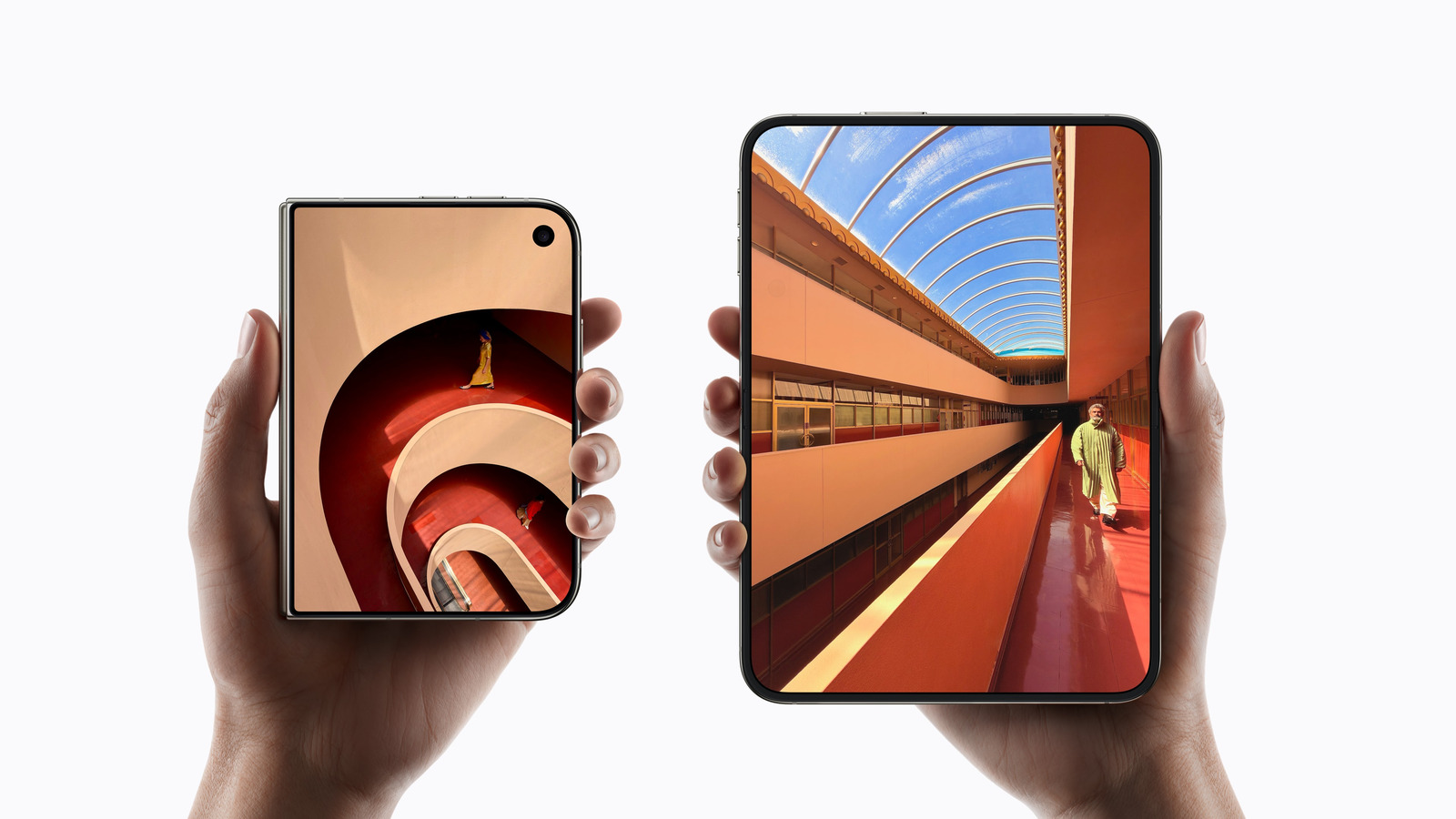
The most expensive iPhone in the lineup unlocks via fingerprint, while every cheaper model uses facial recognition. This compromise is set to remain – and for longer than the announcement suggests. According to the report, the way back to Face ID will be via software.
The unlock button on the foldable iPhone is located in the side button. This is due to the design: there simply isn't enough space in a case of this thickness for the components behind Face ID, a fact that was already apparent in the device's technical specifications at its launch. Bloomberg's latest Power On newsletter now describes how Apple plans to solve this problem – and when.
Key Facts at a Glance
- Face ID is expected to return to the foldable iPhone, but not until the third generation.
- The path to achieving this leads through more image processing in software: less complex depth sensors, but smaller components.
- A telephoto lens is also expected for the same generation.
- The first generation will be available on October 23rd for €2,299 – at least two product cycles will pass before the third generation.
- The report does not mention a date, confirmation, or technical details regarding the planned sensors.
Why the Duo doesn't have Face ID
Face ID doesn't use a conventional camera, but rather a projector that casts a dot pattern onto the face, and an infrared camera that reads it. These components require depth within the casing – precisely what a device that folds and is meant to remain thinner than any other iPhone doesn't have.
Apple has therefore opted for the fingerprint sensor in the side button. For buyers, this is the most noticeable step backwards on the most expensive device in the series: Anyone spending €2,299 gets an unlocking method that Apple has been gradually replacing on the iPhone since 2017.
What the software is supposed to change about that
The approach presented in the report focuses not on the components themselves, but on their analysis. If more work is shifted to image processing, the sensors have less to do – a simpler depth system could then suffice, because the software fills in what the hardware no longer measures. Smaller components fit into a thinner housing.
This approach is not substantiated. The report describes a possibility, not a decision, and names neither a specific procedure nor a supplier. The fact that Apple develops sensor technology and data processing from a single source makes the idea plausible – but it is not proof.
How far away is that?
The third generation of a device, the first of which will be released on October 23rd: At least two complete product cycles lie between now and that date. This statement therefore falls into a category where Apple's plans are known to change several times.
This also applies to the second point of the report, the telephoto lens for the same generation. The current version manages with two external cameras and one internal one – a third lens would be a significant expansion, subject to the same space constraints as Face ID.
A device that still needs to gather its technology
We expect Apple to close the gap faster than the report suggests. The reason lies within its own product range: A top-of-the-line model lacking features that lower-priced devices naturally include is difficult to sell in the long run – especially given the ongoing patent dispute with a BASF subsidiary surrounding Face ID, which is likely to increase rather than decrease Apple's interest in developing its own, more streamlined solution. However, physics argues against this rapid pace: The components have been similarly sized for years, and Apple has repeatedly postponed the implementation of under-display Face ID, even in its Pro models.
For those considering a purchase, this means: If you're waiting for Face ID on the Duo, you're waiting for a device that won't appear for at least two generations – with all the potential price and features changes that could occur in the meantime. If the unlocking method is a deal-breaker, you can find alternatives in our comparison of the iPhone Duo and iPhone 18 Pro. Would Touch ID in the side button be a reason for you to pass on the foldable iPhone – or is that no longer an issue after a few days of getting used to it? Feel free to disagree in the comments.