This article may contain affiliate links. Learn more on our Partner Program page.
A company from Ludwigshafen accuses Apple of using third-party technology to secure facial recognition in the iPhone. The lawsuit cites seven patents, 14 iPhone models, and six iPad Pro variants – and it was filed six days before Apple's September keynote.
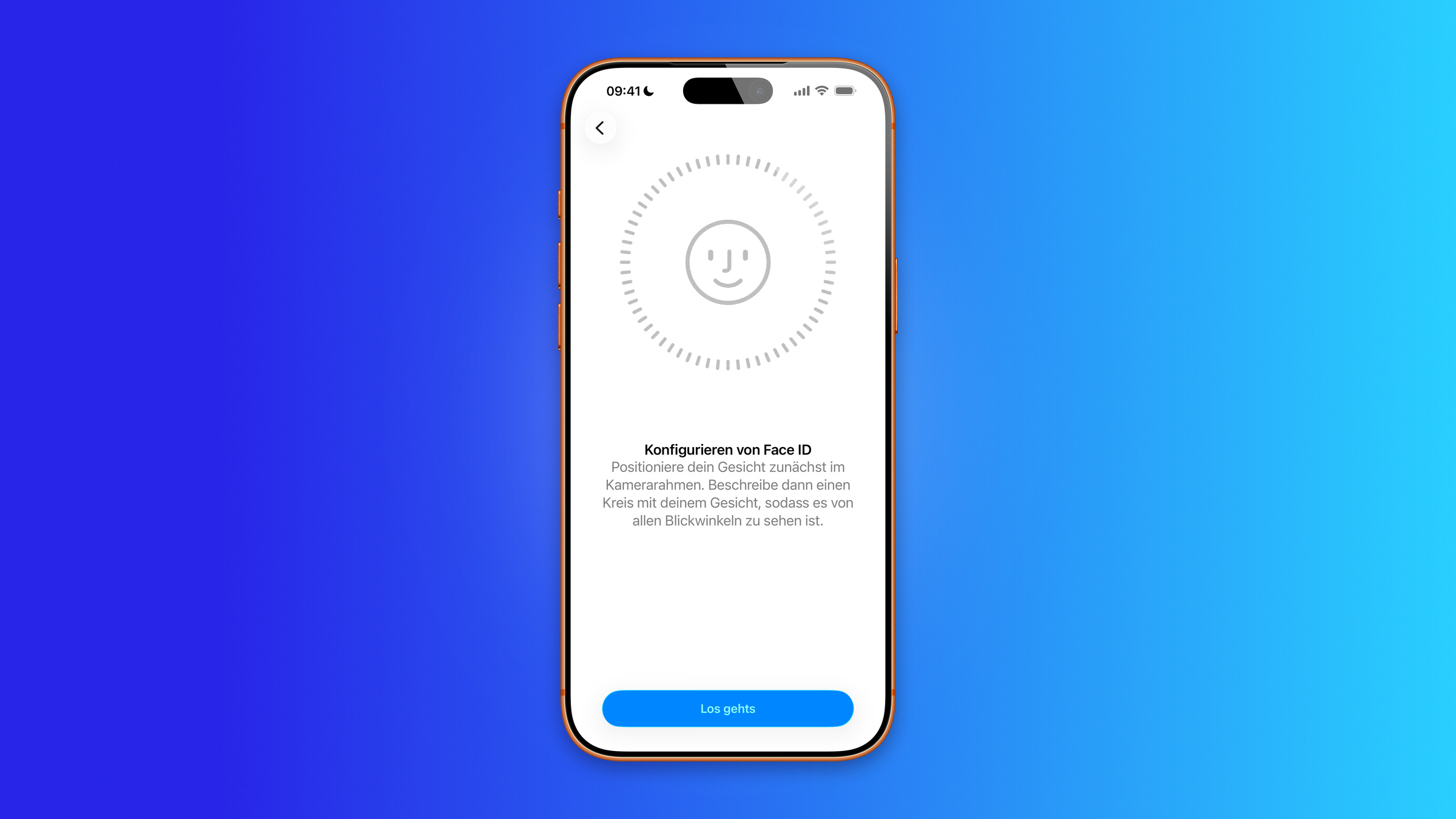
On September 3, 2026, a patent lawsuit was filed against Apple in the U.S. District Court for the Western District of Texas. The plaintiffs are trinamiX GmbH from Ludwigshafen am Rhein, Germany, and its U.S. subsidiary, trinamiX Sensing LLC. The lawsuit does not concern Face ID itself, but rather a specific capability of the newer versions: the ability to distinguish between real skin and materials that only resemble skin. This is precisely where Apple's own development work comes in, as facial recognition is intended to eventually move beneath the display while retaining its security features.
Key Facts at a Glance
- trinamiX GmbH, a wholly owned subsidiary of BASF SE based in Ludwigshafen, filed a lawsuit against Apple on September 3, 2026, concerning seven US patents. The case is being heard under file number 7:26-cv-00348.
- It's about optical skin recognition for unlocking via face – a protective layer against masks, photos and silicone replicas.
- All seven patents were granted between April 29, 2025 and January 20, 2026, i.e. within nine months.
- The list of devices in question begins with the iPhone 15 and extends to the iPhone Air. The original version of Face ID from the iPhone X is explicitly excluded from the complaint.
- trinamiX is demanding damages and a sales and import ban – both limited to the United States.
Seven patents from two families
The lawsuit is based on two patent families. Four patents are titled "Optical skin detection for face unlock," and three others are titled "Detector for identifying at least one material property." Their age is striking: not a single one was granted before spring 2025.
| Patent number | Title | Issued on |
|---|---|---|
| US 12,288,421 | Optical skin detection for face unlock | 29.04.2025 |
| US 12,298,394 | Detector for identifying at least one material property | 13.05.2025 |
| US 12,332,352 | Detector for identifying at least one material property | 17.06.2025 |
| US 12,361,760 | Optical skin detection for face unlock | 15.07.2025 |
| US 12,456,334 | Optical skin detection for face unlock | 28.10.2025 |
| US 12,461,238 | Detector for identifying at least one material property | 04.11.2025 |
| US 12,530,925 | Optical skin detection for face unlock | 20.01.2026 |
The roots reach back further than the grant dates suggest. Both families claim priority from European patent applications – one from March 15, 2019, the other from February 18, 2021. US protection is therefore the latest stage in a development that began in Germany.
How the technology is supposed to work
In its complaint dated September 3, 2026, trinamiX describes a process that the company calls Beam Profile Analysis and claims to have developed in 2016 and 2017. A light pattern is projected onto a scene, and the properties of the surface can be deduced from the way the light is reflected.
Combined with three-dimensional depth measurement, the system is designed to check two things simultaneously: whether a face is in front of the device, and whether its surface is human skin. According to the company, the technology has passed certifications from the FIDO program, the Chinese IIFAA, and the Android Biometric Security Test, in each case without any attempt at deception being accepted.
The starting point lies even earlier. Around 2010, BASF researchers working on organic solar cells discovered a material effect that could be used for distance measurement and 3D scanning. This observation led to the founding of the company: legally established on December 16, 2014, and operationally launched in 2015. Both dates appear in company descriptions, and the lawsuit resolves this apparent contradiction. Today, according to its own statements, trinamiX holds more than 800 granted and pending patents worldwide.
Why the lawsuit starts with the iPhone 15
Regarding the question of what Apple implemented and when, one paragraph of the lawsuit is the most interesting. There, trinamiX itself states that the original version of Face ID in the iPhone X did not contain the patented technology and lacked material and skin recognition. As evidence, the company cites reports from late 2017 in which security researchers circumvented facial recognition using a mask made from a 3D-printed frame, a hand-modeled silicone nose, and photos glued on.
The list of products in question doesn't begin in 2017, but rather with the iPhone 15 from September 2023. It names 14 iPhone models, including the iPhone Air, as well as six iPad Pro variants, and includes the phrase "other infringing iPhone and iPad models." The complaint doesn't specify which devices are meant – this addition leaves the door open for models that aren't even on sale yet. Apple is presenting the next generation of iPhones this week; what kind of sensors it will contain is currently only known... from rumors and supplier reports known.
The lawsuit consistently cites the iPhone 17 as an example device. A separate comparison is provided for each of the seven patents, intended to demonstrate that this model fulfills all the features of the respective main claim. According to the plaintiffs, these comparisons are based on publicly available information.
The place of jurisdiction is no coincidence
The lawsuit was filed in the Midland/Odessa division of the Western District of Texas, presided over by District Judge David Counts. This district has been considered a preferred location for patent litigation for years due to its expedited proceedings.
The complaint provides a detailed justification for jurisdiction, citing figures that firmly establish both sides in Texas. Apple employs over 5,000 people in Austin and, according to the plaintiff, maintains its largest corporate site outside of Cupertino there; the lasers and image sensors for Face ID are also said to be partly sourced from partners in Texas. And trinamiX itself has a presence there: its US subsidiary in Austin employed twelve full-time staff in August 2026, which, according to the company, represents about a third of its global workforce in the biometrics business.
One point, however, is conspicuously missing. trinamiX writes that Apple became aware of the intellectual property rights at the latest upon service of this lawsuit – alternatively, the company was previously "willfully blind." A prior licensing offer, a cease-and-desist letter, or a failed attempt at negotiation is not mentioned in the document. This is a crucial difference when considering whether the infringement was intentional and whether the damages should be correspondingly higher.
A German plaintiff, a purely American case
For iPhone owners in Germany, the practical consequence is minimal: none. The proceedings are based on US patent law, and the requested injunction explicitly refers to manufacturing, sale, offering, and importation in the United States. There is no European equivalent to date – according to research by the specialist service ip fray, trinamiX has not yet appeared in patent proceedings before either US district courts or the Unified Patent Court.
The case remains interesting nonetheless, due to a piece of information about your own device that Apple never disclosed. The fact that facial recognition eventually incorporated material testing was never mentioned in any keynote or security document. Only a lawsuit roughly dates this change – and suggests that the Face ID version in the current iPhone is technically more advanced than the one from 2017. How Apple generally secures biometric methods can best be seen in its most recent iteration, the iris scan of the Vision Pro.
It's important to consider the perspective: So far, only the plaintiff's viewpoint is available. Whether the seven patents will withstand scrutiny and whether Apple's implementation actually falls under their claims will only be decided during the proceedings. Furthermore, there have already been several patent lawsuits against Face ID, including those filed by CPC Patent Technologies and Carbyne Biometrics.
A process that is likely to take years
A jury trial has been requested, and despite its reputation for speed, cases of this magnitude in West Texas can drag on for years. Until then, nothing will change regarding the devices sold, neither in the US nor elsewhere. Should a settlement be reached, it would likely be a licensing agreement and the amount would never be publicly disclosed.
What do you think about the fact that a subsidiary of a chemical company is claiming ownership of the iPhone's security technology? Does the explanation of how it works, from the solar cell to facial recognition, convince you, or does it sound like a patent that was only retroactively tailored to suit the company? Feel free to disagree in the comments.