This article may contain affiliate links. Learn more on our Partner Program page.
Two days before the keynote, a number of camera features have appeared in the iOS 27 betas that Apple has not yet shown anywhere. Four of them are purely software-based, one hints at hardware that doesn't yet exist. None of them are currently accessible.
A user has sifted through the latest iOS 27 betas and discovered five previously unknown features of the camera app. He documented his findings on the MacRumors forum. This is code from a released beta, not an official announcement – Apple will decide what actually appears in the final version. This discovery joins a series of similar findings that are increasingly revealing the state of iOS 27 shortly before its release.
Key Facts at a Glance
- The code mentions exposure scopes, focus peaking, a continuous self-timer, manual focus, and aperture-dependent image correction.
- None of the five functions can be accessed in the current betas.
- Manual focus is limited in the code to devices that ship with iOS 27 pre-installed.
- The aperture correction matches the expected variable aperture, but says nothing about which model will receive it.
- Four of the five features could potentially also be implemented on older iPhones.
What's in the code
| Feature | What it is supposed to do |
|---|---|
| Exposure scopes | Waveform or histogram for assessing exposure during recording |
| Focus Peaking | Colored marking of the edges that are sharply focused |
| Overexposure warning | Highlighting areas that are too light using solid color, pulsing, diagonal stripes or checkerboard pattern |
| Serial self-timer | Several shots in succession, the countdown restarts immediately |
| Manual focus | Manual focus setting and locking instead of autofocus |
| Aperture-dependent correction | Lens correction adjusts to the set aperture. |
Tools from camera technology
The first three functions have been standard in professional photography and videography for years, but were previously unavailable in the iPhone camera app. A histogram shows how much of the image is too dark or too bright; a waveform displays the same information but assigns it to the position in the image. Focus peaking draws colored outlines around everything that is in focus.
The overexposure warning is explicitly designed with several display options. The fact that Apple provides four variations suggests a well-developed feature rather than a casual test.
Continuous shooting with self-timer
The self-timer will soon be able to take multiple photos in succession. A crucial detail in the process is that the countdown restarts immediately after the photo is taken, without waiting for the previous image to be saved. For group photos where someone is to be included, this is the most practically relevant of the five improvements.
Manual focus suggests new hardware
This is where it gets interesting, because the history can be traced. A version of this feature already existed in iOS 26 as a slider. In the first beta of iOS 27, the slider was removed – however, the underlying code for locking focus remained.
The difference lies in one limitation: According to the findings, the feature is restricted to devices that ship with iOS 27 pre-installed. It cannot be used on any current iPhone, not even after the update. This is the clearest hardware-related clue in the entire discovery and suggests that Apple is reserving the feature for the next generation.
What aperture correction leaves open
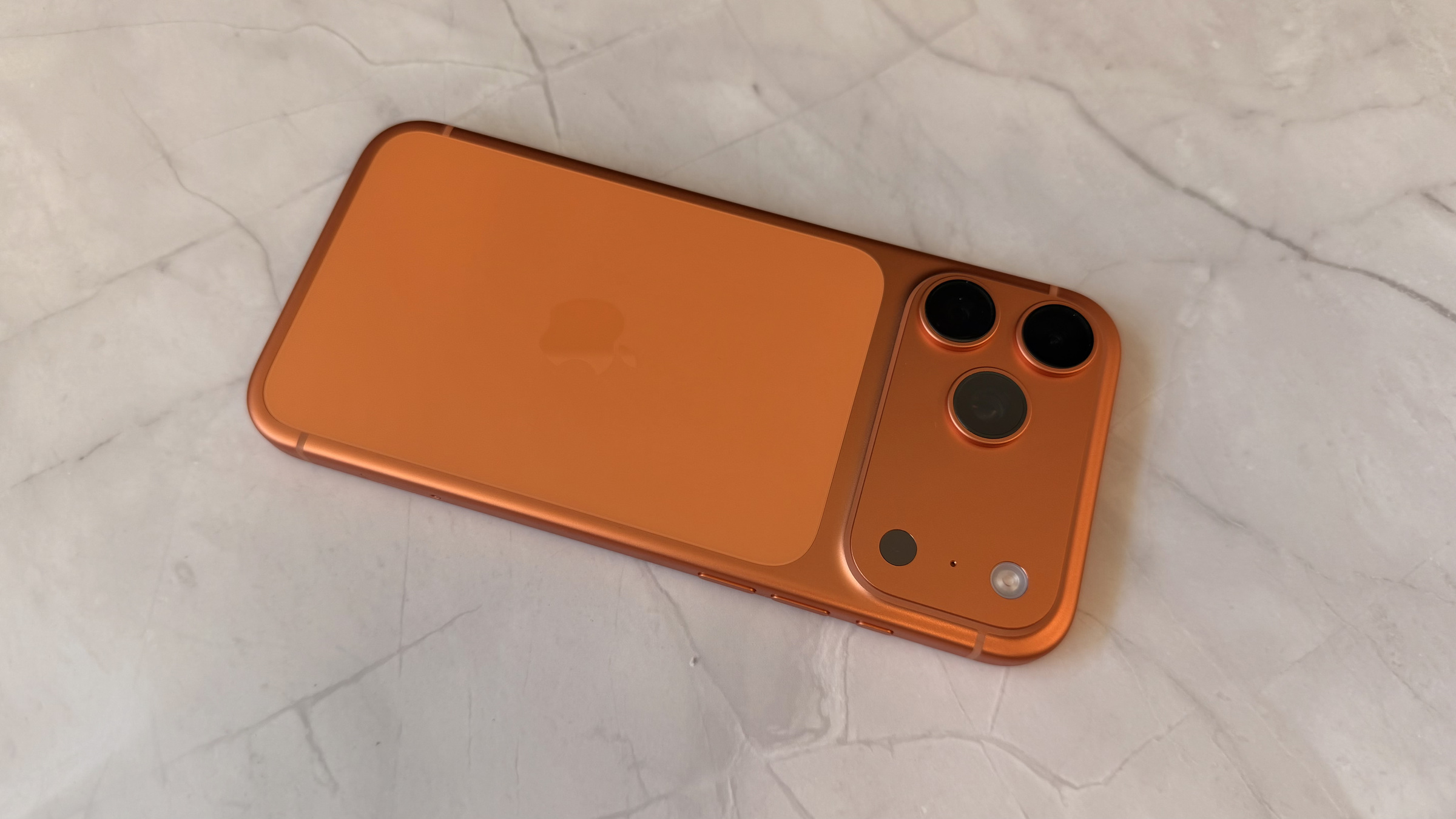
The fifth finding concerns image processing: iOS 27 can adjust lens corrections depending on the set aperture, blending between up to four reference points. Such a correction only makes sense if the aperture can actually be adjusted – and that's exactly what's expected for the upcoming Pro models.
What the code doesn't answer is the question that was most discussed beforehand: whether both Pro models will get the variable aperture or only the larger one. Since mid-August, Chinese leakers have been saying that the mechanism requires space that the smaller casing doesn't provide; earlier reports had mentioned both models. The current state of this debate can be found in our overview of the iPhone 18 Pro.
The software side doesn't help with this question. An aperture-dependent correction would look identical in the code, regardless of whether one model or two receive the hardware – it only proves that Apple is calculating with a variable aperture. Anyone who concludes from this finding that both Pro models will receive it is overstating the evidence.
Two days until the resolution
One point is crucial for the evaluation: None of the five features are available in the current betas. Apple could unlock them for the launch, postpone them to a later update, or remove them entirely – the latter is not uncommon with discoveries of this kind, as the disappearance of the focus slider from iOS 26 demonstrates.
Our expectation: The three assessment tools and the burst self-timer should also be available on older iPhones, as they don't require any special hardware. However, the device limitations in the code suggest that manual focus won't be available on older devices. This is an assessment based on available sources, not an announcement – it can be verified on Wednesday at 7 PM CEST.
Which of these five features would actually change your everyday photography routine – or are histograms and focus peaking just gimmicks on a phone? Feel free to disagree in the comments.