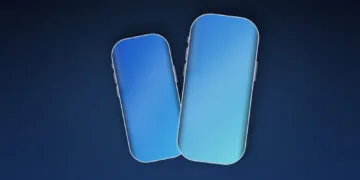
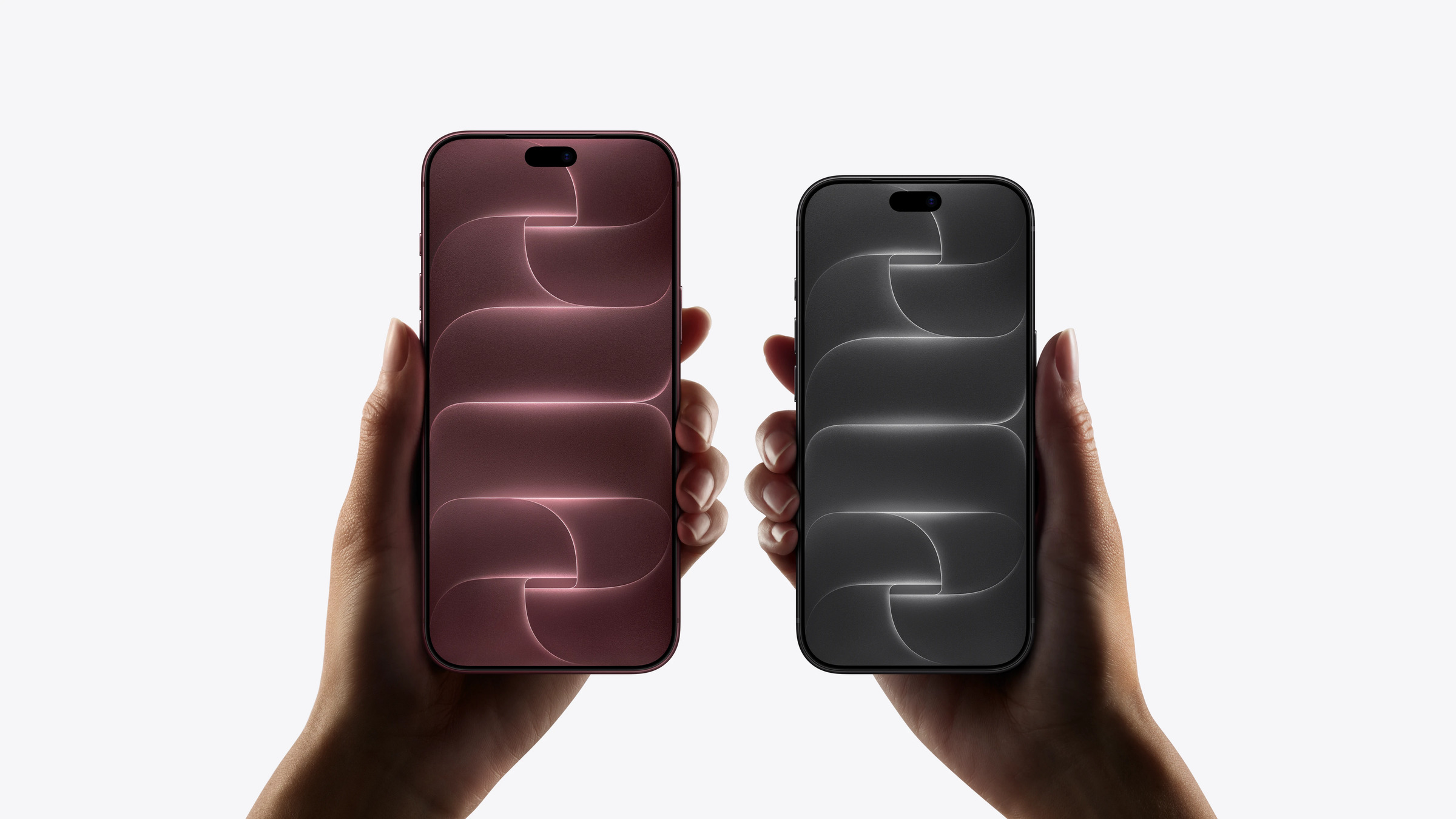
Variable aperture in both models, the first Apple chip built on a 2nm process, and a significantly smaller Dynamic Island: Apple unveiled the iPhone 18 Pro and iPhone 18 Pro Max on September 9th. Sales begin on September 18th, and the price increase is the highest it's been in a long time.
For the first time in over ten years, there will be no standard model alongside the Pro series this fall: The iPhone 18 and iPhone 18e won't follow until spring 2027, with the two Pro models sharing September with the foldable iPhone Duo. The overall lineup for this generation is detailed in the overview of the entire series. This page summarizes Apple's German data sheet information on the iPhone 18 Pro and Pro Max – specifications, prices, release dates, and any points where the devices differ from expectations.
Key Facts at a Glance
| Detail | iPhone 18 Pro | iPhone 18 Pro Max |
|---|---|---|
| Price from | 1,449 euros | 1,599 euros |
| Display | 6.3 inches, 2622 × 1206 | 6.9 inches, 2868 × 1320 |
| Chip | A20 Pro | A20 Pro |
| Memory | 256 GB to 2 TB | 256 GB to 2 TB |
| Main camera | 48 MP, variable aperture | 48 MP, variable aperture |
| Front camera | 18 MP Center Stage | 18 MP Center Stage |
| Battery | 4,056 mAh | 5,391 mAh |
| Dimensions and weight | 71.9 × 150.0 × 8.75mm, 211g | 78.0 × 163.4 × 8.75mm, 249g |
| Modem | Apple C2 | Apple C2 |
| Availability | from September 18th | from September 18th |
Prices: 150 euros more, and the storage levels increase
The iPhone 18 Pro starts at €1,449, and the Pro Max at €1,599. Compared to their predecessors, which started at €1,299 and €1,449 respectively, this represents an increase of €150 for each model – a price hike that only the iPhones are subject to this evening, while the prices of the other new releases remain unchanged. Pre-orders have been open since 2 PM CEST on September 12th, with deliveries beginning on September 18th; the complete pre-order schedule also lists the starting markets.
| Capacity | iPhone 18 Pro | iPhone 18 Pro Max |
|---|---|---|
| 256 GB | 1,449 euros | 1,599 euros |
| 512 GB | 1,699 euros | 1,849 euros |
| 1 TB | 2,199 euros | 2,349 euros |
| 2 TB | 2,949 euros | 3,099 euros |
More interesting than the entry-level model is the next tier up. Both models follow the same logic: €250 for the upgrade to 512 GB, €500 for 1 TB, and €750 for 2 TB. Choosing the largest option costs €1,500 more than the base model – the same as buying a complete second iPhone 17. The entry-level model remains at 256 GB, while the 2 TB tier at the top is new.
Design: same thickness, new color names
Externally, Apple sticks with the aluminum unibody design, featuring Ceramic Shield 2 on the front and Ceramic Shield on the back. The thickness remains unchanged at 8.75 millimeters for both models. However, the weight has increased: the Pro Max weighs 249 grams, 16 grams more than its predecessor, while the iPhone 18 Pro weighs 211 grams.
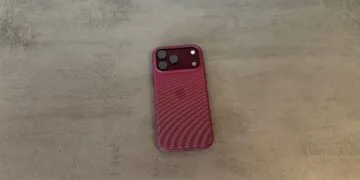
The color palette comprises four shades for both models: black, silver, polar, and burgundy. The German naming convention is noteworthy. With the iPhone 17 Pro, Apple left "Cosmic Orange" untranslated, while "Deep Blue" and "Silver" were given German names. This time, all four shades have German or language-neutral names – burgundy replaces the signature color of its predecessor, and polar represents the light blue shade.
The water and dust protection remains at IP68, tested up to six meters for 30 minutes. The box contains the iPhone and a one-meter-long USB-C cable; a power adapter is not included, as before.
Display: smaller Dynamic Island, same brightness
The display sizes remain at 6.3 and 6.9 inches with 460 ppi, along with ProMotion featuring adaptive refresh rates up to 120 Hz, always-on display, and a typical contrast ratio of 2,000,000:1. Apple specifies a typical brightness of 1,000 nits, 1,600 nits in HDR mode, and 3,000 nits outdoors – the same values as the previous generation. Therefore, there is no significant increase in outdoor brightness.
The most noticeable change is at the top of the display: the Dynamic Island is significantly narrower than before. Face ID continues to use TrueDepth technology in the center-stage front camera, so it doesn't disappear completely under the display.
A20 Pro: seven graphics cores and dual Neural Engine
The A20 Pro combines a 6-core CPU consisting of two super cores and four efficiency cores with a 7-core GPU including Neural Accelerators and a dual 16-core Neural Engine. Hardware-accelerated ray tracing is also included. Initial benchmark results for the new chip can be found in the A20 Pro benchmark report.
Apple remains silent on RAM specifications, as always. This time, however, it's more than just a formality: The most powerful on-device model Apple showcased at WWDC 2026 requires 12 GB of unified memory. Whether the new Pro models will reach this threshold cannot be determined from Apple's own statements.
Camera: variable aperture in both models
The 48MP Fusion main camera features, for the first time, a mechanically adjustable aperture covering four stops between ƒ/1.48 and ƒ/4.0, at a 24mm focal length, and second-generation optical image stabilization with sensor-shift technology. It is included in both models – the recent assumption that the mechanism required the space of the larger body has not been confirmed.
The rest of the system consists of a 48MP ultrawide lens with a 13mm focal length and ƒ/2.2 aperture, and a 48MP telephoto lens with a 100mm focal length, ƒ/2.8 aperture, and a tetraprism design. This results in a 16x optical zoom range and up to 40x digital zoom. Also new are the Pro controls for aperture, shutter speed, white balance, and histogram, which also apply to video, and Apple's Reference Image feature: The main camera signs its images, allowing for the detection of post-processing. A comparison with the iPhone 17 Pro reveals what real-world changes this offers compared to the previous generation.
The front-facing camera is an 18MP center-stage camera with an f/1.9 aperture and autofocus. The upgrade to 24 megapixels, which had been anticipated for months, did not materialize; the resolution is the same as that of the iPhone 17.
Battery: Pro Max clearly ahead, Pro almost unchanged
Apple lists the nominal battery capacities in the EU product information sheet: 4,056 mAh for the iPhone 18 Pro and 5,391 mAh for the Pro Max. The Pro Max thus sees a noticeable increase, while the smaller model only sees a single-digit percentage increase. Apple translates this into battery life as follows:
| Info | iPhone 18 Pro | iPhone 18 Pro Max |
|---|---|---|
| Typical use | up to 23 hours. | up to 29 hours. |
| Video playback | up to 34 hours. | up to 43 hours. |
| Video playback streamed | up to 31 hours. | up to 38 hours. |
Apple states that charging to 50 percent takes approximately 15 minutes – provided the power adapter and cable are compatible: 60 watts and a USB-C cable with the appropriate specifications are required. The same charge takes 30 minutes via MagSafe, while wireless charging is possible at 25 watts, both via MagSafe and Qi2. Which power adapters actually achieve the 15-minute charging time is detailed in the fast charging guide.
In the EU energy label, both models achieve efficiency class A, drop resistance class B, and repairability class C with an index of 3.14 out of 5. All label values are listed in the EU data sheet report.
Modem and radio: C2 in both models, but N1 instead of N2
Both Pro models feature Apple's C2 cellular modem. This applies without restriction to the versions sold in Germany, Austria, and Switzerland; however, Apple deviates from this in the US, as the report on the C2 modem and its US exception shows.
Apple continues to use the N1 chip for Wi-Fi, Bluetooth, and Thread, not the expected successor. It offers Wi-Fi 7 with 2x2 MIMO, Bluetooth 6 and Thread, along with the second-generation Ultra Wideband chip. The USB-C port supports DisplayPort and USB 3 with speeds up to 10 Gbps – requiring a compatible cable.
Regarding mobile connectivity, the devices sold in this country retain the card slot: Apple offers dual SIM functionality consisting of a nano-SIM and an eSIM, plus dual eSIM support. This distinguishes the Pro models from the iPhone Duo and the iPhone Air, both of which work exclusively with eSIM.
Three expectations that were not fulfilled
Three things turned out differently than the reports before the keynote suggested. First, the variable aperture: it's included in both models, not just the Pro Max. Second, the front camera remains at 18 megapixels instead of increasing to 24. And third, the wireless chip – Apple continues to use the N1 and not its successor.
The finished device's dimensions also deviate from the circulating figures. The depth remains at 8.75 millimeters, even though a larger camera module would have suggested a greater height. The color names from the supply chain – Dark Cherry, Light Blue, Dark Gray – do not appear in Apple's official color palette; in stores, these colors are called Burgundy, Polar, Black, and Silver.
One detail from the footnote that counts in this country
Apple notes in the German data sheet that Siri AI will initially not be available in the EU under iOS 27. For buyers in Germany and Austria, this means that while the devices will run iOS 27 out of the box, some of the advertised features will remain unavailable for the time being. This restriction does not apply in Switzerland – the country is neither in the EU nor the EEA and is listed on the availability page.
Together with the €150 surcharge, this creates an unusual situation: The price is rising in a generation where some of the software updates haven't even arrived in German-speaking countries yet. We expect this to resolve itself over the course of the model year, but no date has been set.
Who is the iPhone 18 Pro intended for?
If you're coming from an iPhone 15 Pro or older, you're skipping several generations at once – the chip, camera system, and display control are worlds apart. With an iPhone 17 Pro in your pocket, however, the difference is much smaller: the casing, display size, and brightness levels are identical, and the noticeable differences are limited to the aperture mechanism and the chip.
The main difference between the two models is the battery. The camera and chip are identical, and the price difference is €150 – for that price, you get 6 more hours of typical usage time and a larger display, albeit with an extra 38 grams of weight. A complete comparison can be found in the Pro vs. Pro Max comparison, and those upgrading from the standard model can find the comparison with the iPhone 17.
If you're looking for screen real estate rather than performance, you're faced with a different question: The iPhone Duo costs €850 more than the iPhone 18 Pro and won't be available until October. And if you're still undecided, the iPhone buying guide sorts the entire range by budget and intended use.
The question remains: what justifies the price difference for you? Is it the variable aperture that actually delivers different images in everyday use – or would you be better off spending the money on the larger battery in the Pro Max? Let us know in the comments how you would decide between the two.