
This article may contain affiliate links. Learn more on our Partner Program page.
Two sizes, one chip, one camera system: With Apple's new Pro models, the list of real differences is shorter than in previous years. What remains are display size, weight, battery life – and a price premium that's the same for every storage option. Anyone who wants to decide before the sales launch on September 18th will inevitably encounter three key figures.
Apple unveiled the iPhone 18 Pro and iPhone 18 Pro Max together on September 9th, both featuring the A20 Pro chip and the new variable aperture main camera. Apple began accepting pre-orders on September 12th, with deliveries starting on September 18th. A side-by-side comparison of the two models reveals a column in Apple's technical specifications that is largely identical: chip, cameras, storage capacities, colors, and IP rating. The only differences are in four areas – all of which are related to the casing.
Key Facts at a Glance
- The Pro Max measures 6.9 inches, the Pro 6.3 inches – that's about 20 percent more display area with 38 grams more weight.
- The variable aperture is not a unique feature of the larger model: Both Pro models feature the same triple camera system.
- The Pro Max's battery has 33 percent more capacity, but offers 26 percent more video playback – 43 hours instead of 34.
- The surcharge is 150 euros, and this applies to all four storage levels from 256 GB to 2 TB.
- The chip, memory options, colors, charging speed, ports and protection class are the same for both models.
6.3 vs. 6.9 inches: What the larger frame costs
Both displays are Super Retina XDR OLED with 460 ppi, ProMotion up to 120 Hz, always-on display, and the same brightness of 1,000 nits in typical use, 1,600 nits at HDR peak, and 3,000 nits outdoors. The difference is purely in terms of screen area: 2,622 × 1,206 pixels for the Pro, 2,868 × 1,320 pixels for the Pro Max.

Converted to pixel density, this equates to approximately 14.9 square inches compared to 17.9 square inches – almost a fifth more space for text, maps, and video tracks. To achieve this, the casing grows in both dimensions, while the depth remains exactly the same at 8.75 millimeters.
| Feature | iPhone 18 Pro | iPhone 18 Pro Max |
|---|---|---|
| Display | 6.3″ (measured 6.27″) | 6.9″ (measured 6.86″) |
| Resolution | 2,622 × 1,206 pixels | 2,868 × 1,320 pixels |
| Height | 150.0 mm | 163.4 mm |
| Width | 71.9 mm | 78.0 mm |
| Depth | 8.75 mm | 8.75 mm |
| Weight | 211 g | 249 g |
| Model number | A3714 | A3717 |
The 38 grams are the price paid for the increased surface area. For comparison, from the same series: the smaller model weighs just over five grams more than the iPhone 17 Pro, and the larger one 18 grams more than its predecessor. In both cases, the increase is due to the battery.
One camera system for both models
Before the keynote, the variable aperture was rumored to be a feature reserved for the larger model – as a report in mid-August indicated. Apple's specifications list the camera system for both devices in a single block: a 48 MP Fusion main camera with aperture settings of ƒ/1.48, ƒ/1.8, ƒ/2.8, and ƒ/4.0, along with a 48 MP ultrawide and a 48 MP telephoto lens with a 100 mm focal length and a 16x optical zoom range.

The front camera is also the same: an 18 MP Center Stage with an ƒ/1.9 aperture. And the Pro controls for aperture, shutter speed, white balance, and histogram are available in the camera app of both models. Anyone looking to make the camera the deciding factor will find no such advantage this year.
How far the larger battery really carries
Herein lies the most tangible difference. Apple specifies up to 23 hours of typical usage for the Pro, and up to 29 hours for the Pro Max. For video playback, the figures are 34 versus 43 hours, and for streaming, 31 versus 38 hours.
The capacities are listed in the EU product information sheets: 4,056 mAh in the Pro, 5,391 mAh in the Pro Max. That's 33 percent more energy for 26 percent more video playback time – the larger display negates some of this advantage. In the EU energy label, this translates to 52 hours compared to 62 hours per charge cycle, with a minimum lifespan of 1,000 cycles in each case.
The higher figures of 36 and 45 hours circulating in reports apply to the eSIM-only models from twelve markets. In Germany, both Pro models are shipped with a physical SIM card slot, and Apple's German website accordingly lists the lower figures.
When it comes to charging, the two phones are identical: 50 percent in about 15 minutes via cable with a 60-watt power adapter, 50 percent in 30 minutes via MagSafe starting at 35 watts. For its measurements, Apple uses the 40W Dynamic Power Adapter with a maximum output of 60 watts – it's not included in the box with either model. Which other power adapters are suitable and why wattage alone isn't enough can be found in the overview of fast charging for the new Pro models.
The surcharge remains constant at 150 euros
Apple charges the following prices in Germany:
| Storage | iPhone 18 Pro | iPhone 18 Pro Max | Difference |
|---|---|---|---|
| 256 GB | 1,449 euros | 1,599 euros | 150 euros |
| 512 GB | 1,699 euros | 1,849 euros | 150 euros |
| 1 TB | 2,199 euros | 2,349 euros | 150 euros |
| 2 TB | 2,949 euros | 3,099 euros | 150 euros |
The price difference remains the same across all four tiers – in percentage terms, it decreases from 10.4 percent for the entry-level model to 5.1 percent for the 2 TB version. Those who need a lot of storage anyway pay relatively little for the larger capacity.
The same €150 price difference separated the iPhone 17 Pro from its Max model last year, when they cost €1,299 and €1,449 respectively. The price range has changed, but the gap hasn't.
What both models have in common
The A20 Pro in both cases features six CPU cores, seven GPU cores with Neural Accelerators, and a dual 16-core Neural Engine; the triple-area vapor chamber is also present in both. The first Geekbench results for the A20 Pro show how this translates into benchmark results.

Also identical are:
- Storage capacities from 256 GB to 2 TB
- the four colors black, silver, polar and burgundy
- Aluminum unibody, Ceramic Shield 2 on the front, Ceramic Shield on the back
- IP68 according to IEC 60529, tested up to 6 meters for 30 minutes
- USB-C with USB 3 and up to 10 Gbps, MagSafe and Qi2 with up to 25 watts
- Face ID, LiDAR scanner, action button and camera controls
- Repairability index 3.14 out of 5 and five years of guaranteed system updates
- iOS 27 pre-installed, box only contains a USB-C cable without a power adapter.
What the 150 euros actually stand for
This year, the premium essentially buys two things: space and durability. In previous generations, a camera advantage was regularly included, which often made the decision for many. That advantage is gone, and with it, the question shifts from technology to handling.
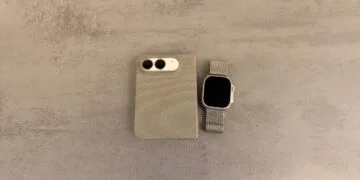
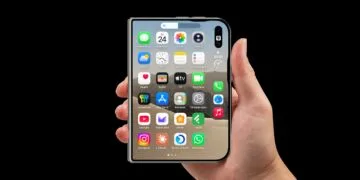
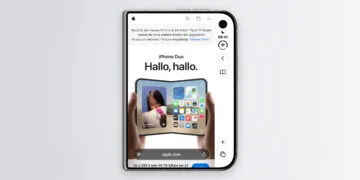
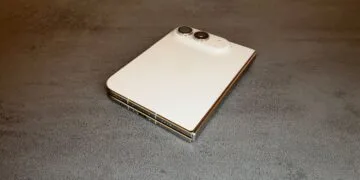
Nine extra hours of video playback is a plus on a long trip, but less so for everyday use with an evening charge. Conversely, the 249 grams are noticeable in your pocket and when typing with one hand – the Pro Max is only five grams lighter than the foldable iPhone Duo. If you're torn between the two, picking up the device in the store is more informative than any chart.
Which model is suitable for whom?
The iPhone 18 Pro is the obvious choice for anyone who uses their iPhone with one hand and charges it every evening anyway. It delivers the same photos, the same processing power, and the same charging speed, but in a design that eliminates the need to reposition your grip.
The iPhone 18 Pro Max is worthwhile if the display is your primary workspace – for video editing on the go, navigation in the car, writing long texts, or spending long days without a power outlet. If you're considering upgrading from an older Pro model, a direct comparison to the iPhone 17 Pro will help you assess whether the upgrade is even worth it. And if you're looking to maximize the screen size anyway, you should also consider the foldable iPhone Duo as a third option, which will be available from October 23rd.
Are the 38 grams and 150 euros worth the nine hours of additional video playback to you – or does the slimmer frame weigh more heavily on you than any battery life figure? Let us know your thoughts in the comments.
Frequently Asked Questions: iPhone 18 Pro vs. Pro Max
No. Both models feature the same system consisting of a 48MP main camera with variable aperture, a 48MP ultrawide lens, and a 48MP telephoto lens, along with the same 18MP front camera and the same Pro sliders in the camera app.
150 euros, and that applies to every storage level – from 1,449 versus 1,599 euros for 256 GB to 2,949 versus 3,099 euros for 2 TB.
Apple claims 43 hours of video playback instead of 34, and 29 hours of typical use instead of 23. The battery capacities are 5,391 mAh versus 4,056 mAh.
The higher figures of 36 and 45 hours apply to the eSIM-only models from twelve markets. In Germany, both Pro models are shipped with a physical SIM card slot, hence the lower figures listed on Apple's German website.
No. Both reach 50 percent in about 15 minutes via cable with a 60-watt power adapter and 50 percent in 30 minutes via MagSafe from 35 watts.
Yes: Black, Silver, Polar and Burgundy, each with 256 GB, 512 GB, 1 TB or 2 TB.
Apple will begin accepting pre-orders on September 12th, with sales starting on September 18th, 2026.