This article may contain affiliate links. Learn more on our Partner Program page.
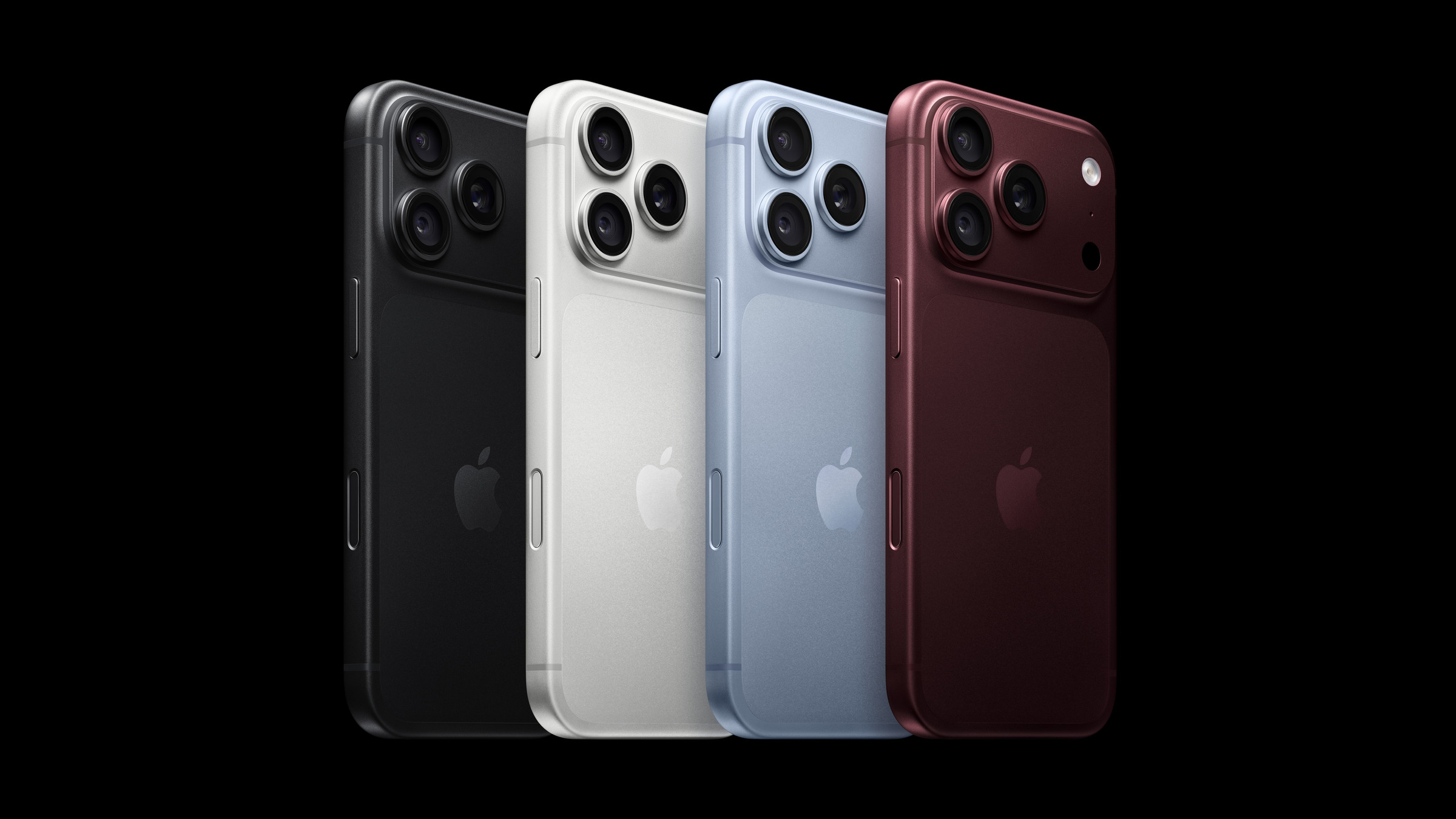
Apple has unveiled its new Pro models, and the most striking feature is behind the glass: a main camera with a four-stop aperture. It also boasts the first 2-nanometer chip in an iPhone and the longest battery life Apple has ever claimed for an iPhone. Pre-orders begin on Saturday, with sales starting September 18.
On the evening of September 9th, Apple unveiled the iPhone 18 Pro and iPhone 18 Pro Max, the two devices that had dominated the rumor mill for months. The announcement in the Apple Newsroom highlights four key features: camera, performance, battery, and Siri AI. Much of this aligns with information gathered over months about the iPhone 18 Pro – however, the announcement deviates from this in one crucial aspect.
Key Facts at a Glance
- The 48-megapixel main camera gets a variable aperture with six laser-cut blades and four manually selectable levels – in both models, not just the Pro Max.
- The A20 Pro is manufactured using a 2-nanometer process, has seven graphics cores and a dual Neural Engine with a total of 32 cores.
- Apple states up to 36 hours of video playback for the iPhone 18 Pro and up to 45 hours for the Pro Max – these figures apply to the eSIM-only models.
- Siri AI will launch as a beta on September 14th, initially only in English and not at all on the iPhone in the EU.
- Prices in the USA: $1,199 for the iPhone 18 Pro, $1,299 for the Pro Max, each starting at 256 GB.
The variable aperture is included in both models
Six laser-cut blades move seamlessly between aperture settings, automatically adjusting depth of field and light intensity. Users can manually select one of four aperture levels; an interface is available for apps, granting access to the entire aperture range. Combined with a new sensor, Apple promises improved low-light performance and greater depth of field in group photos.
Three weeks ago, the situation was different: A report attributed the variable aperture exclusively to the Pro Max and made it the distinguishing feature between the two models. Apple's announcement, however, lists the camera feature for both models, as well as the new Pro sliders in the camera app. The only remaining differences between the Pro and Pro Max are therefore battery and storage capacity.
The Pro controls allow you to adjust aperture, shutter speed, and white balance, and optionally display a histogram. Additionally, there are texture and grain controls within the photographic styles, post-processing cinematic effects for recordings up to 60 frames per second, and 4K time-lapse with Dolby Vision.

Apple Reference Image and the EU
A new feature is designed to verify the authenticity of a photograph: The sensor signs the image data, and Private Cloud Compute uses this to create an unalterable reference image that can be overlaid next to the actual photo in the Photos app, like a digital negative. This feature must be actively enabled.
In Germany, the feature will only be partially available at launch. According to Apple's own footnote, it won't be possible to take a reference image with the iPhone 18 Pro models in the EU initially; however, developing and viewing the image will work with iOS 27, iPadOS 27, and macOS 27. The feature is completely absent in China for regulatory reasons. Additionally, Apple plans to support the SynthID standard later this year, which allows for the identification of AI-processed images.
A20 Pro: seven graphics cores, dual Neural Engine
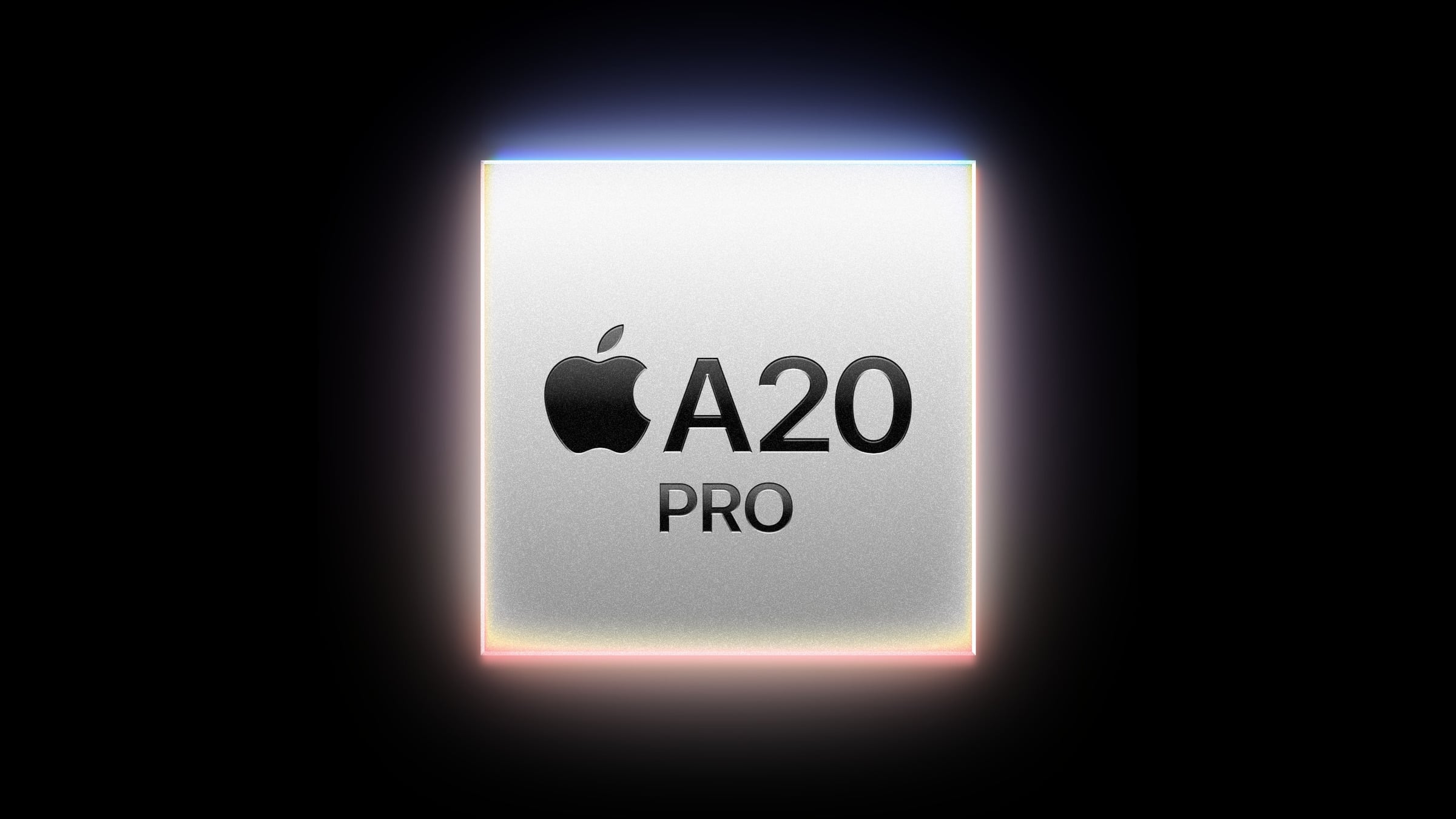
The A20 Pro is the first iPhone processor manufactured using a 2-nanometer process. Apple specifies six CPU cores with integrated Neural Accelerators, 50 percent more memory bandwidth than the A19 Pro, and a seven-core graphics unit that is said to be up to 40 percent faster. The number of graphics cores matches the chip image that surfaced in early September.
In addition, it features a dual Neural Engine with 16 cores each. Apple states that the AI computing power is double that of the A19 Pro and comprises a total of 32 cores. The memory is located next to the chip in a new design, thus outside its thermal path, allowing the A20 Pro to be in direct contact with a redesigned vapor chamber – which, with three times the surface area, is said to enable up to 40 percent more sustained performance.
As with its predecessor, the N1 chip with Wi-Fi 7, Bluetooth 6, and Thread provides wireless connectivity. The new C2 modem, according to Apple, uploads noticeably faster than the C1X while consuming 15 percent less energy. The C2's mmWave support is limited to the US market.
Battery: Why peak values don't apply here
The stated 36 hours of video playback for the iPhone 18 Pro and 45 hours for the Pro Max refer to the models without a SIM card slot. The eSIM-only versions are sold in Bahrain, Canada, Guam, Japan, Kuwait, Mexico, Oman, Qatar, Saudi Arabia, the United Arab Emirates, the USA, and the US Virgin Islands – Germany, Austria, and Switzerland are not on the list.
According to Apple, freeing up the SIM card slot provides two additional hours of video playback. For the devices sold here, this translates to up to 34 hours for the iPhone 18 Pro and up to 43 hours for the Pro Max. The actual cost of the slot can be seen in comparison to the predecessor: Apple lists up to 31 hours for the iPhone 17 Pro and up to 37 hours for the 17 Pro Max on its German product page. Those interested in the underlying technology can find the basics in the overview of eSIM upgrades.
| iPhone 17 Pro | iPhone 18 Pro | iPhone 17 Pro Max | iPhone 18 Pro Max | |
|---|---|---|---|---|
| Chip | A19 Pro | A20 Pro (2 nm) | A19 Pro | A20 Pro (2 nm) |
| Graphics cores | – | 7 | – | 7 |
| Video playback (eSIM models) | – | up to 36 hours. | – | up to 45 hours. |
| Video playback (German product page) | up to 31 hours. | – | up to 37 hours. | – |
| Storage | 256 GB – 1 TB | 256 GB – 2 TB | 256 GB – 2 TB | 256 GB – 2 TB |
| Starting price Germany | 1,299 euros | 1,449 euros | 1,449 euros | 1,599 euros |
Both models charge to 50 percent in about 15 minutes via cable or 30 minutes wirelessly. Apple also states that the Pro Max offers approximately seven hours of video playback after five minutes of wired charging.
Dynamic Island, colors and accessories
The Dynamic Island is smaller yet displays more: Up to three live activities can run simultaneously, and Face ID continues to function unchanged. The four color options are black, silver, glacier, and – new to the lineup – burgundy.
Included accessories are a wrist strap, a hand strap made of recycled polyester with embedded magnets that also holds AirPods Pro 2 and AirPods Pro 3. The Clear Case has been redesigned and now works with both the crossbody and wrist straps.
iOS 27 and Siri AI: The launch has two catches
iOS 27 will be released on Monday, September 14th. Apple Intelligence launches on the same day and will support German. Siri AI is a separate issue: The revamped assistant will be available as a beta starting September 14th, initially only in English. Apple has announced French, Japanese, Korean, Portuguese, and Spanish for October – German is not among them.
The second drawback concerns availability: Siri AI is not launching on iOS, iPadOS, and watchOS in the EU, and the same applies to all functions that rely on these platforms. Switzerland is not part of the EU and is therefore considered to have access – albeit initially only with English interface. For an overview of other missing features in Switzerland, see the list of EU-wide limitations.
There is good news for mobile phone customers in Germany: iPhone Handoff, which allows two iPhones to be used alternately under the same phone number, is launching with exactly two providers, according to Apple – T-Mobile in the USA and Telekom in Germany.
Pricing and market launch
In Germany, the iPhone 18 Pro starts at €1,449, and the Pro Max at €1,599, both with 256 GB of storage and optionally with 512 GB, 1 TB, or 2 TB. At their market launch in September 2025 , the iPhone 17 Pro and 17 Pro Max cost €1,299 and €1,449 respectively – also starting at 256 GB. The price increase for both devices is therefore €150 for the same base storage capacity. New is that the smaller model can now also be configured with up to 2 TB of storage.
Pre-orders start on Saturday, September 12th, at 2 PM CEST, with sales beginning on Friday, September 18th in more than 65 countries, including Germany. Twenty more countries will follow on September 25th.
The problem lies in the camera, not the housing
Those upgrading from the iPhone 17 Pro won't find a new design, but rather two components that make the difference: the sensor with adjustable aperture and the 2-nanometer chip with a larger vapor chamber. This is a significant camera upgrade – but one whose value only becomes apparent when manually adjusting the aperture. For everything that happens automatically, the difference compared to its predecessor remains manageable.
The real disappointment for German-speaking customers lies elsewhere. The device is advertised with Siri AI, which doesn't work on the iPhone here at launch – and in Switzerland, where it does work, it doesn't understand German initially. Those who switch because of the new assistant are buying a promise, not a feature. Those who switch for the camera, however, get immediate value.
Is the variable aperture enough of a reason for you to switch, or are you waiting until Siri AI is available in German here as well? Let us know in the comments what's the deciding factor for you.