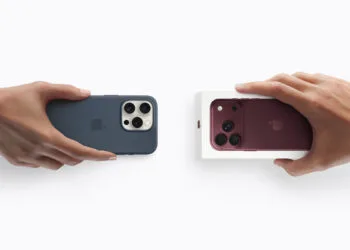
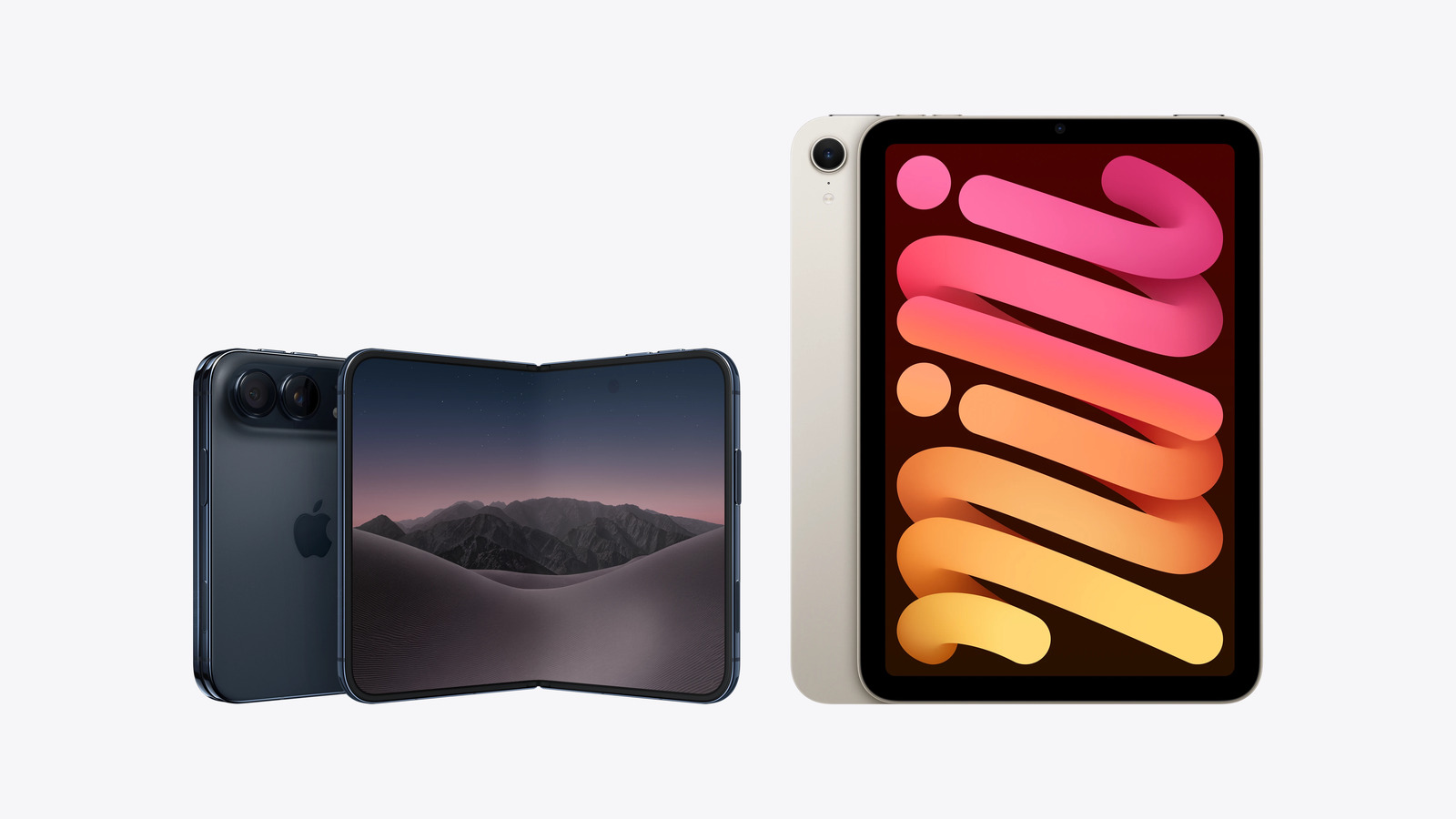
When unfolded, the iPhone Duo measures 7.6 inches, the iPad mini 8.3 inches. Two devices that would have been clearly different a year ago are now the same size – and only 39 grams apart. The price difference, however, is enormous.
Since Apple unveiled the foldable iPhone on September 9th, there's now a phone that, when unfolded, falls into the size category of the smallest iPad. For anyone who has previously used a phone and a compact tablet side-by-side, this raises a new question: Is the second device still necessary? How the duo fares against the thinnest iPhone is revealed in a direct comparison with the iPhone Air; here, the focus is on the device class boundary. The answer depends less on screen size and more on three factors: surface area, weight, and overall cost.
Key Facts at a Glance
- The iPad mini offers around 17 percent more display area than the unfolded Duo – despite only 0.7 inches more diagonally.
- The weight difference is 39 grams; the Duo weighs 254 grams, the iPad mini 293 grams.
- An iPhone 17 plus iPad mini costs from €1,778 together, which is €521 less than the duo alone.
- Both devices rely on Touch ID and eSIM; neither supports physical SIM cards.
- The iPad mini runs at 60 Hz and has an A17 Pro chip; a successor with an OLED display is expected in October – therefore, we advise against buying the current model.
How large the difference in area really is
The diagonals suggest a small difference: 7.6 inches for the Duo's inner display, 8.3 inches for the iPad mini. In reality, the difference is larger because the area increases quadratically with the diagonal.
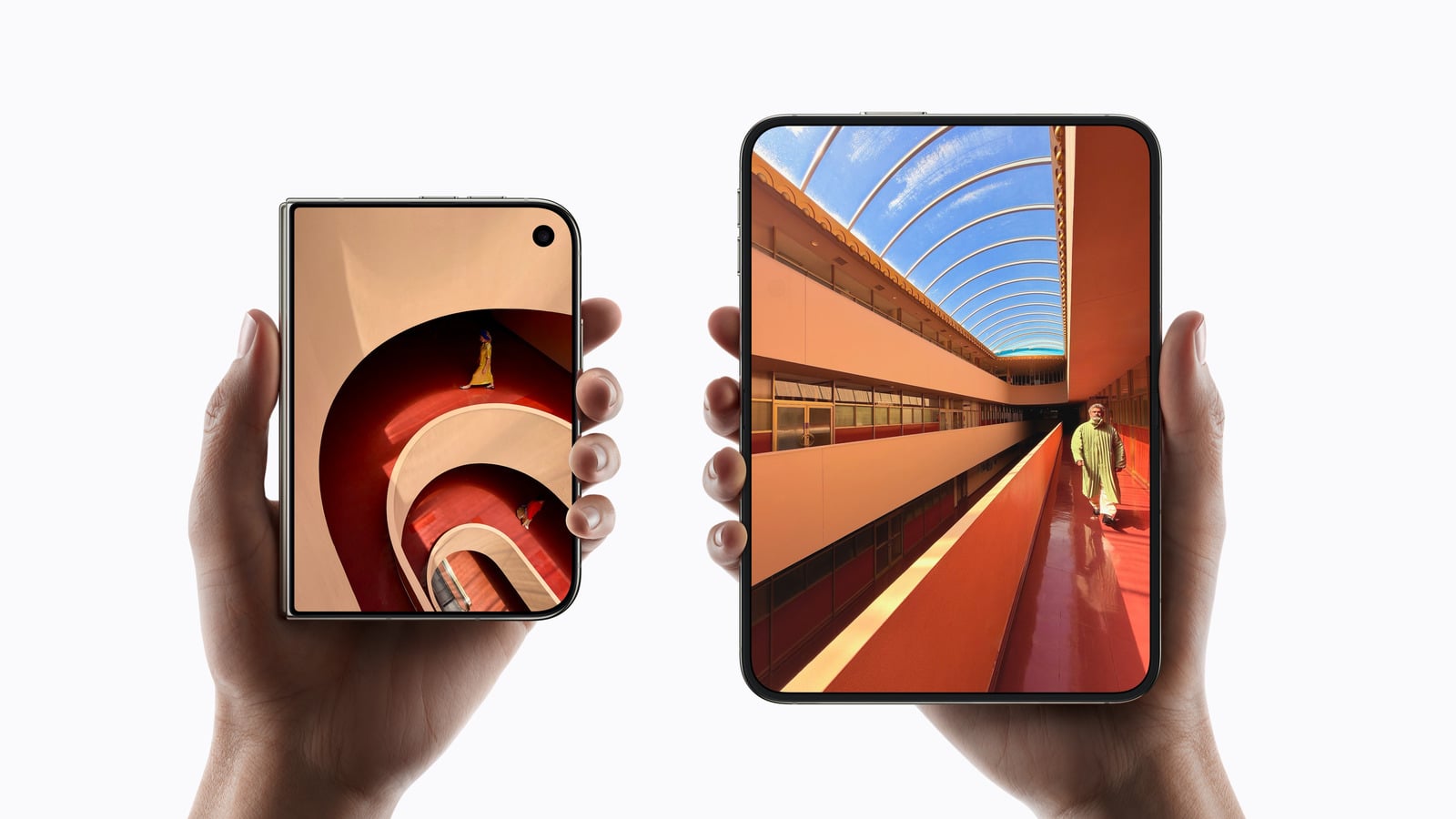
Based on the iPhone Duo's technical specifications – 1878 x 2670 pixels at 430 ppi – this results in a usable screen area of approximately 27.1 square inches. The iPad mini, with 2266 x 1488 pixels at 326 ppi, offers approximately 31.7 square inches. That's about 17 percent more screen area for the tablet.
Then there's the form factor. The iPad mini is a classic rectangular tablet, while the Duo, when unfolded, is almost square. This works in favor of the iPad for reading in portrait mode and sketching, but in favor of the Duo for split views side by side.
Where the devices diverge technically
| Feature | iPhone Duo | iPad mini |
|---|---|---|
| Display | 7.6″ inside, 5.4″ outside, OLED | 8.3″ LCD |
| Refresh rate | ProMotion up to 120 Hz | 60 Hz |
| Peak brightness | 3,000 nits outdoors | 500 nits |
| Chip | A20 Pro, 6-core CPU, 7-core GPU | A17 Pro, 6-core CPU, 5-core GPU |
| Weight | 254 g | 293g (Wi-Fi), 297g (Cellular) |
| Rear cameras | two 48MP cameras | a 12 MP camera |
| Water protection | IP68 | – |
| Cellular | Dual eSIM as standard | eSIM, only in the cellular model |
| Unlock | Touch ID in the side button | Touch ID in the top button |
| Memory | 256 GB to 2 TB | 128 GB to 512 GB |
| Price | from 2,299 euros | from 679 euros |
The display technology is striking: the more expensive device offers everything the tablet lacks – OLED instead of LCD, 120 Hz instead of 60 Hz, and six times the peak brightness. Anyone using the iPad mini outdoors will immediately notice the difference.
Conversely, there's one point that gets lost in the table: The iPad mini supports the Apple Pencil Pro, including its hover function. For the iPad and iPad duo, Apple only lists the Apple Pencil (USB-C), adding that support will be added later this year. So, at launch on October 23rd, the foldable iPhone won't support the stylus.
The bill with two devices
The most interesting comparison isn't device against device, but device against device pair. The duo starts at €2,299 for 256 GB. An iPhone 17 starting at €1,099 and an iPad mini starting at €679 together cost €1,778 – that's €521 less, with two separate batteries and two screens that can be used simultaneously.
The competition is tighter in the high-end segment. An iPhone 18 Pro starting at €1,449 plus an iPad mini adds up to €2,128. The price difference to the Duo shrinks to €171. Those who are already leaning towards the Pro model and add a small tablet end up paying almost the same as for the foldable device.
The price difference is most pronounced when storage sizes are the same: €2,299 for the Duo with 256 GB compared to €809 for the iPad mini with 256 GB. The cellular version of the tablet costs a consistent €170 extra, regardless of capacity.
How timing affects the decision
The current iPad mini launched with the A17 Pro chip and still uses a 60Hz LCD display. Several reports anticipate a successor in October with an OLED display, a revised chip, and, for the first time, an IP rating; the current status is summarized in the overview of the iPad mini 8.
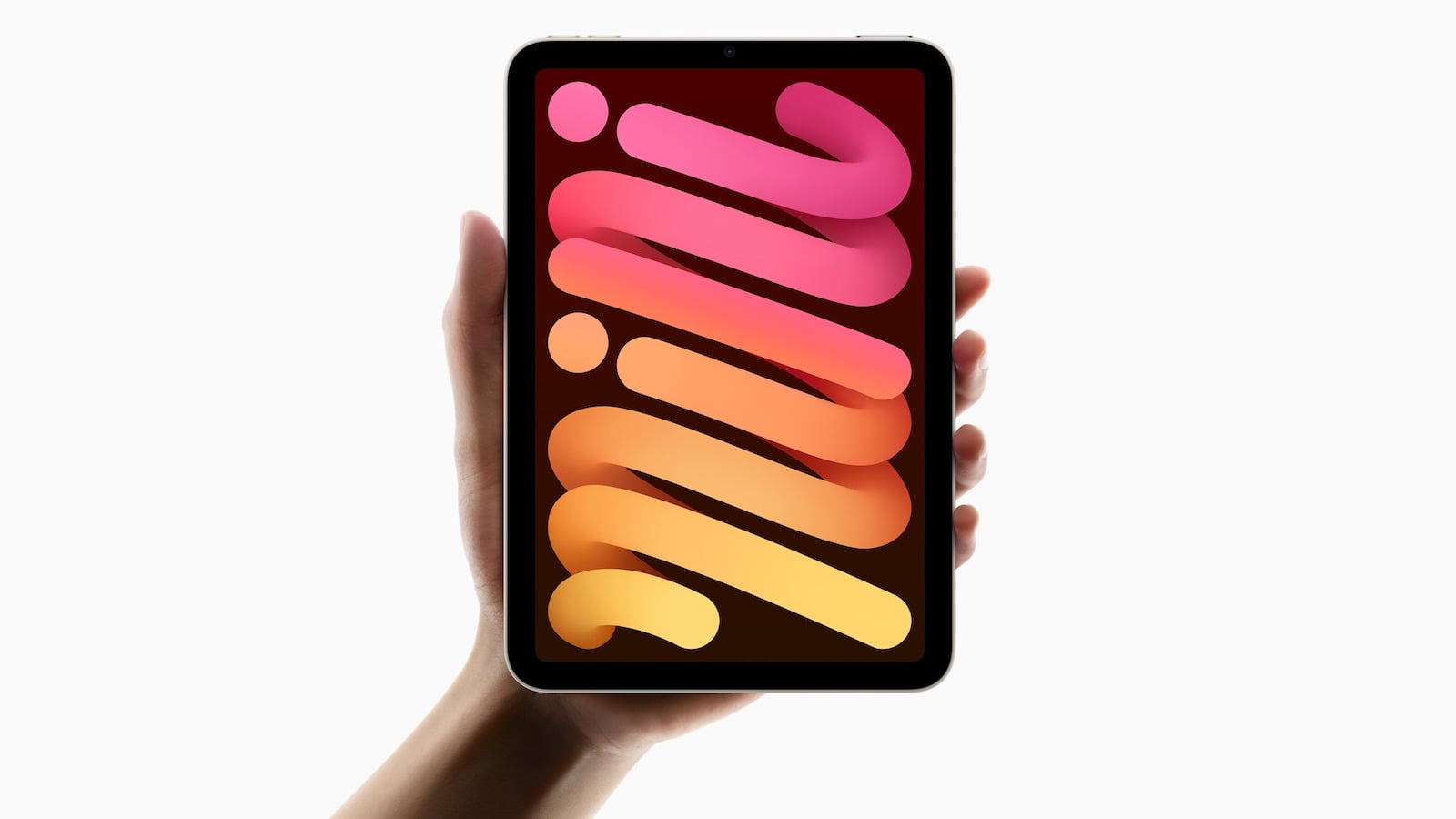
This leads to a clear recommendation: We advise against buying the current iPad mini at this time. The device is about to be replaced and, with its 60Hz LCD, has the weakest display in the current iPad lineup. Anyone spending €679 now is paying full price for the outgoing generation just a few weeks before the switch – without knowing what the successor will offer for the same or a similar price.
Both devices fall within the same timeframe anyway: The duo will be available in stores on October 23rd, and pre-orders start on October 16th. So, anyone who is undecided between the two loses nothing by waiting and gains the opportunity to compare the new tablet against the foldable iPhone.
The only exception is a defective or missing device that needs to be replaced immediately. In that case, the iPad mini is available, while the Duo is simply unavailable until pre-orders begin.
Two devices that are less interchangeable than it seems
The idea that the foldable iPhone would make the small tablet obsolete doesn't hold up to scrutiny. The iPad mini offers more screen space, better stylus support, and costs a fraction of the price. The combination has a clearly superior display and saves you carrying a device in your pocket – for a price premium that, in the entry-level segment, is over €500.
The more honest question, therefore, isn't which device wins, but whether one screen is enough for you. If you've primarily used your tablet in the evenings on the sofa, the Duo will likely replace it. However, if you use it for drawing, taking notes with the stylus, or alongside your phone, it won't replace anything – in that case, you'll end up buying an expensive iPhone with the Duo and still keeping your iPad. Our iPhone buying guide can help you determine which iPhone is right for you.
For most users, the combination of an iPhone and a tablet will likely remain the better deal, as long as the stylus or working with two devices is a factor. The extra cost for the duo buys convenience, not additional screen space. However, the tablet portion of this calculation should no longer be based on today's iPad mini, but rather on what will be available alongside it in October.
What's your plan – does an unfolded 7.6-inch display replace the iPad mini in your daily life, or would you end up with two devices again? Let us know in the comments how you handle it.
Frequently Asked Questions: iPhone Duo or iPad mini
Probably not. The current model is about to be replaced; a successor with an OLED display is expected in October. Anyone who doesn't need a device immediately should wait for the official announcement.
No. The inner display measures 7.6 inches, while the iPad mini measures 8.3 inches. In terms of surface area, the tablet has approximately 17 percent more space because the surface area increases squarely with the diagonal.
For reading, videos, and shared views, mostly yes. Not for working with the stylus: The iPad mini supports the Apple Pencil Pro, while Apple only offers the Apple Pencil with USB-C for the Duo – and according to Apple, support for that won't arrive until later this year.
The combination. An iPhone 17 starting at €1,099 and an iPad mini starting at €679 together cost €1,778; the duo starts at €2,299. With an iPhone 18 Pro, the difference shrinks to €171.
No, it uses an LCD with 60 Hz and 500 nits. The Duo has an OLED with ProMotion up to 120 Hz and 3,000 nits outdoors.
No, the iPad mini also works exclusively with eSIM. The cellular version costs an extra 170 euros for every storage tier.
Pre-orders open on October 16th, with delivery starting on October 23rd.