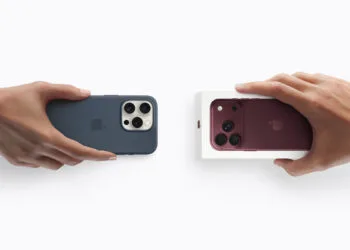
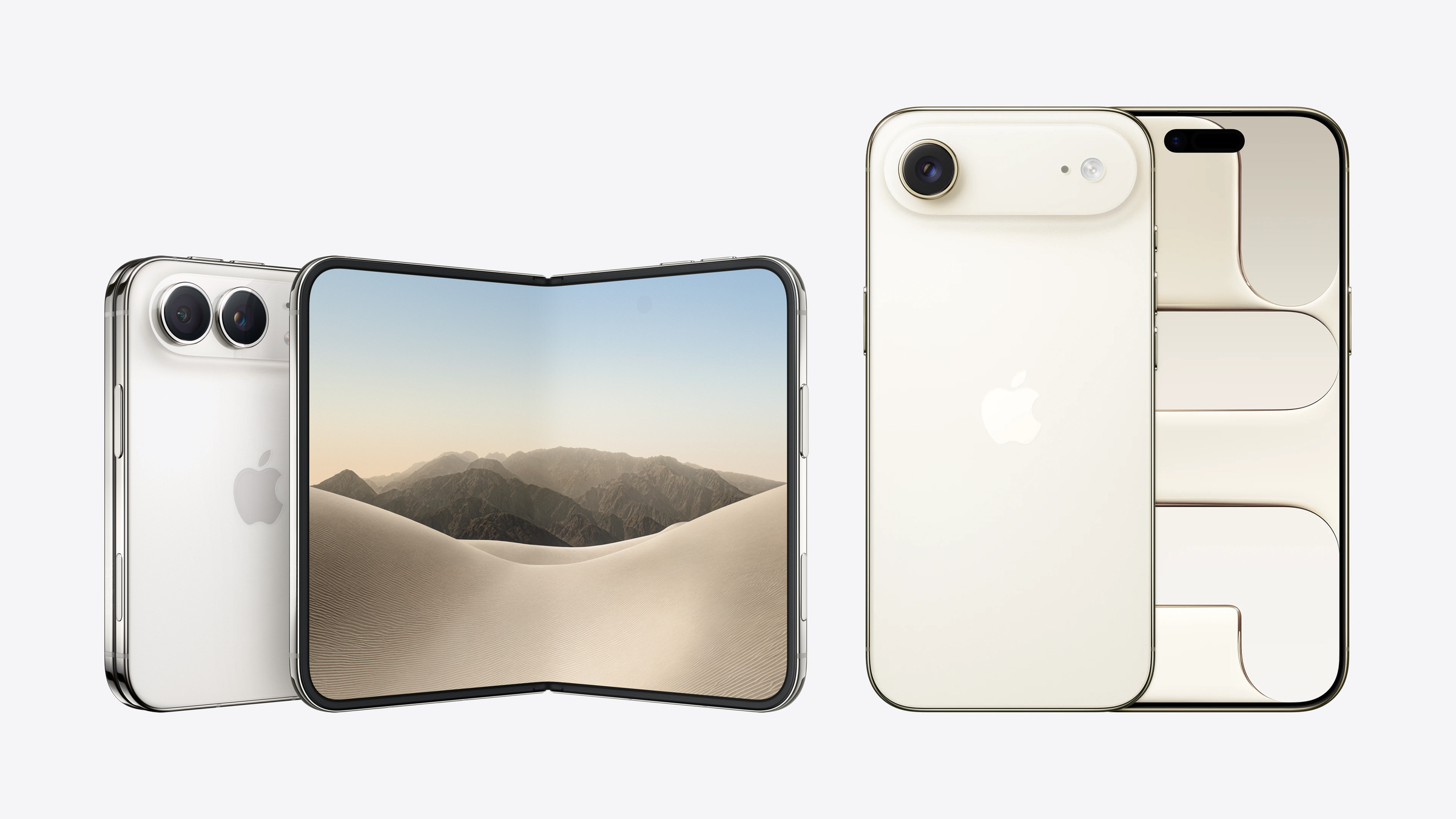
Apple's thinnest iPhone and its first foldable iPhone have been available side-by-side since September 9th. The price difference between the two is exactly €1,000 – and this gap remains consistent across all storage options. While the devices share titanium, eSIM, and an edge-to-edge OLED display, they diverge in almost every aspect of everyday use.
With the foldable iPhone, Apple has opened up a new price range: The device starts at €2,299 in Germany and was presented alongside the iPhone 18 Pro. The iPhone Air remains in the product line and costs €1,299.
The two phones have more in common than their size difference would suggest: titanium frames, Ceramic Shield 2 on the front, a Super Retina XDR display with ProMotion and up to 3,000 nits of brightness outdoors, and eSIM only. They diverge in almost everything else. The Duo has two displays, two batteries, and a fingerprint sensor, while the Air has one display, one battery, and Face ID.
Key Facts at a Glance
- The price difference is a constant 1,000 euros across all three common storage levels.
- When unfolded, the Duo measures 5.2 mm, making it thinner than the Air; when folded, it measures exactly twice as thick at 11.3 mm.
- The inner display offers roughly two-thirds more surface area than the Air display, while the outer display offers roughly one-sixth less.
- The Duo does without Face ID and the action button; its front camera has a resolution of 12 megapixels instead of 18.
- The Air is already available in stores, the Duo will be released on October 23rd.
A thousand euros, at each level
Both models start at 256 GB, with the Duo also offering a 2 TB option. The price difference is identical across the three available capacities for both.
| Memory | iPhone Duo | iPhone Air | Distance |
|---|---|---|---|
| 256 GB | 2,299 euros | 1,299 euros | 1,000 euros |
| 512 GB | 2,549 euros | 1,549 euros | 1,000 euros |
| 1 TB | 3,049 euros | 2,049 euros | 1,000 euros |
| 2 TB | 3,799 euros | not available | – |
It's noteworthy that the price difference doesn't increase: Apple sets the storage upgrade prices identically for both devices, leaving the difference between the models unaffected. Within the Duo series, however, the upgrades vary – Apple charges €750 for going from 1 TB to 2 TB, and the total difference between the entry-level and fully expanded models is €1,500.
The rounded figure is more recent than it seems. The Air cost €100 less until September 9th – the day Apple raised the prices of its existing models. Without this price increase, the difference to the Duo would be €1,100.
One large screen versus two smaller ones
The Duo's inner display measures 7.6 inches with a resolution of 1878 x 2670 pixels and 430 ppi, while the outer display measures 5.4 inches with a resolution of 1398 x 2034 pixels and 460 ppi. The Air has a 6.5-inch display with a resolution of 2736 x 1260 pixels, also at 460 ppi.
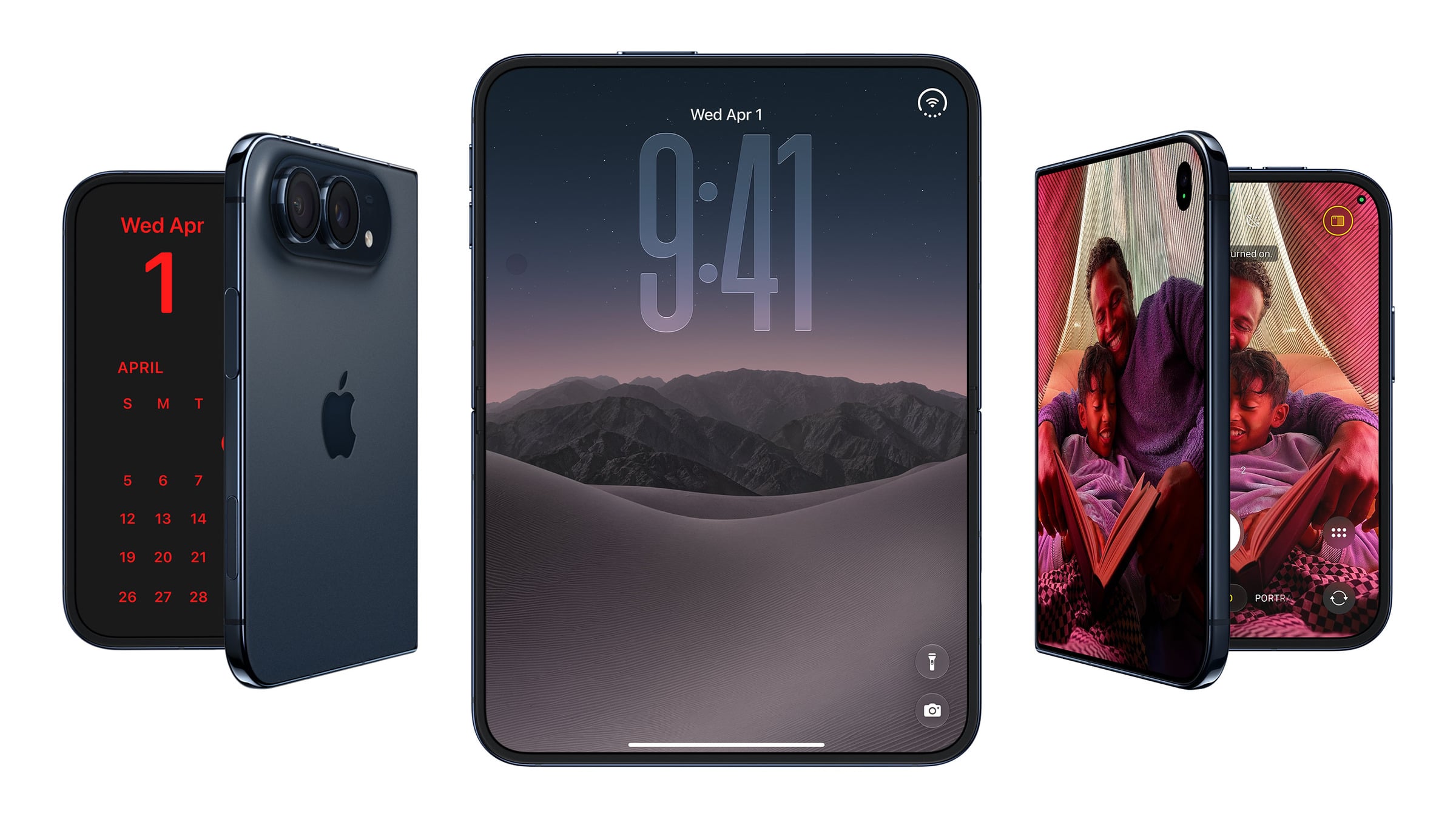
Based on resolution and pixel density, the inner dual-display offers roughly two-thirds more screen area than the Air's display. When folded, the ratio reverses: the outer screen area is about one-sixth smaller than that of the Air.
Both devices feature Dynamic Island, Always-On Display, and ProMotion with refresh rates up to 120 Hz. Only the Duo's inner panel has an additional nano-texture coating, and only the Duo is compatible with the Apple Pencil (USB-C) – although Apple will add this support later this year. According to Apple, the display is designed for multitasking with apps arranged side-by-side; iOS 27 includes a specially adapted interface for this purpose.
When folded, it's exactly twice as thick
When unfolded, the Duo is 5.2 mm thick, which is 0.44 mm thinner than the Air at 5.64 mm. So, when open, the Air is no longer the thinnest iPhone. When folded, however, the situation reverses: 11.3 mm versus 5.64 mm, a difference of exactly twofold.
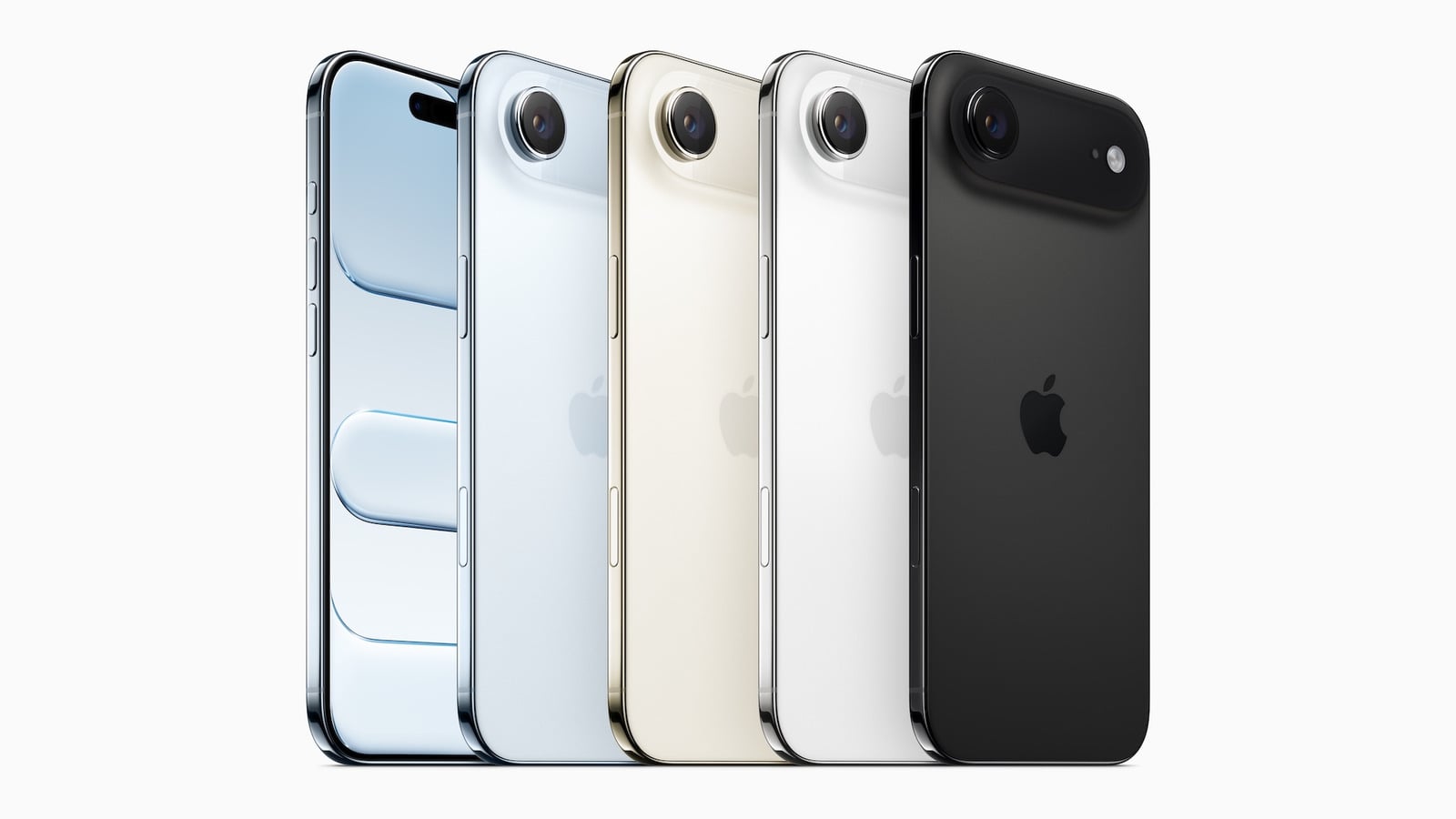
The weight difference is clear. The Duo weighs 254 g, the Air 165 g – a difference of 89 g or around 54 percent. In a trouser pocket, the Duo is also 84.1 mm wide and 117.8 mm high, while the Air, at 74.7 x 156.2 mm, is significantly narrower and longer.
| Feature | iPhone Duo | iPhone Air |
|---|---|---|
| Dimensions opened | 164.6 x 117.8 x 5.2 mm | 156.2 x 74.7 x 5.64 mm |
| Dimensions closed | 84.1 x 117.8 x 11.3 mm | – |
| Weight | 254 g | 165 g |
| Housing | Titanium, titanium hinge cover | Titanium frame |
| Protection class | IP68, up to 6 m for 30 minutes | IP68, up to 6 m for 30 minutes |
A20 Pro vs. A19 Pro
The Duo uses the A20 Pro with six CPU cores, seven GPU cores, and a dual 16-core Neural Engine. The Air uses the A19 Pro, also with six CPU cores, but five GPU cores and a single 16-core Neural Engine. Both support hardware-accelerated ray tracing.
The difference is more noticeable in the ports. The Duo's USB-C port supports USB 3.0 and up to 10 Gbps, and outputs video via DisplayPort. The Air sticks with USB 2.0 at 480 Mbps – roughly one-twentieth of the transfer rate. Anyone transferring large video files directly from the device will notice this immediately.
For mobile connectivity, the Duo uses the C2 modem, while the Air uses the C1X. Both utilize the N1 chip with Wi-Fi 7 and Bluetooth 6 for wireless networks, and both operate exclusively with eSIM. When switching from a device with a card slot, the phone number must first be activated as an eSIM.
More camera at the back, fewer at the front
The Duo features a 48MP dual-fusion system combining the main and ultra-wide cameras, offering 0.5x, 1x, and 2x zoom levels. The Air only has the 48MP main camera and offers 1x and 2x zoom. Macro photos, cinematic effects, intelligent focus tracking, and improved low-light video are exclusive to the Duo, which also records Dolby Vision in 4K at 120 fps instead of 60 fps.
The front camera rotates. The Air has an 18MP center-stage camera with ƒ/1.9 and autofocus, while the Duo has a 12MP outer camera with ƒ/2.2. The Duo's inner FaceTime camera is located under the display and only records video in 1080p. On paper, this makes the cheaper device the better choice for video calls and selfies.
Face ID vs. Touch ID – and a missing button
The Air unlocks via Face ID using TrueDepth technology in the front camera. The Duo, on the other hand, uses a fingerprint sensor in the side button because its front camera is located under the display. Apple Pay works with both methods.
Furthermore, there's a detail that Apple explicitly identifies as a missing feature in its own comparison in the store: The Duo lacks an action button. The Air has one, as do the iPhone 18 Pro, iPhone 17, and iPhone 17e. Both devices in the comparison feature camera controls.
Battery, charging and accessories
Apple claims up to 44 hours of video playback on the outer display and up to 31 hours on the inner display for the Duo, along with a typical usage time of up to 24 hours with evenly alternating between the two. The Air achieves up to 27 hours. Compared to the Duo's better performance, that's a difference of around 63 percent.
With the separately available iPhone Air MagSafe battery, the battery life increases to up to 40 hours. This accessory is only available for this model and costs extra.
Charging requirements differ: The Duo reaches 50 percent in about 20 minutes, requiring a power adapter with at least 60W. The Air achieves 50 percent in 30 minutes and only needs 20W. Both devices come with a USB-C cable; a compatible power adapter must be purchased separately. Wireless charging is supported by the Duo at up to 25W via MagSafe and Qi2, while the Air supports up to 20W.
The premium price buys space, not equipment
The higher price is due to components the Air simply doesn't have: hinge, second panel, second battery. Features that would normally justify a higher price – a better front camera, more buttons, facial recognition – favor the cheaper model in this comparison. The Duo isn't a better-equipped Air, but rather a different device with its own usability issues.
Economically, the price still makes sense: The closest competitor within the company is the iPhone 18 Pro, which uses the same A20 Pro chip, starts at €1,449, and costs €850 less than the Duo – with three rear cameras instead of two and a variable aperture. The Air doesn't even factor into this calculation. It represents a device you barely notice, while the Duo represents one you unfold.
Which device is suitable for whom?
The Air is the choice if you want an iPhone that's as inconspicuous as possible. It's light, slim, has a better front camera, and a full set of physical buttons. If you make a lot of calls, often hold the device, and rarely shoot videos, you get a more well-rounded package for significantly less money – including Face ID instead of a fingerprint sensor. The only cheaper options are the iPhone 17 and iPhone 17e, which start at €1,099 and €849, respectively.
The Duo is worthwhile if the screen is the primary reason for buying it: two apps side-by-side, longer texts, maps, videos. With roughly two-thirds more screen space than the Air, it replaces a small tablet in many everyday situations, and 44 hours of video playback lessens the weight somewhat. However, those who would primarily use the device with the lid closed will be paying €1,000 for a smaller display than the Air.
There's already a set order: The Air is available in stores, the Duo will be added on October 23rd.
What weighs more heavily on you – the €1,000 surcharge or the two-thirds more screen that the Duo unfolds to reveal? Let us know your reasoning in the comments.
Frequently Asked Questions: iPhone Duo or iPhone Air
The iPhone Duo starts at €2,299 with 256GB, the iPhone Air at €1,299. The €1,000 price difference remains the same across all shared storage options: €2,549 vs. €1,549 for 512GB and €3,049 vs. €2,049 for 1TB. Only the Duo offers an additional 2TB option for €3,799.
Folded, yes; unfolded, no. When open, the Duo measures 5.2 mm, making it thinner than the Air at 5.64 mm. When closed, it measures 11.3 mm, exactly twice the thickness of the Air. The weight difference remains significant: 254 grams versus 165 grams.
No. The Duo unlocks via a fingerprint sensor in the side button because the inner FaceTime camera is located under the display. The iPhone Air uses Face ID via TrueDepth technology in the front camera. Apple Pay works with both methods.
The iPhone Air. It has an 18MP center-stage camera with ƒ/1.9 and autofocus. The Duo has a 12MP external camera with ƒ/2.2, while the internal camera under the display only records video in 1080p. On the back, the situation is reversed: only the Duo has an ultra-wide-angle lens.
The inner display measures 7.6 inches compared to 6.5 inches in the Air. Based on resolution and pixel density, that's roughly two-thirds more screen area. When folded, the outer 5.4-inch display, however, is about one-sixth smaller than the Air's.
No. Apple explicitly states the absence of the action button in its own comparison in the store. The iPhone Air has the action button, as do the iPhone 18 Pro, iPhone 17, and iPhone 17e. Both devices in the comparison have the camera controls.
Pre-orders begin on October 16, 2026 at 2 PM CEST, with deliveries starting on October 23. Germany is among the first launch countries, with 28 more following a week later. The iPhone Air, however, is available immediately.