
This article may contain affiliate links. Learn more on our Partner Program page.
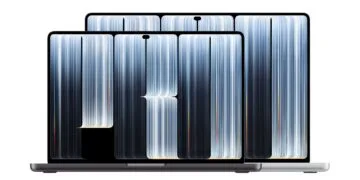
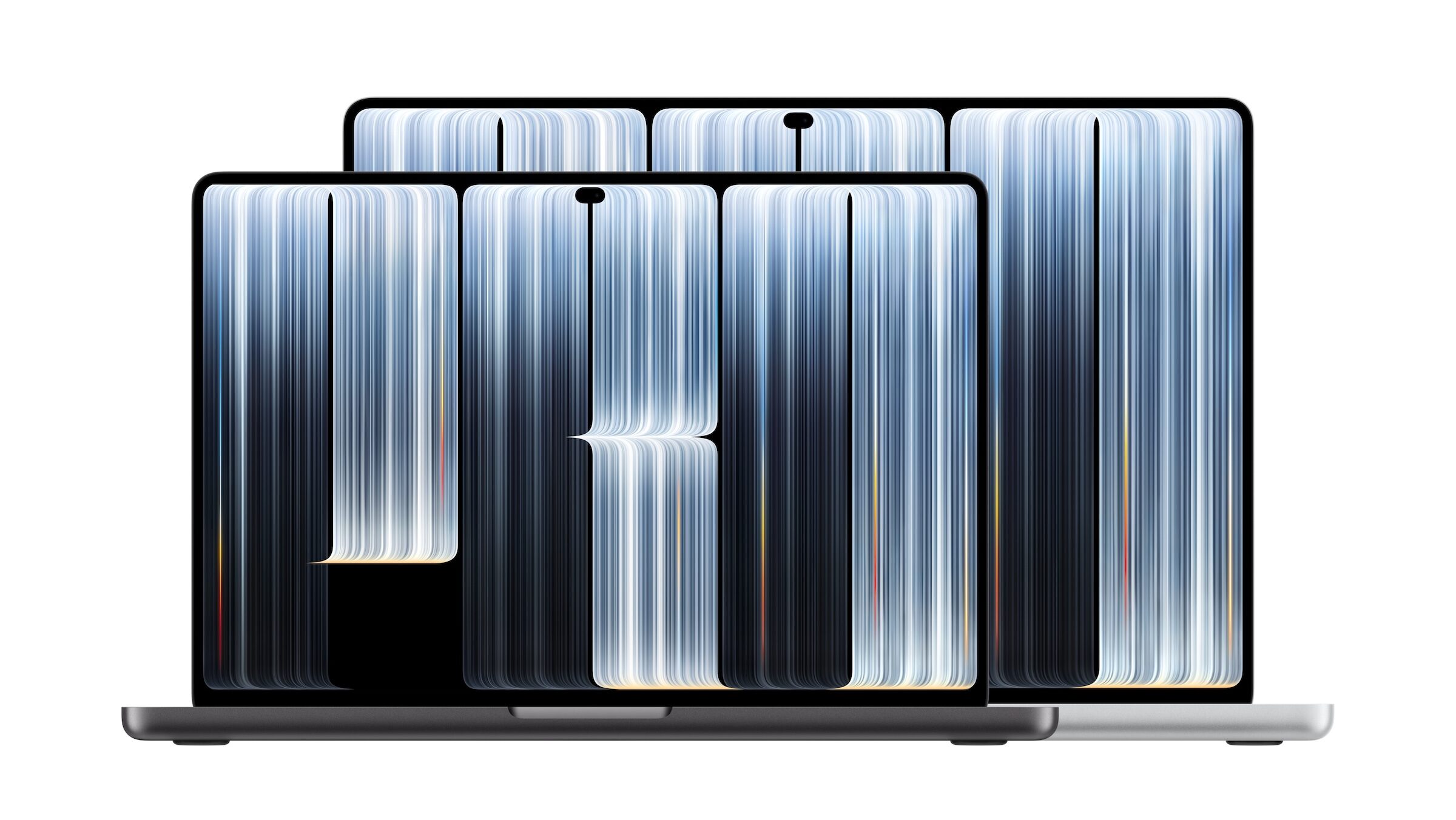
Rumors circulated for months as the MacBook Ultra, but now it's official – and simply called the MacBook Pro. Tandem OLED, touchscreen, and Dynamic Island make it the biggest overhaul of the line since 2021. Here you'll find all the specs, prices, and differences compared to the Mini-LED models, all in one place.
Apple unveiled the MacBook Pro with PROLED XDR display on October 28, 2026, via press release. The device is available in 14-inch and 16-inch models, each with either the M5 Pro or M5 Max processor. The specifications in this overview are taken from Apple's German technical data sheets and the configurators of the Apple Stores in Germany, Austria, and Switzerland.
The new models do not replace the existing ones. The MacBook Pro models with Mini-LED displays remain in the lineup, and Apple introduced the MacBook Pro with M6 as a new entry-level model in the same week. This marks the first time the MacBook Pro is available with two display technologies side-by-side.
Key Facts at a Glance
- Tandem OLED with 10,000,000:1 contrast, 2000 nits peak brightness, P3 and Adobe RGB
- First Mac with touchscreen, the notch gives way to a Dynamic Island
- M5 Pro and M5 Max, up to 128 GB RAM and for the first time up to 16 TB SSD
- The 14-inch model weighs 1.38 kilograms instead of 1.60 kilograms, the 16-inch model from 1.82 kilograms
- In Germany and Austria from €3,299, in Switzerland from CHF 2,799; available in stores from November 6th.
Models and prices in Germany, Austria and Switzerland
Pre-orders for the MacBook Pro with PROLED XDR display began on October 28th, and it will be available in stores starting Friday, November 6th. Prices are identical in Germany and Austria, while in Switzerland they are significantly lower (in Swiss francs). The starting prices according to the configurators are:
| Model | Germany | Austria | Switzerland |
|---|---|---|---|
| 14-inch, M5 Pro | from €3,299 | from €3,299 | from CHF 2799 |
| 14 inch, M5 Max | from €5,199 | from €5,199 | from CHF 4399 |
| 16-inch, M5 Pro | from €3,899 | from €3,899 | from CHF 3299 |
| 16 inch, M5 Max | from €5,599 | from €5,599 | from CHF 4699 |
The nanotextured glass costs an extra 165 euros in Germany and Austria. A power adapter is not included in the box; its power requirements are listed below under "Battery and Charging".
The PROLED XDR Display
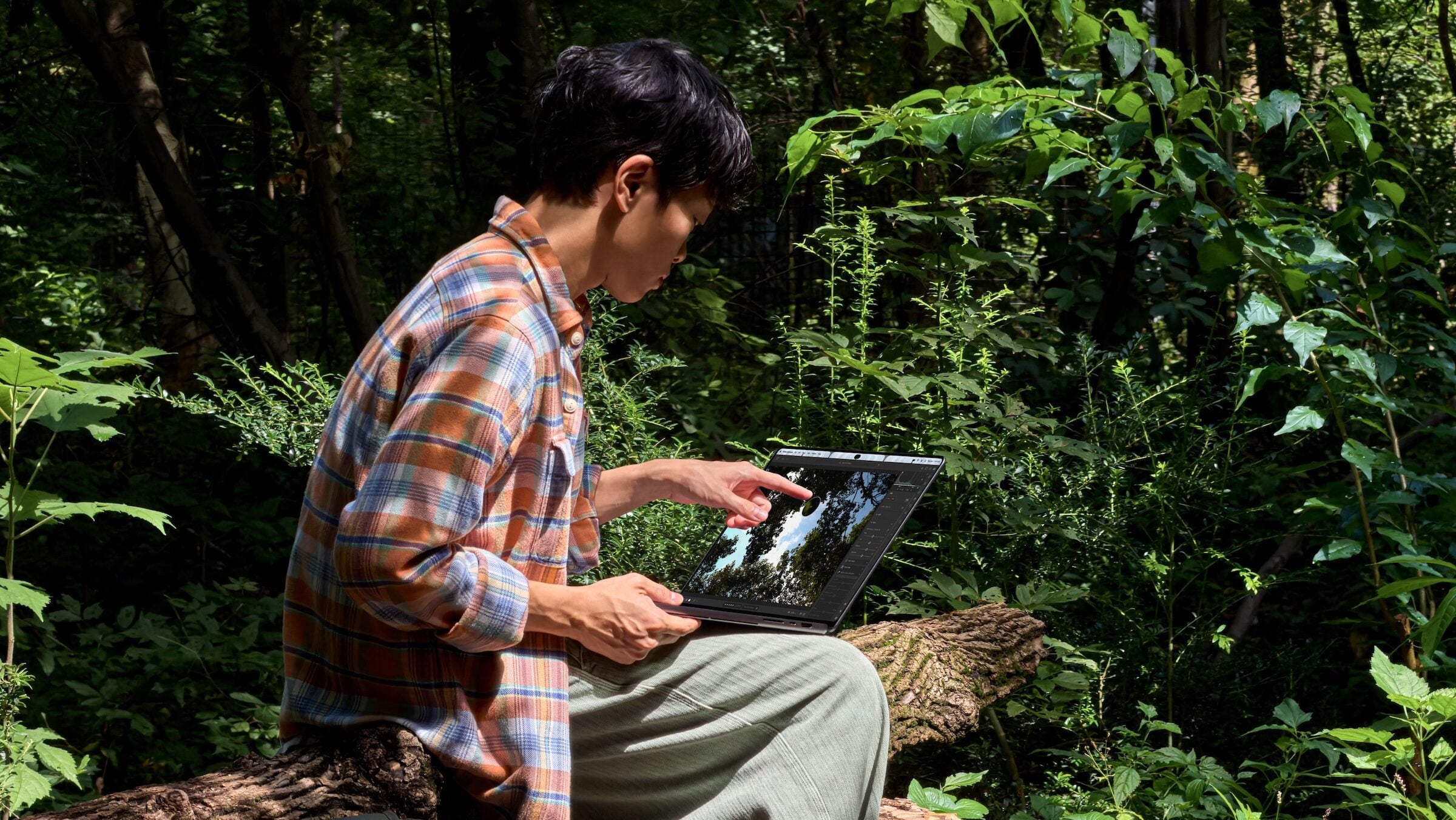
The core of the update is the display. Apple is using tandem OLED, meaning two superimposed light-emitting layers, as used in the iPad Pro since 2024. Apple specifies a contrast ratio of 10,000,000:1, compared to 1,000,000:1 for the Mini-LED display.
Brightness remains constant at up to 1000 nits in full-screen mode. Apple specifies a peak brightness of 2000 nits, for both HDR and SDR content outdoors. The color gamut is new: in addition to P3, the display now covers Adobe RGB, the standard in photography and prepress. ProMotion adjusts the refresh rate between 10 and 120 Hz.
| 14 inch | 16 inch | |
|---|---|---|
| Diagonal | 14.2 inches (36.1 cm) | 16.3 inches (41.4 cm) |
| Resolution | 3024 × 1986 pixels | 3472 × 2266 pixels |
| Pixel density | 254 ppi | 254 ppi |
| Contrast | 10.000.000:1 | 10.000.000:1 |
| Brightness constant / peak | 1000 / 2000 nits | 1000 / 2000 nits |
On the 16-inch model, the diagonal screen size increases from 16.2 to 16.3 inches thanks to narrower bezels. The list of reference modes is also expanding: In addition to the familiar video and cinema standards, there are dedicated Adobe RGB modes for photography and printing, as well as two DICOM modes for medical images, which Apple explicitly permits for non-diagnostic use only.
Touch and Dynamic Island
The MacBook Pro with PROLED XDR display is the first Mac with a touchscreen. According to Apple, the sensor is integrated directly into the panel. It supports multi-touch gestures such as swiping to scroll, two-finger zoom, and double-tapping to resize a window. The keyboard and trackpad remain unchanged; touch input is the addition.
Existing apps work instantly because macOS translates touches into clicks. The pro apps from Apple Creator Studio are adapted; in Logic Pro, for example, software instruments can be played directly on the display. How the macOS 27 interface reacts to touch had already been anticipated. A newly designed hinge is intended to keep the screen stable when tapped, and video stabilization smooths the camera image when typing during a video call.
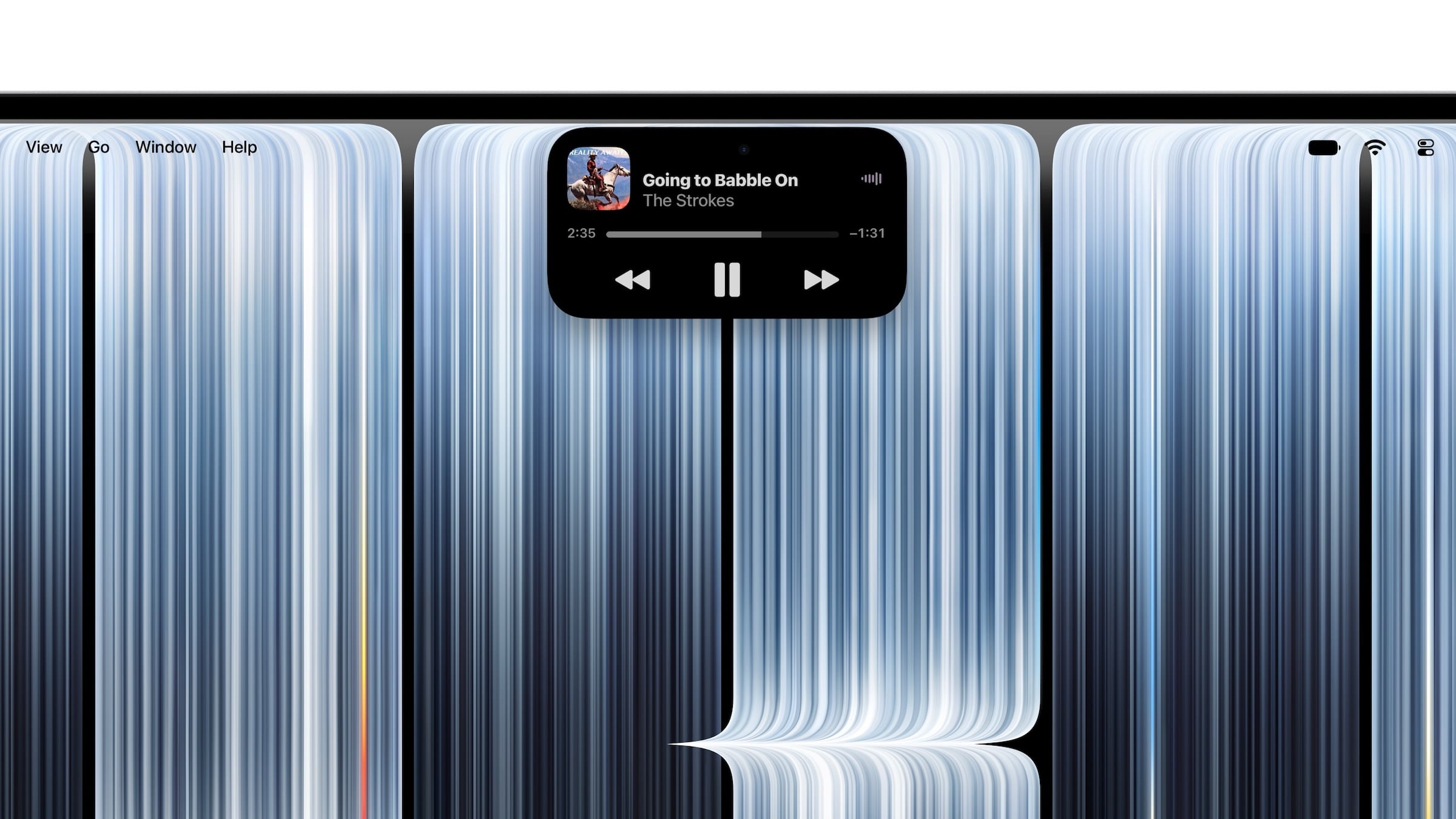
Instead of a notch, there's a Dynamic Island at the top. It displays live activity, calls, and music controls, and is also the new location for Spotlight and Siri AI. According to Apple, however, Spotlight only moves there when Siri AI is available and activated – and Siri AI doesn't currently run in German on the Mac.
Chips, RAM and SSD
The performance remains unchanged from March: M5 Pro and M5 Max, manufactured using a 3-nanometer process. The only new feature is a storage limit of 16 TB, up from 8 TB previously. Apple determines which storage capacity is compatible with each chip.
| Chip | CPU / GPU | Bandwidth | RAM | SSD |
|---|---|---|---|---|
| M5 Pro (14 inch only) | 15/16 cores | 307 GB/s | 24 or 48 GB | 1 to 4 TB |
| M5 Pro | 18/20 cores | 307 GB/s | 24, 48 or 64GB | 1 to 4 TB |
| M5 Max | 18 / 32 cores | 460 GB/s | 36 GB | 2 to 16 TB |
| M5 Max | 18 / 40 cores | 614 GB/s | 48, 64 or 128 GB | 2 to 16 TB |
This leads to two points that are not mentioned in the press release. The 16 TB SSD is only available with the M5 Max, and 128 GB of RAM is only available with the fully configured model including a 40-core GPU. Furthermore, the 16-inch model starts directly with the larger M5 Pro.
How the M5 chips compare to the new M6 in the entry-level model is shown by the comparison between MacBook Pro M6 and M5.
Case, weight and battery
The new housing is thinner, has a smaller footprint, and is most importantly lighter. This is most noticeable in the 14-inch model compared to the Mini-LED version with the M5 Pro:
| 14 inch with M5 Pro | Mini-LED | PROLED XDR |
|---|---|---|
| Height | 1.55 cm | 1.50 cm |
| Width | 31.26 cm | 31.08 cm |
| Depth | 22.12 cm | 21.63 cm |
| Weight | 1.60 kg | 1.38 kg |
| Battery | 72.4 Wh | 72.6 Wh |
| Video streaming | up to 22 hours. | up to 22 hours. |
The battery life remains the same for the 14-inch model. Only the 16-inch model with the M5 Pro achieves the 24 hours mentioned in the press release. The larger model measures 1.60 × 35.55 × 24.42 centimeters and weighs 1.82 kilograms, or 1.84 kilograms with the M5 Max.
| Battery and Charging | 14 inch | 16 inch |
|---|---|---|
| Capacity | 72.6 Wh | 100 Wh |
| Video streaming (M5 Pro / M5 Max) | 22 / 20 hrs. | 24 / 22 hours. |
| Surfing (M5 Pro / M5 Max) | 14 / 13 hours. | 17 / 16 hrs. |
| Recommended minimum power | 70 W | 94 W |
| Fast charging from | 96 W | 140 W |
Because no power adapter is included, the wattage determines the charging speed. The guide to the correct wattage for a MacBook power adapter explains which adapter is compatible with which model.
Connections, camera and sound
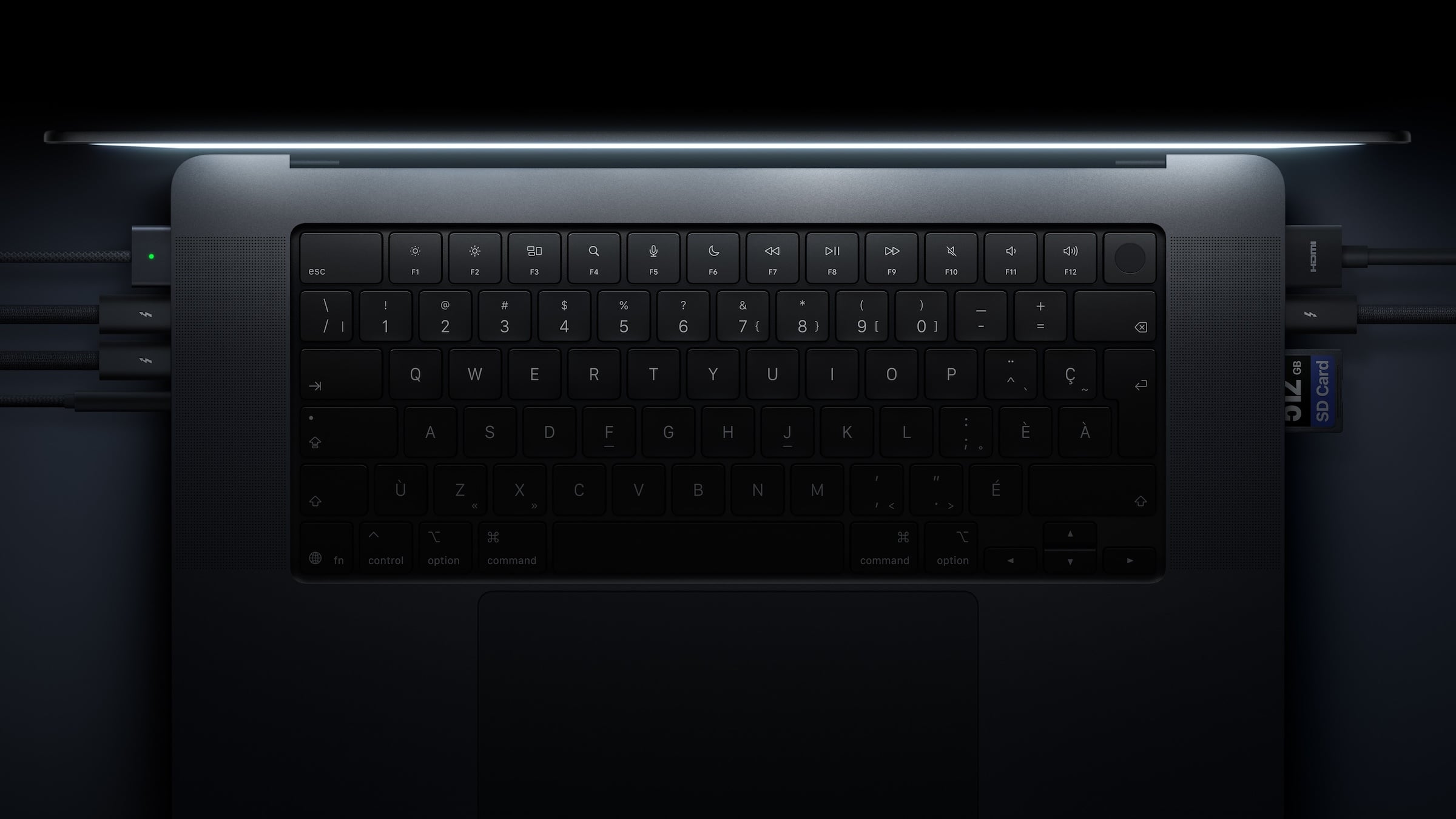
The ports remain unchanged: three Thunderbolt 5 ports, HDMI, SDXC card reader, MagSafe 3, and a headphone jack. The M5 Pro can drive up to three external displays, while the M5 Max supports up to four. New is support for Genlock, which synchronizes the refresh rate of a display with a camera – ideal for filming and virtual productions.
The device communicates wirelessly via Wi-Fi 7 and Bluetooth 6 using Apple's N1 chip. The 12MP camera with Center Stage remains, and it now features a six-speaker system with new woofers that Apple claims deliver 50 percent more bass. For the first time, a dedicated sound profile is available when the lid of the external monitor is closed.
What became of expectations
Some of what has been reported for months has come true. The chip is, as expected, the same as the M5 Pro and M5 Max, not an M6 Pro generation chip. Dynamic Island, touchscreen, lighter chassis, and the 16.3-inch screen size are all correct, as is the autumn release date.
Nothing else. There's no MacBook Ultra name; the device remains a MacBook Pro. It lacks a cellular modem: the specifications only mention Wi-Fi and Bluetooth; 5G is not included. And the device isn't positioned as a separate class above the MacBook Pro, but rather as the second display option within the line.
PROLED XDR or Mini-LED?
Since both variants remain in the product range, a direct price comparison with an identical chip is worthwhile:
| Model | Mini-LED | PROLED XDR |
|---|---|---|
| 14-inch, M5 Pro | from €2,899 | from €3,299 |
| 14 inch, M5 Max | from €4,799 | from €5,199 |
| 16-inch, M5 Pro | from €3,399 | from €3,899 |
| 16 inch, M5 Max | from €5,099 | from €5,599 |
The extra cost doesn't get you a faster device, but rather a different display, touch capability, Dynamic Island, and a lighter chassis. Those who only need processing power can get it more cheaply with Mini-LED. For an overview of all Mac models, see the Mac buying guide; for a comparison with the lighter notebook, see the MacBook Air vs. MacBook Pro comparison.
Who is the MacBook Pro with PROLED XDR intended for?
I clearly see the target audience as photographers, colorists, and videographers who need a reference display on the go. Adobe RGB out of the box, the new reference modes, and 2000 nits peak brightness make a real difference. For them, this is the first MacBook that can at least partially replace an external reference display in their backpack.
For everyone else, the strongest argument is weight. The 14-inch model, weighing over 200 grams less, is noticeable in your pocket every day, and the device is also slightly smaller. However, those who primarily perform calculations, compile, or render will find the same chips more affordable with Mini-LED technology.
If you primarily work in German, you should be aware of one thing: With German as the system language, Dynamic Island will initially be without Siri AI and Spotlight in this area. I expect that this part of the new user interface will only be fully available in Germany once the German language version of Siri AI is released.
What would make you buy the new MacBook Pro – the display, the lighter weight, or the touchscreen? Tell us in the comments which of the three factors is most important to you.
Frequently Asked Questions: MacBook Pro with PROLED XDR
In Germany and Austria, the 14-inch model with the M5 Pro starts at €3,299, and the 16-inch model at €3,899. With the M5 Max, it costs from €5,199 and €5,599, respectively. In Switzerland, prices start at CHF 2,799.
It can be pre-ordered from October 28, 2026, and will be available in stores on November 6, 2026, also in Germany, Austria and Switzerland.
Yes, the MacBook Pro with PROLED XDR display is the first Mac with a touchscreen. It supports multi-touch gestures such as swiping, zooming, and double-tapping. The keyboard and trackpad remain unchanged.
PROLED XDR is a tandem OLED display with a contrast ratio of 10,000,000:1, up to 2000 nits, and additionally supports the Adobe RGB color space. The Liquid Retina XDR display of the Mini-LED models achieves a contrast ratio of 1,000,000:1 and up to 1600 nits in HDR mode. Touch and Dynamic Island functionality are exclusive to PROLED XDR.
No. According to Apple's technical specifications, the device only communicates via Wi-Fi 7 and Bluetooth 6; a cellular modem is not built in.
A power adapter is not included. Apple recommends at least 70 watts for the 14-inch model; fast charging starts at 96 watts. For the 16-inch model, the minimum is 94 watts, with 140 watts for fast charging.
No, they will remain in the product range. With the same chip, they are cheaper: The 14-inch model with M5 Pro costs from €2,899 as a Mini-LED version and from €3,299 as a PROLED-XDR version.