
This article may contain affiliate links. Learn more on our Partner Program page.
On Wednesday, the wait is over: After nearly two decades of resistance, Apple is launching its first Mac with a touchscreen. The most significant innovation is how macOS will handle it. The user interface will adapt to whether a finger or the trackpad was last used.
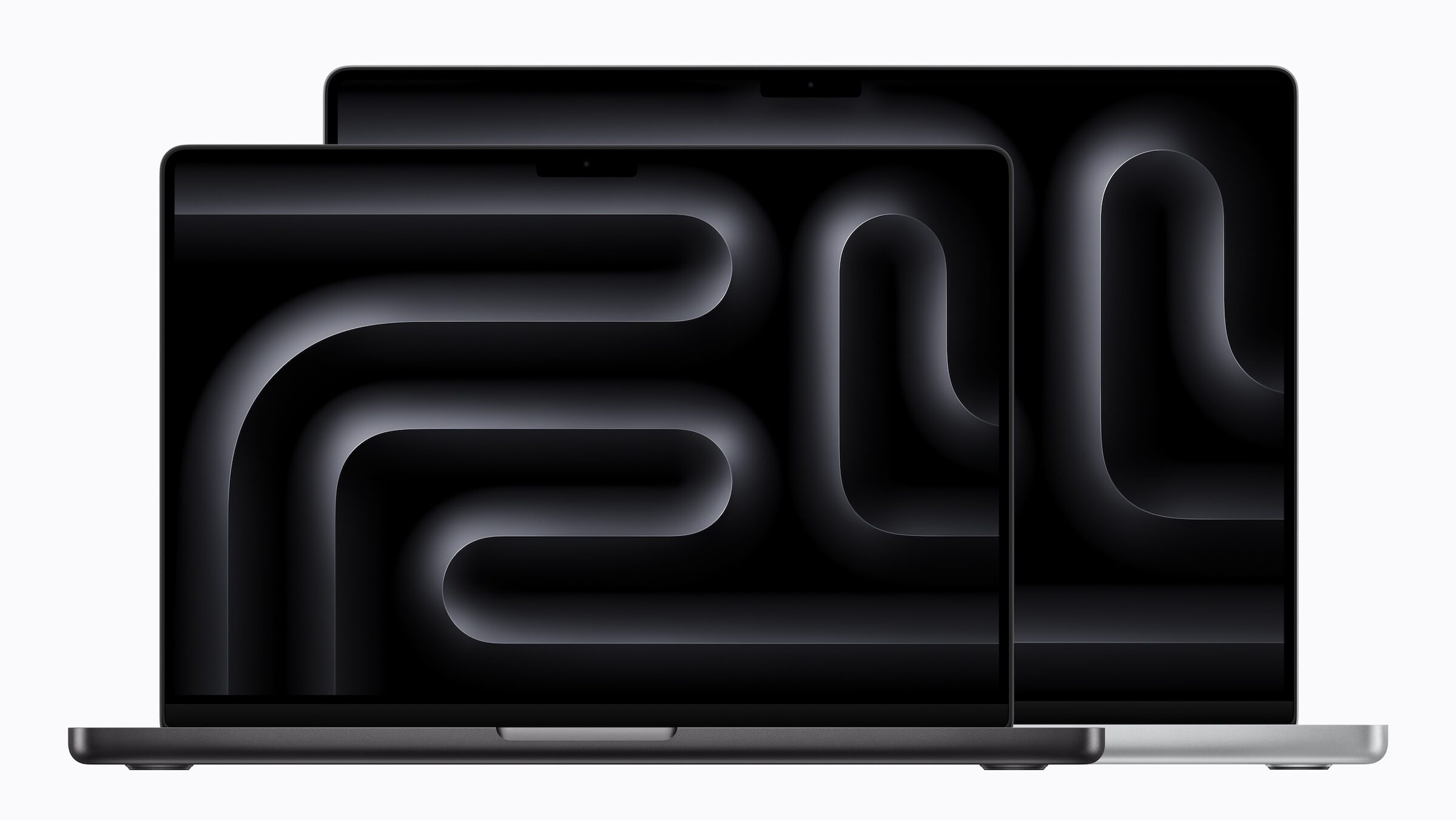
The key specifications of the new MacBook Pro have been circulating for weeks: an OLED display, Dynamic Island instead of a notch, a lighter chassis, and the M5 Pro and M5 Max chips. What was missing until now was a clearer picture of how the touchscreen would perform in everyday use. Bloomberg's Mark Gurman now provides this information in his October 25th Power On newsletter. He also confirms Wednesday as the launch date.
Reports have long referred to the device as the MacBook Ultra. The current state of all rumors surrounding the new MacBook Pro demonstrates just how long the project has been dragging on. Gurman accurately predicted the date and products for the October 13th launch. Apple itself has so far only confirmed the October 28th date, not the specific devices.
Key Facts at a Glance
- The MacBook Pro with OLED touchscreen is expected to be announced via press release on Wednesday, October 28th, in 14 and 16 inch sizes.
- According to Gurman, macOS 27 Golden Gate will have a dynamic interface that aligns controls based on the last used input.
- Touch is intended as an additional input method, not as a replacement for the keyboard and trackpad. The design team was internally opposed to the touchscreen.
- The existing models with Mini-LED will remain in the program for the time being, while the OLED models are expected to become significantly more expensive.
- Expected on the same day: iMac and 14-inch MacBook Pro with M6, both in the previous design.
Announcement on Wednesday via press release
According to Gurman, there will be no stage presentation. Apple will introduce the devices via press release, after which invited guests are expected to be able to try them out at Apple's "Pro and tell" event in Los Angeles. Apple itself had announced the event on October 19 with the invitation to "Pro and tell".
The meeting in Los Angeles begins at 10 a.m. local time. Because Germany switched to winter time today, but the US doesn't change its clocks until November 1st, there is an eight-hour difference this week instead of nine. In Germany, this corresponds to 6 p.m.
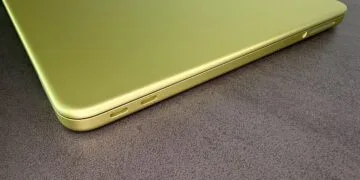
The new models will outwardly resemble the current ones. However, they will be lighter, and a Dynamic Island will replace the notch at the top of the screen. Gurman still mentions the M5 Pro and M5 Max chips, the same generation Apple introduced in March.
A macOS that responds to the last input
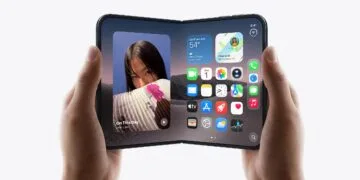
The most interesting part of the report concerns the software. macOS 27 Golden Gate is said to have a dynamic interface that takes previous interactions into account. The user who last touched the screen will see different controls than someone who used the trackpad.
According to Gurman, tapping a button opens a menu around the finger. The Dock and menu bar are adapted for touch operation. There were already hints of this: In the third beta of macOS 27.2, touch gesture recognition appeared in Photos, Notes, Safari, and the Overview, along with a new Dock animation when long-pressing an icon.
| Date | What became known |
|---|---|
| October 5 | Code for touch gestures in the third beta of macOS 27.2 |
| October 15 | Gurman mentions November 6th as a possible sales launch date |
| October 19 | Apple invites you to "Pro and Tell" on October 28th |
| October 25 | Gurman confirms Wednesday and describes the touch surface |
Why Touch is only an option
Apple positions the touchscreen as an additional input method, used when appropriate. The keyboard and trackpad remain the primary tools. Gurman provides the background: Tim Cook and John Ternus both concluded that customers now expect a touchscreen on the Mac. The industrial design team, however, rejected the idea. The compromise is a device that offers touch functionality but doesn't let it dictate the user experience.
This marks the end of a long line. Back in 2010, when introducing the MacBook Air, Steve Jobs explained why Apple didn't include touchscreens in its notebooks: vertical surfaces were unsuitable for touching, and the arm would tire. Gurman calls this move the company's latest major about-face.
Mini-LED technology will remain, OLED technology will become more expensive
According to Gurman, the current MacBook Pro models with Mini-LED displays will remain in the lineup for the time being, but will eventually be discontinued. The new OLED models will be positioned above them and will be significantly more expensive. Gurman did not provide specific prices. Prices for Germany, Austria, and Switzerland will therefore be announced on Wednesday with the press release.
In addition to the top-of-the-line models, Gurman expects a new iMac and a 14-inch MacBook Pro with the M6 processor, which Apple introduced in August with the Mac mini, to be unveiled on the same day. Both are expected to remain externally unchanged. According to previous reports, an iPad mini with an OLED display will also be part of the media event on October 28. Gurman anticipates that the devices could be available for purchase on Friday, November 6.
OLED displays for the other Macs, however, remain a distant prospect. According to Gurman, Apple is testing prototypes of the MacBook Air and iMac with OLED, but both are still far from market launch. This week's iMac retains its current display, and the next MacBook Air is expected to be released in early 2027, also without OLED.
A compromise that is reflected in the price
I think this approach is more sensible than a Mac that's supposed to behave like a large iPad. The interface adapts to the input method actually used. According to the report, those who stick with the trackpad will still get the appropriate controls for it. At the same time, the dispute with the design team shows how cautiously Apple is proceeding. The touchscreen is an addition, not a completely new beginning.
It will still be expensive, though, because touch functionality is only available as part of the package with the OLED display and the new enclosure. I expect that, precisely for this reason, many buyers will opt for the still-available Mini-LED model, whose chips remain unchanged. Anyone already planning a purchase should wait until Wednesday; the Mac buying guide will show which Mac is suitable for which purpose until then. Further news about the device can be found on the MacBook Pro page.
Would you pay a significant premium for a touchscreen and OLED display, or is the MacBook Pro with Mini-LED and the same chip sufficient for you? Let us know in the comments which of the two models you would choose.