
This article may contain affiliate links. Learn more on our Partner Program page.
One day before the iPhone Duo goes on sale, discussions are already underway about its successor. Internally, prototypes of the second generation are reportedly running, featuring Face ID under the outer display. This could potentially address the biggest criticism of the first foldable iPhone sooner than previously expected.
The iPhone Duo will be available in Germany, Austria, and Switzerland on Friday, October 23. Instead of Face ID, it features Touch ID integrated into the side button. This could change with the second generation. Bloomberg reporter Mark Gurman reports in his podcast Power On that Apple is already internally testing prototypes of the iPhone Duo 2 with Face ID. The sensor is expected to be located under the outer display.
Gurman is one of the most reliable sources for Apple's product planning; his information on devices and release dates has been largely accurate for years. This time, however, it concerns a prototype undergoing testing, not a final product decision. Gurman himself qualifies this by stating that the technology is not guaranteed. He does not disclose suppliers or component details.
Key Facts at a Glance
- Apple is reportedly testing prototypes of the iPhone Duo 2 with Face ID under the outer display.
- According to the report, this is not guaranteed: If there are delays, Face ID might not arrive until the third generation.
- The iPhone 18 Pro already has the infrared camera for Face ID located under the display.
- This move could further reduce the size of the notches in the display of the Duo 2 and the iPhone 20.
- The first iPhone Duo retains Touch ID in the side button.
Face ID under the outer display
According to the report, the Face ID sensor in the prototypes is located under the external display, i.e., the screen used when the device is closed. The prototypes are being tested; this does not yet constitute approval for mass production.
Gurman explicitly mentions both possibilities: Face ID in the iPhone Duo 2 if development stays on schedule, or only in the iPhone Duo 3 if it is delayed. The report does not include a release date for the second generation.
Why the first model uses Touch ID
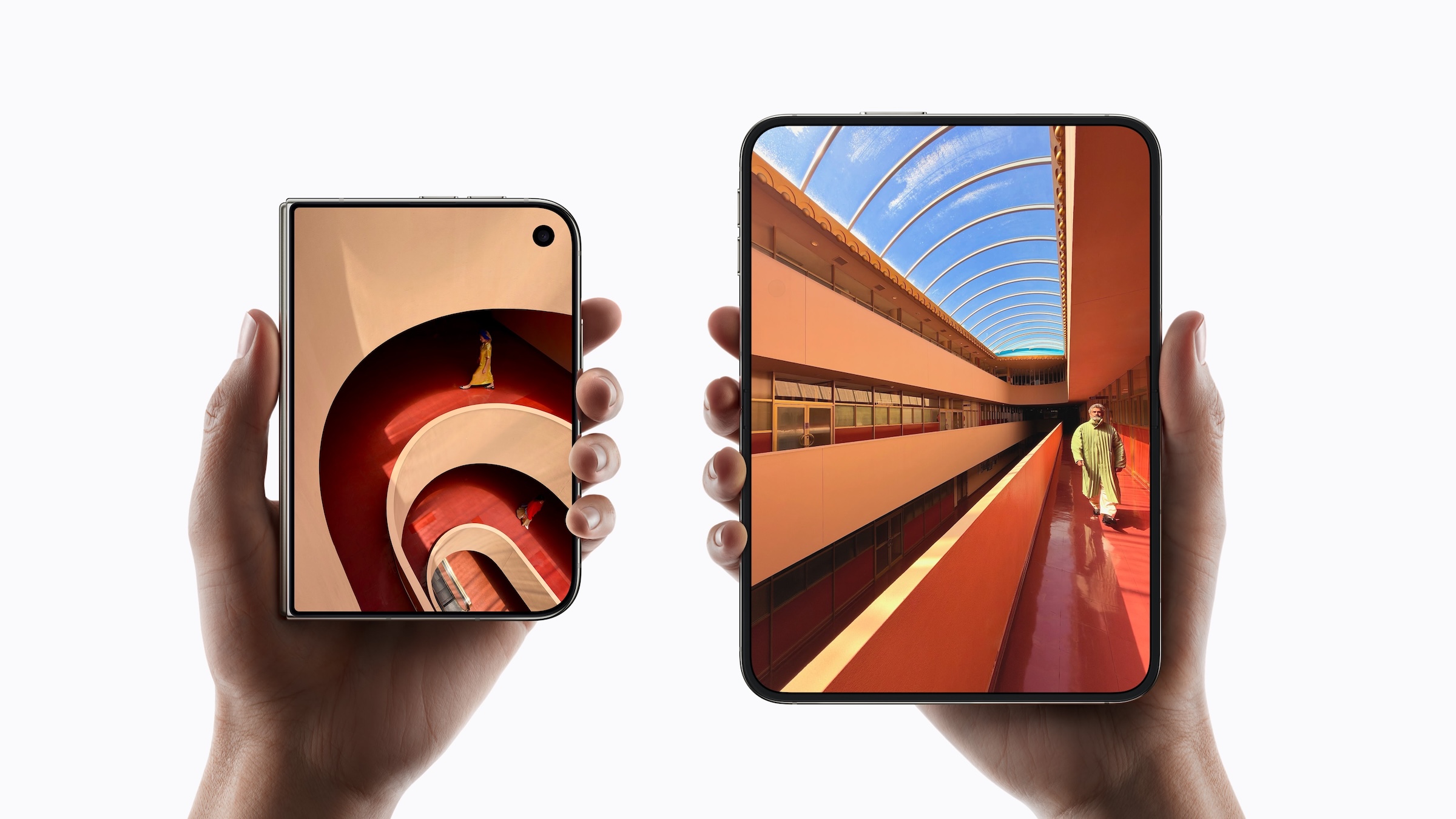
Since its unveiling on September 9th, Face ID has been the weak point of the iPhone Duo. According to reports, the very thin casing prevented Face ID from being implemented in the first model. When unfolded, the iPhone Duo measures 5.2 millimeters, and there reportedly wasn't enough space for the Face ID components within that thickness.
Apple itself offers a different explanation for the fingerprint sensor. In one of the first reviews of the iPhone Duo, reviewer Rutherford reiterates Apple's argument: Touch ID ensures a consistent experience across iPad and Mac, and a side-mounted sensor is a better fit for a device used in a variety of positions. This explanation did little to counter the criticism. The lack of Face ID was the most heavily criticized point in all four reviews, even though the sensor in the side button, according to the reviewers, works quickly and reliably.
From outlook to prototype
The new report doesn't contradict the previous findings; it simply pushes them forward. In mid-September, Gurman estimated that Face ID could fit into devices up to the third generation, provided components become smaller and software handles some of the depth sensing. Now he mentions second-generation prototypes.
| Date | According to the report |
|---|---|
| 13.09.2026 | Face ID expected by the third generation, explicitly as a guess |
| 22.10.2026 | iPhone Duo 2 prototypes with Face ID are being tested; a shift to the Duo 3 is possible |
Both pieces of information come from the same source. Their correlation is therefore a matter of consistency, not independent confirmation. A prototype with Face ID primarily demonstrates that Apple is seriously pursuing the technology for this format. Whether the second or third model will feature it will only be decided once it's ready for mass production.
What the iPhone 18 Pro already anticipates
Apple has already laid the groundwork. On the iPhone 18 Pro, the infrared camera for Face ID has moved under the display; in the teardown, every other row of pixels is missing above the sensor. The selfie camera and dot projector, however, remain in the Dynamic Island.
According to reports, Apple is working on making Face ID smaller and less obtrusive overall. If more components are moved under the display, the bezels and notch on the iPhone Duo 2 and the iPhone 20 anniversary edition could shrink even further. Apple has not confirmed this for either device.
Why waiting for Face ID is almost impossible to plan
Sales begin tomorrow, and my own iPhone Duo arrives on Friday as well. Assuming an annual release cycle like the other iPhone lines, I expect the second generation in fall 2027. Whether it will include Face ID is more likely after this report, but not certain.
Anyone considering buying today is weighing a year's wait against a clear opportunity. If Face ID is a deal-breaker for you, the iPhone 18 Pro is the safer alternative to the iPhone Duo. I don't consider Touch ID in the side button a reason to forgo the device, as long as the sensor works as reliably as the tests indicate.
Would Face ID on the iPhone Duo 2 be a reason for you to wait a year – or would you buy it now and accept Touch ID? Let us know your decision in the comments.