
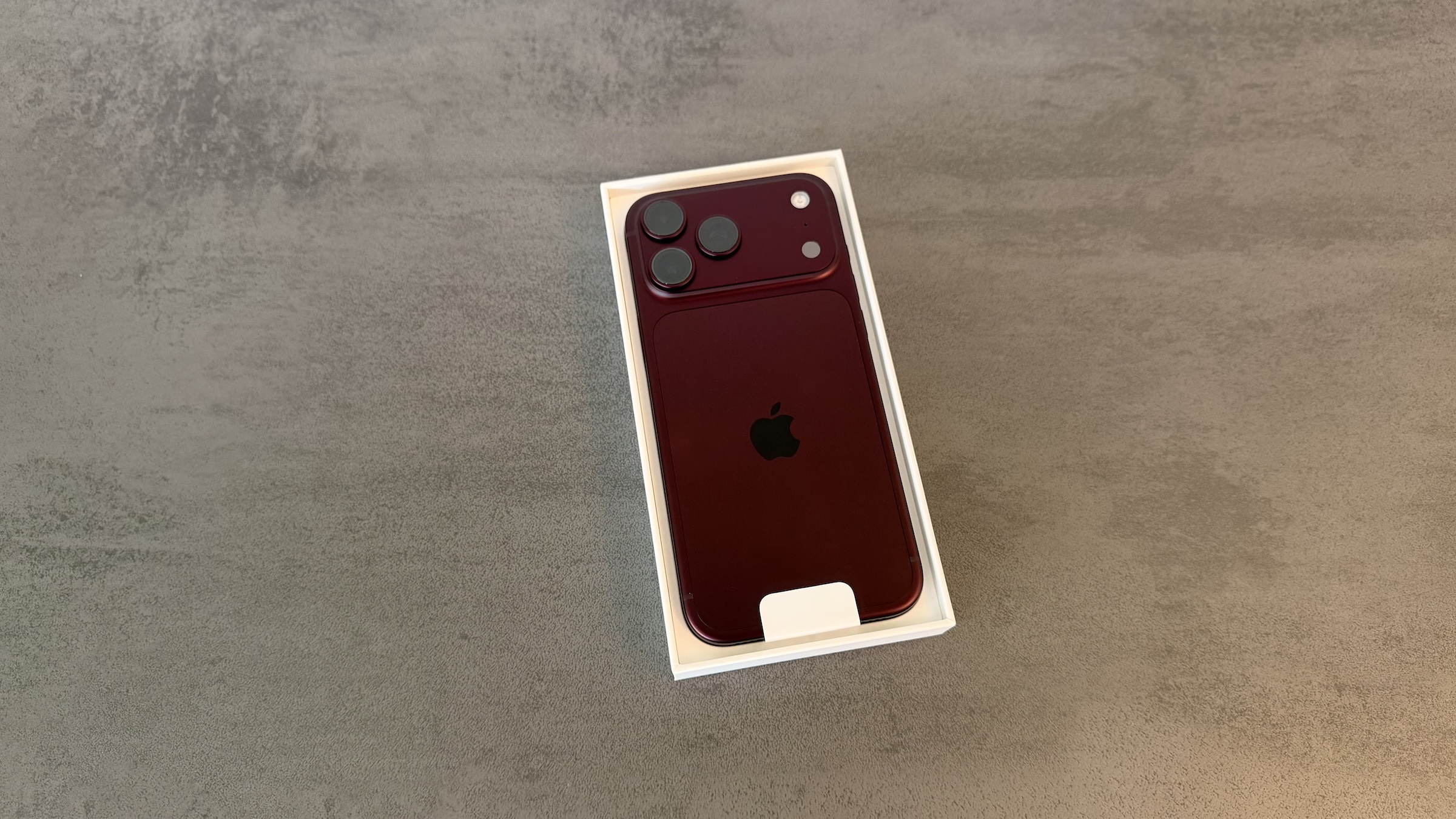
When opening the iPhone 18 Pro, the plastic frame around the display broke on three out of four devices – and because any major repair involves accessing the display, this particularly affects battery replacements. The teardown also reveals the variable aperture with six blades, a significantly larger vapor chamber, and the Face ID camera now located under the display. For repairability, it currently receives a score of seven out of ten.
Three days after the sales launch, iFixit has disassembled the iPhone 18 Pro and Pro Max. The focus is on the variable aperture, the biggest camera innovation of this generation – along with the new cooling system, the position of the Face ID camera, and a finding that should be of interest to repair shops.
Both models have received a preliminary repairability score of seven out of ten. iFixit awarded the iPhone 17 Pro the same score last year. This rating remains preliminary until replacement parts are available and parts compatibility testing is complete.
Key Facts at a Glance
- The white plastic frame around the display cracked or came loose on three out of four opened devices.
- The variable aperture works with six blades, each about as thin as a human hair.
- Repairing the aperture itself is considered practically impossible; the entire camera unit would need to be replaced.
- The screwed-in battery carrier from last year remains, but the memory is moved inside the circuit board.
- Repairability scores a preliminary seven out of ten, the same as its predecessor.
The aperture with six blades
The aperture consists of six overlapping lamellae made of a polymer composite, which are moved by electromagnets. iFixit was even able to trigger the mechanism with an external magnet after the surrounding electronics had already been removed. Each lamella is about as thin as a human hair and has tiny slits and holes that engage with pins in the actuator.
When the lens assembly was disassembled, the blades flew across the room. It couldn't be reassembled, and that's the key finding: if the aperture is damaged, the entire camera assembly needs to be replaced. In the US, this assembly costs $249 for the iPhone 17 Pro; with the aperture damaged, it becomes more expensive.
The camera app offers four fixed aperture values: ƒ/1.48, ƒ/1.8, ƒ/2.8, and ƒ/4.0. The specific value used can be set manually for each shot. At ƒ/1.48, the aperture measures 4.6 millimeters and lets in approximately 7.3 times more light than at ƒ/4.0. However, this isn't sufficient for creating strongly blurred backgrounds: with a focal length of 6.8 millimeters, the depth of field remains large, and iFixit considers the benefit to the image effect to be minimal.
The display frame broke on three out of four devices
The real problem with the teardown isn't the camera. The displays themselves survived the removal and continued to function, but the white plastic frame around the panel cracked or came loose on three out of four devices opened. This frame is an integral part of the display unit: new adhesive won't replace a broken piece of plastic.
In practical terms, this means that the unit might not sit flush after assembly, and the water seal could be compromised. Since almost every major repair involves the display, a battery replacement could easily turn into a display replacement.
Apple has been using this frame design since the iPhone 15 Pro, and problems of this kind haven't occurred before. iFixit suspects that the improved cooling system dissipates the heat from the heating mat too quickly, preventing the adhesive from softening sufficiently. The one device that opened cleanly was heated for 15 minutes at 70 degrees Celsius and then for another 10 minutes at 72 degrees Celsius. Four devices aren't enough to produce a significant defect rate, and other teardowns didn't encounter this issue.
Battery, cooling and storage
| # | iPhone 17 Pro | iPhone 18 Pro |
|---|---|---|
| Access | only via the display | only via the display |
| Battery | screwed-on carrier, electrically releasable adhesive | bolted support, 13 screws, electrically releasable adhesive |
| Chip | A19 Pro chip inside the circuit board, memory stacked above it. | A20 Pro on the outside, RAM next to it |
| Cooling | Vapor chamber | According to Apple, the steam chamber has three times the surface area. |
| Data storage | accessible from the outside | inside the circuit board assembly |
| Repairability | Preliminary 7 out of 10 | Preliminary 7 out of 10 |
The battery still detaches from its housing in about 90 seconds at 12 volts. The downside of the new circuit board affects data recovery and memory repairs: because the NAND chips are now located between the board layers, the assembly must first be separated. The USB-C port also remains a test of patience, as its ribbon cable runs along the side of the casing to the circuit board.
A look under a microscope reveals how Apple conceals the Face ID camera's sensor opening: Every other row of pixels is missing above the infrared sensor, with the pattern tapering back towards the edge. The selfie camera and dot projector remain within the Dynamic Island.
What the EU data sheet says about this
For buyers in this country, there's a second assessment of the same issue, and this one comes from Apple itself. The EU energy label data sheet lists a repairability index of 3.14 out of 5 points for the iPhone 18 Pro and Pro Max, slightly higher than its predecessor. However, this isn't enough for a proper classification: both generations are in class C on a scale from A to E.
One detail from the teardown directly affects the devices sold here. The disassembled models were eSIM-enabled; iFixit explicitly points out that devices with a SIM tray have smaller batteries. Furthermore, the version of the Pro Max sold in the US still uses a Qualcomm modem, while this one uses Apple's C2 modem.
Why the frame is more important than the aperture
The aperture is the component everyone's talking about, but it affects very few people. Hardly anyone replaces cameras, but batteries are constantly being replaced – and this is precisely where the problem lies, via the display, whose frame proved fragile in this teardown. Should this be confirmed, a planned battery replacement will turn into a display repair, which costs significantly more.
If you're opting for a repair rather than a new purchase, it's worth asking about the repair shop's experience with this particular model when requesting a battery replacement and insisting on a guarantee of water resistance. If the device is sent in for repair, back up your data and log out beforehand. Until iFixit has opened more devices, it remains unclear whether the issue was specific to these four units or to the overall design.
Would you attempt to replace a battery yourself on a device in this price range – or would you take it to a repair shop after this finding? Let us know in the comments how you handled your last battery replacement.