The long-awaited living room screen is supposed to recognize who is standing in front of it – and do so without the sensors required for Face ID on the iPhone. According to reports, the device is already being tested in employees' homes. A launch date is still pending.
At the September keynote, John Ternus described the iPhone as an "intelligent personal hub." A new device for the home is intended to fulfill the same role: a screen with a speaker that combines device control, video calls, and media. The user interface for this device was already present in the code of Apple's systems in August.
Mark Gurman reveals new details in his Bloomberg newsletter of September 20th. According to him, the device runs a proprietary operating system designed for Siri AI, and Apple is testing it in employees' homes.
Key Facts at a Glance
- The Home Hub is intended to be for the home what the iPhone is for the individual.
- According to the report, a camera recognizes the face and adjusts the display to the person – without a depth sensor like Face ID.
- The same procedure could later be implemented on the iPhone Duo via an update.
- The system relies on Siri AI, and also includes a home screen, widgets, and clock faces.
- A sales date has not yet been set.
A hub for the home, not for the person
The division of tasks described in the report is simple: The iPhone remains the individual's device, while the hub becomes the fixed point in the household. It is intended to control lights, blinds, and thermostats, answer video calls, play music and podcasts, and gather information from the residents' accounts and devices.
This aligns with what has been reported in previous hardware reports: two form factors and a launch between autumn and early 2027, accompanied by a new Apple TV and a refreshed HomePod mini.
| Feature | J490 | J491 |
|---|---|---|
| Lineup | Base in the shape of a halved HomePod mini | magnetic wall mount |
| Display | square, approximately 7 inches | square, approximately 7 inches |
| System | proprietary system based on tvOS, designed for Siri AI | the same system |
| Surface | Home screen, widgets, watch faces | the same surface |
| Steering | Language and Touch | Language and Touch |
| Date | open | open |
Face recognition without depth sensor
The most exciting aspect of the report lies in the sensor technology. The Hub's camera is designed to recognize who is standing in front of the display and adjust the screen accordingly – for example, showing the recognized person's appointments instead of their roommate's. Unlike Face ID on the iPhone, this method doesn't require a depth sensor, working with the camera image rather than a projected dot pattern.
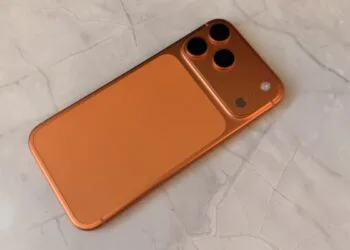
This leads to a potential consequence for the iPhone: the same method could be used on devices where space for a sensor unit is limited. The report mentions the iPhone Duo as a candidate for a future update. In the Duo, the FaceTime camera is located under the inner display, and authentication is handled via Touch ID in the side button.
How reliable is the report?
Gurman has followed the Hub for years, from the initial delay to 2025 up to the J490 and J491 form factors. The information regarding the form factor and user interface matches the code discovery from August, which supports the description.
The very part that has hampered the device so far remains unclear: the release date. The report doesn't mention a date, a price for German-speaking countries, or a list of launch markets. The fact that the device is running in employees' apartments suggests it's in an advanced stage of development, but it doesn't constitute a release date.
What determines the benefits in DACH
For buyers in this country, this device hinges on a single question, and it doesn't concern the hardware. A hub whose system is geared towards Siri AI is only as good as this assistant itself – and that launched with iOS 27 in English. Apple has announced support for French, Japanese, Korean, Portuguese, and Spanish for October; German is not on that list.
We therefore expect the Hub to launch in German-speaking countries later, or initially with a significantly smaller range of functions, than in the US. A device that is operated by voice command and is supposed to control half the apartment will be difficult to sell as long as it doesn't understand the residents' language. As soon as Apple announces German as a language option for Siri AI, the release date for the Hub here will become interesting – until then, it will remain a device for the US market.
Would you put such a screen in your living room if it recognized you via camera – or is that exactly the point where you draw the line? Let us know your thoughts in the comments.