
This article may contain affiliate links. Learn more on our Partner Program page.
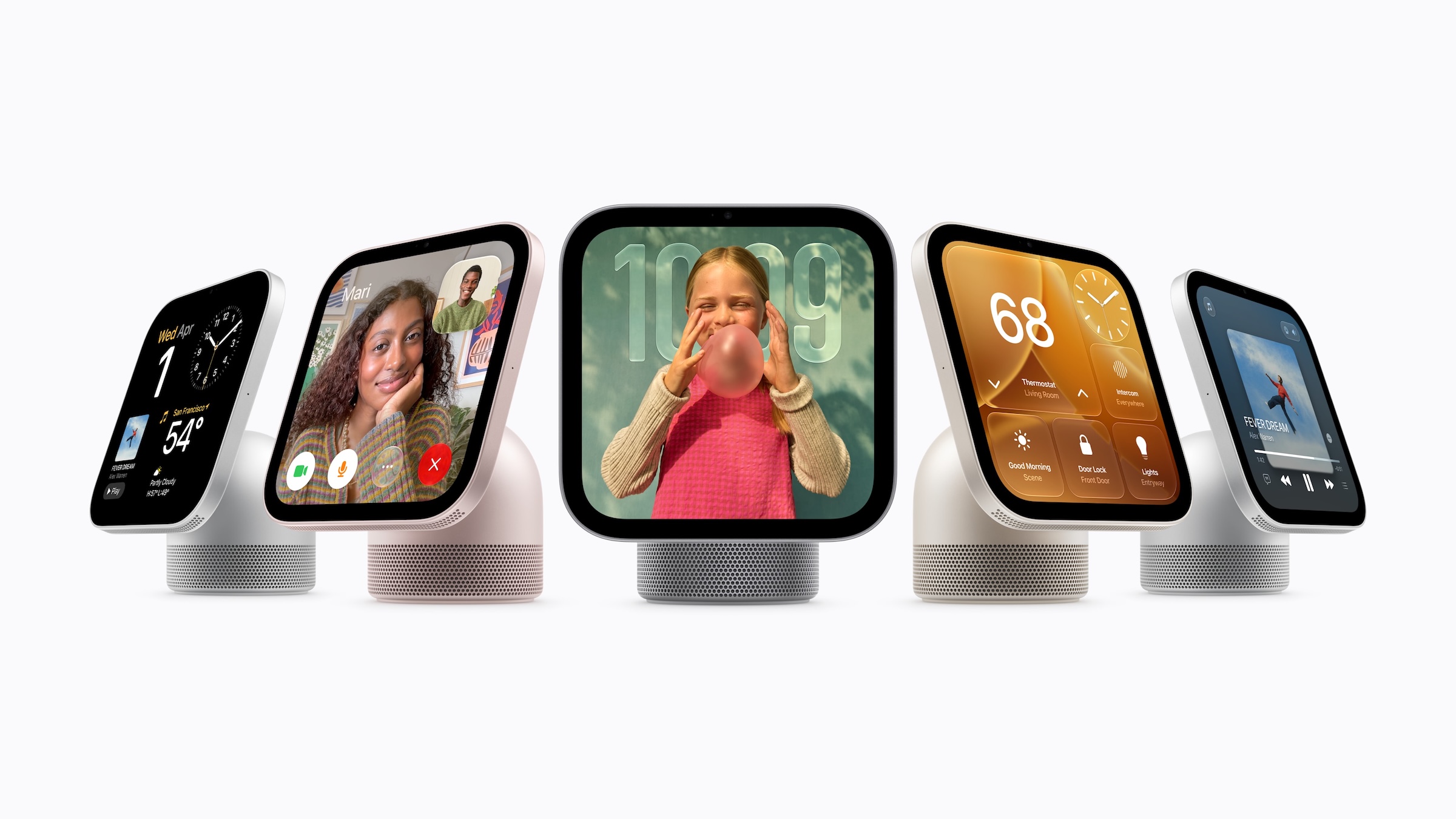
A display that swivels towards the speaker, doesn't bump into anything, and turns on the light as soon as someone enters the room: A second report describes the larger HomeView model in more detail than before. The price of around $1,000 has been rumored for over two years. What's new is that Apple is reportedly still internally debating what the first generation should even be allowed to do.
In mid-October, Bloomberg reporter Mark Gurman reported that Apple was planning a larger model with a robotic arm, surpassing the current Home View. Now, Aaron Tilley of The Information follows up with a report on Apple's arduous journey to its first robot.
Tilley reports on Apple for The Information, citing unnamed sources with insight into the development. The same publication erred in January when it reported a rotating robot base for the first Home View. This time, the display and timeframe align with Gurman's information, but the internal conflicts are being reported for the first time.
Key Facts at a Glance
- The device is said to feature a 9-inch display on a swiveling arm and resemble the iMac G4 or Pixar's lamp mascot.
- Cameras and sensors are designed to capture its surroundings and allow it to act independently.
- Apple is reportedly aiming for a 2027 launch in the US for around $1,000, but it might be 2028.
- Internally, there is reportedly disagreement about which software features will be included in the first generation and which in the second.
A display that thinks for itself
According to the report, a prototype has a 9-inch display on a swiveling arm. Visually, the device is said to resemble Apple's old iMac G4 or the lamp from the Pixar logo. Like the current Home View, it is expected to support FaceTime and other basic functions.
The difference lies in its autonomy: According to The Information, the device, equipped with a camera and sensors, is designed to "fully perceive its surroundings and act independently." The report cites examples such as turning on the lights when someone enters the room or asking a cat to get off the table. It is also designed to avoid accidentally bumping into objects in its environment.
Dispute over the software
According to the report, the hardware has been largely finalized for about two years. The software, however, appears to be still undecided: Tilley writes of internal disagreements about which features the first model will have and which will be reserved for a second generation, which Apple is already discussing.
The timeline also depends on this. Apple is reportedly aiming for a 2027 launch, but the device might not be ready until 2028.
| Info | Bloomberg, October 2026 | The Information, November 2026 |
|---|---|---|
| Display | approximately 9 inches, rotatable by 360 degrees | 9 inches on a swiveling arm |
| Period | 2027 or 2028 | Target 2027, possibly 2028 |
| Price | – | approximately $1,000 (USA) |
| Autonomy | turns towards the speaking person | perceives the environment, acts independently |
Two news outlets are describing the same device with identical specifications. This is only of limited use as independent confirmation, as both rely on unnamed sources. There is no official name; designations like HomeView Max or HomeView Ultra are currently only speculation.
Apple's other robot plans
According to the report, the tabletop robot is not Apple's only robotics project. Apple is also said to have explored a wheeled robot that follows its user around the home, a flying device for indoor use, and a robot that folds laundry. This report thus joins a longer list of robotics projects at Apple.
The price stays the same, everything else changes
Gurman mentioned a price target of around $1,000 back in August 2024. Since then, the display has grown from approximately 7 to 9 inches, the launch date is now slated for 2027 or 2028, and the AI desk robot initially planned for 2027 has become a model in the HomeView series. The current HomeView starts at $299 in the US; the robot model would cost more than three times that amount.
I consider the dispute over the software to be the most important news. If the hardware has been ready for two years and the timeline is still shaky, the bottleneck apparently lies in what the device is supposed to decide independently.
For buyers in Germany, the robot model is thus doubly out of reach. The current Home View will already be released on November 13th without the EU, and Switzerland is also missing from the launch list. I assume that Apple will reach an agreement with the EU and eventually sell the Home View here as well, but how long that will take is difficult to predict. A device that reacts autonomously to its environment with a camera and sensors is likely to present its own set of challenges. Therefore, it could take significantly longer for the robot model to arrive here than in the US.
Would you trust a device that decides for itself when to turn on the lights or send the cat off the table, or should it only react to commands? Tell us in the comments how much autonomy you would allow a smart home hub to have.