This article may contain affiliate links. Learn more on our Partner Program page.
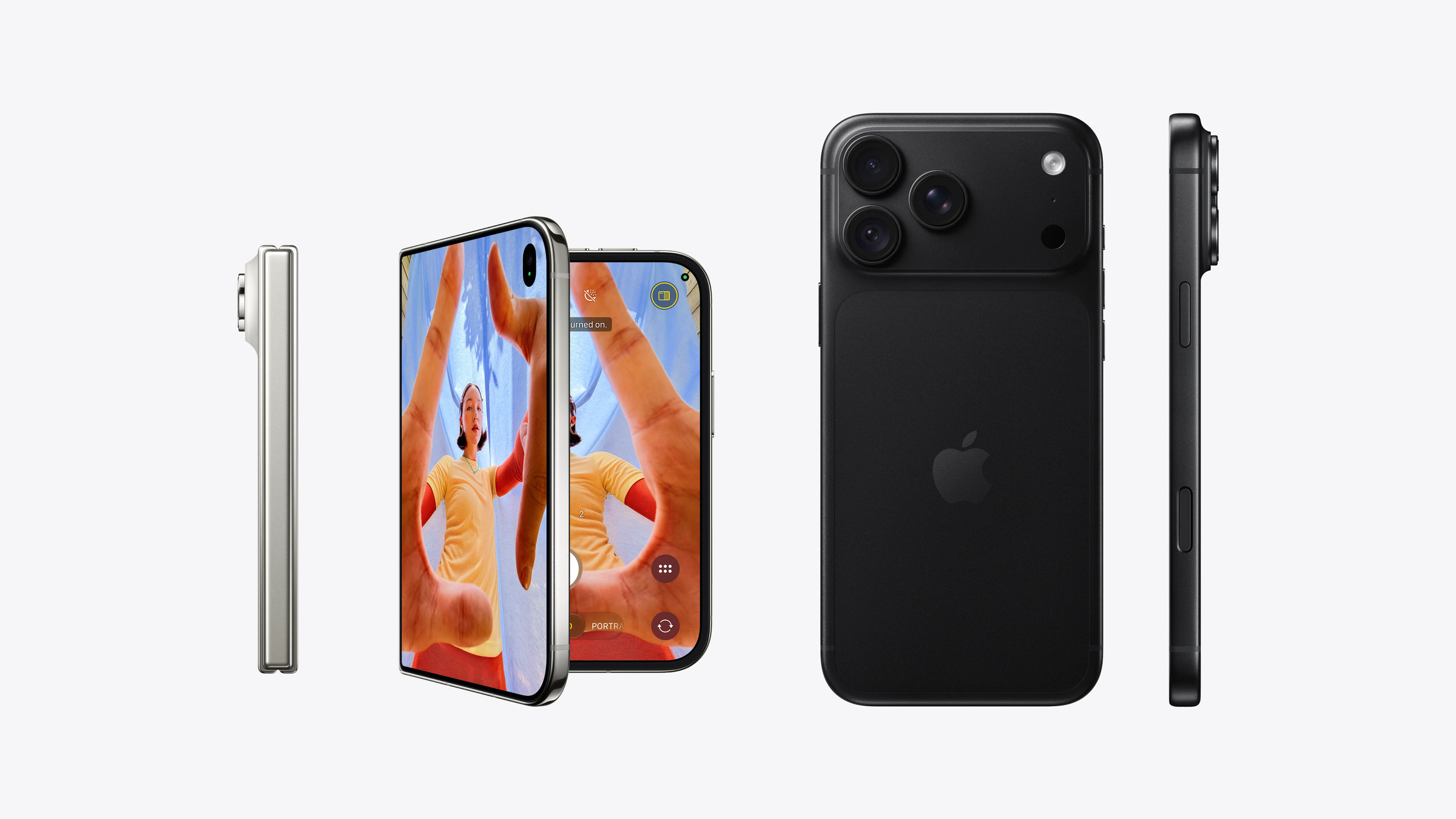
Apple unveiled two very different flagship iPhones that same evening. One folds out to reveal a 7.6-inch display, the other has a better camera – and costs exactly €850 less at every storage level. The surcharge for the hinge is a fixed amount, not a percentage.
The iPhone Duo and the two Pro models were unveiled together on September 9th, but will be released five weeks apart – the complete program of the evening can be found in the overview of the September keynote. Those who now have to decide face an unusual question: not which device offers more features, but rather what kind of device.
This comparison is based on the technical specifications of the iPhone Duo and the iPhone 18 Pro. Differences between the Pro and Pro Max models are noted. The generational question within the Pro series is clarified by comparing it to the iPhone 17 Pro.
Key Facts at a Glance
- The price difference to the iPhone 18 Pro is €850 for every storage option, and €700 for the Pro Max. This applies even with all the bells and whistles.
- The Duo's internal display is roughly 50 percent larger than that of the Pro Max and about 80 percent larger than that of the smaller Pro.
- The Duo uses the same A20 Pro, but the weaker camera: no variable aperture, no telephoto lens, no ProRAW, no ProRes.
- The Duo unlocks via Touch ID in the side button; there is no Face ID.
- Pre-orders start on October 16th, sales begin on October 23rd. The Pro models will be available in stores as early as September 18th.
The price: a fixed surcharge across all levels
| Storage | iPhone 18 Pro | iPhone 18 Pro Max | iPhone Duo |
|---|---|---|---|
| 256 GB | 1.449 € | 1.599 € | 2.299 € |
| 512 GB | 1.699 € | 1.849 € | 2.549 € |
| 1 TB | 2.199 € | 2.349 € | 3.049 € |
| 2 TB | 2.949 € | 3.099 € | 3.799 € |
What's remarkable isn't so much the starting price, but the structure behind it. All three models use the same price scale for upgrades – €250 for 512 gigabytes, €500 for one terabyte, and €750 for two. This means the price difference between the Duo and the Pro remains exactly €850 across all configurations, and the difference to the Pro Max remains exactly €700.
For the purchase decision, this means: the storage capacity doesn't change anything. Those who opt for one terabyte of storage on the Duo pay the same premium compared to the similarly equipped Pro Max as they would for the entry-level model. The calculation can therefore be reduced to a single question – is the larger display worth 700 or 850 euros?
The display: the real justification
When unfolded, the inner display measures 7.6 inches with a resolution of 1878 x 2670 pixels and a pixel density of 430 ppi. Calculating the area from the pixel dimensions and pixel density yields approximately 175 square centimeters. The iPhone 18 Pro Max has an area of 115 square centimeters, while the smaller Pro model has 96 square centimeters.
| Display | Area | Resolution | ppi |
|---|---|---|---|
| iPhone Duo inside | approximately 175 cm² | 1878 × 2670 | 430 |
| iPhone Duo outside | approximately 87 cm² | 1398 × 2034 | 460 |
| iPhone 18 Pro | approximately 96 cm² | 2622 × 1206 | 460 |
| iPhone 18 Pro Max | approximately 115 cm² | 2868 × 1320 | 460 |
The inner display thus offers roughly 50 percent more screen area than the Pro Max and around 80 percent more than the Pro. The outer display has about 90 percent of the area of the smaller Pro – so when folded, it's practically a full-fledged iPhone.
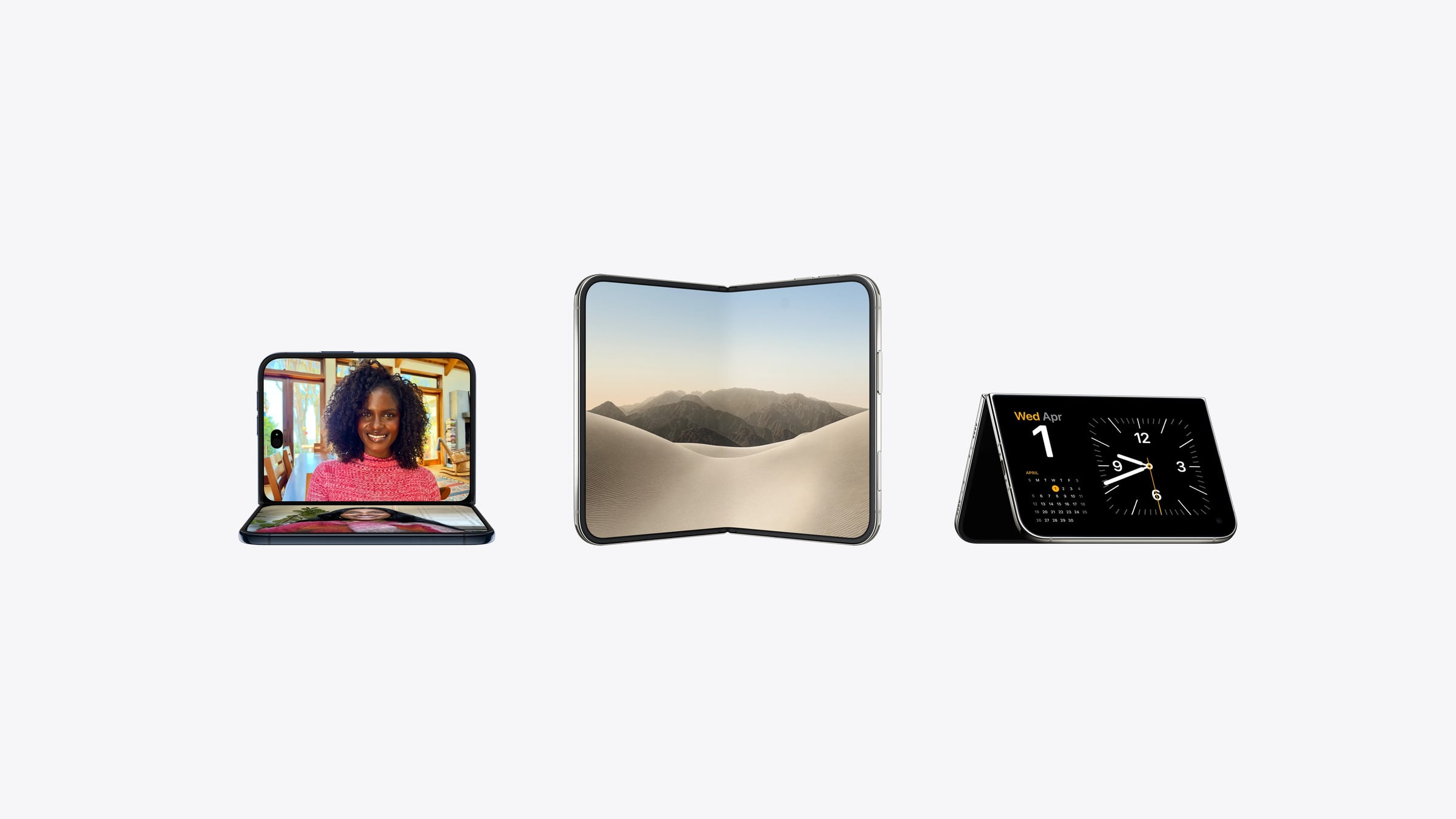
The price difference is listed on the same line: 430 ppi instead of 460 ppi. All other current iPhones have a higher resolution. In addition, there's the nano-texture coating on the inner panel, which Apple otherwise only uses for displays and the Vision Pro. Brightness, contrast, ProMotion, and Always-On are identical on all three devices.
Camera: here the more expensive device loses out
Both devices feature the A20 Pro with seven GPU cores and a doubled Neural Engine. The camera systems, however, differ significantly.
The dual-lens camera has two lenses instead of three: a 48MP main camera with a fixed f/1.6 aperture and a 48MP ultrawide lens. A dedicated telephoto lens is missing. The optical zoom range therefore ends at 4x, while the Pro models cover 16x. Digitally, it's 10x compared to 40x, and in video, 6x compared to 24x.
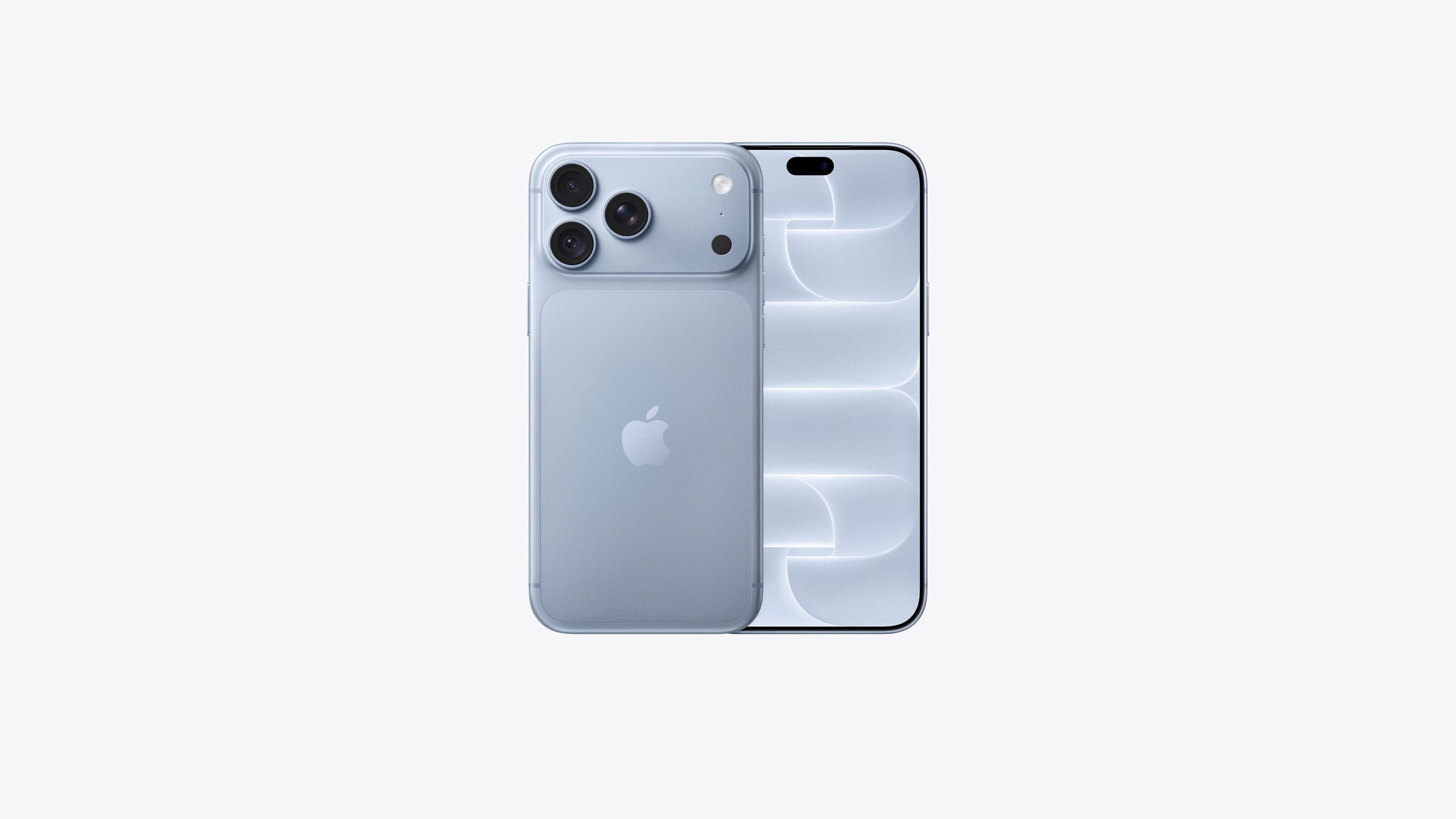
The Duo also lacks the variable aperture of the Pro models, with its four settings from ƒ/1.48 to ƒ/4.0. ProRAW and ProRes are also missing, as are Apple Log 2, the Academy Color Encoding System, Genlock, spatial photos, spatial video, and the LiDAR scanner. Recording is limited to HEIF, JPEG, HEVC, and H.264.
Those who use the iPhone for work rather than photography will find that the most expensive model has fewer features. Conversely, the Duo has four exclusive camera functions, all of which utilize the outer display: Smart Photo triggers the shutter when everyone is in position, Duo Preview shows a live preview of the subject, Eye-Catcher plays animations for children, and Duo FaceTime lets bystanders join a call.
Touch ID instead of Face ID
The device unlocks via a fingerprint sensor in the side button, or alternatively via a paired Apple Watch. Face ID and TrueDepth technology are not mentioned in the specifications – a piece of code found in iOS 27 had suggested their presence before Apple unveiled the device.
In practical terms, this means two things. Apple Pay works via finger gestures instead of gaze, and features that rely on the depth camera are unavailable on the back anyway due to the lack of LiDAR. The internal FaceTime camera is located under the display; Apple hasn't provided a megapixel count for it.
Battery, charging and connection
The dual-battery system offers up to 44 hours of video playback via the outer display, but only 31 hours via the inner one. Apple specifies 24 hours for typical use – exactly the same as the iPhone 18 Pro, while the Pro Max achieves 30 hours. Therefore, two batteries don't automatically translate to longer battery life; they compensate for the larger surface area.
Both devices charge to 50 percent in approximately 20 and 15 minutes respectively, using a 60-watt power adapter. MagSafe delivers 25 watts across the board.
One important point to consider here: The Duo is only available worldwide as an eSIM device, including in Germany, Austria, and Switzerland (DACH region). The iPhone 18 Pro will continue to ship with a physical SIM card slot. Anyone needing a physical SIM card – for example, from their employer or for a second contract – will have to transfer their SIM to an eSIM on the Duo or write off the device.
Dimensions, weight and dates
When folded, the Duo is 11.3 millimeters thick; when unfolded, it's only 5.2 millimeters. The weight is 254 grams in both states—just five grams more than the iPhone 18 Pro Max and 43 grams more than the smaller Pro. The frame is made of grade 5 titanium, the hinge cover is 3D-printed, and the hinge itself consists of more than one hundred components.
Further details can be found in the datasheet article for the Duo, including Split View as an iPhone first.
The release dates for the devices are significantly different. The Pro models will be shipped starting September 18th, while the first foldable iPhone can be pre-ordered from October 16th and will be available from October 23rd. There are exactly five weeks between the two launch dates.
Two devices that answer different questions
The comparison isn't about a better and a worse device, but rather about two answers. The iPhone 18 Pro is the more complete tool: more lenses, more formats, a finer display – and it costs €850 less. The Duo is the larger device – a 7.6-inch display in your jacket pocket, without having to carry a second one.
This makes the decision quite clear. Those who need the camera for work should choose the Pro; the lack of RAW and ProRes formats cannot be added or circumvented. On the other hand, those who read a lot, write, or run two apps side-by-side will get a screen area on the Duo that no other iPhone offers, and will pay a premium for it, which is at least predictable.
Which weighs more heavily on you: the unfolded 7.6-inch display or the telephoto lens that the Duo lacks? Let us know in the comments which you would choose.
Frequently Asked Questions: iPhone Duo or iPhone 18 Pro
850 euros – and that's for every storage option. The price difference compared to the iPhone 18 Pro Max remains constant at 700 euros. The price increase for storage is identical across all three models, so the configuration doesn't change the price difference.
When unfolded, it offers around 50 percent more screen area than the iPhone 18 Pro Max and about 80 percent more than the iPhone 18 Pro. When folded, the outer display is roughly 90 percent the size of the smaller Pro model.
Yes. It lacks the telephoto lens, variable aperture, ProRAW, ProRes, Apple Log 2, and the LiDAR scanner. The optical zoom range ends at 4x instead of 16x.
No. It is unlocked via a fingerprint sensor in the side button or via a paired Apple Watch.
No, it's a purely eSIM device worldwide. The iPhone 18 Pro will continue to be shipped with a physical SIM card slot in this country.
Pre-orders start on October 16th, delivery from October 23rd. The Pro models will be available five weeks earlier.
Not necessarily. Apple states 24 hours for typical use – the same as the iPhone 18 Pro. The Pro Max achieves 30 hours.