This article may contain affiliate links. Learn more on our Partner Program page.
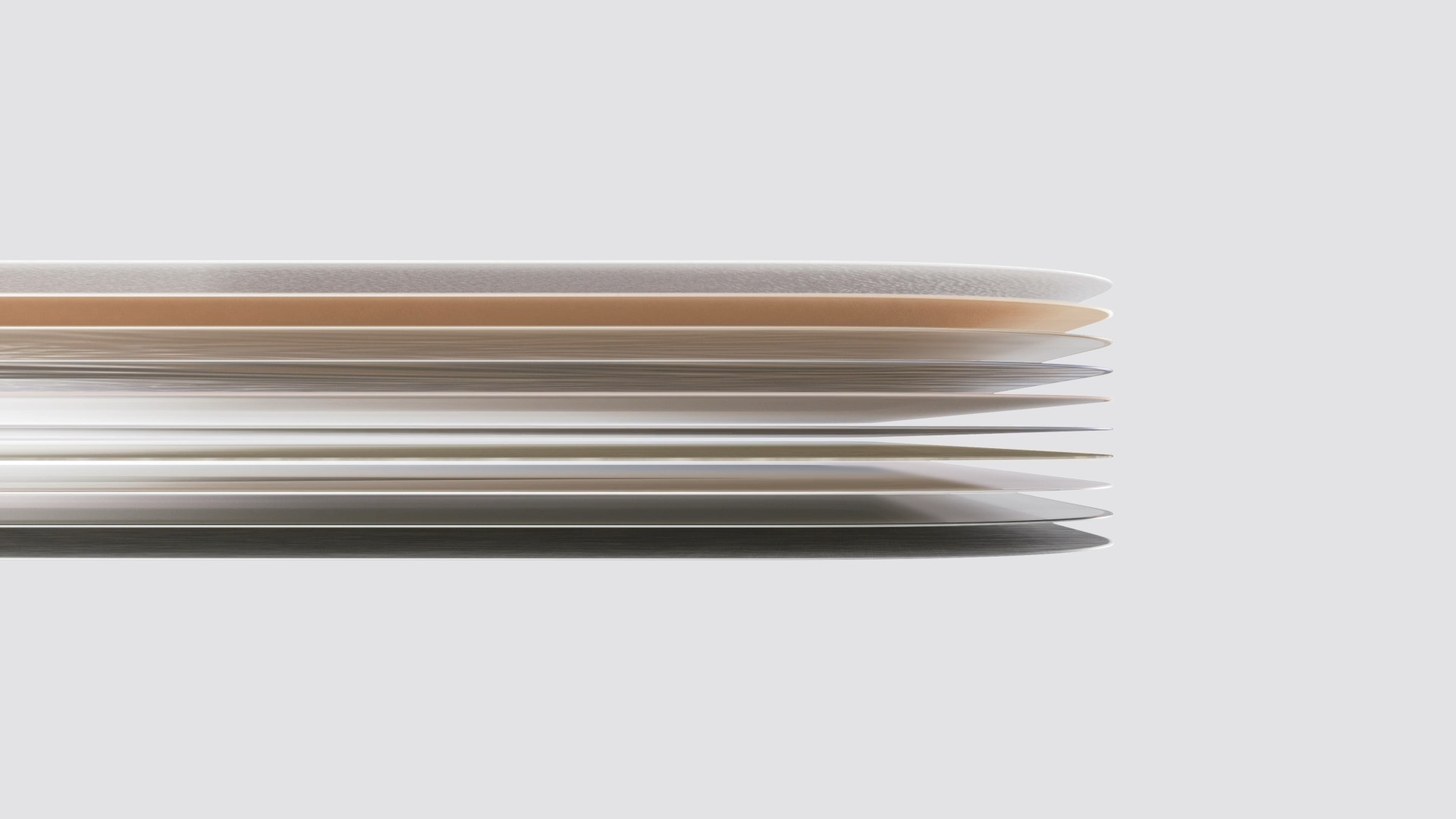
A display that is folded multiple times a day requires a different construction than a rigid sheet of glass. Apple has now described what lies beneath the surface of the iPhone Duo – a special polymer, high-strength glass on the top and bottom, sliding adhesives, and a titanium plate.
With the first foldable iPhone, the durability of the inner display is the crucial question by which the device will be judged. In its press release for the iPhone Duo, Apple goes into unusually great detail, describing the panel's layered structure – a section that is typically omitted from product presentations.
What's interesting here isn't so much the individual material specifications, but rather what the design reveals about the engineering decisions. And what Apple leaves open to interpretation in one particular area.
Key Facts at a Glance
- The panel is covered with a scratch-resistant coating and a top layer made of a special polymer with nanotexture.
- High-strength glass sits both above and below the foldable panel, with a titanium plate forming the bottom edge.
- Special adhesives allow the layers to slide past each other in order to reduce bending stress.
- The inner display is the only surface of the device without Ceramic Shield.
- Apple states that the polymer's stiffness is up to 40 percent higher than other materials in the industry, but does not name a point of comparison.
The structure from top to bottom
The outermost layer is a scratch-resistant coating. Beneath that is the top layer, which determines the display's character: a nanotextured polymer developed by Apple to reduce glare and reflections and create the matte surface. According to Apple, this same layer makes the crease less visible – less visible, not invisible.
Beneath the top layer sits the actual OLED panel, sandwiched between two layers of high-strength glass. The fact that glass is located not only above but also below the panel is the less obvious aspect: it stabilizes the surface against deformation, rather than just protecting the top. A titanium plate forms the final layer.
The trick lies in how these layers are bonded. Apple describes special adhesives that allow the layers to slide past each other when folded – the analogy in the press release is the pages of a book shifting against each other when turned. This prevents bending stress from building up in the first place, rather than absorbing it. This very approach was already speculated about in the spring, though without confirmation at the time.
No Ceramic Shield inside
In the same announcement, Apple mentions three protected areas, and a gap becomes apparent upon comparison. The front, i.e., the outer display, features Ceramic Shield 2, offering three times the scratch resistance of the previous generation. The back uses Ceramic Shield. The inner display, however, has the polymer top layer.
This isn't negligence, but a physical necessity – a ceramic-reinforced glass layer cannot be permanently bent. Nevertheless, in everyday use, this means that the largest and most expensive surface of the device is the only one not covered by Apple's own protective glass. The announcement doesn't address how the polymer material compares to Ceramic Shield in terms of scratch resistance.
Frame, hinge, and internal stiffening components
The construction doesn't end with the display. The housing is made of grade 5 titanium with a mirror-polished surface, the hinge cover is 3D-printed and has a micro-blasted finish. The hinge itself consists of more than one hundred components and supports the center of the display when the device is open.
Inside, two details are often overlooked in reports: supporting ribs stiffen the structure, and the antenna slots are filled with ceramic fiber inserts, increasing the frame's rigidity. Both address the same problem – a housing that splits in the middle loses torsional rigidity and must compensate for it elsewhere. The remaining design specifications can be found in the device's datasheet.
A number without a reference point
The most striking claim is also the weakest. Apple states that the stiffness of the top polymer is up to 40 percent higher than "other materials used in the industry"—without specifying which materials are meant, which devices they are used in, or how the measurement was taken. A percentage without a named point of comparison cannot be verified or interpreted, and the "up to" makes it even less convincing.
This doesn't invalidate the structure. The design specifications are concrete and comprehensible, and Apple describes more here than is typical in a product presentation. It's just that the only number in the entire section is the one that's least useful.
The true value of the design will only become apparent after a few thousand folding cycles in everyday use – and therefore at the earliest months after the sales launch on October 23rd. Those who need to decide before then can find the remaining arguments in the comparison with the iPhone 18 Pro.
Would a matte, less scratch-resistant display surface deter you from buying it, or does the prospect of a barely visible crease outweigh that? Let us know in the comments where your limit is.