This article may contain affiliate links. Learn more on our Partner Program page.
A new chip, a redesigned sensor package, and, for the first time in years, a ceramic case: The Apple Watch Series 12 changes little on the surface but a lot underneath. Those wearing a Series 11 will therefore face a bill that consists not only of new features – but also of an extra 50 euros for the larger case size.
Apple unveiled the Apple Watch Series 12 on September 9th, with shipping beginning September 18th. The most noticeable innovation lies in the sensor technology: a health monitoring system now measures heart rate significantly more frequently than its predecessors. Other new features include the S11 chip, a slightly redesigned case, and a third material class. The information in this comparison is taken from the technical specifications of the Apple Watch Series 12 and the datasheet for the Series 11.
Key Facts at a Glance
- The Series 12 gets a new chip, the S11; the Series 11 still ran on the S10.
- The sensor package is newly assembled: a third-generation electrical heart sensor, a continuously active optical heart sensor, and HRV during recovery.
- For the first time, in addition to aluminum and titanium, a ceramic case is available – at an entry-level price of 1,049 euros.
- The battery life remains at 24 hours, and 38 hours in power-saving mode. However, recharging is now more efficient: 15 minutes of charging is sufficient for twelve hours instead of eight.
- The entry-level price remains at 449 euros, while the 46mm version costs 20 euros more than last year.
The S11 chip replaces the S10
The Series 12 uses the S11 chip, a 64-bit dual-core processor with a quad-core Neural Engine and 64 GB of memory. The Series 11 used the S10 chip in this position – with the same number of cores and the same amount of memory.
On paper, this is a classic generational shift. In practice, the chip primarily carries the new sensor logic: Continuous background measurement consumes processing time, and that's precisely where the difference between the two models lies.
Operation and gestures remain unchanged. Both generations support tapping, double-tapping, and rotation gestures, as well as Precise Search for the iPhone via the second-generation Ultra Wideband chip.
What changes the health detection system
Apple is grouping the Series 12 sensors together as a single system for the first time: a third-generation electrical heart sensor, an always-on optical heart sensor, a blood oxygen sensor, and a temperature sensor. The Series 11 lists the same sensor types individually, including the third-generation optical heart sensor, but without the "always-on" designation.
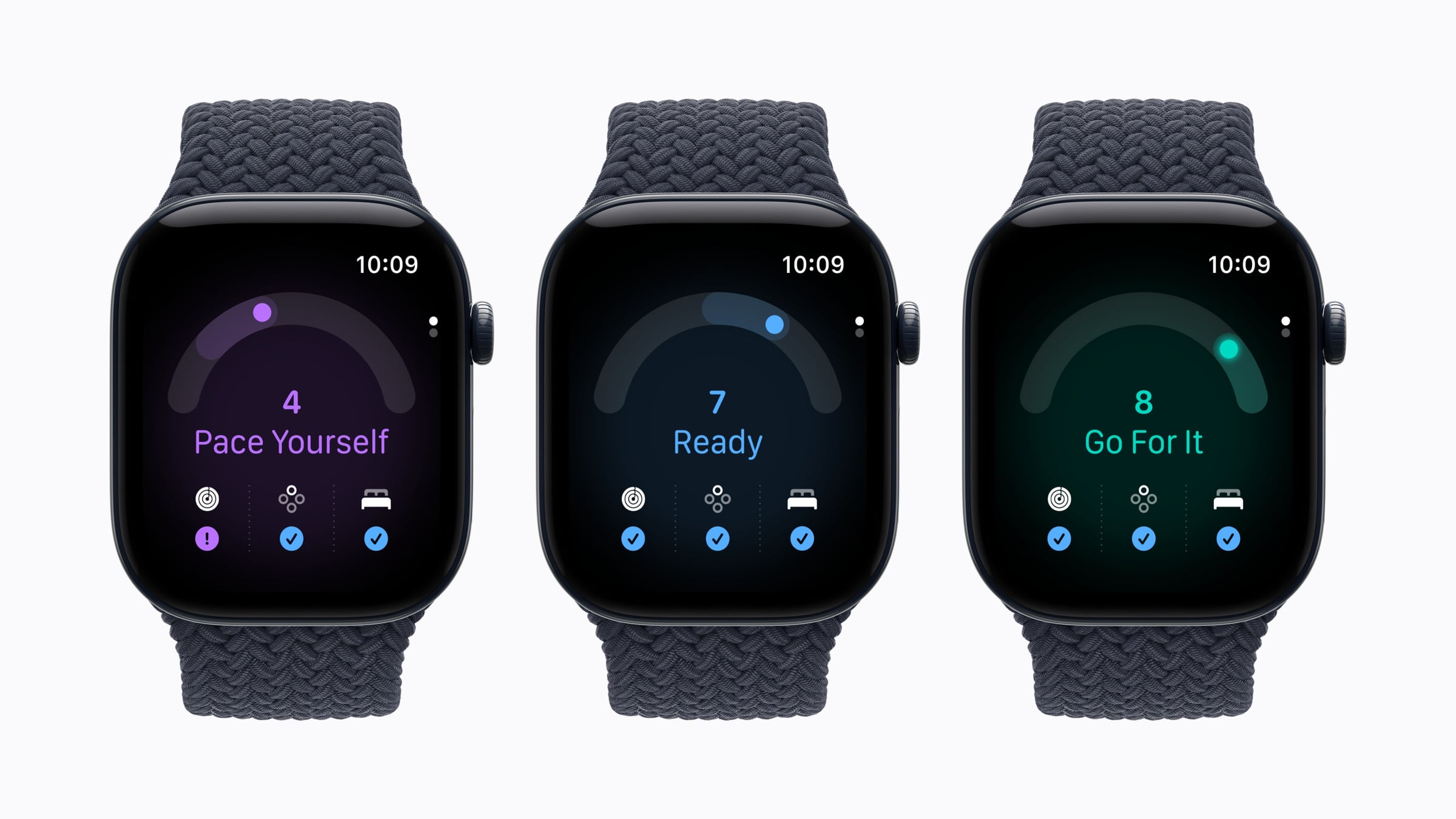
This results in two features not available on the Series 11: background high-frequency heart rate monitoring and recovery heart rate variability (HRV), which measures heart rate variability after exertion. The Series 12 vital signs app displays six values, including blood oxygen and HRV.
The daily health score is based on the same sensor technology. Apple explicitly states in the Series 12 announcement that it is a result of the new health detection system and the S11 chip – it is therefore dependent on the hardware, not on watchOS 27.
Everything else remains the same: High blood pressure alerts, ECG app, sleep apnea alerts, sleep index, wrist-based temperature monitoring, and the blood oxygen app were already available on the Series 11. Anyone wanting to upgrade because of these features doesn't need a new watch.
Same runtime, faster recharging
Battery life remains unchanged: 24 hours with normal use, 38 hours in power-saving mode, for both generations. Apple also states that charging from zero to 80 percent takes approximately 30 minutes for both models.
The models differ, however, when it comes to short top-ups. Fifteen minutes on the charger is enough for up to twelve hours of normal use with the Series 12, compared to eight hours with the Series 11. Five minutes provides ten hours of sleep tracking instead of eight. For those who wear the watch at night and briefly charge it in the morning while getting dressed, this is the most practical improvement of this generation.
One millimeter more casing, slightly less display area
Here, a closer look at the details is worthwhile. The 46mm model of the Series 12 measures 40mm in width in both aluminum and titanium, while the Series 11 was 39mm wide. The 42mm model measures 37mm instead of 36mm. The depth remains 9.7mm in both cases.
At the same time, Apple specifies a smaller display area: 1,196 mm² instead of 1,220 mm² for the larger model, and 970 mm² instead of 989 mm² for the smaller one. This represents a reduction of just under two percent in each case. Resolution and pixel density remain the same – 416 x 496 and 374 x 446 pixels respectively, at 326 ppi in both generations. The image itself doesn't get smaller; what has changed is the area that Apple designates as the display area. The casing is larger, but the displayed area remains the same.
The weight increases with the case size. All variants gain between 1.7 and 1.9 grams – the 46 mm aluminum model with GPS, for example, goes from 37.8 to 39.5 grams.
| Feature | Series 12 | Series 11 |
|---|---|---|
| Chip | S11 | S10 |
| Housing material | Aluminum, titanium, ceramic | Aluminum, titanium |
| Width (46 mm, aluminum) | 40 mm | 39 mm |
| Display area (46 mm) | 1,196 mm² | 1,220 mm² |
| Display area (42 mm) | 970 mm² | 989 mm² |
| Weight (46 mm, aluminum, GPS) | 39.5 g | 37.8 g |
| Weight (42 mm, aluminum, GPS) | 32.2 g | 30.3 g |
| Peak brightness | 2,000 nits | 2,000 nits |
| Front glass (aluminum) | Ceramic Shield 2 | Ion-X with 2x scratch resistance |
| Battery life | up to 24 hours. | up to 24 hours. |
| Power saving mode | up to 38 hours. | up to 38 hours. |
| 15 minutes charging | up to 12 hours of use | up to 8 hours of use |
| Compatibility | iOS 27 or later | iOS 26 or later |
Ceramic as a third case class
In addition to aluminum in four colors and titanium in two finishes, the Series 12 is available in pearl white and midnight blue with a ceramic case. The return of this material had been reported previously.
The ceramic version is one millimeter taller and wider than the aluminum and titanium versions, slightly thicker at 9.85 mm – and significantly heavier: 51.3 grams in pearl white compared to 39.5 grams for the aluminum model of the same size, a difference of almost twelve grams. The darker midnight blue version weighs even more at 52.9 grams.
Apple separates the materials for the front glass: aluminum gets Ceramic Shield 2, titanium and ceramic get a sapphire front glass.
The prices: entry-level price is the same, 46 mm is more expensive
The entry-level price remains at 449 euros for the 42mm aluminum model with GPS – exactly the same price as the Series 11. However, Apple has increased the price of the larger case: 499 euros instead of 479 euros, and 619 euros instead of 599 euros for the version with cellular connectivity.
This changes a factor that has remained stable for years: the surcharge for the larger casing increases from 30 to 50 euros. The surcharge for mobile connectivity, however, remains exactly 120 euros, regardless of the casing size. Our overview of the differences between GPS and cellular technology explains the practical benefits of the cellular version.
| Variant | Series 12 | Series 11 |
|---|---|---|
| Aluminium 42 mm, GPS | 449 € | 449 € |
| Aluminium 42 mm, Cellular | 569 € | 569 € |
| Aluminium 46 mm, GPS | 499 € | 479 € |
| Aluminium 46 mm, Cellular | 619 € | 599 € |
| Titanium 42 mm | 799 € | from €799 |
| Titanium 46 mm | 849 € | from €849 |
| Ceramic 42 mm | 1.049 € | – |
| Ceramic 46 mm | 1.099 € | – |
Titanium remains unchanged in price. The ceramic case costs €250 more, which is €150 more than the starting price of the Apple Watch Ultra 4, which boasts 50 hours of battery life. A Series 12 in ceramic is therefore more expensive than the Ultra – with less than half the battery life.
What this generation is really gaining weight for
The upgrade from the Series 11 to the Series 12 pays off in exactly one area: heart rate. Anyone seriously tracking recovery and exertion will gain valuable data from background monitoring and HRV during recovery that the previous generation simply didn't collect.
Added to that is the faster charging, which is more beneficial in everyday use than any number of sensors. The rest argues against it. Battery life, brightness, resolution, water resistance, depth gauge, and the entire health suite, from ECG to sleep apnea, are identical. In the aluminum model, Ceramic Shield 2 replaces the previous Ion-X front glass, the case is slightly heavier, and the larger model with the same features costs €20 more than a year ago. If you're coming from a Series 11 and don't analyze training data, this isn't the year to upgrade – the Series 12 is more interesting for those still wearing an older watch or who are already considering getting one.
The new top-of-the-line price point remains noteworthy. With the addition of ceramic, the series now extends beyond the Ultra model for the first time, without any technical improvements – the material is the only change.
Apple Watch Series 12: The series grows upwards
The Series 12 isn't a watch that makes the Series 11 look outdated. It's a watch that extends the product range upwards – through price, materials, and sensors that measure more in the background than anything Apple has previously integrated into a wristwatch.
Would you pay €250 more for a ceramic case than for titanium, even though everything else remains the same – or is the aluminum model the only sensible option for you? Let us know your choice in the comments.
Frequently Asked Questions: Apple Watch Series 12 vs. Series 11
For a specific purpose only. Those who seriously analyze heart rate and recovery will get values from the high-frequency background measurement and HRV during recovery that the Series 11 doesn't collect. For everyone else, battery life, brightness, resolution, water resistance, and the entire health suite, from ECG to sleep apnea, are identical.
The S11 features a 64-bit processor, two cores, a quad-core Neural Engine, and 64 GB of storage. The Series 11 uses the same core count and storage capacity as the S10.
Apple is combining the sensors in the Series 12 into a single unit for the first time: a third-generation electrical heart sensor, an always-on optical heart sensor, a blood oxygen sensor, and a temperature sensor. This forms the basis for the more frequent measurements and the daily fitness score. The Series 11 lists the same sensor types individually, including a third-generation optical heart sensor, but without the "always-on" designation.
No. Both offer up to 24 hours of battery life with normal use and 38 hours in power-saving mode. The difference lies in the charging speed: 15 minutes of charging provides 12 hours of battery life for the Series 12, and 8 hours for the Series 11.
€1,049 for the 42 mm version and €1,099 for the 46 mm version. The ceramic version is listed in the configurator exclusively as a GPS + Cellular model and is therefore €250 more expensive than the titanium version.
Both case sizes are one millimeter wider, while the depth remains at 9.7 mm. The weight increases by 1.7 to 1.9 grams, depending on the variant. The only significantly heavier option is the new ceramic bezel, which weighs 51.3 grams for the 46 mm model.
Background high-frequency heart rate monitoring, recovery heart rate (HRV), and a daily fitness score, which Apple says is based on the new sensors and the S11 chip, are all new features. The aluminum case uses Ceramic Shield 2 instead of Ion-X. However, watchOS 27 software features run on both generations.