This article may contain affiliate links. Learn more on our Partner Program page.
Apple has unveiled the Apple Watch Series 12, and the focus is on the sensors: The watch now measures the heart rate every five seconds around the clock and uses this data to calculate a daily fitness score. The price remains at €449, and it will be available from September 18th.
Alongside the new iPhone models, Apple unveiled the twelfth generation of the Apple Watch. The announcement in the German Apple Newsroom focused on a revamped health tracking system, the new S11 chip, and a metric called "Wellness." Much of this aligns with what was previously revealed about the Series 12 – but not the price.
Key Facts at a Glance
- The optical sensor measures heart rate every five seconds throughout the day, and heart rate variability up to 24 times more frequently than before.
- New is the "Daily Form" rating: a value between 0 and 10 with one of four recommendations for the day.
- During outdoor training, the watch lasts up to ten hours, 25 percent longer than the previous model.
- The ceramic case is making a comeback, while the aluminum models will get Ceramic Shield 2.
- Price unchanged from 449 euros, pre-order now, on sale from September 18th.
Heart rate every five seconds
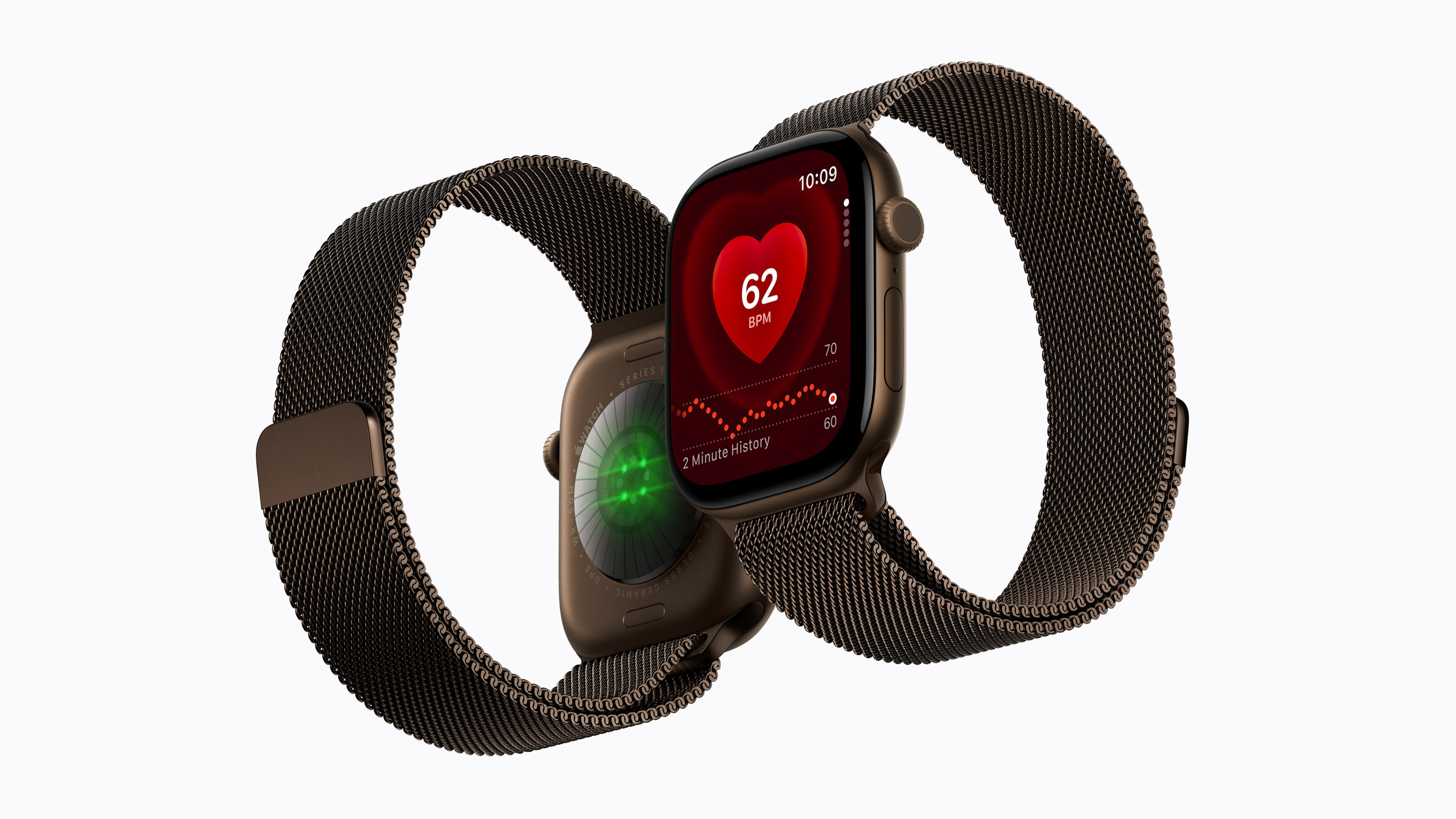
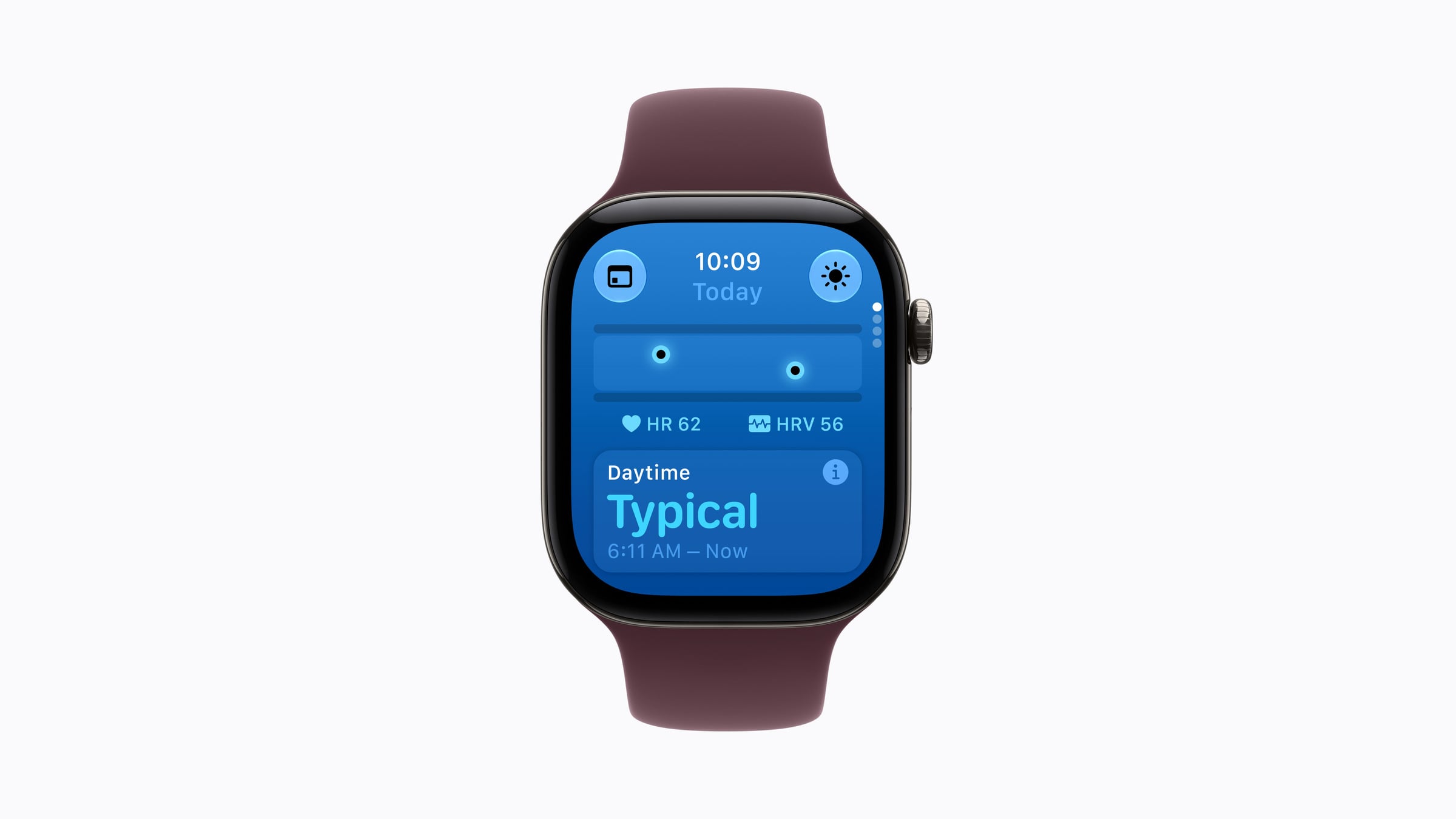
The optical heart rate sensor uses larger green LEDs and continuously measures the pulse every five seconds throughout the day. Previously, this only happened at longer intervals or during exercise. A new complication on the watch face displays the current value in real time. This continuous measurement was first suggested in reports at the end of August.
The watch measures heart rate variability up to 24 times more frequently than before, separating two values: recovery variability as a daily indicator of stress and recovery, and a general value for a longer-term perspective. The vital signs app now allows users to switch between measurements taken at night and during the day.
Apple bases its accuracy claim on its own study with over 1,000 participants, in which the watch was compared to other wearables. Apple also cites new record highs for step counting, with revised algorithms and the S11 chip handling the data analysis.
Daily form: a value between 0 and 10
The new score combines activity, training load, vital signs, and sleep index into a number between 0 and 10, along with one of four recommendations: Recover, Conserve energy, Ready, or Go. The score is adjusted throughout the day as new data becomes available, such as after a strenuous workout.
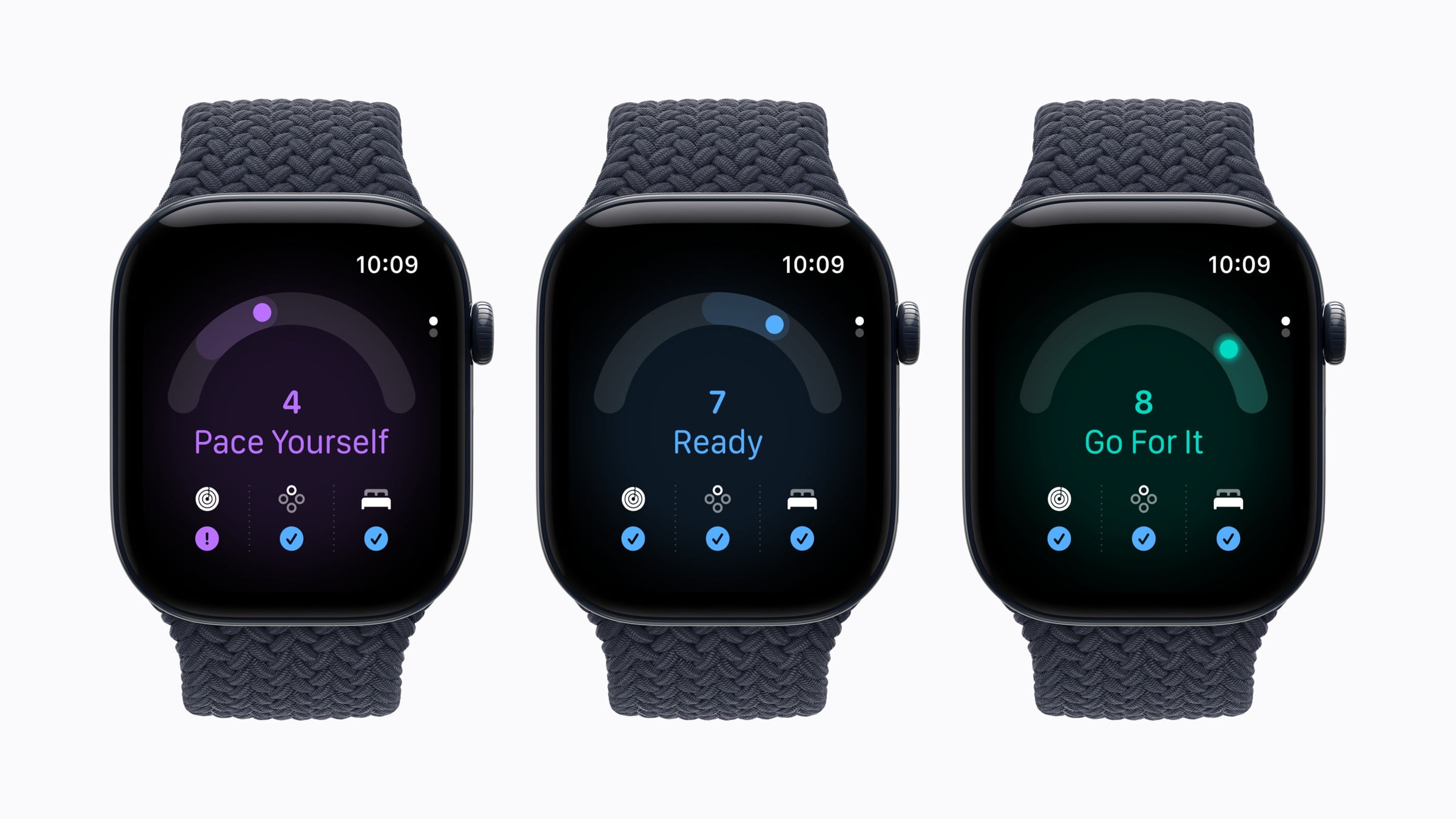
According to Apple, the algorithm was developed using data from the Apple Heart and Movement Study, in collaboration with in-house sports scientists and physicians. Importantly, Apple's own footnote explicitly states that the vital signs app is intended for wellness purposes and not for medical use.
Battery, charging and protective glass
The everyday battery life remains unchanged; Apple still claims up to 24 hours. The watch has seen a significant improvement in outdoor workouts: up to ten hours, a 25 percent increase compared to its predecessor. And a 15-minute charge now provides up to twelve hours of additional battery life, 50 percent more than before.
The aluminum models feature Ceramic Shield 2 for the first time, which Apple claims is 60 percent harder than the Ion-X glass of the Series 11. This brings the aluminum frame closer to the scratch resistance of the more expensive cases.

Noise detection will come later this year
Two features utilize the watch's microphone. Shazam recognizes playing music and displays the title and artist in a widget. The sound recognition feature, which alerts users to sirens, alarms, doorbells, or a crying baby, is designed to help deaf and hard-of-hearing individuals, even without an iPhone nearby. According to Apple, it will be released later this year.
Both functions run through the Secure Enclave of the S11 chip, a hardware-separated area. No recordings are made: The audio data is processed separately from the rest of the system and immediately deleted.
Ceramics are back
In addition to aluminum in Dark Bronze, Black, Light Gold, and Space Gray, and titanium in Radiant Gold and Natural, the watch is again available with a ceramic case in Pearl White and Night Blue. This was last the case with the Apple Watch Edition and was hinted at in August. The sizes remain at 42 and 46 millimeters.
New colors are being added to the watch straps for the Sport Band and Sport Loop, the latter now featuring a printed checkerboard pattern for the first time. The Milanese Loop strap is available in Radiant Gold and Dark Bronze to match the new watch cases.
watchOS 27 and the issue with Siri AI
watchOS 27 will be released on Monday, September 14, and will bring a dynamic app grid, a one-handed tap gesture for the Smart Stack, and support for perimenopause and menopause in Cycle Tracking. Workout Buddy will now also work without an iPhone nearby.
The same applies to Siri AI on the Apple Watch as on the iPhone: The new assistant will initially launch as a beta version only in English, and it won't be available on watchOS in the EU at launch. Switzerland is not part of the EU and is therefore unaffected – only German language support is currently missing there. Apple Intelligence itself will be available with German support on September 14th. For an overview of other missing features in this country, see the EU support gaps.
Price and market launch
| Apple Watch Series 11 | Apple Watch Series 12 | |
|---|---|---|
| Price from | 449 euros | 449 euros |
| Chip | S10 with 4-core Neural Engine | S11 |
| Optical heart sensor | 3rd Generation | New health detection system, measurements every five seconds |
| Daily use | up to 24 hours. | up to 24 hours. |
| Power saving mode runtime | up to 38 hours. | – |
| Outdoor training runtime | approximately 8 hours (calculated from Apple's percentage estimate) | up to 10 hours. |
| Fast charging, 15 minutes | up to 8 hours. | up to 12 hours. |
| Glass and aluminum models | Ion-X with twice the scratch resistance | Ceramic Shield 2, 60 percent harder than Ion-X |
| Glass titanium models | sapphire | sapphire |
| Housing | Aluminum, titanium | Aluminum, titanium, ceramic |
| Sizes | 42 and 46 mm | 42 and 46 mm |
The comparison figures for the Series 11 come from Apple's technical data sheet. Apple does not specify a separate figure for the training runtime of its predecessor – the approximately eight hours result from the statement that the Series 12 lasts 25 percent longer in this regard.
The Apple Watch Series 12 starts at €449, the same price as the Series 11. Pre-orders are now open in Germany and more than 50 other countries, with sales beginning on Friday, September 18. watchOS 27 runs on the Series 9 and later, the SE 3, and the Ultra 2 and later.
One evening, two price ranges
What's remarkable about this announcement is what didn't happen. While the new iPhone Pro models cost €150 more than their predecessors in this country, the watch remains exactly the same price as the Series 11 – and yet it still gets new sensors, tougher glass, and a third case variant.
This aligns with the market situation: Apple Watch sales rose by 14 percent in the second quarter, while the overall market shrank. Companies experiencing growth have little incentive to raise prices.
A sober assessment is warranted when considering its usefulness. Continuous heart rate monitoring provides more data points, but the daily fitness score remains a recommendation for well-being, not a medical diagnosis – Apple itself states this in the footnotes. Nevertheless, those upgrading from a Series 10 or earlier will see the biggest leap in years.
Would you let a value between 0 and 10 dictate your training decisions, or do you prefer to rely on your own instincts? Let us know in the comments how you handle it.