

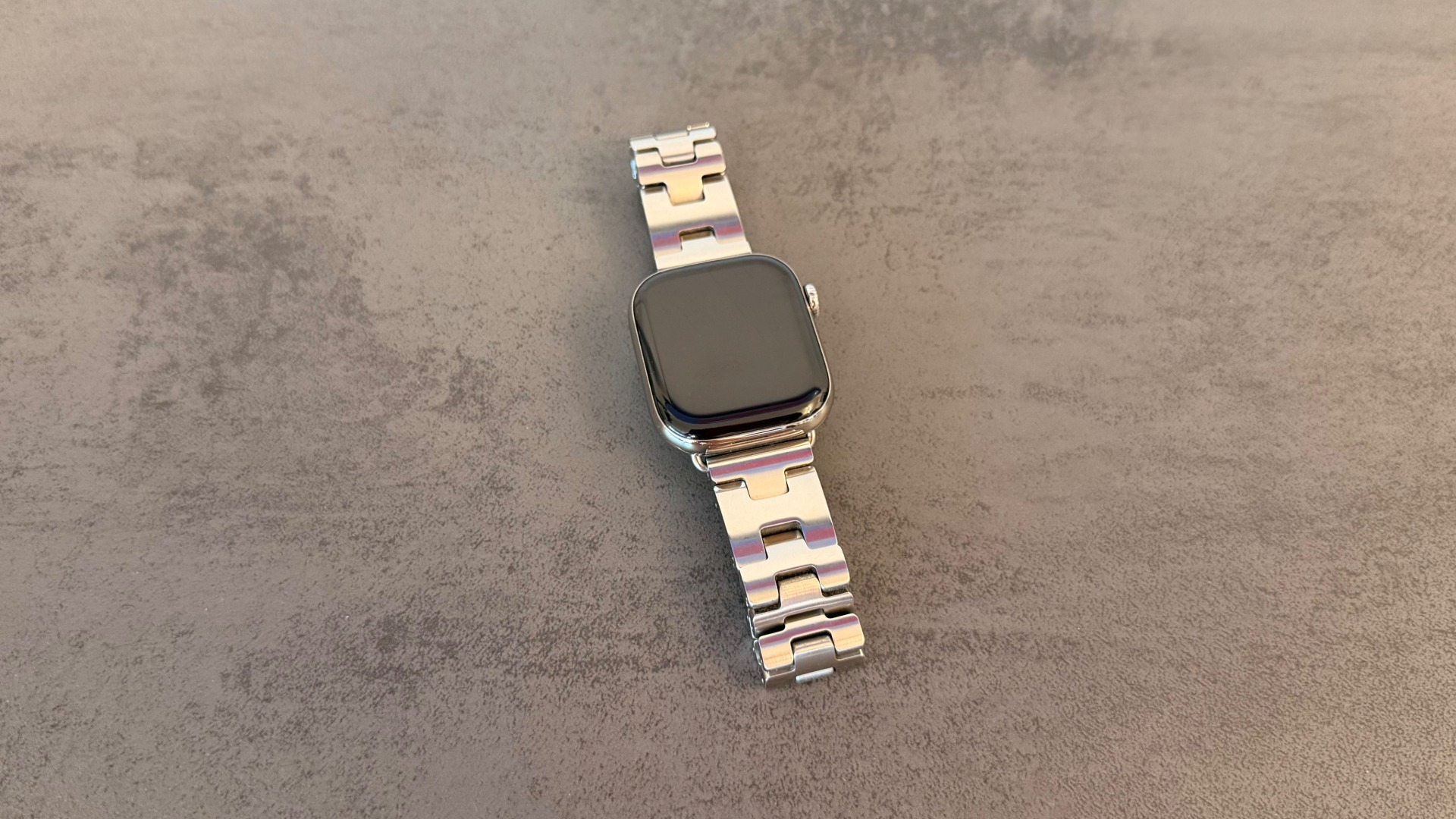
The Apple Watch Series 12 is expected in September 2026 – alongside the iPhone 18 Pro and the iPhone Ultra. The fall lineup will be smaller than previously anticipated: three devices are currently in testing, and a new Apple Watch SE is not among them. The Series 12 itself is expected to receive a minor update – a new chip, a larger battery, and an unchanged case.
Since 2015, Apple has released a new Apple Watch every September. The Series 11 in fall 2025 was a moderate update with 5G connectivity, longer battery life, and high blood pressure alerts - but little to cause a stir. Which of the currently available models - Ultra 3, Series 11, or SE 3 - is the best fit depends heavily on the intended use.
For the upcoming generation, Bloomberg reporter Mark Gurman already tempered expectations in mid-May 2026 and extended this assessment to the entire product line in July: The Series 12 is expected to be largely identical to the Series 11 – with new watch faces, a new processor, and minor improvements via watchOS 27. Touch ID has been scrapped for 2026, Siri AI will not run natively on the watch but will instead be routed through the paired iPhone, and a successor to the entry-level model is entirely absent from the fall lineup. This article summarizes all known rumors.
Apple Watch Series 12: The most important points at a glance
| Detail | Expectation |
|---|---|
| Release | September 2026, along with iPhone 18 Pro and Apple Watch Ultra 4 |
| Lineup | Series 12 with Wi-Fi and cellular connectivity, plus Ultra 4 – not a new Apple Watch SE |
| Chip | New device family „Watch8” for the first time since 2023, processor listed as T8320 in code findings |
| Design | No visible changes to the case |
| Housing material | Aluminum and titanium as before, ceramic variant in white and dark grey tested |
| bracelets | Numerous new colors and configurations are expected. |
| Battery | Larger cell plus efficiency gains, longer lifespan expected |
| Watch face | New watch faces with watchOS 27, including a Modular Ultra variant |
| Sensors | Reported by suppliers of an 8-sensor array, denied by sources close to the company. |
| Health | Continuous heart rate monitoring under trial; revised health and fitness apps |
| Wristband sensor | Leaked information about a health sensor in the silicone band, possibly sold separately |
| Touch ID | Rejected for 2026 |
| Siri AI | Only usable via a paired iPhone, therefore not currently usable in the EU. |
| Starting price | Expected to start at €449 (like Series 11) |
Three devices under testing – and a gap in the lineup
According to the latest Bloomberg report, three Apple Watches are currently in late-stage testing: the Series 12 in Wi-Fi and cellular variants, and the Apple Watch Ultra 4. Internally, they are identified by the codenames N237, N238, and N240 – the same codenames that appeared in an early system version at the end of 2025, without any mention of a fourth device.
This means the fall lineup is missing a model many had expected: a new Apple Watch SE will not be released in September. When a successor to the entry-level model might arrive remains unclear. The third-generation SE launched in September 2025 and, according to the previous cycle, wouldn't have been due for a new release yet – but for buyers on a budget, this still means another year without a new entry-level model.
Design: Familiar form, redesign only later
The Apple Watch Series 12 will largely resemble the Series 11 externally. This means: same case shape, same rounded square design, buttons on the right, speaker on the left. Leaker Instant Digital also confirmed on Weibo that the 2026 Apple Watch will not receive any radical design changes. However, new watch bands and possibly new colors are likely.
Reports differ regarding the timing of the major redesign. Earlier reports placed the redesign, including a new band system, in 2027 – a Weibo leaker initially dated it to 2028 and later corrected the date, aligning with Apple's roughly three-year design cycle since the Series 10 in 2024. At the end of August, it was stated that Apple intended to complete the redesign next year, but that it could be delayed until the following year. None of these dates are reliable: The same redesign, in varying forms, has been circulating in the rumor mill since 2023 without ever being released.
The recurring new band connector also falls into this category. As long as Apple doesn't want to abandon compatibility with existing bands, a change remains unlikely – and a model year without a case redesign would be the worst possible time for it. Apple continues to pursue a conservative approach with the case; the real changes are happening beneath the surface.
How fundamental the redesign could be was hinted at in early August by another report. According to the report, Apple's design department is considering round displays, devices without any screen at all, and additional price points above the Ultra and below the SE. Nothing has been decided yet; the source itself considers a round model unlikely. This doesn't change anything for the Series 12 – but it does explain why the date for the major redesign keeps getting pushed back: Apple is apparently still searching for its direction.
Ceramic could return as a third case material
While the form factor remains the same, the material selection expands. A report from late August no longer merely mentions the ceramic version as a possibility, but cites two tested versions: white and dark gray. Apple last offered this same combination in 2017 with the most expensive Series 3 model. Numerous new band colors and configurations are also expected. This would make the case design the only external feature that distinguishes the Series 12 from the Series 11.
Ceramic was last used in 2019 with the Apple Watch Series 5 Edition; it was discontinued in 2020. The material is significantly more scratch-resistant than aluminum and retains its high gloss for years, but it weighs more and breaks where metal deforms.
In terms of price, that would be a significant step: The ceramic version started at €1,399 in 2019, while the aluminum model of the same generation started at €449. The entry-level price for the Series 12 would remain unchanged – a ceramic frame would be an additional step above the titanium version, not a replacement.
The chip is changing families for the first time in three years
Internally, the Series 12 and Ultra 4 are assigned to the "Watch8" device family. The Series 9, Series 10, and Series 11 all belonged to the previous family – an indication of how little the basic architecture has changed since 2023. The associated processor appears in code finds as the T8320. The Series 11 currently uses the S10 chip with a 64-bit dual-core processor and a 4-core Neural Engine.
Detailed technical specifications for the successor are still lacking; only increased performance has been mentioned. The trend with Apple Silicon suggests improvements in three areas: greater energy efficiency, faster processing of health data, and more power for local AI tasks. For a device that will be continuously monitoring and analyzing heart rate, the last point is crucial. This is complemented by a larger battery cell, which, along with the efficiency gains, should provide longer battery life. So, performance and endurance increase, while the casing remains the same.
Sensors: Two contradictory reports
One of the most striking rumors comes from DigiTimes: The Apple Watch Series 12 is said to feature a new sensor array with eight sensors arranged in a ring on the underside. What exactly these sensors measure is unconfirmed.
Possible areas of application:
- Improved heart rate measurement during exercise and sports
- More precise SpO2 values (blood oxygen)
- Improved temperature measurement for cycle tracking
- More reliable sleep monitoring
- Basis for future blood pressure or blood sugar measurements
The principle is similar to Oura's approach with the Ring 4: More sensors with a better arrangement deliver more reliable data – even if the watch doesn't fit perfectly.
This rumor, however, is not reliable. Mark Gurman doesn't expect a major hardware leap with the Series 12 and mentions only minor, unspecified adjustments. The contradiction is even more pronounced with the sister model series: DigiTimes, citing suppliers, had also predicted a complete redesign and a doubling of the number of sensors for the Ultra 4 – Bloomberg disagrees on both points and expects neither visible design changes nor new sensors. Improvements to health and fitness features are expected, but according to previous reports, these will be software-based.
This doesn't resolve the contradiction. Supplier reports are available earlier but are more often inaccurate because they conflate prototypes and production models; Bloomberg's information usually comes from the company itself and is closer to the final configuration. The overview of the Apple Watch Ultra 4 continuously compiles information on how these two sources relate to each other.
At the end of August, the software side became more concrete. The heart rate sensor will soon measure throughout the day, instead of just during workouts and at intervals; this feature is currently being tested. In parallel, Apple is working on redesigning its Health and Fitness apps to display more wellness metrics – based on the data analysis already offered by specialized providers. Both of these improvements will not require new sensors, thus reinforcing the company's approach of prioritizing software-based advancements.
Health sensor in the wristband instead of the case?
Alongside the array on the underside of the case, a second, more unusual theory is circulating: Leaker Kosutami claims that the Series 12 could have an additional health sensor directly in the silicone band instead of in the watch case. The sensor would be permanently integrated into the band via injection molding – this most likely refers to the fluoroelastomer band, i.e., the standard sport band that Apple includes at no extra cost. How such a sensor could be incorporated into bands made of fabric, leather, or metal has not yet been determined internally.
For users, this would have an immediate consequence: the latest sensor might only be accessible via a single – and, of all things, the cheapest – band variant. However, a more logical approach than reserving it exclusively for the included band would be for Apple to sell this sensor-equipped variant separately, as an independent accessory that could also be purchased alongside more expensive bands. This would create a new accessory category for Apple with recurring revenue potential, instead of further condensing the already dense electronics within the casing.
The leak leaves open what the sensor is intended to measure. Previous reports suggested a fluid balance sensor and an approach for capturing muscle movements – both functions that would benefit from the larger skin contact area of a band. The frequently mentioned non-invasive blood glucose measurement is explicitly excluded: this is said to be integrated into the optical sensor array under the casing and remains completely unclear.
Despite all the speculation, caution is advised. Kosutami's track record is generally respectable, but the leaker has been wrong before, specifically regarding the Apple Watch – for example, in 2023 with his prediction of a changed band connector that never materialized. The fact that this latest clue again revolves around Apple Watch bands should therefore be taken with a grain of salt. Until Apple officially unveils the Series 12, the wrist-mounted sensor remains an intriguing but unconfirmed possibility.
Blood pressure and blood sugar: Not quite there yet
Blood pressure
The Series 11 already introduced high blood pressure warnings based on the analysis of heart rate data over 30 days. Apple is working on true wrist-based blood pressure measurement – but there are significant doubts as to whether the technology will be mature enough by 2026.
Blood sugar
Non-invasive blood glucose monitoring has been rumored for years. Apple is demonstrably researching it and recently appointed a new project leader, but the accuracy is not yet sufficient for a consumer product. This feature is not expected for the Series 12.
Touch ID: Comeback on the wrist?
Touch ID has long been considered a hot feature for the next Apple Watch generation. Several sources reported that Apple was testing its integration, most likely in the side button, similar to the iPad Air. This would have allowed the watch to be unlocked without an iPhone, Apple Pay to be authorized, and sensitive apps to be protected.
In May 2026, however, the Chinese leaker Instant Digital reported that Apple had abandoned the project for 2026. Two specific reasons were said to be decisive: First, an additional biometric sensor would strain the already tight energy efficiency of the Apple Watch. Second, a fingerprint sensor would increase the cost of the components without significantly expanding its usefulness from Apple's perspective. Apple is reportedly continuing its strategy of unlocking the smartwatch via iPhone pairing.
Code hints like "AppleMesa" - Apple's internal codename for Touch ID - don't automatically signify a final product decision. Apple regularly tests software features that don't make it into final devices. Touch ID on the wrist isn't completely off the table, however. Should Apple find a technical solution in the coming years that doesn't significantly impact battery life or unit costs, the topic could quickly resurface - but currently, attention is focused on two other areas: larger batteries and more sophisticated health sensors.
Apple Intelligence: Via the paired iPhone instead of natively
With iOS 27 and the Gemini-powered Siri generation, Apple Intelligence moves to the center of its software lineup – and with watchOS 27, Siri AI also arrives on the Apple Watch. The important addition: The processing isn't done by the watch itself, but by a paired iPhone with Apple Intelligence. A dedicated Siri app appears on the Watch, allowing users to continue conversations started on their iPhone.
The fact that the processing remains outsourced has a purely technical reason: The Apple Watch currently has between one and 1.5 gigabytes of RAM. For devices that run Apple Intelligence directly, Apple currently requires at least eight gigabytes. This gap cannot be closed quickly in such a small form factor with such a tight power budget – only a significantly larger battery or a much more efficient chip could overcome it. Neither is expected by 2026. Native AI processing on the wrist therefore remains a topic for a later generation.
Why the performance leap in Europe is currently coming to nothing
This very design has an unpleasant side effect for buyers in Germany and Austria. Siri AI on the watch requires a paired iPhone with Siri AI – and the assistant is initially unavailable on iPhones and iPads in the EU because Apple refuses to reconcile the planned system access with the interoperability requirements of the Digital Markets Act. The regulatory background to this chain lies entirely on the iPhone side; the Apple Watch is left out, as it is not itself regulated.
In practical terms, this means that the new chip and larger battery primarily serve a function that won't even be available in this country initially. The Apple Watch thus joins a growing list of features that are missing in the EU. In Switzerland, this isn't an issue: the country is neither in the EU nor the EEA, the DMA doesn't apply there, and Siri AI is available on the paired iPhone.
Release and price
The Apple Watch Series 12 is expected to be unveiled in mid-September 2026, alongside the iPhone 18 Pro and the iPhone Ultra. Pre-orders are likely to begin a few days after the keynote, with sales starting in the following weeks. The Apple Watch Ultra 4 is currently slated for release at the same time, but a new Apple Watch SE is not.
No major price change is expected. The Series 11 starts at €449 (GPS) in Germany. This is further supported by a detail from the summer: During the European price increase at the end of June, the Apple Watch was exempt, while Macs, iPads, and the Apple Vision Pro became more expensive. Furthermore, the absence of a Touch ID sensor eliminates one of the previously mentioned reasons for a price increase – if Apple were to actually include the new sensor array, an additional €20 to €50 would be conceivable.
Apple Watch Series 12: Who should wait?
Those who already own an Apple Watch Series 10 or 11 will find little reason to upgrade to the Series 12 – the most compelling feature now being continuous heart rate monitoring with its improved analysis. Whether this is exclusive to the new generation or will also be available on older models remains to be seen. An unchanged case, no confirmed new sensors, and an AI function that won't even be launched in the EU initially, don't, in themselves, justify a generational upgrade.
The situation is different further down the model range. watchOS 27 leaves five Apple Watch models behind – the Series 6, Series 7, Series 8, the second-generation SE, and the first Ultra will only receive basic security updates going forward. If you wear one of these devices, the Apple Watch SE has been the obvious, affordable alternative, and this is precisely the model that will be missing this fall. That leaves the Series 12: larger display, thinner case, 5G, high blood pressure alerts, sleep apnea detection, a new chip, and the new watch faces from watchOS 27 – a significant leap compared to a six-year-old watch.
Our recommendation depends primarily on your timeframe: If you're planning to buy this fall anyway, the Series 12 offers a solid but unremarkable model at what is expected to be an unchanged price. Those who can wait are speculating on the major redesign with a new strap system and a thinner case – for which information now varies widely, ranging from 2027 to "a few more years." Don't rely on a specific release date.
- Tim Cook: 15 years as Apple CEO – the record in numbers
- Apple Event in September: iPhone 18 Pro, Ultra and more


Would the continuous heart rate monitoring and new health app be worth the upgrade for you – or are you waiting for the model with a new casing, even though the release date has been delayed for years?