

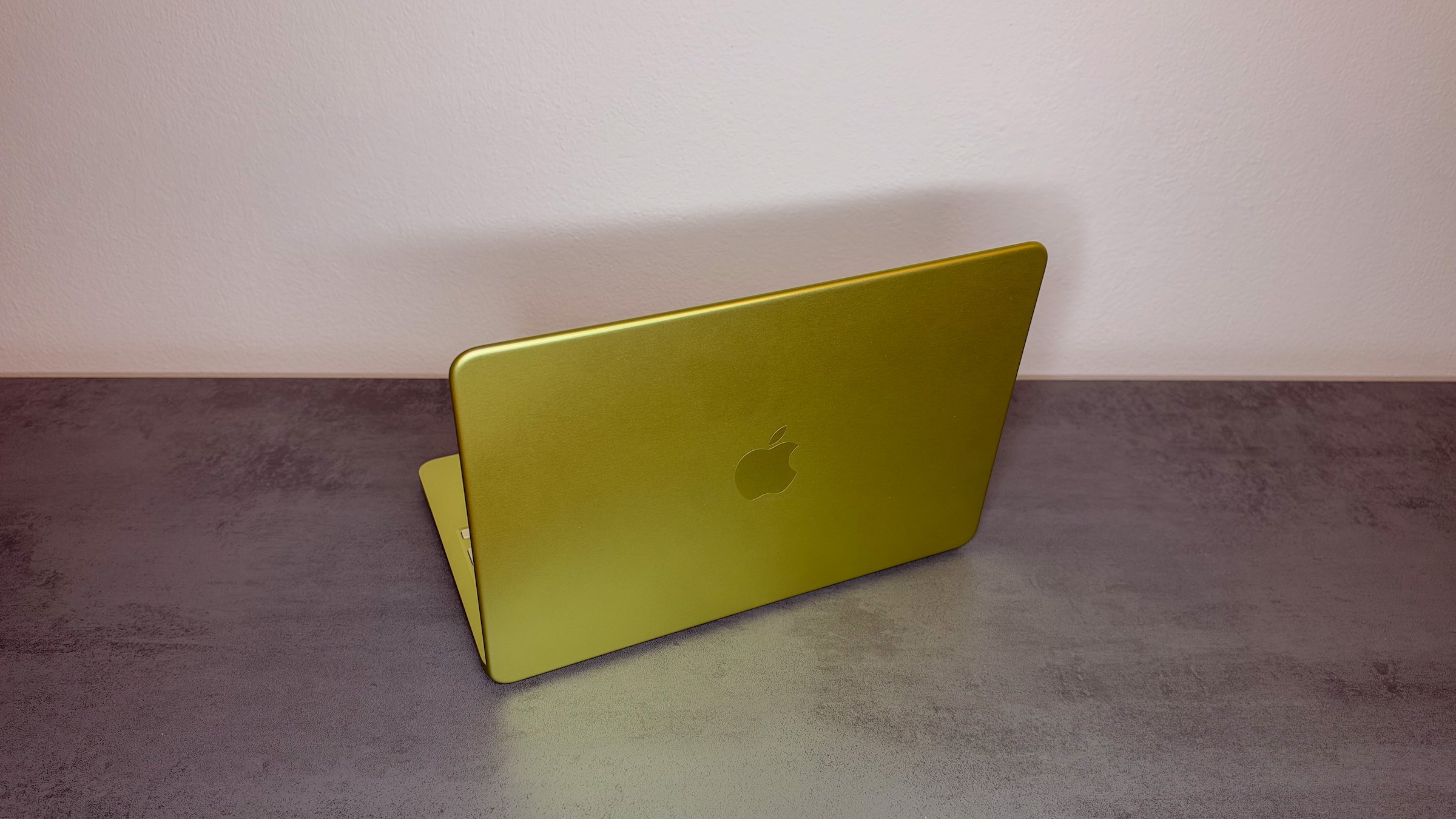
This article may contain affiliate links. Learn more on our Partner Program page.
Eight months after the launch of the most affordable MacBook ever, its successor is becoming increasingly clear. A faster chip, more RAM, and new colors are considered certain, and a release window has now been established. Apple, however, has reserved the touchscreen for a different Mac model.
With the MacBook Neo, Apple introduced a notebook in March 2026 that cost €699 at launch in Germany. No MacBook had ever been so affordable. Its success exceeded Apple's own expectations, and this success is now driving the second generation. It's part of a wave of renewals that is expected to include eleven new Mac models by 2028.
The Neo is less about a completely new device and more about refining the two areas where the first generation was most frequently criticized: the chip and the RAM. According to a Bloomberg report from October 27th, the MacBook Neo 2 is expected to be released in the first half of 2027.
Key Facts at a Glance
| Detail | Expectation |
|---|---|
| Chip | A19 Pro instead of A18 Pro |
| RAM | 12 GB instead of 8 GB |
| Display | 13 inches, unchanged – no OLED, no ProMotion |
| Touchscreen | Considered off the table |
| Design | No renovations expected |
| Colours | New tones, either additional or as replacements |
| Storage | 256 GB and 512 GB, discontinuation of the base variant not excluded |
| Time frame | First half of 2027 according to Bloomberg |
| Quantity | 16 million devices for 2027 according to the supply chain |
| Price | Openly, the current model costs from 799 euros. |
A19 Pro: The chip comes with 12 GB of RAM
The switch to the A19 Pro is the point that several independent sources have been consistently mentioning for months. Taiwan columnist and former Bloomberg reporter Tim Culpan reported on such plans in April 2026. Bloomberg followed suit in July, stating that Apple was using internal test devices with the A19 Pro. In October, Bloomberg also specified the timeframe.
What's interesting isn't so much the chip itself, but what's connected to it. The A19 Pro is used in the iPhone 17 Pro and the iPhone Air with 12 GB of RAM. The much-discussed increase to 12 GB is therefore not an independent design decision, but a consequence of the chip choice.
The pattern is the same as with the first generation. The A18 Pro in today's Neo comes from the iPhone 16 Pro, while the A19 Pro would again be the chip from last year's Pro models. The iPhone 18 Pro now uses the A20 Pro.
The A19 Pro uses six CPU cores, with two performance cores and four efficiency cores, and is manufactured by TSMC using the refined N3P process. Each GPU core has its own Neural Accelerators, a structure tailored for locally running AI models. This is precisely where the first Neo generation, with its 8 GB of RAM, reaches its limits as soon as multiple apps and Apple Intelligence applications simultaneously demand memory. The Apple Silicon RAM overview shows how much RAM is actually needed for everyday use.
Five or six graphics cores
It remains to be seen which GPU configuration the Neo 2 will receive. The A19 Pro is available with five and six graphics cores; the iPhone Air uses the smaller variant. The current MacBook Neo features an A18 Pro with five graphics cores, while the iPhone 16 Pro uses the same chip with six. Culpan therefore expects the Neo 2 to have the five-core version; however, this has not yet been confirmed by any other source.
Why success became a problem
The chip change has a business rationale. According to Culpan, Apple equipped the MacBook Neo with A18 Pro chips in which a graphics core was defective during manufacturing. Instead of scrapping them, Apple allegedly deactivated the affected core and used the chips in the most affordable Mac. This practice, known in the semiconductor industry as binning, is said to have made the entry-level price possible in the first place.
This stockpile reportedly ran out faster than planned. According to Culpan, after Apple increased its production capacity from the original five to six million units to around ten million, new A18 Pro chips had to be ordered, and these come as flawless, fully enabled samples, resulting in higher unit costs. Culpan then described a doubling of production with no fixed price.
Apple is reportedly expecting significantly more sales in 2027. According to a Digitimes report, Apple has given its suppliers a forecast of 16 million MacBook Neo units, following nearly 8 million this year. This figure comes from unnamed sources within the supply chain and is a planning figure, not a sales number. Nevertheless, it suggests that Apple is planning for double the quantity and thus a permanent place for the Neo in its product line.
Storage prices as a factor of uncertainty
At the same time, memory prices have risen, driven by the expansion of AI data centers – an effect that is widening the market along price lines. According to market research firm TechInsights, flash memory now costs around five times as much as it did a year ago. Memory manufacturer SK Hynix has virtually sold out of DRAM and HBM until 2029.
This is doubly relevant for the Neo 2. The key new feature is more RAM, and DRAM is one of the components that has recently become significantly more expensive. And price was already the lever Apple used in June to adjust the current model.
The touchscreen is off the table
Few details in the Neo rumor mill have taken as many turns as the question of a touchscreen. Analyst Ming-Chi Kuo floated the idea of a second-generation touchscreen variant in September 2025. In March 2026, he revised his prediction, and just a few days later, Bloomberg's Mark Gurman made his position clear: for him, it would be a huge surprise if the Neo were to get a touchscreen within the next three years.
It's now clear where touch functionality will first arrive on the Mac. At the end of October, Apple introduced the MacBook Pro with a PROLED XDR display, the first Mac with a touch-sensitive screen. In Germany, it starts at €3,299. Touch functionality thus debuts at the high end of the price range, just as reports had predicted for months.
Technically, there's little to suggest a quick change for the Neo. A touch panel requires a different display assembly, thus driving up precisely the costs that the device is designed to control. No source mentions OLED, ProMotion, or the P3 color gamut in connection with the Neo 2. The 13-inch panel with 2408 × 1506 pixels, 500 nits, and sRGB is likely to remain.
New colors – without specific shades
Bloomberg reported in July that new colors would be available for the successor, and that Apple plans to regularly refresh the Neo with new hues. Currently, the MacBook Neo is available in silver, pink, citrus, and indigo, each with a color-coordinated keyboard. No source has yet revealed which additional colors will be added.
The question of color first arose in May, but in relation to the current model: Culpan described new paint finishes as a tool to keep the Neo attractive despite higher prices. A marketing instrument, then, not a technical upgrade.
Price: The starting position has already shifted
At its market launch in March 2026, the MacBook Neo cost €699 in Germany with 256 GB and €799 with 512 GB and Touch ID. On June 25th, Apple raised both prices by €100.
| MacBook Neo | Market launch March 2026 | Since June 25, 2026 |
|---|---|---|
| 256 GB, without Touch ID | 699 € | 799 € |
| 512 GB, with Touch ID | 799 € | 899 € |
A successor will therefore not start at €699, but at an already increased price point. Whether Apple will maintain this price, justify the increase with improved features, or raise it further remains to be seen. No source has yet announced a price for the second generation.
The contents of the box are unlikely to change. In the EU, the MacBook Neo comes without a power adapter, only a USB-C cable. In the US, a 20-watt power adapter is included. Anyone in Europe who doesn't already own a compatible charger should therefore factor in the additional cost.
What will happen to the 256GB model?
In May 2026, there was talk that Apple might completely discontinue the base model with 256 GB of storage and no Touch ID. This would have effectively increased the entry-level price without any individual configuration becoming more expensive. However, things turned out differently: Apple raised the prices of both models but kept both variants.
The question remains open for the second generation. Should Apple continue with the two-tiered approach, Touch ID will likely remain tied to the larger SSD. The noticeably slow flash storage of the first generation also doesn't appear as a problem in any of the supply chain reports.
When the MacBook Neo 2 might be released
Bloomberg's Mac roadmap from July did not specify a release date for the Neo 2. Since the report from October 27th, it states the first half of 2027. However, this does not specify a month or date.
I expect a release in the spring, so about a year after the first generation. The storage market is the factor most likely to delay this plan.
Who is the MacBook Neo 2 intended for?
The target audience remains unchanged compared to the first generation: school, university, everyday office work, streaming, word processing, and occasional image editing. The Neo remains the most affordable way to get into macOS – without fan noise, with an aluminum casing and a display that is unusually good for this price range. The Mac buying guide shows where it falls short compared to other Macs.
If you already own a MacBook Neo, upgrading after just over a year isn't worthwhile for most people. The jump from 8 to 12 GB is real, but rarely noticeable in everyday use with a browser, email, and Office applications. It's most noticeable when running many apps simultaneously and with locally running AI functions.
Buying a new device is a different story. I consider the 12 GB of RAM the most important reason to wait, because Apple is increasingly running AI functions directly on the device, and a notebook with more RAM will last longer. Anyone needing a device now can sometimes find the current generation in stores for less than Apple's list price, for example, the 256 GB version. Its limitations are well-known and well-documented.
Those needing more power will find the MacBook Air starting at €1,399. Before the price increase in June, the difference between the entry-level prices of the Neo and the Air was €500; since then, it's €600. Whether the extra cost for the MacBook Air is worthwhile now depends more on individual needs than it did in the spring. The fact that the entry-level model outsold the new M5 models of the MacBook Air and MacBook Pro in the first quarter demonstrates how precisely Apple has targeted this niche. All articles about the device are compiled on the MacBook Neo topic page.
Would you go for the current generation with 8GB now, or wait until spring for the Neo 2 with 12GB, even if it might be more expensive? Let us know in the comments how long you would wait.