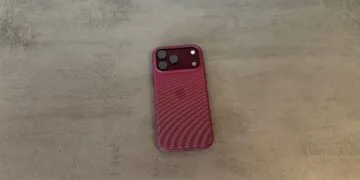
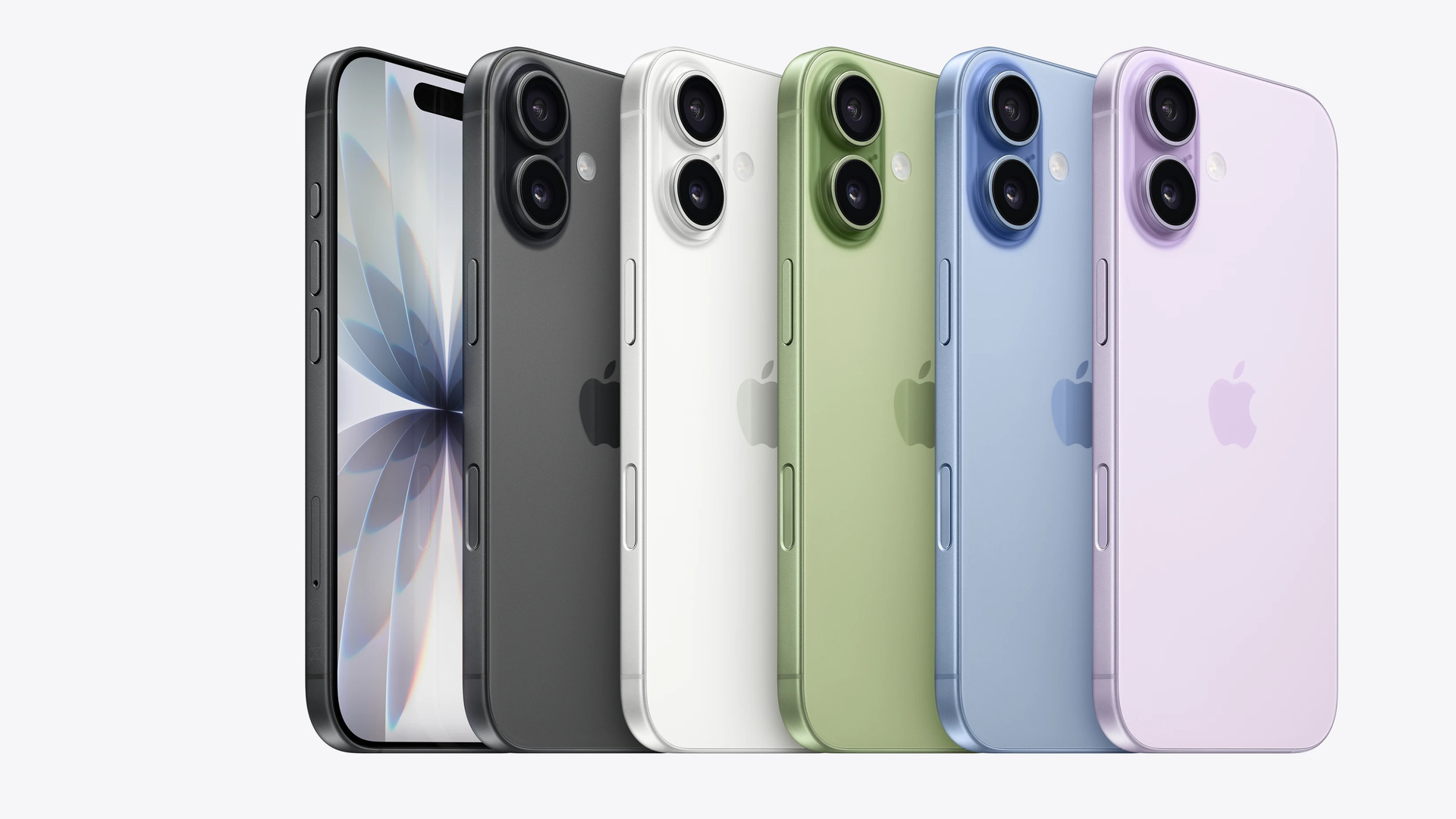
The iPhone 18 generation is coming in two waves. Apple unveiled the iPhone 18 Pro, iPhone 18 Pro Max, and the foldable iPhone Duo on September 9th – a base model iPhone 18 was not included. This page brings both halves together: confirmed specifications for the released devices and current reports on those yet to come.
For the first time in over ten years, there won't be a standard iPhone on store shelves this fall. Apple has reserved September 2026 for its premium models and followed it up with the iPhone Duo, the first foldable iPhone. According to Bloomberg reports, the base model iPhone 18, the iPhone 18e, and the iPhone Air 2 are slated for a joint release in spring 2027 – though Apple hasn't confirmed this. For those currently choosing an iPhone, the iPhone buying guide sorts the entire current lineup by price and intended use; this page remains the central hub for this generation and will be updated with every new release.
Key Facts at a Glance
| Model | Status | Price from (DE) | Availability |
|---|---|---|---|
| iPhone 18 Pro | Presented on September 9, 2026 | 1,449 euros | from September 18th |
| iPhone 18 Pro Max | Presented on September 9, 2026 | 1,599 euros | from September 18th |
| iPhone Duo | Presented on September 9, 2026 | 2,299 euros | Pre-orders open from October 16th, delivery from October 23rd. |
| iPhone 18 | not imagined | open | Expected spring 2027 |
| iPhone 18e | not imagined | open | Expected spring 2027 |
| iPhone Air 2 | not imagined | open | Expected spring 2027 |
The generation is split into two dates
Since 2014, a standard iPhone had been unveiled every September. This tradition was broken with the keynote on September 9th: only the iPhone 18 Pro, iPhone 18 Pro Max, and the iPhone Duo were presented. What else the evening brought – from the two new watches to the revamped Health app – can be found in the overview of the September keynote.
For the remaining three models, Mark Gurman has been citing spring 2027 as the timeframe since April 2026 – the iPhone 18 and iPhone 18e simultaneously, along with the redesigned iPhone Air 2. This would mean Apple would be releasing two product cycles per year in the future: premium models in the fall, volume models in the spring. There has been no confirmation from Cupertino, nor has a date been given.
Several factors in the supply chain already pointed in the summer. Apple extended production of the iPhone 17 and expanded manufacturing capacity – a move that only makes sense if there isn't a direct successor in the standard segment. Largan Precision, Apple's most important supplier of camera lenses, mentioned at the shareholders' meeting that a major US customer had postponed the launch of a new model until the first quarter of 2027; CEO Lin Enping didn't name either the customer or the product.
iPhone 18 Pro and Pro Max: the confirmed specifications
Both models feature the A20 Pro with a dual 16-core Neural Engine and a 48MP Fusion main camera, whose aperture can be mechanically adjusted for the first time in an iPhone. The display measures 6.3 inches and 6.86 inches, respectively. Apple specifies a peak outdoor brightness of 3,000 nits on the German product page, and video playback on the Pro Max is up to 43 hours. Storage options start at 256GB and go up to 2TB.
Prices start at €1,449 for the iPhone 18 Pro and €1,599 for the Pro Max – €150 more than their predecessors. Pre-orders opened on September 12th, and sales begin on September 18th; all dates are detailed in the overview of pre-ordering the Pro models. A comparison with the iPhone 17 Pro reveals what actually changes compared to the previous generation.
Two points are more important for buyers in Germany than they appear in the data sheets. First, the Pro Max uses the C2 modem – with the exception of the US, where Apple is sticking with the previous model. Second, both Pro models in Germany, Austria, and Switzerland retain the card slot, while the Duo works exclusively with eSIM. Apple has provided complete power consumption and repair information in the EU data sheet.
As usual, Apple hasn't specified the RAM. This time, it's more than just a formality: The most powerful on-device model that Apple showcased at WWDC 2026 requires 12 GB of unified memory. Whether the new Pro models exceed this cannot be determined from Apple's own specifications – the benchmark of the A20 Pro provides initial benchmark results.
iPhone Duo: the most expensive iPhone in the series
The foldable model sits alongside the Pro series, not above it. The internal display measures 7.6 inches, the external one 5.4 inches, both with the same aspect ratio. The frame and hinge cover are made of titanium, and the device is rated IP68 for water and dust resistance. When unfolded, it measures approximately 5.2 millimeters thick. It also uses the A20 Pro chip.
According to Apple's German announcement, the price range is from €2,299 for 256 GB to €3,799 for 2 TB, available in Starry White and Night Sky. Apple will begin accepting pre-orders on October 16th at 2 PM CEST, with shipping starting on October 23rd. 28 additional countries will follow on October 30th. All specifications can be found in the detailed analysis of the iPhone Duo, and a comparison with the Pro series is available in the Duo vs. iPhone 18 Pro comparison.
The gap between the two launch dates is remarkable. There are 44 days between the unveiling on September 9th and the delivery of the Duo on October 23rd, and exactly five weeks between the two market launches. Apple is thus staggering its fall releases not only by price, but also by calendar.
What is to follow in spring 2027
The iPhone 18 base model is shaping up to be a mixed bag: it's expected to have more RAM, while Apple might cut corners in other areas. The iPhone 18e would remain the most affordable entry point, and the iPhone Air 2 would retain the slim design. All three devices are currently only confirmed through reports.
A20 chip and RAM: three predictions, no agreement
The most important open question regarding the base model concerns storage. Analyst Dan Nystedt initially predicted the full A20 chip with 12 GB of storage, 50 percent more than the iPhone 17's 8 GB. Ming-Chi Kuo revised this downward to 9 GB for the iPhone 18 and iPhone 18e: The A20 provides the storage via six 1.5 GB dies, while current entry-level iPhones use four 2 GB dies. According to this interpretation, the full 12 GB from eight dies would remain reserved for the Pro models.
In August, a third figure was added. Jeff Pu again mentions 12 GB for the iPhone 18, but 9 GB for the iPhone 18e – even though both are supposed to use the same A20 chip. The note offers no explanation; a simple product differentiation based on price range would be conceivable.
| Time | Source | iPhone 18 | iPhone 18e |
|---|---|---|---|
| June 2026 | Dan Nystedt | 12 GB | not specified |
| 26.06.2026 | Ming-Chi Kuo | 9 GB | 9 GB |
| 12.08.2026 | Jeff Pu | 12 GB | 9 GB |
All three agree only that the storage capacity will increase compared to the 8 GB of the iPhone 17. The details regarding the 9 GB variant are explained in the report on the A20 chip and RAM. Should the lower figure be confirmed, the iPhone 18 would narrowly miss the 12 GB mark for the most powerful on-device model – the gap to the Pro series would be smaller, but not closed.
The A20 also marks the switch to TSMC's 2nm process. Apple is expected to source its LPDDR5X memory from Samsung, with Micron and SK Hynix as alternative suppliers.
Dynamic Island and front camera on the base model
The smaller Dynamic Island display was released with the Pro models. It is expected to be carried over directly to the iPhone 18 – details can be found in the report on the smaller Dynamic Island in the base model.
Looking back makes this remarkable. When the iPhone 14 Pro introduced the Dynamic Island notch in 2022, the simultaneously launched iPhone 14 still retained the old notch; it wasn't until the iPhone 15 a year later that it adopted it. This time, there would be about half a year between the premiere and the adoption, meaning the same number generation. A device that appears months after the Pro series and looks noticeably older would have a tough time competing.
The situation regarding the front camera is unclear. A report from November 2025 mentioned 24 MP for the entire series, while more recent information restricts the upgrade to the Pro models, leaving the iPhone 18 at 18 MP. Both sources have a limited success rate. Furthermore, there's a technical nuance: the 18 MP sensor in the iPhone 17 already uses a 24 MP hardware sensor and pixel binning. A 24 MP upgrade could therefore simply mean that Apple is using the full sensor resolution without binning, without installing any new hardware.
No major changes are expected for the back. The dual setup with a 48MP main camera and a 12MP ultrawide lens is likely to be carried over virtually unchanged from the iPhone 17. The variable aperture will remain exclusive to the Pro series.
Where Apple could save money on the base model
Four approaches are discussed, all from supply chain reports:
- Display: Reduction in peak brightness or manufacturing quality without sacrificing ProMotion
- Camera Control: Haptic feedback and touch recognition are omitted; only the mechanical shutter release function remains.
- Memory speed: LPDDR5X-8533 instead of the faster 9600 variant
- Modem: Stick with the C1X from the iPhone Air instead of switching to the C2
These points hardly matter in everyday use, and that's precisely what makes them plausible. While a regression to 60 Hz or remaining with the A19 frequency appear in the leaks as theoretical options, they are considered unlikely.
Price: Why the dollar entry says little about DACH
Reports still indicate a starting price of $799 for the iPhone 18 in the US. According to KB Securities, Apple is even taking the opposite approach with its most expensive cost-saving measure: The company is said to have purchased larger quantities of LPDDR5X from Samsung, SK Hynix, and Micron at prices above market levels and absorbed the additional costs itself, instead of passing them on to consumers.
Little can be deduced from this for the DACH region (Germany, Austria, and Switzerland). The price adjustments on September 9th demonstrated that a stable dollar exchange rate does not necessarily translate to stable prices in euros: the iPhone 18 Pro and Pro Max each increased in price by €150, and even unchanged models became more expensive. Therefore, anyone calculating the cost of the spring models should use the German price structure rather than the US list. This is our expectation, not an official statement from Apple.
Storage options for the base model are expected to start at 256 GB and go up to 512 GB. Apple already dropped the 128 GB version with the iPhone 17.
What the division changes for the time of purchase
Until now, the simple rule was: the new iPhone arrives in September, after which the price of its predecessor drops. In 2026, this mechanism will only apply to the top half of the product range. Those who don't want a Pro model will simply have no new release to choose from in the fall and will have to decide between a device from the previous generation and a wait of around six months – with no confirmed release date in the end.
In practical terms, this means the iPhone 17 will remain the latest standard model for the coming months, and its price won't be driven down by any successor. At the same time, with the new Duo, Apple is pushing the price ceiling so high that the Pro models appear comparatively more moderate than their own premium justifies. This combination makes fall 2026 an unusually bad time for a budget iPhone – and a good time for anyone already looking to upgrade.
Who is the iPhone 18 intended for?
The base model is aimed at anyone looking for a current iPhone at a standard price and who doesn't need Pro features. If you're coming from an iPhone 15 or older, the jump will be significant – in performance, battery life, and especially in RAM, which for the first time in years exceeds 8 GB.
With an iPhone 17 in your pocket, the options become more limited. The storage increase is the only compelling reason to wait, and whether it will be 9 or 12 GB is still unknown. Anyone who absolutely wants a new device in the fall of 2026 will have no choice but to consider the iPhone 18 Pro, Pro Max, or Duo; a direct comparison of the two generations reveals just how much of a difference the upgrade offers compared to the iPhone 17.
And you – are you waiting until spring for the iPhone 18, or is a six-month wait without a fixed release date the reason for you to go for the Pro model now? Let us know in the comments what you're waiting for.