
This article may contain affiliate links. Learn more on our Partner Program page.
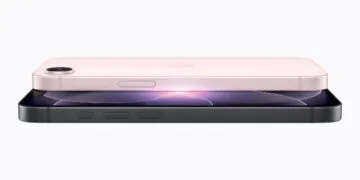
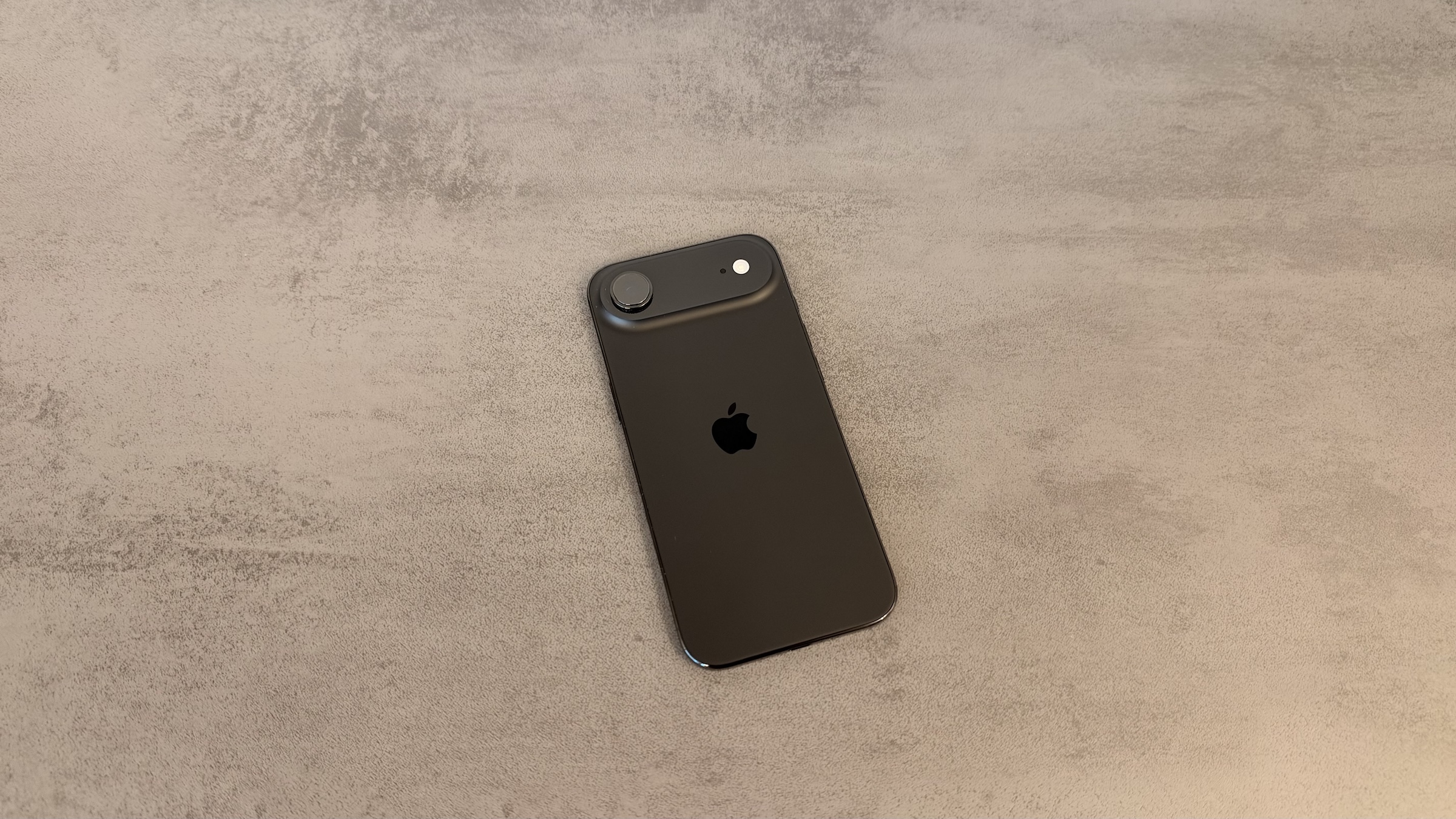
The iPhone Air sold worse than Apple had hoped – nevertheless, a second generation is expected. The iPhone Air 2 could arrive in spring 2027 with an A20 Pro chip, a second camera, and vapor chamber cooling, and a new leak suggests it will be even thinner: around 5.2 millimeters, as thin as the unfolded iPhone Duo. Here's an overview of all the current rumors regarding specifications, release date, and price.
Rarely has an iPhone launched with so much attention and such modest market success as the iPhone Air. Apple positioned the ultra-thin smartphone as a design statement, but sales figures fell significantly short of expectations. Nevertheless, Apple is reportedly sticking to its plan: The iPhone Air 2 is expected to be released in spring 2027, not in autumn like the first generation.
Since September 9th, the comparison framework has been established. Apple unveiled the iPhone Duo, which measures 5.2 millimeters when unfolded, and features the A20 Pro chip, which is also expected to be in the iPhone Air 2. Reports differ on how much else Apple is changing in the Air line: A Chinese leaker expects a purely routine update, while Bloomberg and The Information report a second camera.
iPhone Air 2: The most important points in brief
| Detail | Expectation |
|---|---|
| Release | Spring 2027 (March/April), together with iPhone 18 and iPhone 18e |
| Chip | A20 Pro (2 nm) |
| RAM | 12 GB |
| Case thickness | approximately 5.2 mm (iPhone Air: 5.64 mm) – single source |
| Display | 6.5 inch OLED, ProMotion 120 Hz, always-on |
| Rear camera | 48 MP Fusion + Ultra Wide Angle (according to Bloomberg; Fixed Focus Digital disagrees) |
| Front camera | 18 MP Center Stage |
| Modem | C2 (with mmWave) |
| Cooling | Vapor Chamber |
| Battery | Approximately 3,500 mAh according to the first leak (single source), roughly +11 % |
| Speakers | Stereo (as opposed to mono on the Air) |
| Storage | 256 GB / 512 GB / 1 TB |
| SIM | Dual eSIM (no nano SIM slot) |
| Price | open; iPhone Air currently from €1,299 |
The Air debacle: Why the first iPhone Air flopped
To understand why Apple needs to significantly improve the iPhone Air 2, it's worth looking at the problems of the first model. The iPhone Air launched in September 2025 at a starting price of $999 – $200 more than the iPhone 17 and only $100 less than the iPhone 17 Pro. This mid-range positioning with premium aspirations proved difficult.
An investor survey by KeyBanc Capital Markets showed little demand for the device after its launch. Supply chain analyst Ming-Chi Kuo reported that suppliers had to reduce their capacity by over 80 percent between the launch and the first quarter of 2026. Foxconn halted production until the end of December 2025, while Luxshare stopped production as early as October. The price on Amazon in the UK temporarily dropped by up to 30 percent.
The picture isn't entirely clear, however. Ookla's measurement data for the fourth quarter of 2025 showed that the iPhone Air accounted for 6.8 percent of speed test samples for the iPhone 17 generation in the US, while the iPhone 16 Plus reached 2.9 percent a year earlier. These are measurement samples, not sales figures, but they suggest that the Air didn't perform worse than the Plus model it replaced.
The main criticisms of the iPhone Air: only a single rear camera, a 3,149 mAh battery which seems disappointing for a premium price, the lack of vapor chamber cooling, and only a single speaker. Apple is apparently aware of these weaknesses – and plans to make targeted improvements in the iPhone Air 2.
A20 Pro chip with 2-nanometer manufacturing
The iPhone Air 2 is expected to get the A20 Pro. The chip is now official: Apple is using it in the iPhone 18 Pro, the iPhone 18 Pro Max, and the iPhone Duo. This would mean the Air would retain a Pro chip, just like the A19 Pro in the first generation.
According to Apple, the A20 Pro is based on a 2-nanometer process. The 6-core CPU is, according to Apple, up to 20 percent faster than the A19 Pro, graphics performance increases by up to 40 percent, and RAM bandwidth by 50 percent. How much of this translates into real-world performance depends on the cooling system – Apple significantly enlarged the vapor chamber in the iPhone 18 Pro for this purpose.
Apple is expected to stick with 12 GB of RAM – the same amount offered by the first iPhone Air and the iPhone 17 Pro models. This is important for Apple Intelligence and more advanced AI models that run directly on the device.
Vapor chamber cooling: An important upgrade
One of the most noticeable improvements is likely to be the cooling system. The first iPhone Air came without a vapor chamber – a compromise that could limit performance during extended gaming sessions or 4K recording. Apple is expected to incorporate a vapor chamber in the iPhone Air 2, similar to the one introduced with the iPhone 17 Pro. This would distribute heat over a larger area, enabling more consistent performance.
The iPhone Duo demonstrates that a vapor chamber can also be accommodated in very thin housings: Apple directly connects the A20 Pro chip to a specially developed vapor chamber. The iPhone Air 2 is more compact because the camera, battery, and cooling system must fit into a single housing, unlike the Duo where they are distributed across two halves.
The camera question: One or two lenses?
Opinions differ on this point. The main criticism of the first iPhone Air was its single rear camera. While the iPhone 17 features two lenses and the iPhone 17 Pro even three, the iPhone Air only offered a 48MP Fusion main camera with a sensor crop for 2x telephoto zoom.
Option 1 – with a second camera: The Information, Bloomberg's Mark Gurman, and several other sources all agree that Apple plans to include a second lens in the iPhone Air 2. A 48MP Fusion Ultra Wide lens is expected – similar to the second camera in the iPhone 17. This would be made possible by a thinner Face ID module, freeing up enough space in the casing for the second lens.
Option 2 – without a second camera: Weibo leaker Fixed Focus Digital consistently contradicts this. According to his sources in the supply chain, the iPhone Air 2 will be a purely routine update – without a second camera lens and without design changes. Only the A20 Pro chip is expected to be an upgrade.
Which version is correct? Both sources have a good track record, but they see different stages of production. Fixed Focus Digital typically has earlier access to supply chain details, while The Information and Bloomberg tend to focus more on strategic planning. It's possible that Fixed Focus Digital is seeing early production plans that Apple may have changed after the weak Air launch. The majority of evidence now points to the dual-camera version.
A recent Bloomberg report reinforces this picture: According to the report, iPhone Air 2 prototypes in an already advanced testing stage feature two rear cameras – an ultra-wide-angle lens is added to the existing main camera, while a telephoto lens is not planned.
The front camera is expected to remain unchanged with the 18 MP center-stage sensor already used in the iPhone Air and iPhone 17.
C2 modem with mmWave
Apple is expected to make a generational leap with its modem. The first iPhone Air used the C1X, Apple's first in-house 5G modem generation without mmWave. The successor modem is now official: Apple uses the C2, the next-generation cellular modem system, in the iPhone Duo. It is also expected for the iPhone Air 2, reportedly with mmWave support for the first time.
This would put the iPhone Air 2 on par with the iPhone Duo in terms of mobile connectivity – a remarkable step for a device that is primarily sold based on its design.
Battery: More capacity despite a thin casing
The 3,149 mAh battery of the first iPhone Air was one of its weak points. Apple claims up to 27 hours of video playback, which increases to up to 40 hours with the separately available iPhone Air MagSafe battery. The battery costs €115 in Germany and, when attached, makes the otherwise remarkably thin device quite bulky.
According to several reports, Apple is planning a larger battery for the iPhone Air 2. A supply chain leak suggests a capacity of 3,500 mAh, roughly eleven percent more than the current Air. This figure comes from a single source so far; the recent leak regarding the case thickness only supports the general idea, not the exact value.
In the context of the rest of the iPhone family, however, the increase is modest. Even with 3,500 mAh, the iPhone Air 2 would still fall short of what the regular iPhone 17 already offers.
| iPhone model | Battery capacity |
|---|---|
| iPhone Air (current) | 3,149 mAh |
| iPhone Air 2 (rumor) | 3,500 mAh |
| iPhone 17 | 3,692 mAh |
| iPhone 17 Pro | 3,988 mAh |
Efficiency is likely more important than raw capacity. The A20 Pro, manufactured using a 2-nanometer process, is more energy-efficient, and according to a separate report, a Samsung-derived OLED technology called CoE (Color Filter on Encapsulation) could make the display thinner, thus creating space for a slightly larger cell. More efficient cell chemistry (possibly silicon-carbon) and the slimmer Face ID module, which rearranges internal components, also play a role. If all these factors combine, the battery life improvement would come less from the additional milliampere-hours and more from the interplay between the more energy-efficient chip and the thinner panel. Should the casing actually shrink to around 5.2 millimeters, every additional milliampere-hour will be even more precious.
Approximately 5.2 millimeters: As thin as the unfolded iPhone Duo
According to Apple, the iPhone Air measures 5.64 millimeters. Korean blogger yeux1122 writes in a post on the Naver platform that the iPhone Air 2 will be about 0.4 millimeters thinner – despite a larger battery. Based on Apple's specifications, this would result in a thickness of approximately 5.24 millimeters, a good seven percent less than the current model.
| Device | Thickness | Source |
|---|---|---|
| iPhone Air | 5.64 mm | Apple |
| iPhone Air 2 | approximately 5.2 mm | rumor |
| iPhone Duo, unfolded | 5.2 mm | Apple |
| iPhone Duo, folded | 11.3 mm | Apple |
yeux1122's claim is sometimes correct, sometimes incorrect, and the post cites neither a document nor a source in the supply chain. The fact that Apple has already mastered manufacturing for 5.2 mm thicknesses with the iPhone Duo supports this theory. However, the post doesn't explain how a thinner casing would be compatible with a larger battery.
Design and material: The concept remains
Apple is expected to stick with the proven design concept. The Grade 5 titanium frame, the Ceramic Shield 2 on the front, and the Ceramic Shield on the back are likely to remain, as is the 6.5-inch OLED display with 2736 x 1260 pixels, ProMotion technology, and always-on display. The brightness levels (1,000 nits typical, 1,600 nits HDR peak, 3,000 nits outdoors) and the IP68 water and dust resistance will also remain standard.
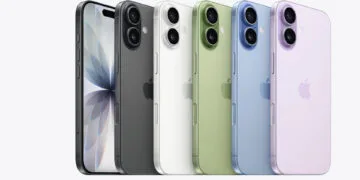
What could change: Reports suggest a slightly reduced weight. The first iPhone Air already weighed only 165 grams. Apple is reportedly still trying to shave off even more grams through a thinner Face ID module and optimized components. There are no concrete leaks yet regarding the colors; the current model is available in Sky Blue, Light Gold, Cloud White, and Space Black.
One concrete improvement could come in the audio department: The first iPhone Air only had a single integrated speaker – one of its most frequent criticisms. A second speaker for true stereo sound would be a logical correction for the second generation and has already been hinted at in several leaks.
Regarding the SIM concept, Apple is likely to stick with the eSIM-only solution. The iPhone Air is available in Germany and internationally exclusively with dual eSIM – physical SIM cards are no longer supported. There are no indications of a return to nano-SIM for the second generation, and Apple is actively driving this transition worldwide.
Release: Spring 2027
For a long time, it was unclear when the iPhone Air 2 would be released. Early reports predicted a launch in September 2026, alongside the Pro models and the foldable iPhone. In April 2026, Bloomberg reporter Mark Gurman contradicted this: According to him, the iPhone Air 2 would be released in spring 2027, together with the iPhone 18 and the iPhone 18e, likely in March or April.
The first half of this split has occurred. On September 9th, Apple introduced the iPhone 18 Pro and iPhone 18 Pro Max, as well as the iPhone Duo; a new Air was not among them. The original iPhone Air remains in the lineup. The Air 2, along with the iPhone 18 and iPhone 18e, is expected to form the second half of the iPhone 18 generation this spring.
Remarkably, according to Fixed Focus Digital, Apple is already planning an iPhone Air 3 for a later generation – despite the weak sales figures of the first model. Apple seems to view the Air line as a long-term strategic pillar.
iPhone Air 2 price: Even the current Air has become more expensive
There are no concrete price details for the iPhone Air 2 yet. The starting point is the current model, which has cost more since September 9th. In Germany, the entry-level price rose from €1,199 to €1,299, and in the US from $999 to $1,099. The price increase was most significant for the 1TB version.
| Storage | Price at launch (Sept. 2025) | Price since September 9, 2026 |
|---|---|---|
| 256 GB | 1,199 euros | 1,299 euros |
| 512 GB | 1,449 euros | 1,549 euros |
| 1 TB | 1,699 euros | 2,049 euros |
Then there's the storage market. Apple is said to have accepted significantly higher storage prices from Samsung for the first quarter of 2027 – precisely the period in which the iPhone Air 2 is expected to be released. With the iPhone 18 Pro, Apple has already passed on the increased costs: it starts at €1,449 in Germany, €150 more than its predecessor.
Apple's strategy: Why Apple is sticking with the Air
Apple's decision to stick with the iPhone Air despite weak sales figures seems contradictory at first glance – but makes strategic sense upon closer inspection. Previous Apple experiments like the iPhone 12 mini, iPhone 13 mini, iPhone 14 Plus, and iPhone 15 Plus were each discontinued after two generations. Apple is therefore giving the Air at least this second chance as well.
Much like the MacBook Air, which wasn't an immediate bestseller upon its 2008 launch but ultimately became Apple's most popular notebook, the iPhone Air could carve out its own niche in the long run. The Air line demonstrates design expertise and Apple's ability to push technological boundaries – a value not directly reflected in sales figures.
I consider the second generation to be the real test for the line. With the iPhone Duo, Apple now has a second device in its lineup that touts its thinness and, when unfolded, is even thinner than the current Air. If the Air is to compete, it needs more than just another half millimeter: a second camera and longer battery life are the points by which the first model already had to measure up.
Who is the iPhone Air 2 intended for?
The iPhone Air 2 is aimed at buyers who want an exceptionally thin and light iPhone without sacrificing modern performance. Those who bought the first iPhone Air and were frustrated with the single camera or battery life will get significantly more substance with the second generation – provided the dual-camera version proves successful.
Anyone currently using an iPhone 13 Pro, iPhone 14, or iPhone 15 and looking to upgrade to a lighter premium device will be well served by the iPhone Air 2. The difference between a heavier steel or aluminum iPhone and the 165-gram titanium casing is clearly noticeable in everyday use.
Anyone who already owns the iPhone Air 1 should think twice. Without the second camera, the upgrade would be a classic minor update – faster, more efficient, but without any fundamental changes to functionality. With a second camera, vapor chamber, and larger battery, however, the iPhone Air 2 would be the device the first Air should have been from the start.
If you need a top-of-the-line camera, the iPhone 18 Pro is the better choice. If you want a foldable iPhone, you don't have to wait: the iPhone Duo will be available from October 23rd, starting at €2,299, and a comparison with the iPhone Air shows where the two differ. And if you're looking for an affordable, modern iPhone, keep an eye on the iPhone 18e, which is also expected in spring 2027.
Which of the two features do you miss more in the current Air – the second camera or the battery life? Tell us in the comments what will influence your purchase decision for the successor.