This article may contain affiliate links. Learn more on our Partner Program page.
Storage is becoming more expensive, and by 2027, buyers could feel the effects significantly. Market researchers are predicting fewer shipments in the notebook market. Manufacturers have little room to maneuver: they can charge higher prices, earn less, or cut corners on features. Apple already made its decision in Germany back in June.
Taiwanese market research firm TrendForce forecasts a decline in global notebook shipments for 2027, according to a TrendForce press release dated October 8. Analysts cite rising component costs, particularly for RAM, as the primary reason. This shifts the risk from component shortages to weaker demand.
The forecast comes shortly after weak figures for the current year. In the third quarter, worldwide PC shipments fell by over 20 percent, and Mac shipments by 11 percent.
Key Facts at a Glance
- TrendForce expects a decline in notebook shipments in the low single-digit percentage range in 2027, or in the high single-digit range in the worst-case scenario.
- For a mid-range notebook costing $900, around 68 percent of the component costs in the third quarter of 2026 were attributable to the processor, RAM and SSD.
- RAM is expected to remain scarce in 2027 because AI servers will consume the available capacity. Flash storage shortages are expected to ease in the second half of the year.
- The share of notebook manufacturing outside China is expected to fall from around 24 percent to below 20 percent.
- Apple already raised its Mac prices in Germany in June by 100 to 400 euros, citing storage costs as the reason.
Why demand will become a risk in 2027
TrendForce considers shipments in 2026 to be supported, but not healthy. They were driven by improved processor availability, early purchases by manufacturers, and premature replacement purchases. The analysts do not see this as a genuine recovery in demand. If these effects disappear in 2027, cost pressures will hit a market without tailwinds.
IDC's third-quarter figures fit this picture. Worldwide, 62.7 million PCs were shipped, compared to 78.5 million in the previous year. IDC cited a lack of inventory purchases as one of the reasons, as these had been brought forward in anticipation of announced price increases.
Two-thirds of the costs are contained in three components
For a mid-range notebook with a suggested retail price of $900, TrendForce predicted that in the third quarter of 2026, approximately 68 percent of the component costs would be attributable to the processor, RAM, and SSD. TrendForce did not break down how this share was distributed among the three components. If prices in this category rise, it will almost immediately impact the overall cost.
Analysts expect no relief in the RAM market in 2027. AI servers are tying up capacity in modern manufacturing processes, so the supply of PC memory will remain correspondingly limited. The situation for flash memory for SSDs could ease in the second half of 2027 when new capacities become available. Printed circuit boards, ceramic capacitors, and power supply components are also under pressure.
Price, margin or features
According to TrendForce, manufacturers can hardly maintain prices, features, and profits simultaneously. Three options remain: higher sales prices with the risk of declining demand, lower margins, or stripped-down devices, for example, with less RAM.
According to analysts, the extent to which deliveries will decline in 2027 depends primarily on how much of the additional costs are passed on to buyers.
| Scenario | Expected decline in 2027 |
|---|---|
| Base scenario | low single-digit percentage range |
| Costs are passed on in full to the buyer. | high single-digit percentage range |
Manufacturing is moving back to China
TrendForce also expects a reversal in production locations. If tariffs do not increase further, costs will once again take precedence over risk diversification. Capacities built outside of China could then partially relocate back.
| Year | Share of notebook manufacturing outside China |
|---|---|
| 2025 | approximately 24 percent |
| 2026 | approximately 21 percent |
| 2027 | possibly less than 20 percent |
Apple has already chosen the first path
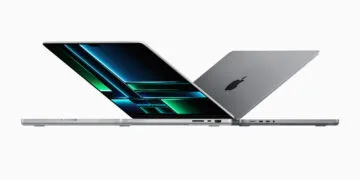
Apple faces the same dilemma. On June 25th, Apple raised its prices for Macs and iPads in Germany, citing the sharply increased costs of memory and flash chips. The MacBook Neo rose from €699 to €799, the 13-inch MacBook Air from €1,199 to €1,399, and the 14-inch MacBook Pro from €1,899 to €2,199. Of the three approaches described by TrendForce, Apple has thus chosen the higher price.
I find it remarkable that this round of price increases hasn't hurt Apple so far. While Mac shipments fell by 11.3 percent in the third quarter, the overall market declined by 20.1 percent, and Apple's market share rose from 8.5 to 9.5 percent. Apple explicitly stated that its price hike was just the beginning, so further increases are not out of the question. Whether the 2027 MacBook will become even more expensive hinges on the same question as with all other manufacturers: how much of the storage costs is passed on to the customer.
If you're considering a new laptop, pay particular attention to the storage capacity: this is the aspect where prices and configurations are most likely to change in the coming months. If you're buying a Mac now, you can choose between the current models at the prices set after the June price adjustment. The impact of this price round on Apple's Mac business will become clear with the quarterly results on November 2nd.
Are you buying your next laptop now to take advantage of current prices – or are you waiting for the memory market to ease up in 2027? Let us know your thinking in the comments.