This article may contain affiliate links. Learn more on our Partner Program page.
For nearly two years, the British government officially left open the question of whether it had compelled Apple to circumvent iCloud encryption. Now a court has ended this stance. The order exists, and Apple's legal challenge against it is being heard largely in public.
The Investigatory Powers Tribunal, the UK's specialized court for surveillance matters, ruled on November 19, 2026, that the Home Office can no longer keep secret the existence of a so-called Technical Capability Notice issued to Apple. Such an order allows the government to require companies to possess technical capabilities, such as the ability to decrypt data. The public ruling by the Investigatory Powers Tribunal stems from a hearing on September 17, during which the court examined the UK's policy of secrecy. Two cases were heard jointly: Apple's lawsuit and the lawsuit brought by the civil liberties organizations Privacy International and Liberty.
The legality of the order itself has not yet been decided. The ruling determines how much of it the public may know, and that is significantly more than the government wanted.
Key Takeaways
- The Investigatory Powers Tribunal publicly confirms that the UK Home Office has issued a Technical Capability Notice to Apple.
- The government failed to demonstrate that this confirmation would harm national security. According to the court, it had repeatedly broken its own policy of neither confirming nor denying the information.
- A large part of Apple's lawsuit can now be heard in public. Details of the order remain confidential for now.
- A main hearing in both cases is targeted for the first half of 2027.
- In the UK, Enhanced Privacy remains blocked for new users, while in Germany, Austria and Switzerland it remains available.
What the court decided
The Home Office had argued that even confirming that Apple had received such an order would harm national security. It cited its long-standing practice of neither confirming nor denying orders of this kind. The three judges, Lady Carmichael as President of the Court, as well as Justices Chamberlain and Johnson, did not agree. In essence, the ruling states:
We reject the respondent's contention that it would be damaging to national security to confirm the fact that the respondent has given Apple a technical capability notice.
The reasoning is clear. Because the government itself has repeatedly deviated from its policy of secrecy, the order has long been public knowledge:
Anyone with even a passing interest in this topic already knows that the respondent has served a technical capability notice on Apple.
The judges described as „absurd“ the assumption that official confirmation would provide even a poorly trained, malicious actor with any significant new information. The ministry's security assessment was given no significant weight because it failed to consider its own previous deviations from the policy of secrecy.
The government broke with its own line
These deviations are the real crux of the ruling. The Times and the Financial Times had reported on background briefings between government officials regarding the Apple order. The court assumes that these briefings took place and were authorized, and considers them a significant departure from its own policy. Furthermore, the government had allowed Apple to brief the US Attorney General, the Vice President, and their staff, but not Congress. The court also classifies this as another clear deviation.
The US side was involved in the conflict from the outset. The initial order, issued in January 2025, also included data on US citizens and drew protests from Washington. In August 2025, the UK dropped this demand, as announced at the time by US Director of National Intelligence Tulsi Gabbard. Apple's first lawsuit was subsequently dismissed due to changed circumstances. In July 2026, Apple went to court again, this time challenging a second order, reportedly affecting only British customers – marking the beginning of the second legal battle against the UK.
| Date | Station |
|---|---|
| January 2025 | First order, also covers US users |
| February 21, 2025 | Apple is halting Extended Privacy for new users in the UK |
| April 7, 2025 | Court rejects complete secrecy regarding the first trial |
| August 2025 | US Director of National Intelligence reports British abandonment of the first order |
| Autumn 2025 | Reports of a second order for British customers only; Apple's first lawsuit is dismissed. |
| July 2026 | Apple is appealing the second order. |
| September 17, 2026 | Hearing on secrecy |
| November 19, 2026 | Court publicly confirms order |
How the proceedings continue
Apple bases its lawsuit on five grounds. The first two concern the interpretation of the Investigatory Powers Act 2016 and, according to the court, can likely be argued in full in public; the third can be argued largely in public. Regarding ground four, proportionality, the court also believes that much can be clarified in public, with only a portion potentially involving confidential material. Regarding ground five, unequal treatment compared to other technology companies, the court anticipates evidence that will only be discussed in closed session.
It remains unclear how much of the order's contents may be made public. The judges consider it detrimental to disclose all material, but want to draw the line only after the parties have exchanged their evidence. The parties deem a trial in December 2026 unfeasible. They are aiming for a hearing in the first half of 2027 for both Apple's lawsuit and the lawsuit brought by the civil rights organizations.
Extended data protection remains available in this country
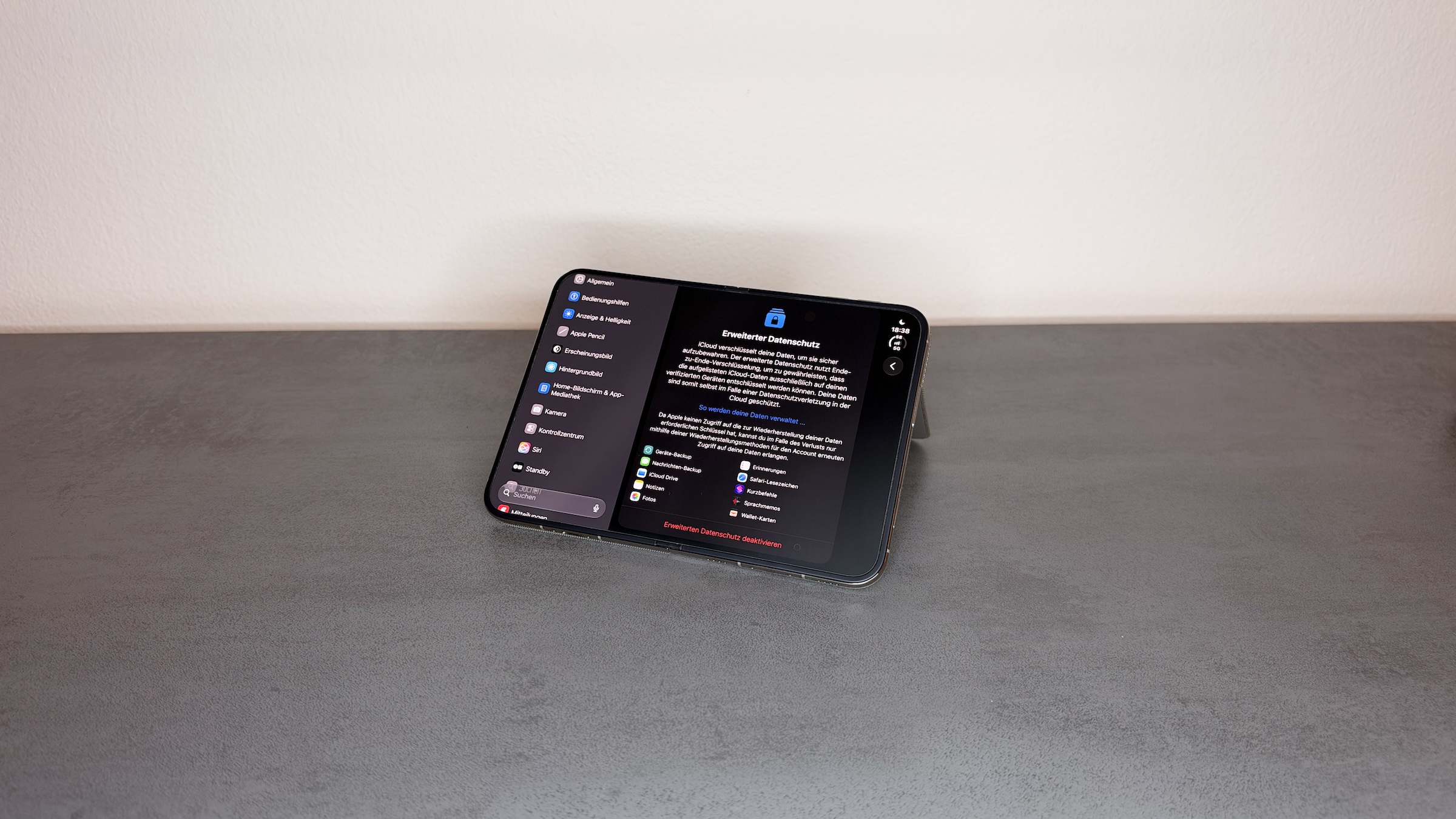
The dispute concerns British users. Apple disabled Enhanced Privacy for iCloud for new users in the UK in February 2025. According to Apple's support document, those who had already activated it there must deactivate it themselves, as Apple cannot do this automatically. Apple has not yet specified a deadline for this. Without the feature, iCloud backups, photos, and notes are only protected by standard iCloud encryption, where Apple holds the encryption keys. iMessage, FaceTime, and health data remain end-to-end encrypted.
Outside of Great Britain, Extended Privacy remains available everywhere, including Germany, Austria, and Switzerland, according to Apple. Users who wish to use the feature can activate Extended Privacy for iCloud in the settings, thereby encrypting ten additional data categories end-to-end. All articles related to the service are compiled on the iCloud topic page.
Why the ruling goes beyond secrecy
I consider this decision more important than its formal subject matter suggests. Until now, the entire dispute over a backdoor in iCloud has been shrouded in secrecy; the public has only been aware of reports and hints. From now on, the government must at least partially disclose its legal position regarding the powers granted under the Investigatory Powers Act, and Apple can present its case publicly for the first time.
I expect that the two grounds for interpreting the law will have the greatest impact, because if successful, they will limit the authority itself, and not just this one order. For users in Great Britain, nothing will change until the hearing next year. For users in Germany, this case demonstrates why Extended Data Protection is not a niche feature: according to reports, it is precisely what the British government wanted access to.
Would you enable Enhanced Privacy even though Apple would then be unable to help you if you lost access, or is the convenience of regular iCloud protection more important to you? Let us know your decision in the comments.