Whether London will demand access to encrypted iCloud data from Apple has been an open secret for a year and a half – the government has never officially confirmed it. This was precisely the subject of negotiations in London on Thursday. Apple and two civil rights organizations want to ensure that future proceedings are based on the actual facts.
The Investigatory Powers Tribunal, the UK's special court for surveillance matters, heard on September 17 not about the order itself, but about the silence surrounding it. The British government adheres to the principle of neither confirming nor denying the existence of such orders. Apple had already filed a second complaint in July against the order, which is tailored to British users; the tribunal is hearing it together with a complaint from Privacy International and Liberty. The hearing took place at the Royal Courts of Justice, as reported by Computer Weekly from the courtroom.
Key Facts at a Glance
- The tribunal heard arguments on September 17th about whether the British government should remain silent on the issue of whether it has obligated Apple to provide a backdoor.
- Apple's lawyers and the civil rights groups consider this untenable because US government officials and anonymous British sources have already confirmed the order.
- The government argues that any break in silence would reveal to criminals which providers have received such orders.
- A decision will be made later; a hearing on the order itself is not expected before 2027.
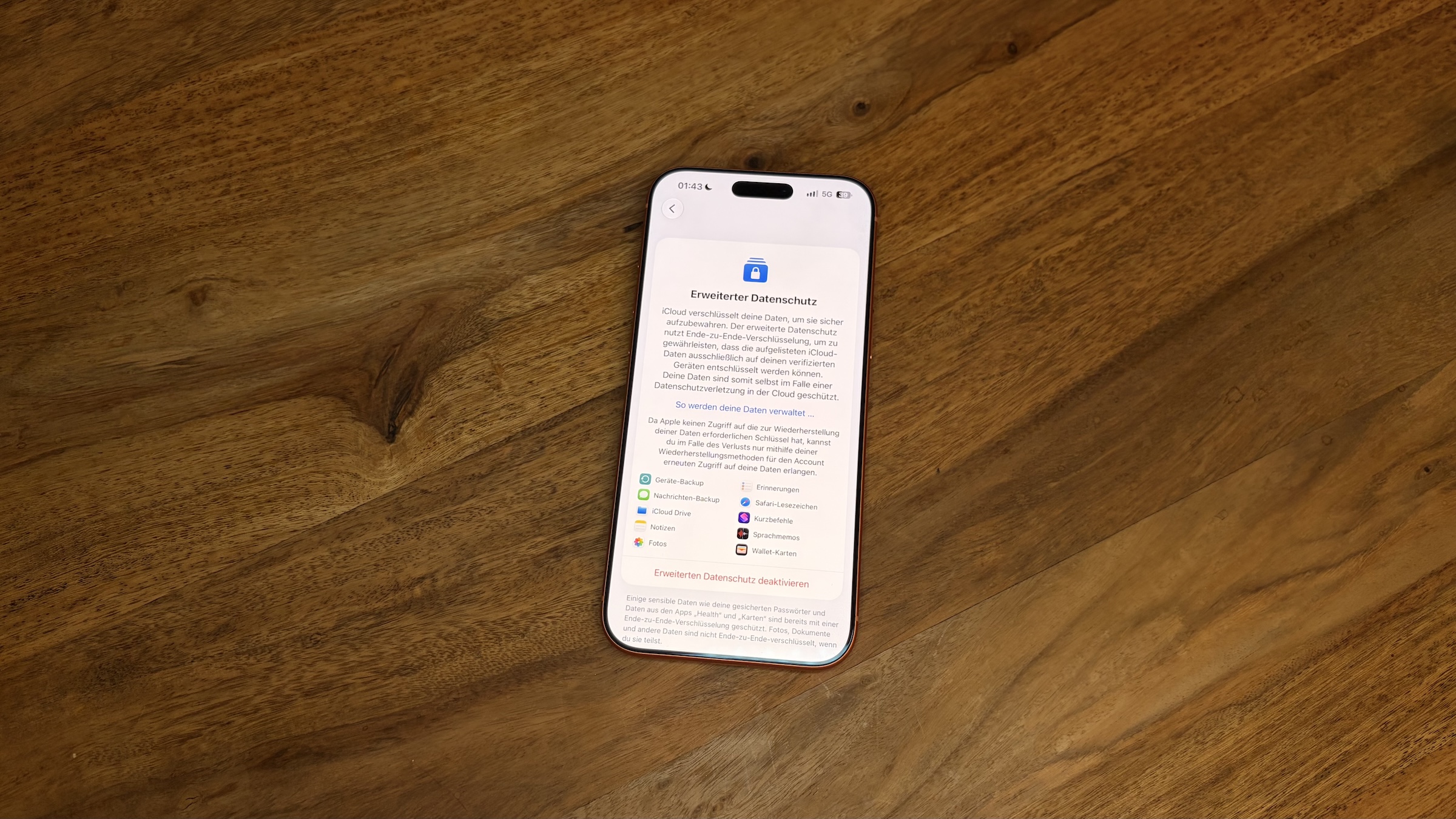
- In Germany, Austria and Switzerland, the Extended Privacy for iCloud can still be activated.
What the hearing was about
The order at the heart of the matter is a so-called Technical Capability Notice. This allows the British Home Office to compel service providers to maintain technical access for law enforcement. Anyone receiving such an order is prohibited from disclosing it publicly. Therefore, Apple cannot yet openly state what it is actually challenging in its legal action.
The government proposes conducting the proceedings based on presumed facts. The case would then proceed as if an order existed, without its confirmation. Apple and the two organizations reject this. According to Reuters, both lawyers described the policy of silence as a violation of the principle of public trial, preventing meaningful public debate about the case.
The arguments against silence
Ben Jaffey, lawyer for Privacy International and Liberty, called the government's stance in court a farce. His reasoning: The initial order from January 2025 was not only widely reported but also confirmed to The Times by sources in the Home Office. This was further supported by public statements from then-US Director of National Intelligence Tulsi Gabbard and US President Donald Trump. Gabbard had announced in August 2025 that London had dropped its demand for the data of American users.
Two further points were raised. WhatsApp and Google testified that they had not received such an order—they are allowed to do so because no law prohibits confirming the absence of an order. And a letter to the tribunal from Democratic US Senator Ron Wyden and Republican Representative Warren Davidson reveals that Apple was permitted to discuss the order with the US government, but not with Congress. The very necessity of such permission, Jaffey argued, proves the existence of the order.
Apple's lawyer, Daniel Beard, also contradicted the assertion that a trial based on alleged facts would have no consequences for the plaintiffs. He stated that this assertion was simply false.
Why the government is sticking to its line
Neil Sheldon spoke on behalf of the government. His central argument: If the government were to confirm or deny the case in this one instance, it would be difficult to maintain a consistent policy in other cases. Over time, a pattern would emerge regarding which providers have received a court order and which have not. Terrorists and perpetrators of online abuse could then specifically seek ways to circumvent legitimate access to their data.
Sheldon acknowledged that some people had likely already drawn their own conclusions from the reporting. Others, however, had not. Furthermore, the consequences of an error were very unevenly distributed: a trial based on assumed facts would only restrict public access to a limited extent, whereas breaking the silence could seriously harm national security.
What happens next
The tribunal will decide on the issue of secrecy at a later date. A full hearing on the order itself is not expected until next year, according to Reuters.
| Ask | Status after the hearing |
|---|---|
| Should the government continue to remain silent? | The tribunal's decision is pending. |
| Is the order lawful? | Main trial no earlier than 2027 |
| Enhanced data protection in Great Britain | Not available to new users since February 2025 |
| Enhanced data protection in Germany, Austria, and Switzerland | Can be activated as before. |
The tribunal has already contradicted the government on the issue of secrecy: In April 2025, it rejected the attempt to keep even the basic details of Apple's proceedings under wraps.
Why the procedural question is more than a formality
At first glance, the dispute seems like a minor legal issue. In reality, it determines whether it's even permissible to publicly debate whether a state can compel a provider to open up end-to-end encryption. If the case remains based on assumed facts, Apple won't be able to openly discuss what is actually being demanded of it, even in public proceedings.
The core of the conflict remains the service's architecture. According to Apple, with Extended Privacy, they have no access to the encrypted data. This is precisely why Apple disabled the feature for new users in the UK in February 2025, instead of weakening it.
For users in German-speaking countries, the hearing changes nothing. The second order, known since October 2025, targets British users, and in Germany, the Extended Privacy feature for iCloud can still be enabled. If you're not already using it, iCloud backups and photos, for example, are stored in a format that Apple can technically access.
Have you enabled Enhanced Privacy – or are you deterred by the fact that Apple can no longer help you if you lose access? Let us know in the comments whether the dispute in London changes your decision.