This article may contain affiliate links. Learn more on our Partner Program page.
Apple is facing criminal charges in France. The company is accused of deliberately hindering independent iPhone repairs by software-locking replacement parts to specific devices. A conviction would be the first of its kind.
The Paris public prosecutor's office is bringing Apple before the capital's criminal court. According to the AFP news agency, the European distribution company Apple Distribution International and the parent company Apple Inc. are being prosecuted. The case was initiated by a criminal complaint filed in December 2022 by the organization Halte à l'obsolescence programmée (HOP), which made the proceedings public in a statement on November 17, 2026.
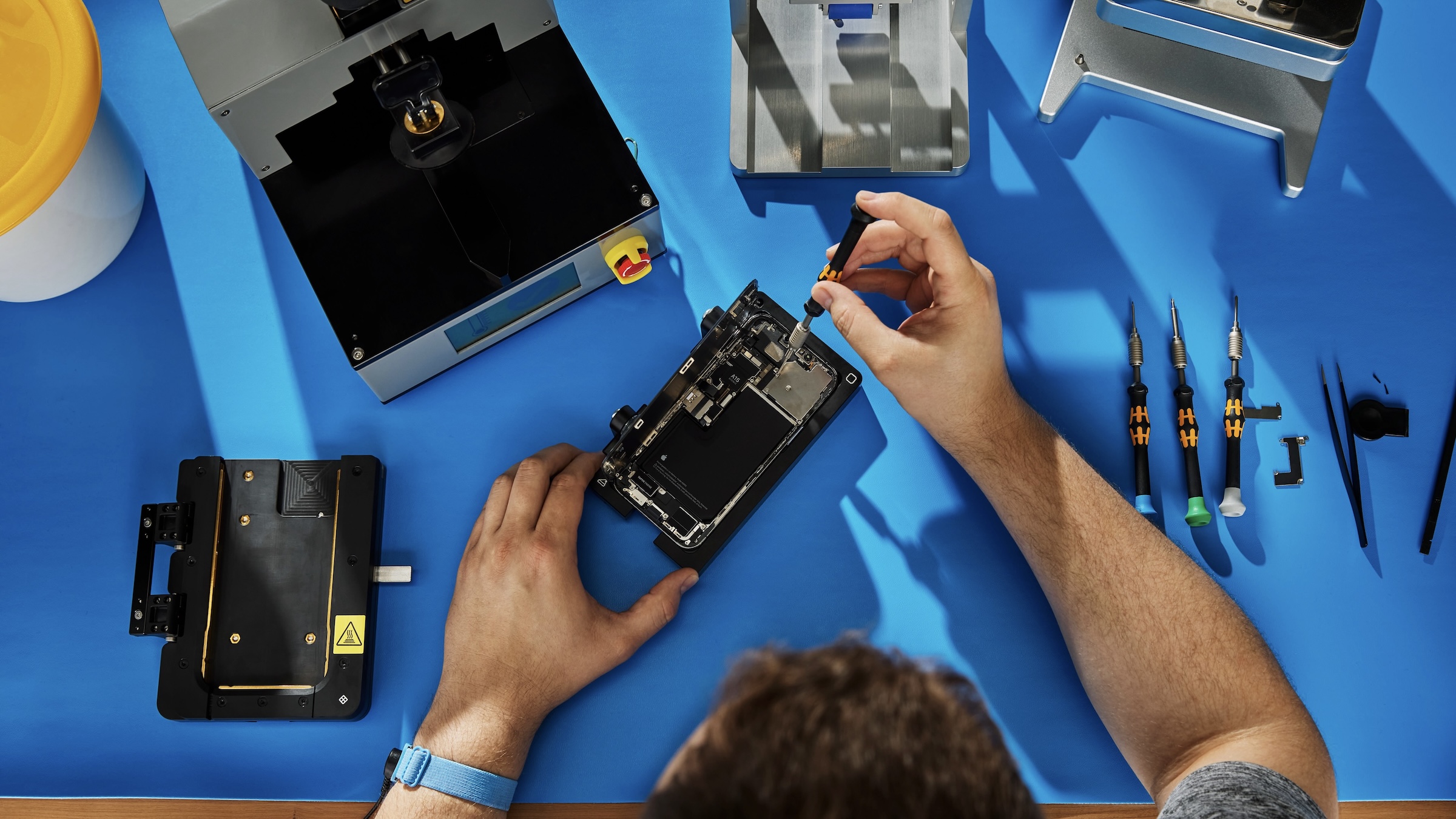
The focus is on so-called parts pairing, in which Apple electronically assigns components such as the display, battery, and camera to a specific iPhone. Apple has relaxed this procedure several times in recent years, for example with the repair assistant in iOS 18, and now also sells parts for the iPhone Duo via self-service repair. However, the court case concerns the period before these changes.
Key Takeaways
- Apple will appear before the criminal court in Paris for four days starting on June 17, 2027; a first hearing to set the date is scheduled for February 25, 2027.
- The charge is obstruction of repair and reconditioning, a criminal offense that France has had since 2021.
- According to HOP, the case concerns 24 iPhone models and practices between November 2021 and July 2024.
- Apple rejects the accusations and refers to the privacy and security of the iPhone.
- In Germany, since July 31, 2026, the Civil Code has prohibited hardware and software technologies that hinder repairs, but under civil law and not as a criminal offense.
What HOP accuses Apple of
According to HOP, replacement displays, batteries, and cameras did not function correctly after repairs performed outside of Apple's authorized network, even when genuine Apple parts were used. The organization cites as an example an iPhone XR whose touchscreen was not recognized by Apple under iOS 16 but worked again with an older iOS version.
According to HOP, the lawsuit covers 24 iPhone models and the period from November 2021 to July 2024. Legally, it is based on a provision of French consumer law that, since 2021, has prohibited technical locks used by manufacturers to prevent repairs outside their own channels. The organization refers to this as planned obsolescence through repair obstruction.
Following the complaint of December 7, 2022, the Paris Public Prosecutor's Office launched an investigation and confirmed it in May 2023. From the complaint to the indictment, almost four years passed.
Dates and penalty range
| Date | Step |
|---|---|
| December 7, 2022 | Criminal complaint filed by HOP |
| May 2023 | The Paris public prosecutor's office has made the investigation public. |
| November 17, 2026 | HOP makes the charges public |
| February 25, 2027 | Hearing regarding the scheduling of the hearing |
| from June 17, 2027 | Main hearing scheduled for four days |
If convicted, Apple faces a fine of up to €300,000 or a percentage of its annual revenue, according to a source close to the case, speaking to AFP. Affected customers could also claim damages.
Laetitia Vasseur, General Delegate of HOP, attaches appropriate importance to the procedure:
A conviction for planned obsolescence by obstructing repairs would be a historic first in France and worldwide.
How Apple defends itself
Apple considers the allegations unfounded. The company told AFP:
We categorically reject these unfounded accusations.
Apple states that testing replacement parts is necessary to ensure the privacy, security, and operational reliability of the iPhone. At the same time, the company points out that it has restricted the pairing of parts for new iPhones since 2022. In April 2024, Apple also announced support for the use of used original parts in repairs.
HOP acknowledges these steps but doubts their long-term effectiveness. In any case, they play only a limited role in the trial, as the period in question ends in July 2024.
Not the first case in France
This isn't the first time Apple and HOP have clashed in France. Following a 2017 complaint by the organization regarding throttled iPhones with aging batteries, the consumer protection agency DGCCRF investigated. The proceedings ended in February 2020 with a €25 million settlement, without a trial, based on misleading business practices through omission, not planned obsolescence.
This time the case will go to trial. A second lawsuit filed by HOP against printer manufacturer Epson is running in parallel and is scheduled to be heard before the criminal court in Nanterre on February 25, 2027.
Why the process extends beyond France
I consider the potential sentence less important than the conviction itself. It would be the first time a court has legally established that parts pairing went beyond what is permissible. This very question is now also being raised in Germany.
Since July 31, 2026, the right to repair under the EU Directive has been in effect here, implemented, among other things, in Section 479e of the German Civil Code (BGB). According to this directive, smartphone manufacturers may not use hardware or software technologies that hinder repairs, unless legitimate and objective reasons, such as the protection of intellectual property, justify them. Under certain conditions, they may also not obstruct the use of used or compatible spare parts by independent repair shops.
The difference lies in the legal framework. France criminalizes obstructing repairs, while German law addresses it within the realm of sales law. Whether Apple's argument that testing parts serves safety is a legitimate and objective reason remains the crucial question under German law as well. I therefore expect the Paris ruling to be interpreted here in Germany as a benchmark for defining the boundary between protection and obstruction.
Have you ever had an iPhone repaired outside of Apple's network and then received an error message about an „unknown part“—or did everything go smoothly? Tell us in the comments how your repair went.