This article may contain affiliate links. Learn more on our Partner Program page.
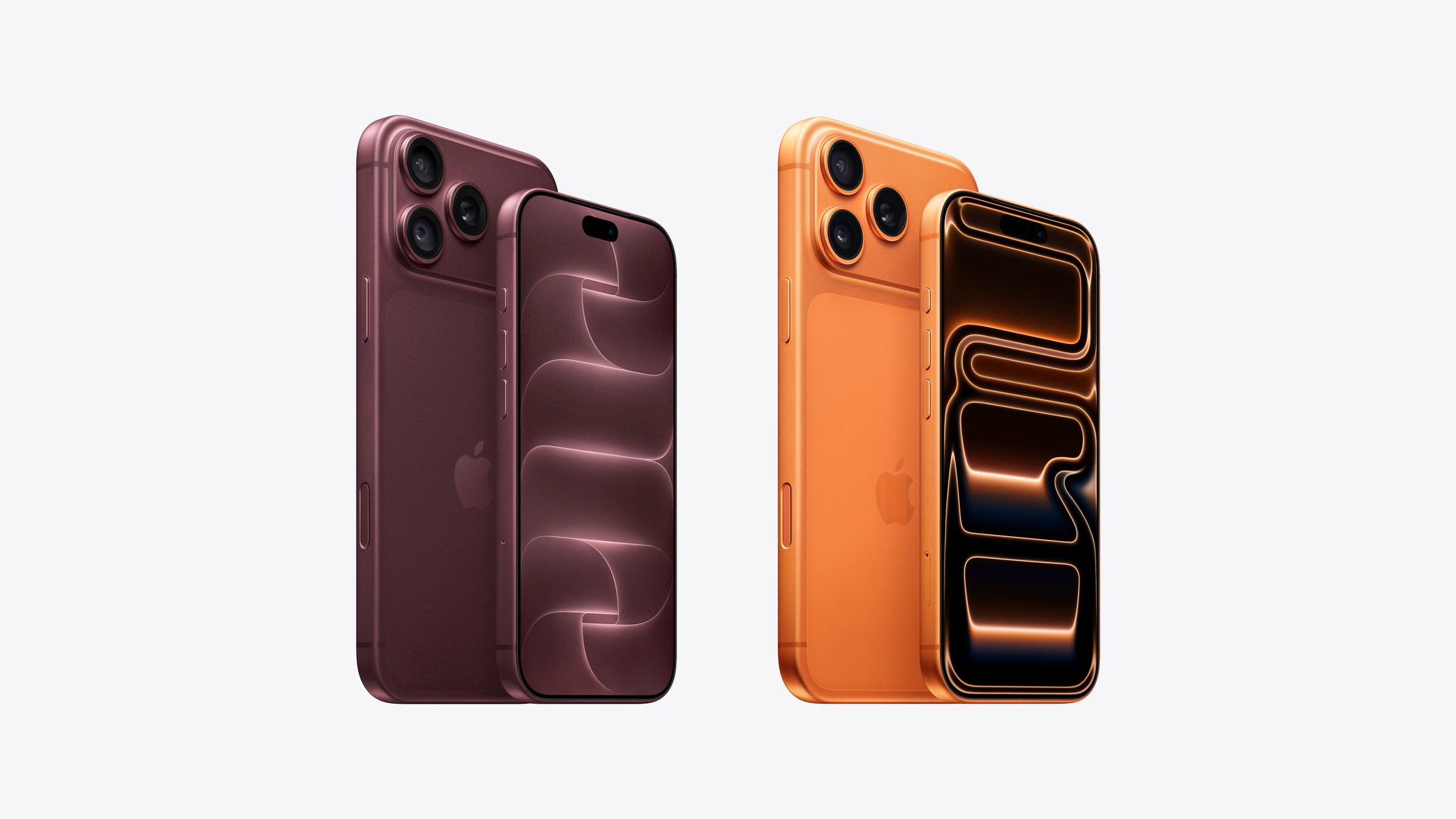
The iPhone 17 Pro and iPhone 18 Pro differ by a year, five grams, and up to €400 in storage capacity. The casing remains identical down to a tenth of a millimeter, as does the display in every single dimension. The differences lie in the chip, the main camera, and the price.
Apple unveiled its new Pro generation on September 9th, along with the new watches, the AirPods 5, and the first foldable iPhone – a recap of the entire evening shows just how packed the schedule was. For iPhone 17 Pro owners, a more pressing question arises: What's really changed when the two devices are virtually indistinguishable from the outside?
The answer lies in the technical specifications. This comparison is based on the technical specifications of the iPhone 18 Pro, as well as the datasheets for the iPhone 17 Pro and the iPhone 17 Pro Max. The Pro and Pro Max are discussed together here because both models are identical except for size, weight, and battery life.
Key Facts at a Glance
- The A20 Pro features a seventh GPU core and a doubled Neural Engine with 32 cores. Apple claims a graphics improvement of up to 40 percent compared to the A19 Pro.
- The main camera now has a variable aperture with four levels from ƒ/1.48 to ƒ/4.0. On the iPhone 17 Pro, it was fixed at ƒ/1.78.
- Battery life increases by three hours for the Pro and by six hours for the Pro Max. For the first time, Apple also provides a figure for typical usage.
- Dimensions and display remain unchanged, the weight increases by 5 and 18 grams respectively.
- The entry-level model costs €150 more, the 1TB version €400 more. The smaller Pro model offers 2TB for the first time.
The A20 Pro and the second Neural Engine
Both chips have six CPU cores, but Apple names them differently: The A19 Pro featured two performance cores and four efficiency cores, while the A20 Pro has two super cores and four efficiency cores. The difference is more significant in graphics. Instead of six GPU cores, there are now seven, each with Neural Accelerators and hardware-accelerated ray tracing. At the launch, Apple claimed up to 40 percent more graphics performance compared to its predecessor.
The biggest structural leap lies in the Neural Engine. The 16 cores are replaced by two blocks of 16 cores each, for a total of 32. Together with the next-generation vapor chamber, this aims to create models that can run continuously on the device without performance dropping after just a few minutes.
What the more powerful chip doesn't change: Apple Intelligence's server-side functions are subject to daily usage limits, and these apply regardless of which processor is in the device.
Variable aperture: the real reason to buy
The main camera retains its 48-megapixel resolution and 24mm focal length, but for the first time features an adjustable aperture. Four aperture settings are available – ƒ/1.48, ƒ/1.8, ƒ/2.8, and ƒ/4.0 – controlled by a blade mechanism. On the iPhone 17 Pro, the aperture was fixed at ƒ/1.78, with any changes to the depth of field handled by software.
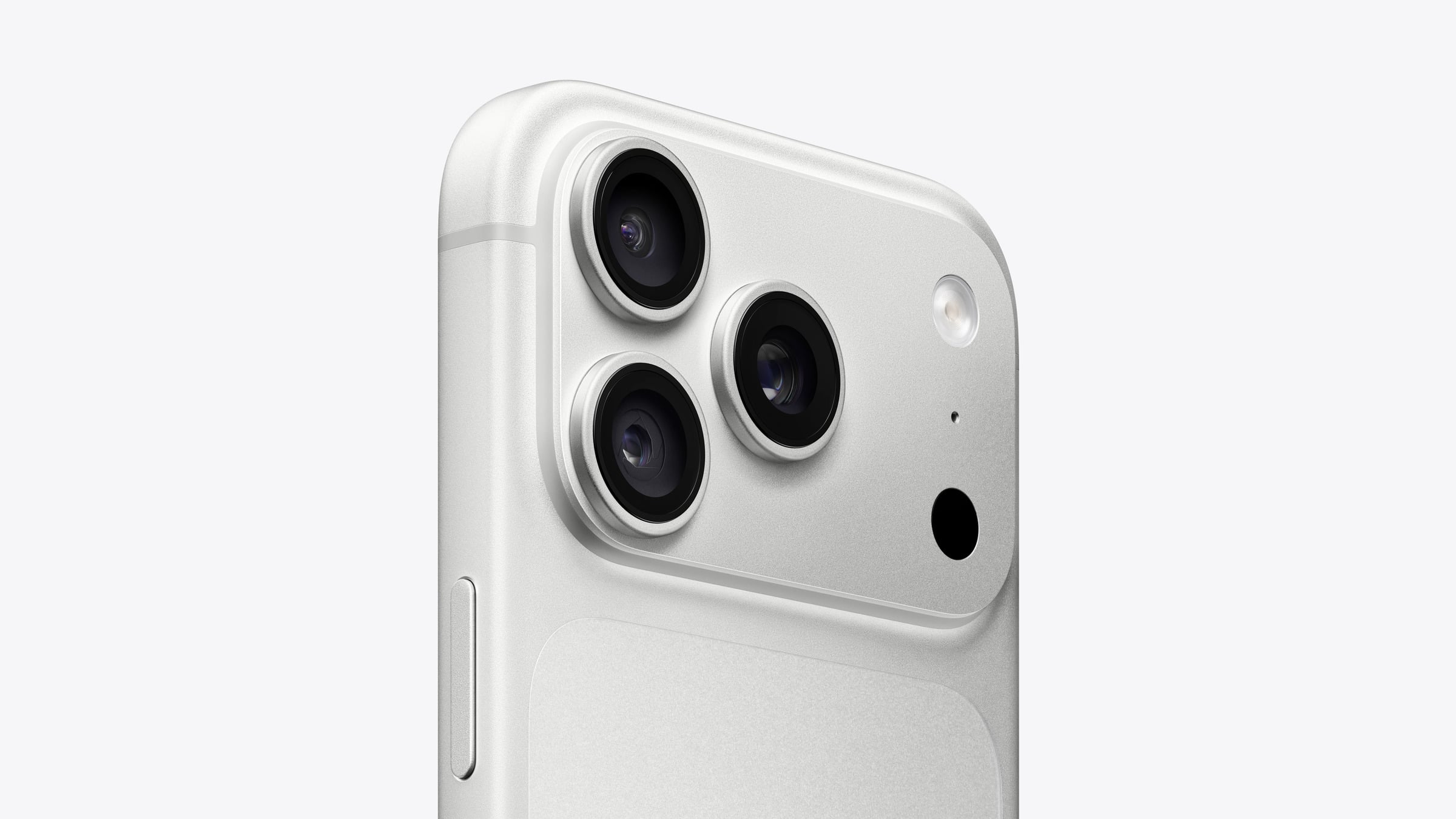
New Pro controls for aperture, shutter speed, white balance, and histogram, as well as Apple Reference Image, have been added to the camera app. The ultrawide lens now delivers high-resolution photos at either 24 or 48 megapixels; previously, only the 48-megapixel option was available. The telephoto lens remains unchanged: 100mm with 4x zoom, plus the 200mm optical zoom.
The video improvements are more significant than the specifications might initially suggest. The movie mode now records up to 4K Dolby Vision at 60 frames per second instead of 30, the digital zoom extends to 24x instead of 15x, and the front camera receives the same Pro controls as the rear camera – for shutter speed, white balance, and histogram.
Battery: three hours longer, six with the Max
| Value | iPhone 17 Pro | iPhone 18 Pro | iPhone 17 Pro Max | iPhone 18 Pro Max |
|---|---|---|---|---|
| Video playback | 33 hours. | 36 hours. | 39 hours. | 45 hours. |
| Video playback streamed | 30 hours | 33 hours. | 35 hours. | 40 hours. |
| Typical use | not specified | 24 hours | not specified | 30 hours |
The increase is more significant with the larger model: six hours compared to three. Another new feature is that Apple now provides a value for typical usage – the iPhone 17 Pro's specifications only listed video playback.
In Germany, there's a limitation that isn't mentioned in the US specifications: The version sold in Germany, Austria, and Switzerland (DACH region) with a physical SIM card slot has a battery life two hours shorter than the eSIM model. Apple therefore lists 43 hours instead of 45 for the iPhone 18 Pro Max on its German website. Anyone wanting to maximize battery life in everyday use will have to adjust the settings anyway.
Charging times have changed. The iPhone 17 Pro reached 50 percent in 20 minutes with a 40-watt power adapter. The iPhone 18 Pro achieves the same result in about 15 minutes, but requires a 60-watt power adapter with adjustable voltage supply. Using MagSafe, it still reaches 50 percent in 30 minutes at 25 watts – only the power adapter requirement is now 35 watts instead of 30.
What has remained the same
The case dimensions are identical to a tenth of a millimeter: 150.0 × 71.9 × 8.75 millimeters for the smaller model, 163.4 × 78.0 × 8.75 for the larger one. The display specifications are also identical in every single data sheet entry – 6.3 or 6.9 inches, 460 ppi, ProMotion up to 120 Hz, 1,000 nits typical brightness, 3,000 nits outdoors, contrast ratio 2,000,000:1.
The only change is the weight: from 206 to 211 grams for the Pro and from 231 to 249 grams for the Pro Max. The 18 grams difference in the larger model is the most noticeable difference in the hand – despite the dimensions being exactly the same.
Also unchanged are IP68, the LiDAR scanner, Wi-Fi 7, Bluetooth 6, Thread, the second-generation Ultra Wideband chip, and USB 3 with 10 gigabits per second. New to the specifications, however, is Apple's own C2 modem; Apple didn't mention a modem at all for the iPhone 17 Pro. The recycled content increases from 30 to 40 percent, and the recycled aluminum content rises from 50 to 85 percent.
Software-wise, there's little difference between the generations: The iPhone 18 Pro ships with iOS 27, while the iPhone 17 Pro receives it as an update. The release candidate has been available since the keynote evening.
Storage and prices: the surcharge increases
| Storage | iPhone 17 Pro | iPhone 18 Pro | iPhone 17 Pro Max | iPhone 18 Pro Max |
|---|---|---|---|---|
| 256 GB | 1.299 € | 1.449 € | 1.449 € | 1.599 € |
| 512 GB | 1.549 € | 1.699 € | 1.699 € | 1.849 € |
| 1 TB | 1.799 € | 2.199 € | 1.949 € | 2.349 € |
| 2 TB | – | 2.949 € | 2.449 € | 3.099 € |
The price increase is unevenly distributed. The 256 and 512 gigabyte options each cost €150, the 1 terabyte option €400, and the 2-terabyte Pro Max version €650. Those sticking with the entry-level size will therefore pay roughly ten percent more; those wanting the maximum capacity will pay significantly more.
Behind this change is a revised pricing structure. Previously, each storage upgrade across the iPhone lineup cost €250. For the iPhone 18 Pro, it's €250 for 512 gigabytes, €500 for 1 terabyte, and €750 for 2 terabytes. From the entry-level model to the largest variant, this adds up to €1,500 – compared to €1,000 for the Pro Max in the previous generation. On the plus side, the 2-terabyte option is now available in the smaller model for the first time; previously, it was exclusive to the Max. The price difference between the Pro and Pro Max remains exactly €150 at each upgrade level.
The price increase didn't just affect the new generation, by the way. The iPhone 16, 17e, 17 and Air have also cost more since September 9th.
The calculation works out via the camera – or not at all
A generational upgrade after only one year rarely makes sense, and this one is no exception. The display, dimensions, telephoto range, and ports are identical; hardly anyone will notice the three extra hours of video playback in everyday use. That leaves the variable aperture, the Pro settings, and the seventh GPU core.
This clearly defines the target audience: those who regularly take photos and actually want to control the depth of field will find this to be the only feature that cannot be added via an update. For everyone else, the iPhone 17 Pro is a device that offers the same screen specifications, the same zoom range, and the same operating system.
In practice, however, the question has shifted: Apple has not sold the iPhone 17 Pro and Pro Max directly since their launch. Anyone still wanting one is dependent on remaining stock at retailers – and there, on daily prices, not the aforementioned list prices. For buyers, this means that the 2-terabyte version of the Pro Max, priced at €2,449, will disappear as an option once stocks are depleted. Its successor costs €650 more at this point.
The move to the new device
The transfer itself is the least exciting part. Both devices support quick start, iCloud restore, and direct device-to-device transfer – which method is best depends primarily on the amount of data and Wi-Fi speed. One point deserves attention: Both generations work with dual eSIM, so there's no need to swap SIM cards in stores without a slot.
The iPhone 18 Pro has been available for pre-order since September 12th, and will be delivered starting September 18th.
What's the deciding factor for you – the variable aperture or the €400 surcharge for the terabyte? Let us know your reasoning in the comments.
Frequently Asked Questions: iPhone 18 Pro vs. iPhone 17 Pro
Only recommended for serious photography enthusiasts. The display, dimensions, telephoto reach, and ports are identical, but battery life increases by three hours. The variable aperture is the only new feature that cannot be added via a software update.
The main camera. For the first time, it works with an adjustable aperture in four steps from ƒ/1.48 to ƒ/4.0, whereas the iPhone 17 Pro had a fixed ƒ/1.78 aperture.
No. Both measure 150.0 × 71.9 × 8.75 millimeters, the Max models 163.4 × 78.0 × 8.75. Only the weight increases – by 5 grams for the Pro and by 18 grams for the Pro Max.
Apple claims up to 40 percent more graphics performance. The chip has seven GPU cores instead of six and a Neural Engine that has been doubled to 32 cores.
Up to 36 hours of video playback on the Pro and 45 hours on the Pro Max. The version sold in this country with a SIM card slot offers two hours less.
It's no longer available at Apple. It's available in stores while supplies last – daily prices apply there, not the previous list prices.
Apple has changed its storage pricing structure. Instead of a flat €250 per doubling, the upgrade to 1 terabyte now costs €500, and the upgrade to 2 terabytes costs €750.