This article may contain affiliate links. Learn more on our Partner Program page.
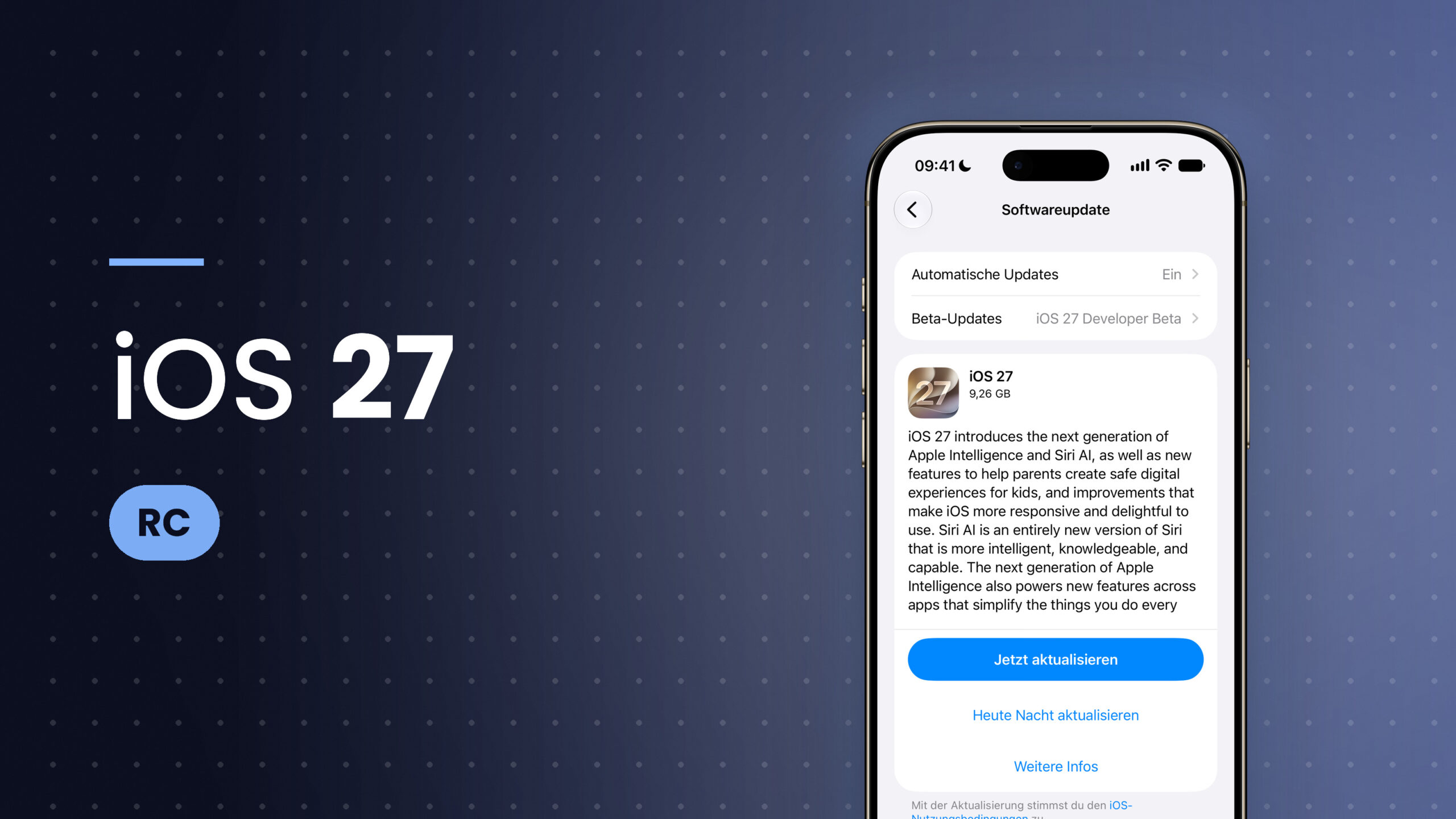
Apple has released the Release Candidate of iOS 27 – the version that typically becomes the public version unchanged. The beta cycle is now over, and the official release for all iPhones is imminent. However, the specific device owned will determine how much of the update users actually receive.
After eight rounds of testing since the WWDC kickoff in June, Apple is concluding its testing phase. The Release Candidate follows the last regular beta and marks the point at which no further changes will be made to the feature set. If no critical bugs are found in this version, this exact build will be rolled out to all compatible devices.
Key Facts at a Glance
- Apple has released the iOS 27 Release Candidate to developers and public beta participants.
- The release candidate is generally the final build; the public release will take place next week.
- Device compatibility remains unchanged: iOS 27 runs on the iPhone 11 and newer, as well as the second generation iPhone SE and newer.
- The full range of functions depends on the device – the new Siri AI features require at least an iPhone 15 Pro.
- Siri AI is blocked on iPhone and iPad in the EU by the Digital Markets Act; Switzerland is exempt.
What the Release Candidate means
The Release Candidate is the version Apple considers ready for release. No new features are added, and bug fixes are only implemented if a critical problem arises. For developers, this is the final version against which they test their apps; for beta users, it means that switching to the public version is seamless – anyone who has installed the Release Candidate will receive the final version as a regular update. Apple details the changes included in this version in the official iOS 27 release notes.
The date is already set: iOS 27 will be released on September 14th for all compatible iPhones. Apple announced the date at the keynote on September 9th, where the new iPhones were also unveiled. The short interval between the release candidate and the official release is typical – with iOS 26, there were also only a few days between the two.
These iPhones will get iOS 27 – and how much of it
Apple is not removing any devices from the list this year: Anyone who could install iOS 26 will also get iOS 27. However, the range of functions is divided into three levels, and this difference is greater than the question of compatibility itself.
| Equipment group | What arrives |
|---|---|
| iPhone 11 and newer, iPhone SE (2nd generation) and newer | The basic system with revised apps, youth protection features and speed improvements. |
| iPhone 15 Pro and newer | Additionally, the Apple Intelligence features including Siri AI |
| iPhone 17 Pro, iPhone 17 Pro Max, iPhone Air | Additionally, the functions that require the highest computing power |
Users with older devices will therefore receive a solid, but significantly stripped-down version of iOS 27. The difference lies not in the compatibility list, but in the hardware requirements of the AI functions.
The DMA hook remains
For users in Germany and Austria, there's a second restriction that applies regardless of the device: Siri AI is blocked on iPhones and iPads in the EU due to the Digital Markets Act. Even those who own an iPhone 17 Pro won't have access to the assistant at launch in these countries. Apple's holdback is due to the DMA's interoperability requirements.
Switzerland is on the other side: it belongs neither to the EU nor the EEA and is not subject to the DMA – Siri AI has been running there from day one. What exactly Siri AI is supposed to do can, for now, only be observed from afar in Germany.
Wait or install now
The same applies to the Release Candidate as to any test version: it is not yet a final product, even if it comes very close. Those who only need to bridge a few days anyway gain little from installing it. This step is primarily useful for developers who want to test their apps and for beta users who want to complete the cycle.
A full backup is always recommended before installation – even for a release candidate.
Two levels of disappointment
For German-speaking countries, this update encounters an unusual situation: first the hardware filters access, then the regulations. Anyone who doesn't own an iPhone 15 Pro or newer won't get the AI features anyway – and even those who do won't get them in Germany. What remains is a solid system update with better apps, improved speed, and enhanced parental controls. That's not a bad outcome, just not the one Apple announced for the update back in June. Anyone planning to upgrade to a new iPhone solely for Siri AI still has no reason to rush.
iOS 27: Here's what's next
Experience shows that after the release, the first fix updates follow within a few weeks, before the next round of features arrives with iOS 27.1. For users in the EU, this is the really interesting point: it's when Apple decides whether it will lift the Siri AI restriction during the cycle or whether it will remain in place for the entire generation.
Are you installing iOS 27 on release day – or are you waiting for the first fix update because you miss the AI features in your region anyway? Let us know in the comments how you plan to do it this time.