This article may contain affiliate links. Learn more on our Partner Program page.
Apple is redesigning the Health app and adding two new sections: an overview of current health status and a long-term view with an estimated health age. Motion analysis via the iPhone camera will also be included. The catch for German-speaking countries lies in the timeline.
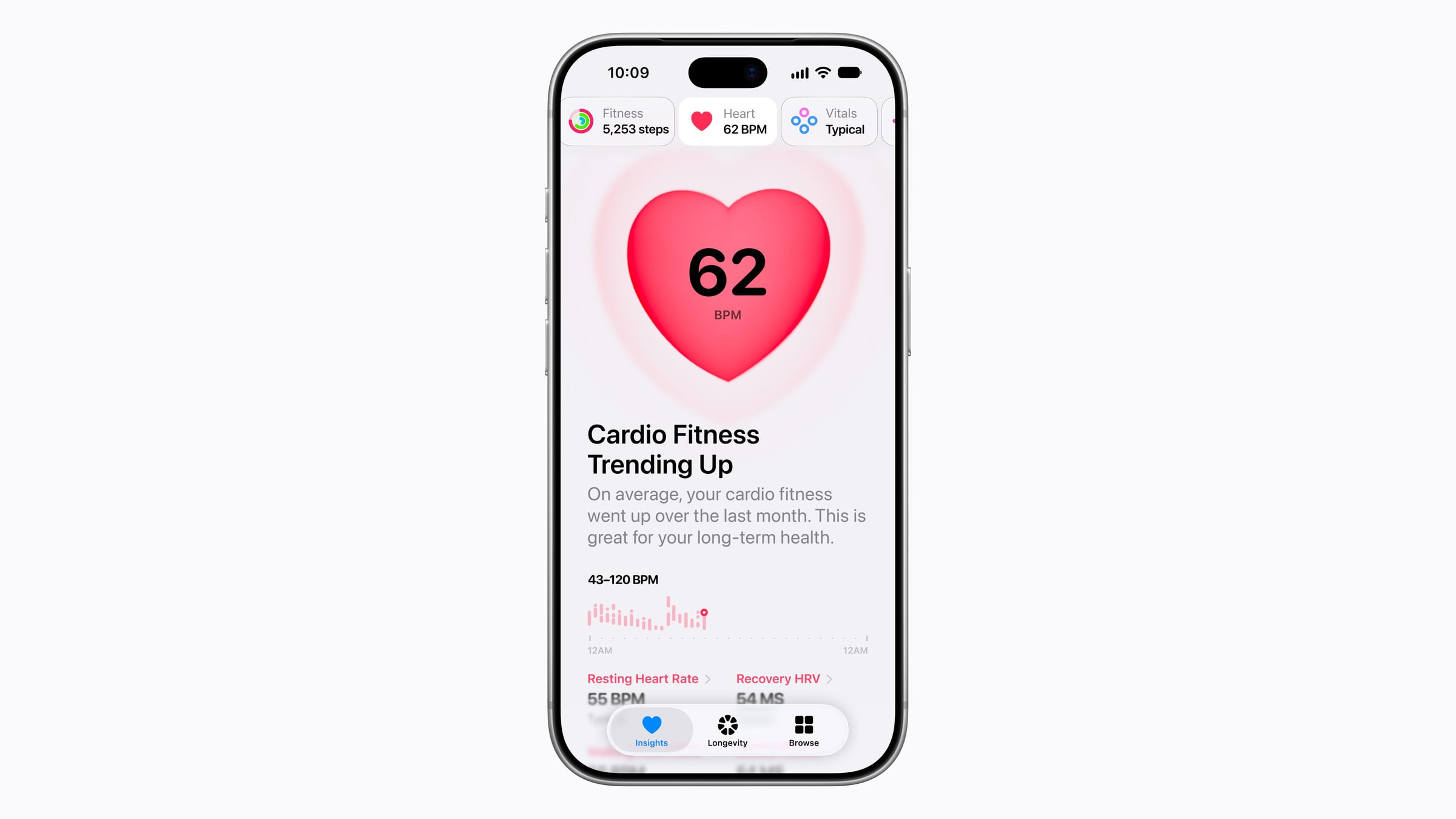
Alongside the new Apple Watches, Apple has announced plans for the Health app. The announcement in the Apple Newsroom describes a redesigned app that will be tailored to user data and incorporate Apple Intelligence. Much of this was already visible in the iOS 27 beta versions – but the scope Apple is now outlining goes beyond that.
Key Facts at a Glance
- The redesigned health app will be released later this year and will launch in US English, with other languages to follow.
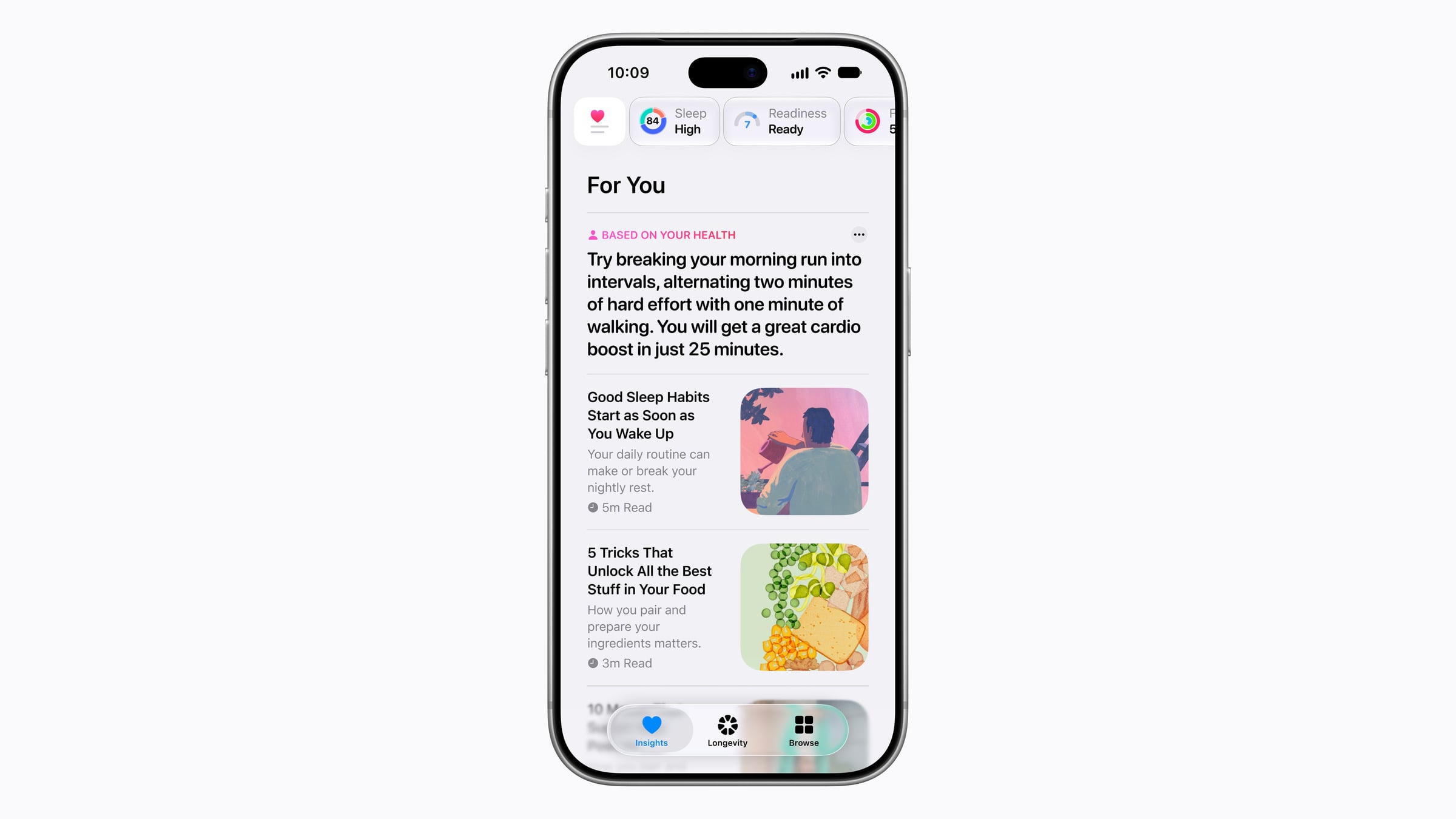
- An Insights section summarizes heart rate, sleep, daily form, fitness, vital signs and cycle, and updates throughout the day.
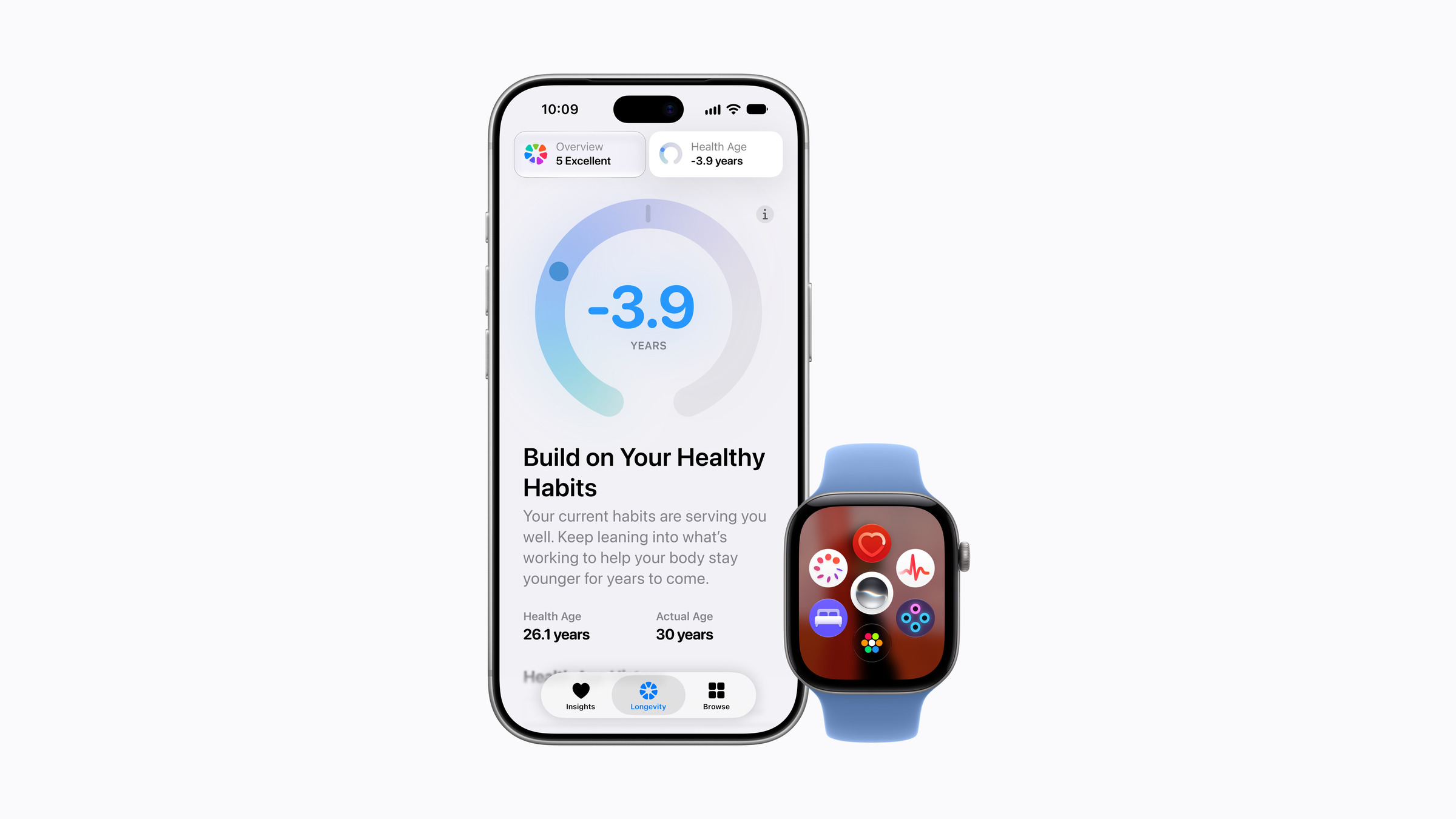
- The Longevity section includes Health Age: a health age calculated from Apple Watch data compared to actual age.
- Motion analysis is performed via iPhone camera and Apple Watch, entirely on the device and without video recording.
- Lab tests via the app are only available in the USA: $119 for over 50 biomarkers at around 2,000 locations.
The timetable is the DACH point
According to Apple, the redesigned app will be released later this year, initially in US English, with other languages to follow. Apple has not yet announced a release date for German. An iPhone or iPad that supports Apple Intelligence is also required; some features only work on iPhone, and Health Age additionally requires an Apple Watch.
What will arrive in this country on September 14th, however, are the extensions that are directly linked to iOS 27 and watchOS 27 – such as the cycle tracking and the workout buddy.
Insights and Longevity: two new areas
The Insights section collects daily data on heart rate, sleep, general condition, fitness, vital signs, and menstrual cycle, updating the summary throughout the day. A section called "For You" provides recommendations and articles based on your own data, such as a suggested evening routine after several short nights.
The Longevity section analyzes long-term data and categorizes it into heart health, sleep, mental well-being, exercise health, metabolism, hearing, and nutrition. Within this section is Health Age: Apple uses values such as VO2 max, resting heart rate, sleep patterns, and heart rate variability to calculate how your measurements compare to your actual age. Adding lab values like A1c or LDL further refines the calculation.
Apple draws its data from iPhones, Apple Watches, AirPods, clinical findings, and third-party apps and devices. An AI-powered health coach had been anticipated for the Health app for some time and had been delayed.
Motion analysis via camera
New features include analyses designed to measure mobility, strength, balance, biomechanics, and VO2 max at home – using the iPhone camera and Apple Watch. Apple emphasizes that the entire process runs on the device: no video is recorded, saved, or shared. Audio and visual feedback is provided during the exercise, and according to Apple, the feature was developed with clinical input.
For its lab tests, Apple has partnered with Quest Diagnostics in the US. Appointments can be booked and paid for via the app: $119 for a package with more than 50 biomarkers at approximately 2,000 locations. Apple has not announced any plans for this service in German-speaking countries.
Cycle tracking detects menopause
With iOS 27, the cycle tracking feature supports perimenopause and menopause. Users can enter their status, record symptoms, and track cycles over extended periods. Those who log bleeding after menopause will receive a notification to consult a doctor.
In addition, a notification will be sent to individuals aged 40 and older if their recorded cycle patterns suggest perimenopause. The reason: Symptoms often begin years before the last menstrual period and are therefore rarely recognized. Apple published data from its own Women's Health Study on this topic earlier this year.
What the watches contribute
The sensors behind the new metrics are located in the Apple Watch Series 12 and Apple Watch Ultra 4. The announcement provides one figure more precisely than the product announcements: heart rate variability will now be measured every five minutes – resulting in the 24-fold increase in frequency mentioned elsewhere.
Minor enhancements relate to sports: GymKit transmits heart rate data via iPhone to treadmills and indoor bikes using AirPods Pro 3, and new models are designed to improve distance calculation on the treadmill from the very first step.
| Available from September 14th | Later this year | |
|---|---|---|
| Heart rate every five seconds | Yes, with Series 12 and Ultra 4 | – |
| Daily form on the clock | Yes, with Series 12 and Ultra 4 | – |
| Cycle log with perimenopause | Yes, with iOS 27 | – |
| Workout buddy without iPhone | Yes, with watchOS 27 | – |
| Insights and Longevity area | – | Yes, first in US English |
| Health Age | – | Yes, Apple Watch required. |
| Motion analysis via camera | – | Yes |
| Lab tests via the app | – | US only, $119 |
Lots of billing, little approval
Health Age is where opinions will diverge. An age calculated from resting heart rate, sleep patterns, and VO2 max is easy to grasp and invites comparison – but it's a model calculation, not a medical assessment. Apple explicitly labels the Vital Signs app as a wellness feature, and the same applies to the new areas.
More practically relevant are the movement analyses. Mobility and balance are rarely tested in everyday life because this usually requires an appointment with a physiotherapist or sports medicine specialist. If the analysis actually stays on the device and no video leaves the iPhone, this is a feature that other providers don't offer.
For you here in this country, however, it will remain a spectator for the time being: As long as the new app only runs in English, only what is delivered directly with iOS 27 and watchOS 27 will be available here.
Would a calculated health age be a useful indicator for you, or rather a number that causes unnecessary anxiety? Let us know your thoughts in the comments.