
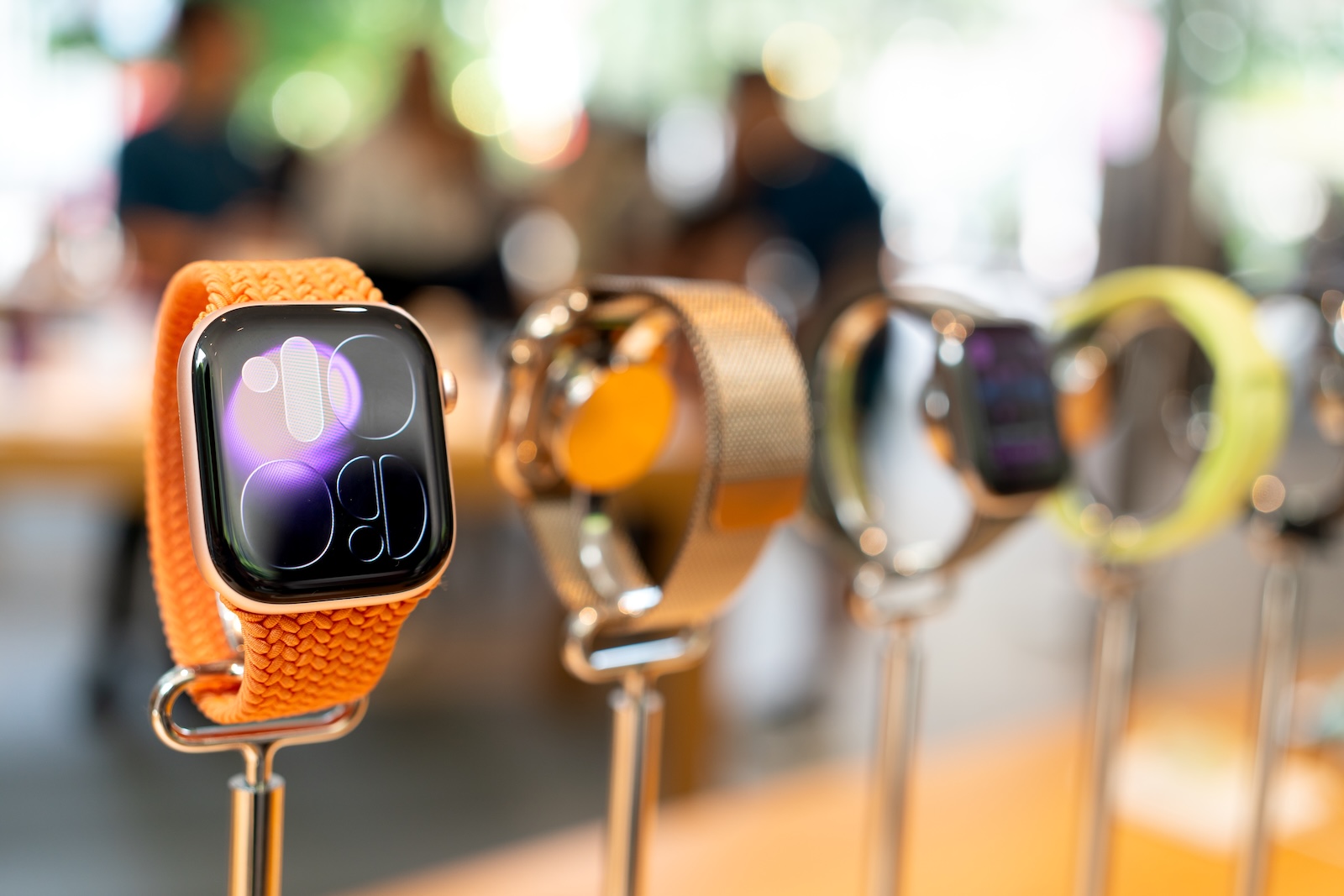
More than 94,000 nights analyzed, measured at the wrist: Researchers from Harvard used Apple Watch data to investigate how women's sleep changes around menopause. The analysis reveals clear patterns – and at the same time, how differently this phase of life unfolds.
For several years, Apple has been using the Apple Watch specifically for large-scale health studies conducted through the Apple Research app. These include the Apple Women's Health Study, the Apple Heart and Movement Study, and the Apple Hearing Study, launched in 2019, which involves institutions such as Harvard, Brigham and Women's Hospital, the American Heart Association, and the University of Michigan. According to Apple, these studies recently enrolled more than 350,000 participants in the US. The Harvard T.H. Chan School of Public Health has now presented the results of an analysis focusing on sleep patterns during perimenopause - the transitional phase before and around the final menstrual period. The analysis is based on the same nightly measurements used to generate the Apple Watch sleep score.
What the data shows
For the Investigation Titled „A Transition of Seasons: Sleep Patterns and Changes in Perimenopause,” the study analyzed more than 94,000 nights of Apple Watch sleep data. This data came from 338 participants in the Apple Women's Health Study, aged between 25 and 59, with the vast majority being between 45 and 59 years old.
A key finding concerns nighttime wakefulness: In the twelve months before and the twelve months after their last documented menstrual period, many participants spent more time awake in bed. Specifically, in the 18 months before menopause, 60 percent of the women with sleep data showed an increase in so-called WASO values compared to the previous six months – that is, the time spent awake after falling asleep. The average increase was 7 percent. Over the period from twelve months before to twelve months after their last menstrual period, postmenopausal participants spent approximately 0.8 percent more of their sleep time awake than before.
It is important to note the researchers' own assessment: the results varied considerably from person to person. Some participants experienced significantly larger increases in nighttime wakefulness, while others saw no noticeable change in sleep quality. The study leaders emphasize that every woman experiences the peri- and postmenopause differently.
More than just disturbed sleep
In addition to sleep data, the participants recorded other symptoms that can accompany menopause. Hot flashes were the most frequently reported, with 82.3 percent of the women reporting them. These were followed by irritability (68.1 percent), mental exhaustion (65.7 percent), and sexual dysfunction (65.6 percent).
The analysis of those participants who reported particularly pronounced symptoms is revealing. In their case, four symptoms were most closely associated with poorer sleep: bladder problems, joint pain, heart-related complaints, and depressive symptoms. While a causal relationship cannot be inferred from this, the frequency points to the complex interplay of physical changes during this phase.
Researchers' recommendations for better sleep
From the data, the researchers derived several practical tips that can help women in perimenopause achieve more restful sleep. They recommend a cool temperature in the sleeping environment and a consistent sleep schedule with fixed times.
In addition, regular exercise in daily life and avoiding typical bladder irritants, combined with reduced fluid intake in the hours before bedtime, are recommended. As a fifth point, the study authors advise firmly incorporating relaxation and mindfulness techniques into the evening routine.
The Apple Watch as a research tool
The analysis exemplifies the value that continuously collected wearable data can have for medical research. While traditional sleep studies typically rely on just a few nights in a laboratory, an Apple Watch provides measurements from real-life situations over months – on the order of tens of thousands of nights. Even in everyday use, the watch can detect indications of health-relevant sleep patterns, such as potential sleep apnea.
At the same time, the nature of such studies must be considered: they are observational data that reveal correlations but do not prove causation. This is precisely why explicitly emphasizing individual differences is so important. For many women, the mere realization that altered sleep patterns are a common occurrence during this phase of life - and that they can be counteracted with manageable adjustments to daily routines - will likely be helpful. (Image: Shutterstock / Wongsakorn 2468)
- Apple releases new report on conflict minerals
- Apple showcases its image AI research at CVPR 2026
- Claude Opus 4.8: Anthropic's new AI model is here
- How iPad and Mac are helping to save the Cherokee language
- Amazon is also acquiring Apple's 20 percent stake in Globalstar
- Study: People who cancel an annual subscription almost never come back
- Meta launches Facebook Plus, Instagram Plus and WhatsApp Plus worldwide
- Apple publishes help document to differentiate between Creator Studio apps
- WhatsApp will soon allow iPhone users to send documents to Meta AI
- iPhone Theft: Apple Plans Automatic Lock When Snatched
- Apple releases new AirTag 2 firmware 3.0.49
- Apple adds CVE details for older and current updates
- Apple patent outlines true underwater photography for iPhones
- Apple Patent: Vision Pro could become modular and upgradeable
- Apple is working on an Apple Pencil with realistic haptics
- Apple case designed to connect iPhone to satellites
- Apple is bringing Touch ID back under the Display
- Apple Vision Pro: Will there be an Apple Pencil-like controller?
- Apple reported significantly fewer patents in the US in 2025
- AirPods of the future: Apple is researching smart gesture logic
- Apple plans fabric displays for HomePod and other devices