
This article may contain affiliate links. Learn more on our Partner Program page.
Since 2005, Google has been the default search engine in Safari, and Apple has earned billions for it. Now, Apple is facing a class-action lawsuit in Canada. The accusation: Apple accepted payment to avoid competing with Google itself.
The Supreme Court of British Columbia, the highest court of first instance in the Canadian province, allowed a class-action lawsuit against Apple Inc. and Apple Canada to proceed on November 6. Justice Thomas's decision, 2026 BCSC 1971, follows a hearing held in July and August. The plaintiff is Spark Event Rentals, an event rental company based in Pemberton, British Columbia.
At its core, the case concerns the same contracts that were already the subject of the major legal proceedings against Google in the US. There, Judge Amit Mehta ruled in September 2025 that the search engine deal between Apple and Google could largely remain in effect. Apple, however, was not a party to those proceedings.
Key Facts at a Glance
- A court in British Columbia allowed a class-action lawsuit against Apple on November 6th regarding the search engine deal with Google.
- The accusation is that Apple engaged in an illegal agreement under Canadian competition law: it allegedly refrained from offering its own search engine in exchange for payment.
- The class includes all Canadian residents who have purchased search ads from Google since 2005.
- Google is no longer a defendant after the court referred Google to an arbitration clause and the plaintiff withdrew the lawsuit against Google.
- The court has not yet ruled on the validity of the allegations; the ruling does not specify a date for the main trial.
What the plaintiff accuses Apple of
The lawsuit describes the contracts between Apple and Google as follows: Starting around 2005, Google would become the default search engine in Safari, in 2007 on the iPhone, and in 2016 also in Siri and Spotlight. In return, Google would give Apple a significant portion of its advertising revenue from Apple devices. Part of the agreement also stipulated that Apple would not offer its own search engine or search ads.
The plaintiff derives her claim for damages from this. Without the deal, Apple would likely have developed or acquired its own search engine, the argument goes. Because this did not happen, Google was able to expand its market power and demand exorbitant prices for search ads, from which Apple profited through revenue sharing.
The alleged offenses include an unlawful agreement under Section 45 of the Canadian Competition Act, conspiracy by unlawful means, and unjust enrichment. For those affected in Quebec, there is also the possibility of extra-contractual liability under the Quebec Civil Code.
Why Apple is alone in the dock
The lawsuit was originally also directed against Google. The court suspended the proceedings against Google in 2023 because the contract under which Spark purchased the ads contained an arbitration clause. Spark could therefore have initiated arbitration proceedings against Google, but withdrew the lawsuit and did not initiate arbitration.
Apple argued that the lawsuit was actually aimed at Google and that Apple was merely an uninvolved third party. Apple was not obligated to compete with Google or to provide space for competitors on its devices. The court rejected this argument: the fact that affected individuals might also take action against Google was only of secondary importance in determining whether a class-action lawsuit against Apple was the right course of action.
Admission does not mean a verdict
The court itself determines the extent of the decision:
Certification of an action as a class proceeding is not a comment on the merits of the claim but rather a determination of whether the action can appropriately proceed as a class proceeding.
The court examined only whether the lawsuit met the requirements of the British Columbia Class Action Law. These requirements include, among other things, that the lawsuit is not obviously hopeless, that the issues can be resolved collectively for all affected parties, that a workable method for calculating damages exists, and that a class action is a better option than individual lawsuits. Whether the alleged collusion occurred and whether advertisers overpaid will only be decided in the main trial. The ruling does not specify a date for that trial.
The class does not include iPhone users, but rather all Canadian residents who have purchased search ads from Google since 2005. Potential claims therefore pertain to advertisers, not device buyers.
The crucial point lies in the agreement
The accusation isn't entirely unfounded. The court quotes extensively from Judge Mehta's US ruling: Apple has the resources to build or buy its own search engine, and Google's revenue share, around $20 billion in 2022, is a significant factor in Apple's refrain from doing so. Mehta also cited other reasons, such as the billions in costs, the lack of an advertising business, and the risk to Apple's reputation. Apple itself had explained to a US court why the company hasn't developed its own search engine.
I believe this very gap is the crucial point. That money influenced Apple's decision is one thing. That Apple committed to Google not to compete is another, and only that would constitute the prohibited collusion alleged in the lawsuit. Apple describes the deal as a standard distribution agreement, and for the lawsuit to be admitted, it was sufficient that the opposing argument was not manifestly untenable.
It's already taken a long time to get this far: The court suspended the proceedings against Google back in 2023. I expect it will be years before a verdict is reached in this case.
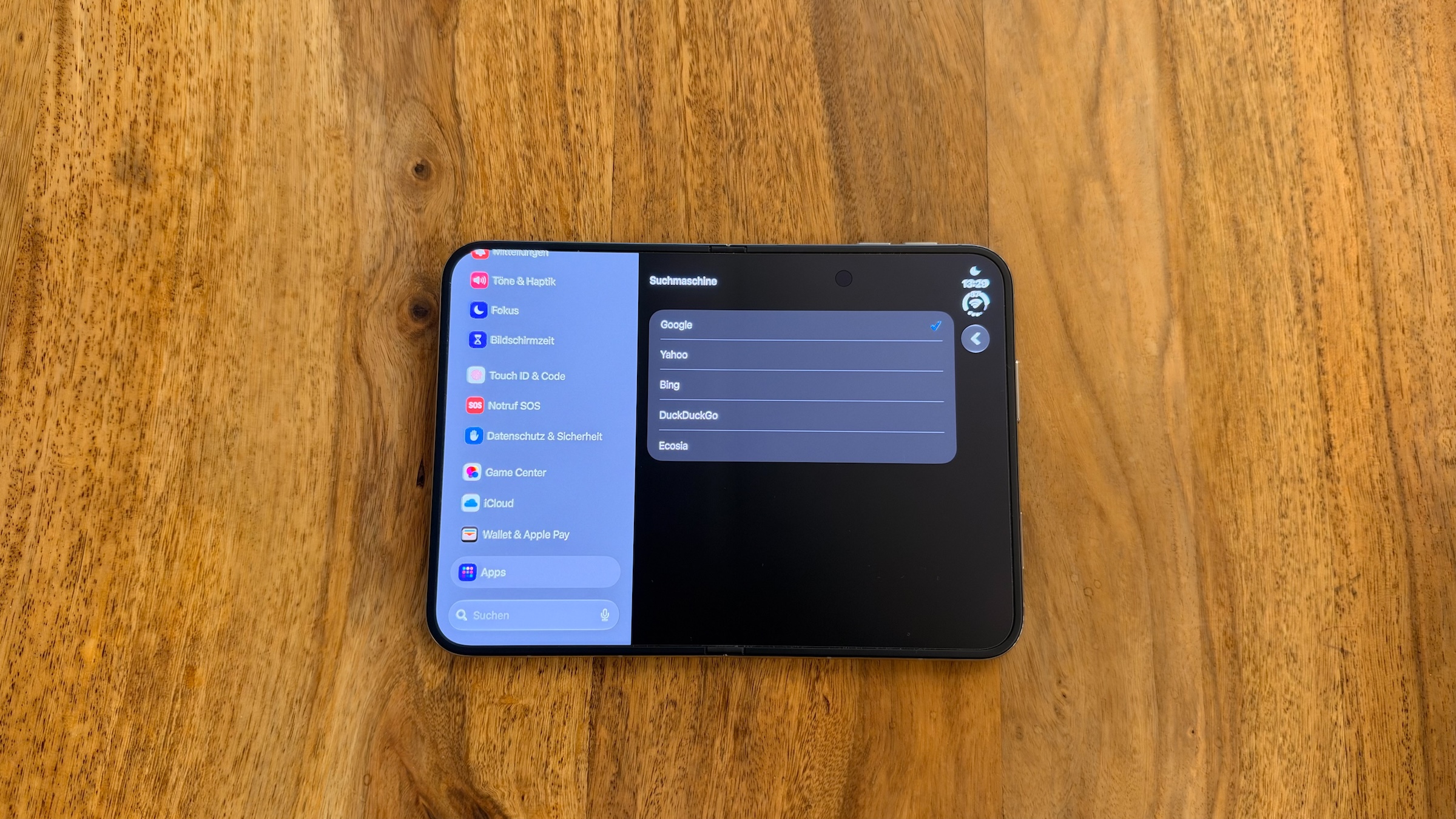
For users in Germany, Austria and Switzerland, nothing changes, as the default search engine in Safari can already be chosen from several providers.
Do you think Apple would have actually built its own search engine without Google's billions, or was that never a serious option for the company? Let us know in the comments how you see Apple's role in the deal.