This article may contain affiliate links. Learn more on our Partner Program page.
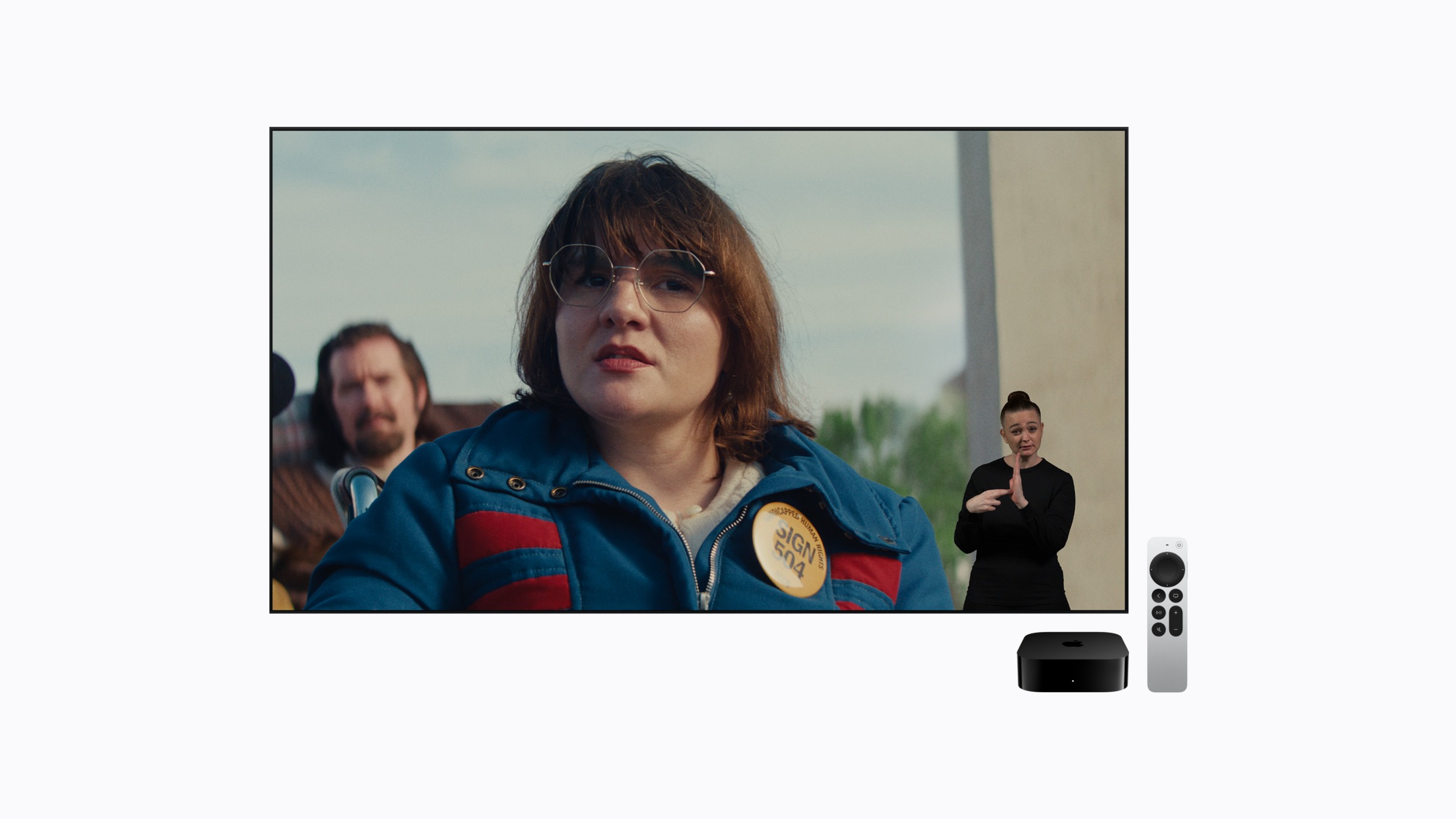
Apple is bringing sign language to the Apple TV app. The new accessibility feature will display an interpreter for selected films, if desired. The first film, about one of the most prominent advocates for the rights of people with disabilities, will be released on Friday.
Apple introduced a new accessibility feature for the Apple TV app on November 10: Select films can now be watched with on-screen sign language interpretation. The feature launches on Friday, November 13, along with „Being Heumann.“ The film about activist Judy Heumann is one of the new releases on Apple TV in November.
iOS, iPadOS, macOS, tvOS, or visionOS version 27.2 is required. iOS 27.2 has been available since the end of October. On supported devices from other manufacturers, the latest version of the app is sufficient.
Key Facts at a Glance
- The Apple TV app will get optional sign language interpretation for selected Apple original movies.
- The series kicks off on November 13th with „Being Heumann,“ and „F1“ is also scheduled. „Way of the Warrior Kid“ and „Greyhound“ will follow later this year.
- Apple has so far only mentioned American Sign Language (ASL) and British Sign Language (BSL).
- Version 27.2 of the Apple systems or the latest app on devices from other manufacturers is required.
This is how sign language works in the Apple TV app
The feature is first enabled in the Apple TV app settings. Afterward, a dedicated button appears during playback of supported Apple Original titles, allowing you to activate sign language interpretation. Titles offering this feature are marked with a special sign language icon.
The search function is also designed with this in mind: Using terms like „with ASL,“ it finds relevant titles. In addition, the app includes a dedicated collection of films and series featuring American Sign Language.
According to Apple, the interpretations were created and tested by deaf people and native sign language users. Each version is tailored to the specific film.
These films will have the function
The initial offering is small. Apple has announced four films, with more Apple Originals to follow.
| Title | Sign language | Available |
|---|---|---|
| Being Heumann | – | from November 13th |
| F1 | ASL and BSL | announced, no date |
| Way of the Warrior Kid | – | later this year |
| Greyhound | – | later this year |
Daniel Durant directed the sign language version of „Being Heumann.“ Durant also acts in the film and previously appeared in „CODA.“ He describes what the work means to him:
It's incredibly meaningful to see our beautiful language authentically represented onscreen.
Sarah Herrlinger, responsible for Apple's global accessibility strategy, sees the feature as a step towards a more accessible television experience:
Bringing sign language interpretation to Apple TV is an exciting step forward in making the viewing experience more accessible and inclusive for Deaf audiences.
“Being Heumann” and the connection to “CODA”
„Being Heumann“ tells the story of Judy Heumann, played by Ruth Madeley. In 1977, she organizes a sit-in in San Francisco with more than 100 activists for the rights of people with disabilities. Madeley is joined by Mark Ruffalo and Dylan O'Brien.
Siân Heder directs. Her film „CODA“ was the first film with a predominantly deaf cast to win the Oscar for Best Picture. „Being Heumann“ is her second work for Apple Original Films.
Why deaf viewers in this country will initially benefit little from it
Sign languages are not a global language. Someone who grew up with German Sign Language doesn't automatically understand ASL or BSL, just as German doesn't automatically make English understandable. Apple only mentions the sign languages of the USA and Great Britain for the launch; German, Austrian, and Swiss German Sign Language are not mentioned in the announcement.
This is confirmed by a look at the German film website: Apple lists „Being Heumann“ there on November 10th with English and Polish audio and 37 subtitle tracks. German is not included for either audio or subtitles.
I still think the feature is well-designed: it's integrated directly into the player, can be activated for each film, and is accessible via the icon, search, and collection. However, its value for German-speaking audiences depends on the language. As long as neither German Sign Language nor German subtitles are available for the films, the service is aimed at an English-speaking audience.
Would you use the sign language feature or recommend it to others if Apple offered it with German Sign Language? Tell us in the comments whether German Sign Language would make a difference to you.