This article may contain affiliate links. Learn more on our Partner Program page.
The presentation lasted only a few minutes, but the technical specifications are considerably more detailed. It reveals a user interface unlike any previous iPhone, two front-facing cameras positioned a considerable distance apart – and a button that has been a standard feature on iPhones for years but is simply missing here.
The first foldable iPhone will be available in stores on October 23rd, with pre-orders starting October 16th. This leaves a good six weeks between the unveiling and the sales launch, during which the device can only be assessed on paper. Apple's press release about the iPhone Duo and the German technical specifications provide more insight than was revealed in the presentation.
Key Facts at a Glance
- Split View allows you to open two apps side-by-side on an iPhone for the first time.
- The main camera has a fixed aperture of ƒ/1.6 – the variable aperture of the Pro models is missing.
- The camera under the inner display only records in 1080p, the outer one can do 4K.
- There is no action button; instead, the camera controls and side button with Touch ID remain.
- The USB-C port transmits data at up to 10 Gbit/s and outputs an image via DisplayPort.
Split View: two apps side by side
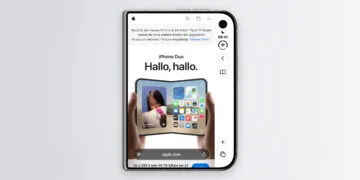
The most striking innovation isn't in the hardware. Two apps can now be run side-by-side on the inner display – something previously unavailable on an iPhone. In addition, it's possible to open two windows of the same app, for example, two Safari pages for comparison.
Paired apps can be saved and accessed later. Users who regularly need the same combination can access it in one step instead of two.
Several providers have already adapted their apps. Apple mentions Netflix, Zoom, and Slack, as well as the Detail app, which runs its AI models directly on the device via the new Core AI framework.
iOS 27 reorganizes the user interface
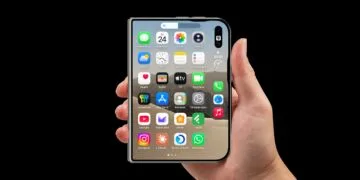
Apple has redesigned the interface for the unfolded format. The lock screen controls, the dock, and app navigation move to the side to free up more vertical space for content. When opened, the display shows two home screen pages side by side, with the vertically scrollable "Today" view with widgets to the left.
The Dynamic Island has also been redesigned: it now sits vertically at the edge of both displays and unfolds for live activity. The status bar has been moved to the corner of the display as a round, flexible element.
The content reacts to the device's shape. It adapts when the device is folded, rotates its orientation when tilted, and switches to the appropriate display when the iPhone is turned over.
Three camera features that are only available here
The second display opens up recording possibilities that a one-piece iPhone does not have.
Smart Photo triggers automatically. Models on the A20 Pro analyze the scene in real time and take the picture as soon as everyone is in position – without a shutter button or self-timer.
Duo Preview shows the person being photographed a live preview on the external display. This allows them to check the pose and assess the framing without having to go behind the camera.
The eye-catcher plays Peanuts animations on the outer display to make children look towards the camera.
In addition, there's Duo FaceTime: People nearby can join an ongoing video call via the outer display and camera without having to crowd in front of the same screen. And selfies can be taken with the rear cameras in higher resolution, with a preview on the outer display.
Where the camera stays behind the Pro model
The data sheet lists a fixed aperture of ƒ/1.6 for the 48 MP main camera. The variable aperture, which Apple touts as a key new feature in the iPhone 18 Pro models, is not present in this duo.
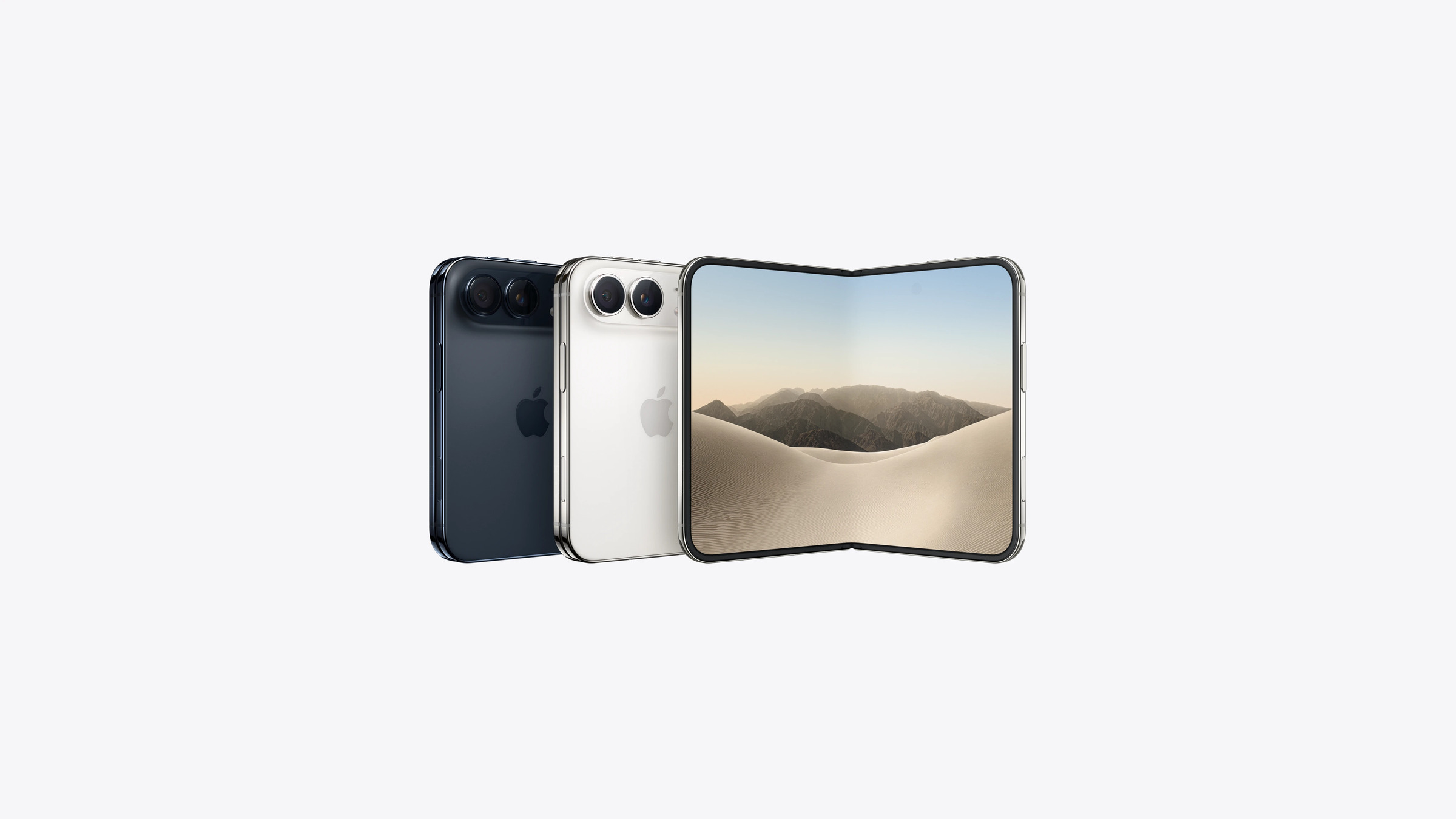
Apple explicitly states that the ultra-wide-angle lens is the same camera used in the Pro models. This information is missing for the main camera. Furthermore, the dual-camera system is used, and the 2x telephoto range is achieved computationally from the main camera rather than via a separate lens.
The two front cameras are not equivalent
The largest gap within the device is between the two front-facing cameras. The outer one is a full-fledged center-stage camera, while the inner one sits below the display and has significantly fewer capabilities.
| Feature | External camera | Camera under the inner display |
|---|---|---|
| Resolution | 12 MP Center Stage | No information in the datasheet |
| Aperture | ƒ/2.2 | ƒ/1.8 |
| Video recording | up to 4K Dolby Vision at 60 fps | 1080p at 30 or 60 fps |
| Cinema mode | up to 4K Dolby Vision at 30 fps | – |
| Night mode | Yes | – |
| Photographic Styles | Yes | – |
| Smart photo and eye-catcher | Yes | – |
Those who value image quality should therefore fold the device closed for selfies. The inner camera is clearly intended for video calls when the device is unfolded, not for photos.
The action button is missing
In its overview of external buttons, Apple lists the volume buttons, camera controls, side button, and USB-C port. An Action Button is not included – the button that has been present in newer models since the iPhone 15 Pro and can be freely assigned.
The side button takes on a different role: it houses the fingerprint sensor. Face ID is not available on the Duo; unlocking is done via Touch ID or a paired Apple Watch.
USB-C can do more here
The port supports USB 3 with speeds up to 10 Gbps and outputs video via DisplayPort. The other current iPhone models remain at USB 2 and their correspondingly lower transfer rates.
For anyone who downloads larger video files from the device, this is the most practically noticeable difference in the entire spec sheet. Wireless charging is supported at up to 25W via MagSafe and Qi2; a one-meter USB-C cable is included in the box along with the device.
Nanotexture, Apple Pencil and dimensions
The nanotexture coating, which reduces reflections and visible wrinkles, is only on the inner display. The outer display features Ceramic Shield 2.
Apple Pencil support is mentioned in the specifications with a footnote: it will be added later this year, specifically for the USB-C model. It will not be included at launch.
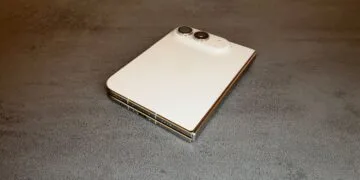
The interesting dimension is its depth. When open, the device measures 5.2 millimeters, and when closed, 11.3 millimeters – more than double the depth. The weight is 254 grams in both states, the height remains the same at 117.8 millimeters, while the width increases from 84.1 to 164.6 millimeters.
eSIM without exception
The Duo supports two simultaneously active eSIMs and stores eight or more profiles. A physical SIM card is not included, in any market.
This particularly affects China, where customers have predominantly used physical SIM cards and the removal of the card slot was seen as a barrier. Apple is now implementing the switchover without regional exceptions. The article on the eSIM transition explains what this means for everyday use.
What the data sheet reveals about the priorities
The list of features removed is remarkably consistent. Variable aperture, dedicated telephoto lens, Face ID, Action Button – Apple has cut back wherever space or height becomes limited. Added features, on the other hand, don't require any additional space: Split View, the camera functions via the second display, and the faster USB port.
This means the Duo isn't a foldable iPhone 18 Pro, but rather a separate device with a different focus. For the first time, the long-standing expectations for a foldable iPhone can be met with verifiable data. Those seeking the best camera will still find it in the Pro model – for €850 less. But those who want screen real estate and multitasking capabilities won't find either anywhere else.
The open question remains: what about the internal display? Nanotexture, a titanium plate, and a hinge made of over a hundred parts represent a considerable effort to prevent visible creases and scratches. Whether it's sufficient will only become clear during extended use.
It takes until the first practical exam
Until October 23rd, the data sheet remains the only reliable basis. Only after that date can it be assessed how the internal display performs in everyday use and how valuable typical 24-hour usage is with two displays.
Which weighs more heavily on you – the extra screen real estate with Split View or the more powerful camera in the Pro model? Let us know in the comments which of the two features you could most easily live without.