
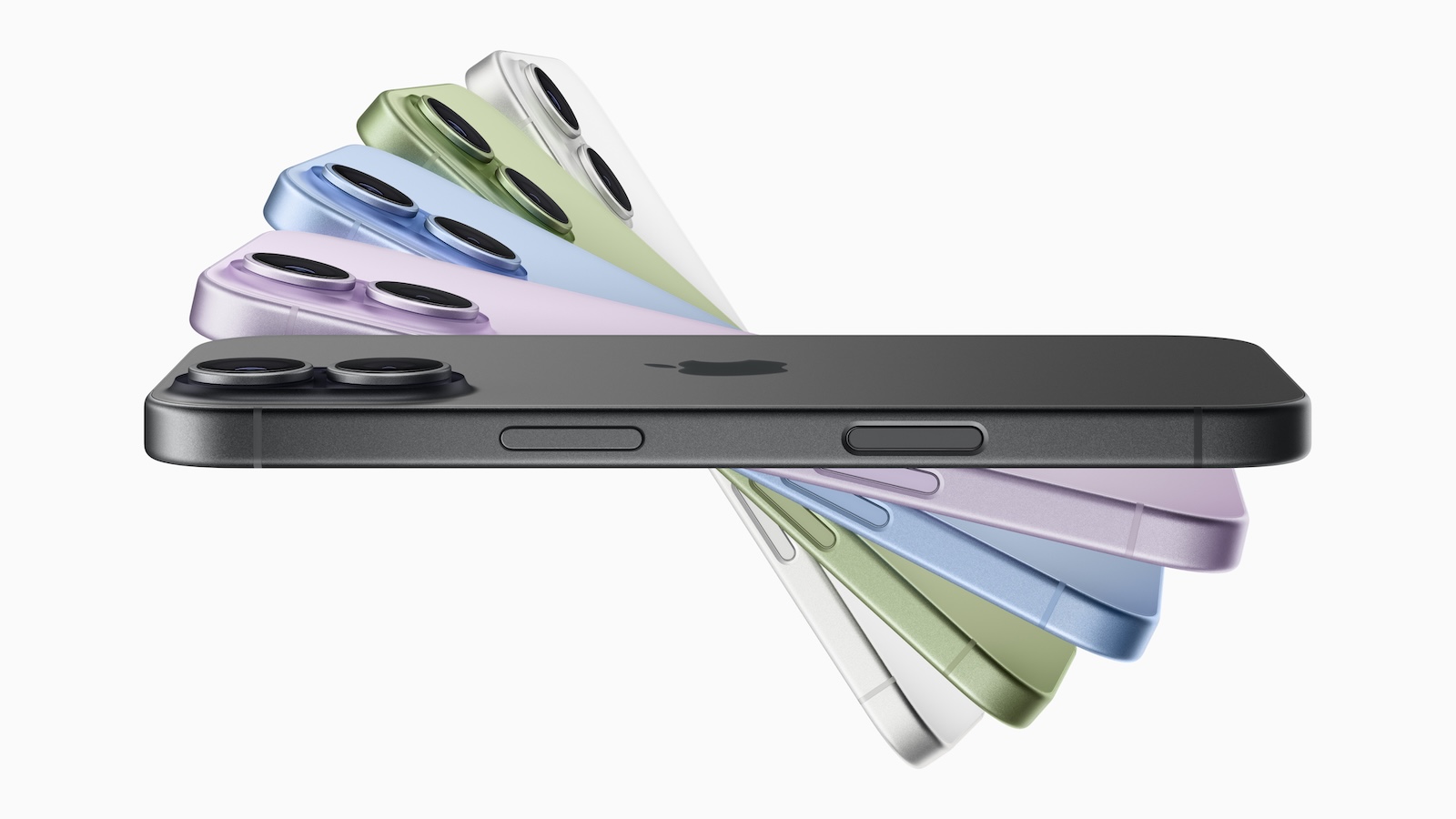
The standard model is expected to adopt the smaller Dynamic Island chip, which debuted in the iPhone 18 Pro in September – significantly earlier than Apple allowed during the last design change. Regarding RAM, this marks the third time in just a few months that a conflicting figure has surfaced.
The regular iPhone 18 is not on the agenda for the September keynote. Apple has staggered the release schedule: Pro models and the iPhone Ultra will arrive in the fall, while the base model will follow in early 2027 along with the iPhone 18e and the iPhone Air 2. A new analyst note now mentions two features that previously seemed reserved for the high-end models, adding an unexpected dimension to the overall picture of the iPhone 18.
Key Facts at a Glance
- The iPhone 18 is expected to get the smaller Dynamic Island display, which will first appear in the iPhone 18 Pro.
- With the iPhone 14, it took a whole generation before the base model received Dynamic Island – this time it would be faster.
- The note mentions 12 GB of RAM for the iPhone 18 and 9 GB for the iPhone 18e, even though both are supposed to use the same A20 chip.
- This contradicts a forecast from June that predicted 9 GB for both models.
- Not unveiled in September, but in early 2027 alongside the iPhone 18e and iPhone Air 2
What the analyst note calls
The information comes from a research note by Jeff Pu, based on conversations within the supply chain, which 9to5Mac obtained. Two points stand out: 12 GB of RAM instead of the 8 GB in the iPhone 17, and the new, smaller Dynamic Island.
Both of these features were initially expected for the Pro series. Neither has been confirmed, and Apple does not comment on unannounced products.
The form factor is faster than last time
Looking back makes this news interesting. When the iPhone 14 Pro introduced the Dynamic Island in 2022, the simultaneously released iPhone 14 retained the old notch. It wasn't until a year later, with the iPhone 15, that the control bar migrated to the standard model.
This time, there would only be half a year between the premiere and the takeover. The Pro models will show the smaller version in September, with the base model following in early 2027 – within the same number generation.
One reason for this could lie in the postponement itself. Because Apple has separated the standard model from the fall launch, there's a gap of several months between this and the Pro's unveiling. A device released in this gap, and which looks noticeably older than the lineup shown in the fall, would face an uphill battle.
The third number is now in the room regarding RAM
The RAM question has been a recurring theme in reports since spring, with each round bringing a different figure. The current figure according to the source:
| Time | Source | iPhone 18 | iPhone 18e |
|---|---|---|---|
| June 2026 | Dan Nystedt | 12 GB | not specified |
| 26.06.2026 | Ming-Chi Kuo | 9 GB | 9 GB |
| 12.08.2026 | Jeff Pu | 12 GB | 9 GB |
Kuo had initially revised his expectations of 12 GB without a price increase downwards in June: 9 GB for the iPhone 18 and 18e, comprised of six 1.5 GB memory modules. The current note reverts to 12 GB, but only for the iPhone 18 – the iPhone 18e would therefore remain at 9 GB.
The lack of explanation is remarkable. Both models are said to use the same A20 chip, and the amount of storage depends on the number of dies used. The note doesn't explain why two devices with an identical chip would be configured differently. A simple product differentiation based on price range would be conceivable – but this isn't substantiated.
The contradiction is not resolved. Both analysts work with sources in the supply chain, both have been right and wrong in the past, and the memory configuration is one of the aspects that can change until shortly before production.
Why the limit is at 12 GB
The number is not an end in itself. Industry insiders believe that the more demanding local AI models in iOS 27 require at least 12 GB of RAM. At 9 GB, the base model would be in a transitional zone: more than the 8 GB of its predecessor, but below the threshold at which the computationally intensive functions run entirely on the device.
For Apple, more than just a question of features is at stake. A standard model that lags behind the Pro devices in key AI functions would weaken Apple Intelligence's positioning as the core of the iPhone. That's precisely why returning to 12 GB would be the more strategically sound option.
What the storage question is worth in German-speaking countries
This is where the assessment shifts. The amount of RAM determines which AI models can run locally – but Siri AI isn't even available on iPhones and iPads in the EU yet. Apple has postponed the launch due to the requirements of the Digital Markets Act; in Germany and Austria, the assistant is only usable on Macs and Vision Pro.
Switzerland is on the other side of the coin. The country is neither in the EU nor the EEA, the DMA does not apply there, and Siri AI is currently slated to launch on the iPhone. A buyer in Zurich will therefore immediately benefit from 12 GB of RAM, while one in Munich will not, at least not initially.
If you're considering an iPhone 18 in Germany or Austria, the amount of RAM is therefore less a question of current functionality than a gamble on future capabilities. Should the dispute with the Commission be resolved, the specifications will determine what the device will still be able to do – and you can't upgrade the memory later.
There is plenty of time before the performance
There are roughly five months between today's announcement and the expected launch, during which both the memory configuration and the design could still change. The picture will likely become clearer only when the Pro models are released in September and it's evident how small the new Dynamic Island actually is. (Image: Apple)
- iPhone Ultra: Screen protectors reveal the camera position
- iPhone 20: Glass design is not supposed to be scrapped after all
- iPhone 18 Pro: Doubts about the billion-dollar backlog at TSMC