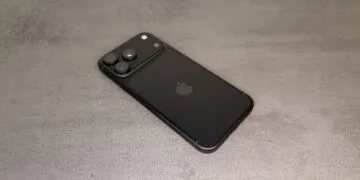
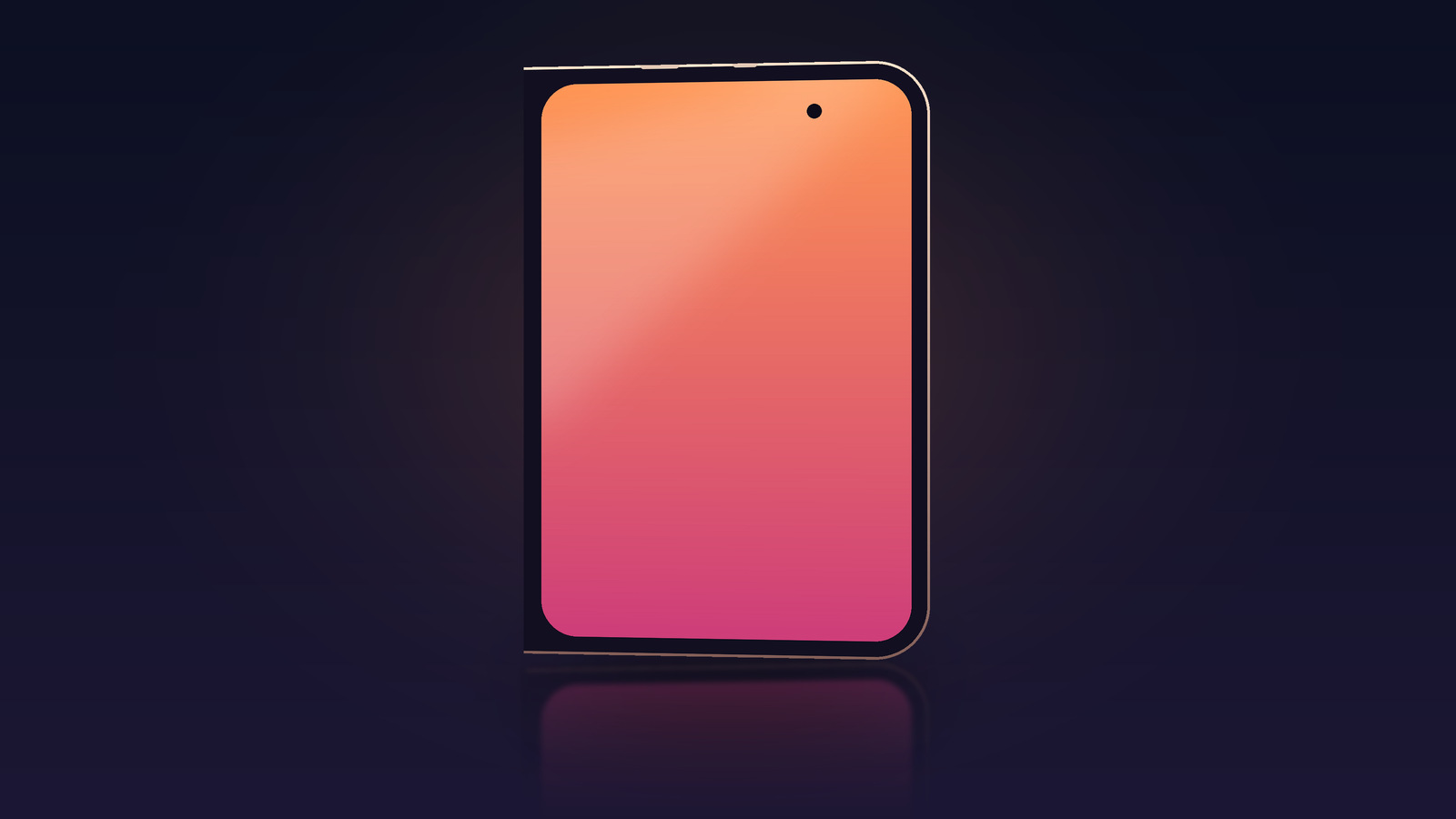
Screen protectors for Apple's first foldable device have surfaced – and they're square on one side and round on the other. They also feature a camera cutout that isn't located where previous reports had suggested. However, the leaker had to clarify what the accessory reveals about the screen and what it doesn't.
Five weeks before the expected release date, rumors surrounding the iPhone Ultra are shifting from manufacturing to accessories. Following the camera module covers, leaker Ice Universe has now released images and a video of screen protectors for the device's exterior. These parts are produced by third-party manufacturers before the market launch based on measurements from the supply chain and therefore provide clues about the device's shape and proportions – though they don't constitute confirmation. These details largely fit into the overall picture of the iPhone Ultra known so far.
Key Facts at a Glance
- The leaked foils have angular corners on the hinge side and rounded corners on the opposite side.
- Ice Universe later clarified that the film covers the entire glass panel and not the display area – the screen itself should remain a symmetrical rectangle with even edges.
- The cutout for the front camera is located on the right instead of in the center; earlier reports had suggested a central position.
- The reason given is Touch ID: Without the TrueDepth system for Face ID, a single hole in the display is sufficient.
- The foils also support the expected shorter and wider format of the external screen.
What the slides show
What's striking about the accessory is its asymmetrical shape. On the side that would be at the hinge, the corners are sharply angular, while on the opposite side they are rounded. The leak offers no explanation for this – however, the asymmetry fits with previous descriptions of a book-sized folding device where the two halves lie against each other at the hinge edge when closed.
In addition, there's a single round cutout for the front camera, located on the right side of the panel. Previous reports had suggested a more central position – the accessories contradict this. Furthermore, the protective films confirm the expected format: shorter and wider than a standard iPhone.
The images and video of the leaked slide come from Ice Universe, a leaker specializing in displays who has frequently been correct about panel details in the past. There is no independent confirmation, and Apple does not comment on unannounced products.
Why the leaker corrected his own report
The most interesting part is in a second post. After the initial release, Ice Universe issued a clarification: The film covers the entire glass panel, not exactly the display area underneath. The screen itself should still be a symmetrically rounded rectangle with uniform edges on all four sides.
This eliminates the obvious conclusion. According to this interpretation, the asymmetry only affects the cover glass and thus the outer edge of the casing, not the surface on which content is displayed.
This process also highlights the limitations of these accessory leaks. A protective film depicts the cover glass, not the active surface beneath it – and anyone who equates the two arrives at a conclusion about the product that the part simply cannot provide.
Touch ID instead of Face ID as a technical explanation
The position of the camera cutout hinges on a fundamental decision. Touch ID is expected for the iPhone Ultra instead of Face ID – and without the TrueDepth system, the space required for the dot projector, infrared camera, and floodlight is eliminated. This leaves only the selfie camera, which can be accommodated in a single circular cutout.
This would be a first for the iPhone lineup: Since the removal of the Home button, all models have featured either a notch or the Dynamic Island, as this is where multiple sensors are located side by side. Apple has never used a single hole in the screen before. The fingerprint sensor itself is expected to move into the side button – a solution Apple already uses in the iPad Air.
What's been circulating so far about the iPhone Ultra
The accessories are the latest in a string of leaks. Just last week, protective cases for the camera module suggested that the device will likely be available in silver and dark blue . The current state of expectations:
| Feature | Expectation |
|---|---|
| Outer display | approximately 5.5 inches |
| Inner display | approximately 7.8 inches |
| Chip | A20 Pro |
| Unlocking | Touch ID in the side button instead of Face ID |
| rear camera | Dual system with 48 megapixels |
| Front cameras | 18 megapixels each on the outside and inside |
| Introduction | Mid-September, together with the iPhone 18 Pro |
Information regarding the battery capacity differs. The report on the slides mentions approximately 5,000 mAh, while an earlier leak listed two separate cells with capacities of 1,921 and 2,962 mAh, totaling 4,883 mAh. It is currently unclear whether this is a rounded figure or a discrepancy. The fact that two cells are used at all is supported by a discovery in the iOS 27 code, where system messages first mention multiple batteries in an iPhone.
What the lack of Face ID means in everyday life
So far, only a US price of at least $2,000 has been circulated. Converting this to euros is not helpful, as Apple sets prices differently regionally and last raised them differently in each market in June – reliable figures for the German-speaking region will only be available at the official launch.
The unlocking method is more practically relevant. Those who currently use Face ID to pay, unlock passwords, or open banking apps do so without touching the device – with Touch ID, the finger has to be on the side button. When quickly glancing at the external screen, this noticeably reduces convenience compared to what current iPhones offer. In tablet mode, however, the situation reverses: a side-mounted sensor is easier to reach when holding the device with both hands than a camera that requires the face to be at the correct angle.
The reason for the change isn't cost-cutting. A foldable device with two screens would require a full TrueDepth system on each side for Face ID – a significant hurdle given the thickness of a foldable. According to this explanation, the space saved benefits the battery and heat dissipation. We therefore expect Apple to frame this move in its presentation as an adaptation to the form factor, not as a return to an older technology.
The accessories market is ahead of the device itself
More accessories are likely to surface before the official unveiling. According to the rumor mill, this means that the dimensions and outline will become more clearly defined in the coming weeks, while little concrete information regarding software, price, and availability is expected before the keynote. (Image: Apfelpatient)
- iPhone 20: Glass design is not supposed to be scrapped after all
- iPhone 18 Pro: Doubts about the billion-dollar backlog at TSMC
- OLED iMac: Fifth layer designed to prevent burn-in