This article may contain affiliate links. Learn more on our Partner Program page.
On August 31st, Apple's longest tenure as CEO comes to an end. Tim Cook is handing over a company that has almost nothing in common with the one of 2011 – except for the name and the logo. What actually happened in those 15 years can be quantified with astonishing precision.
When Steve Jobs resigned on August 24, 2011, and the board of directors appointed Cook as his successor that same day, the appointment was considered a stopgap measure. The man from Alabama was a logistics expert, not a stage performer, and the doubts were loud. They stemmed from a career path that led through supply chains and factory floors rather than stages and product design. Fifteen years later, his tenure can be measured in numbers. His last day as CEO is August 31; John Ternus takes over on September 1.
Key Facts at a Glance
- The company's market capitalization rose from around $350 billion to almost $4.7 trillion – roughly a thirteen-fold increase.
- Apple now generates more revenue in a single quarter than in the entire fiscal year in which Cook took over.
- The services business grew from $9.37 billion in the year to over $30 billion in the quarter.
- Apple now has more than 2.5 billion active devices.
- Cook is not disappearing: As Executive Chairman, he is responsible, among other things, for contacts with politicians.
The company that Cook took over in 2011
Apple was valued at around $350 billion in August 2011, making it already a heavyweight – but one whose business depended almost entirely on the iPhone and iPad. Revenue for fiscal year 2011 totaled $108.25 billion.
Just 14 years passed between the near-bankruptcy of 1997 and this moment. In five decades of company history, no phase has changed as rapidly as the one that culminated in Cook taking office.
This figure is the true benchmark for everything that followed. In the June quarter of 2026, Apple generated $109.4 billion in revenue. This single quarter thus surpassed the entire fiscal year in which Cook took office.
The distinction is important here: Cook took over five weeks before the end of fiscal year 2011. His first full year was 2012, which already closed with $156.51 billion in revenue. The comparison with 2011 serves as a starting point, not as proof of a fourfold increase within a single year.
From device manufacturer to service company
The biggest structural change isn't in the iPhone, but in a division that hardly anyone took seriously in 2011. Apple then called it "iTunes, Software and Services"—essentially the iTunes Store, the App Store, and software sales. It generated $9.37 billion in revenue in fiscal year 2011. Apple Music didn't exist yet, nor did the Apple TV streaming service, and iCloud didn't launch until a few weeks after the end of that fiscal year.
In the June quarter of 2026, revenue reached $30.74 billion in just three months, an increase of 12.1 percent compared to the same quarter of the previous year. Apple now has 1.5 billion paid subscriptions.
| Key figure | Financial year 2011 | June quarter 2026 |
|---|---|---|
| Total revenue | $108.25 billion (year) | $109.42 billion (quarter) |
| Services | $9.37 billion (year) | $30.74 billion (quarter) |
| iPhone | $46.00 billion (year) | $54.25 billion (quarter) |
The structure of the two divisions is therefore not identical. The magnitude of the leap remains unaffected – today's services business includes revenue streams such as advertising, subscriptions, and iCloud that simply did not exist in 2011.
In fiscal year 2025, the company's revenue reached $416 billion – almost four times that of 2011. According to Apple, the foundation on which this business is built comprises more than 2.5 billion active devices.
This explains why Apple is less susceptible to economic fluctuations today than in 2011. A weak iPhone cycle no longer creates a gap that affects the entire company.
The products that were created under Cook
Four product decisions defined his term in office. The Apple Watch transformed an accessory category into a billion-dollar business. The AirPods established a device category that was practically non-existent before.
The switch from Intel to its own chips was the most significant technical intervention – and the one that pulled the Mac out of a dead end. Ironically, this very step was largely driven by the hardware organization that Ternus later acquired.
The Vision Pro remains an open question. Released in 2024, the device has yet to meet market expectations. Its platform strategy is still undecided, and it was never a sales success.
The brands that Apple has broken under Cook
In August 2018, Apple became the first publicly traded company with a market capitalization of one trillion dollars. Two years later, it reached its second trillion, and in October 2025, its fourth.
On July 28, 2026, Apple's market capitalization first exceeded five trillion dollars during trading – however, it closed just below that mark, and currently stands at around 4.7 trillion. The record is therefore a moment, not a permanent state. But even the lower value is roughly thirteen times what the company was worth when Apple took office.
What went wrong in 15 years
Cook himself has identified one of his mistakes. He later described his own map app, hastily launched in 2012 to compete with Google Maps, as his first major error – an admission that is rarely made so clearly.
The most expensive project is coming at the end of his tenure. Apple was late to the game with generative artificial intelligence, and the revamped assistant took significantly longer than announced. Siri is therefore the project that Cook will not finish, but rather hand over.
Then there's the question of price. Apple raised prices for Macs, iPads, and Vision Pro in June, and Cook justified the move in the quarterly call at the end of July by citing sharply increased storage costs. For customers in Germany, Austria, and Switzerland, this is the most noticeable news of the year.
What his term in office meant for Europe
The most significant difference between Cook's Apple and the one from 2011 lies not in the product itself, but in the regulation. The Digital Markets Act has designated the App Store, iOS, Safari, and iPadOS as core platform services, thereby triggering obligations that do not exist in the US: alternative app distribution channels, open interfaces, and modified default settings.
Cook personally handled this dispute. Most recently, he was in talks with the EU to find a way forward for Siri AI, whose launch on iPhones and iPads in the EU depends on interoperability requirements. These regulations do not apply in Switzerland, where the feature runs without this restriction.
Direct communication with the German-speaking world is also part of the plan: Cook spoke with Bavaria's Minister-President Söder via FaceTime, together with his successor. The fact that political work is his new area of responsibility is therefore not a makeshift solution.
The company he is handing over is not the one he took over
Cook's achievements are often reduced to his market capitalization, and that's an oversimplification. The real change is that Apple now has three viable pillars instead of one: devices, services, and its own chip architecture, which no competitor can copy in the short term.
The ecosystem has become more tightly integrated, but also more expensive. Anyone entering Apple's world today no longer pays just for a device, but generally also for storage, music, or television.
In the short term, the change will have little impact. Apple plans in product cycles of three to five years, and the pipeline through the end of the decade is fixed under Cook – the reason his successor is more likely to continue the course than correct it is also related to this inertia.
What Cook doesn't leave behind is a clear position on AI. That's precisely what his successor will first have to measure up on – and sooner than the company would probably like.
Cook remains, just no longer on stage
On August 24, Apple celebrated his retirement at Caffè Macs on its own campus, with around 200 guests in attendance. Shortly before, he had conducted his last conference call as CEO.
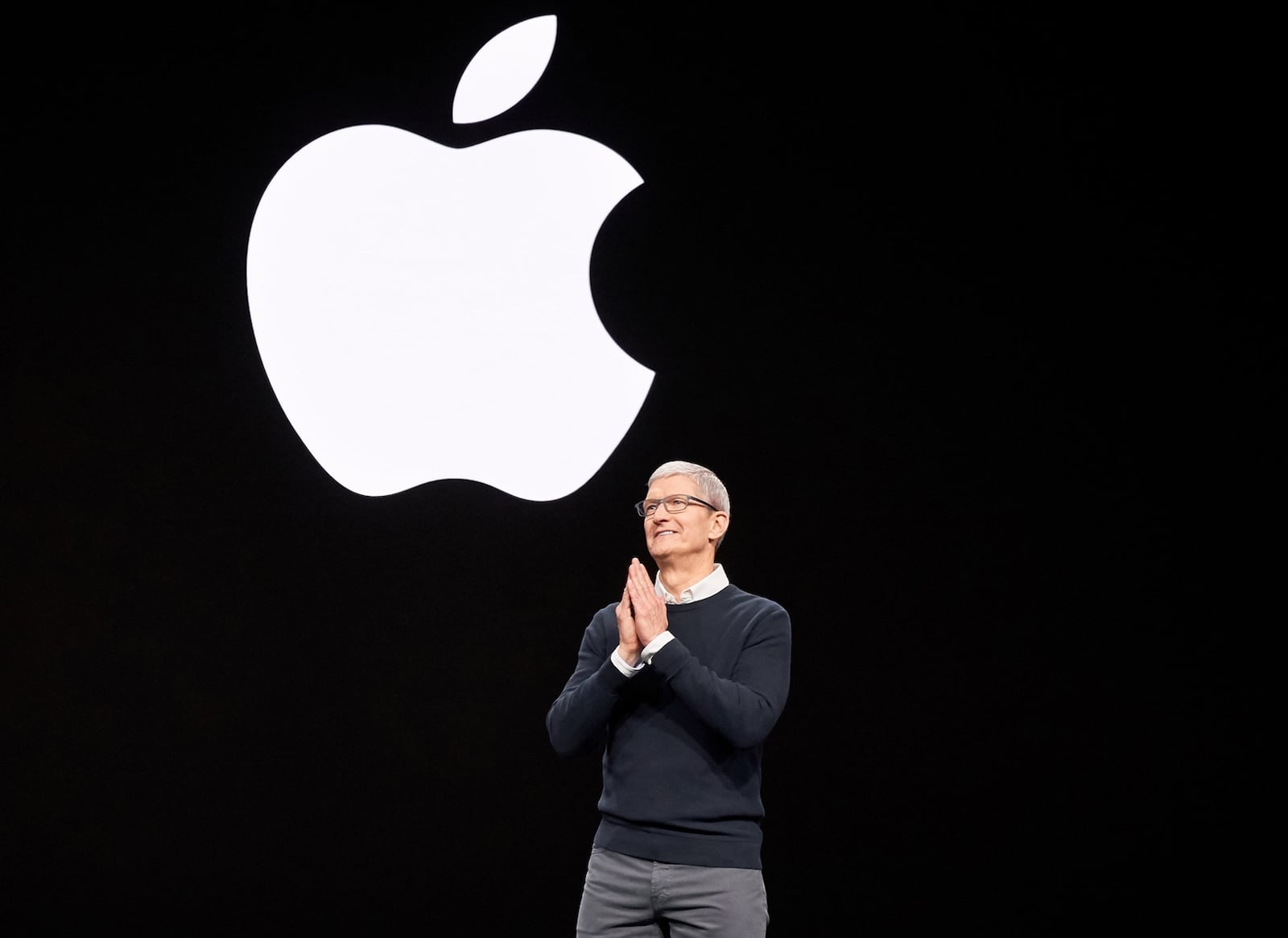
He won't disappear completely. According to the announcement in the Apple Newsroom, Cook will become Executive Chairman of the Board of Directors, where his responsibilities will include liaising with policymakers worldwide. In the same announcement, he called leading Apple the greatest privilege of his life. Arthur Levinson, who has served as non-executive chairman for 15 years, will transition to the role of Lead Independent Director on the same day.
The change at the top is only the most visible part of a A reshuffle that has now affected the entire management team. The hardware responsibility that John Ternus the number of submissions has been at since April Johny Srouji in an expanded role and working alongside Tom Marieb in day-to-day operations. Keynote speeches and quarterly figures will be among Ternus' responsibilities starting September 1st.
Which decision from these 15 years has most significantly changed your everyday Apple experience – the switch to Apple's own chips, the Apple Watch, or simply the price increases of recent years? Share your thoughts in the comments.