This article may contain affiliate links. Learn more on our Partner Program page.
Ten days before the keynote, it's becoming clear where Apple is focusing its efforts with the watch: not on the casing, but on the data. The heart rate sensor will measure continuously, not just during workouts, and the Health and Fitness apps are getting a revamp. The design, however, will remain unchanged.
The prevailing conclusion regarding the Apple Watch Series 12 has been that it won't be a game-changer. Neither Touch ID nor a new case design has materialized in recent months, and the rumors surrounding the Series 12 have been correspondingly underwhelming. The latest edition of Bloomberg's Power On newsletter now adds two points that will make a bigger difference to everyday wearers than any case detail.
Key Facts at a Glance
- The heart rate sensor is designed to measure continuously, not just during training sessions and in random samples.
- Health and fitness apps are to be redesigned and will display more wellness metrics.
- The ceramic case is making a comeback; white and dark grey versions are being tested.
- According to the report, the Series 12 and Ultra 4 will not receive any significantly changed design.
- An Apple Watch SE 4 is not expected this year.
Heart rate monitoring around the clock, not just during training
Currently, the Apple Watch continuously measures heart rate during workouts and at intervals of a few minutes at other times. This is set to change: the sensor will record the value throughout the entire day. According to the report, the feature is currently being tested.
The difference may sound small technically, but it determines how reliable the derived values are. Sleep phases, recovery values, and stress indicators depend on the density of measurement points – those who measure using random samples will inevitably have gaps.
This change will not have a negative impact on battery life. A permanently active optical sensor consumes power, and Apple has only recently improved battery life in its current models. The report doesn't explain how the company reconciles these two factors.
Health and fitness should show more than rings
The second point concerns the software. Apple is reportedly working on redesigning its health and fitness apps to display more wellness metrics – explicitly based on what providers like Whoop and Oura are doing.
Their strength lies less in the measurement itself than in the analysis: instead of three closed rings, they show which factors have influenced sleep and recovery. Both apps charge for this service. Whoop works exclusively with an ongoing membership, and Oura charges €5.99 per month or €69.99 per year in the European Union; without a subscription, the app only displays basic data.
Apple currently doesn't charge for Health and Fitness – Fitness+ is a separate workout offering and isn't necessary for analyzing your data. The report doesn't specify whether this will remain the case if the apps offer significantly more features.
Ceramics return in two colors
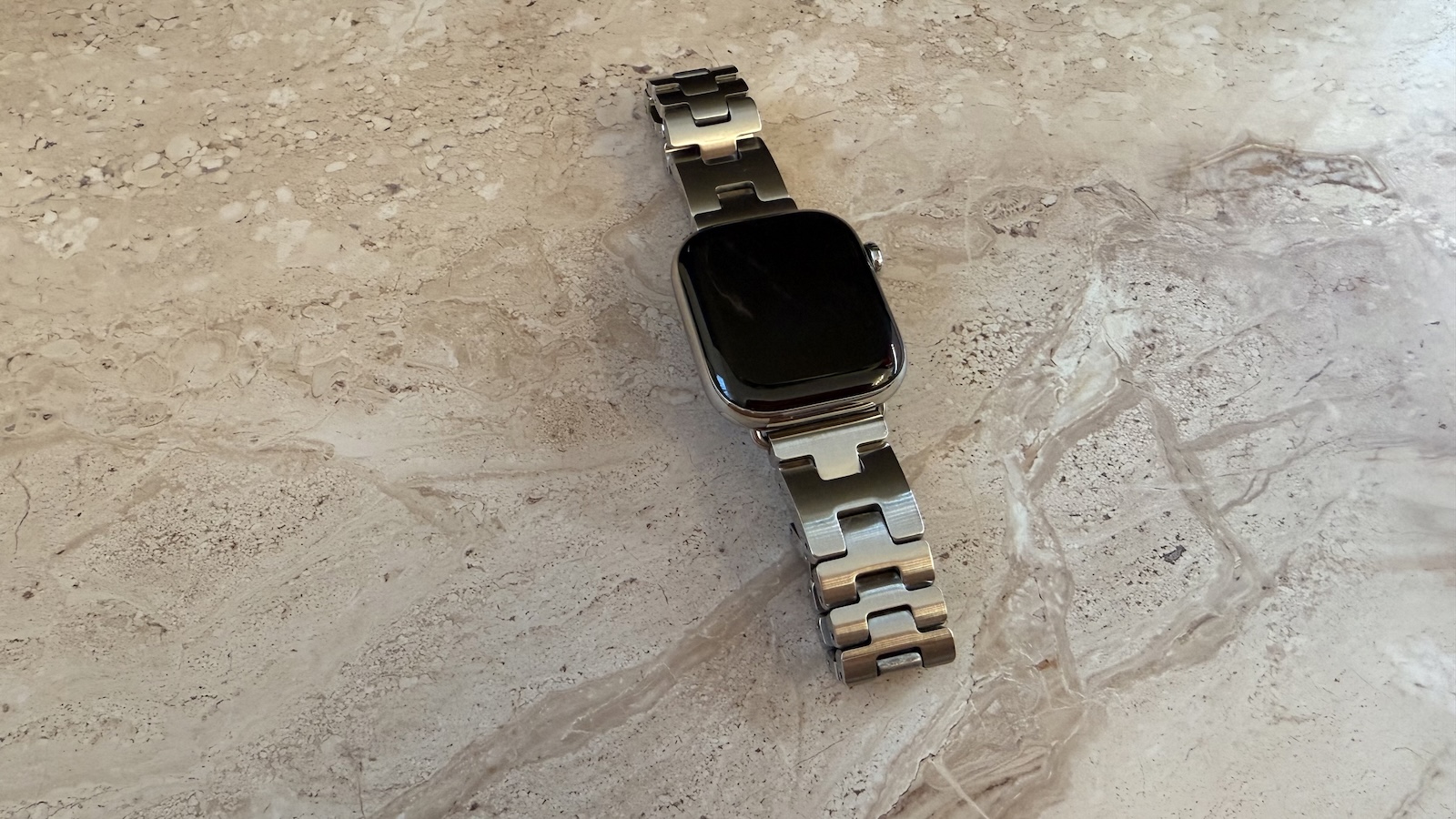
Rumors that Apple would revive the ceramic case have been circulating since early August. The new aspect is the color: white and dark gray were tested, the same combination as the most expensive version of the Series 3 from 2017. Numerous new band colors and variations are also expected.
This would mean that the case variant would be the only visible distinguishing feature compared to the Series 11. Anyone who has been considering a Series 12 because of its appearance will therefore be deciding on the material, not a new shape.
The first architectural change since 2023
The most inconspicuous point of the report is also the most interesting: faster performance. For the first time since the launch of the Apple Watch, Apple has refrained from introducing a new processor in 2025, using the same S10 in the Series 11, SE 3, and Ultra 3 that was already in the Series 10 in 2024. This stagnation goes back even further: the S9 and S10 are based on the same architecture, codenamed T8310; the S10 was simply scaled down for the thinner casing of the Series 10. The last real innovation, therefore, was in 2023.
| Model | Year | Chip | Architecture |
|---|---|---|---|
| Apple Watch Series 9 | 2023 | S9 | T8310 |
| Apple Watch Series 10 | 2024 | S10 | T8310 |
| Apple Watch Series 11 | 2025 | S10 | T8310 |
| Apple Watch SE 3 | 2025 | S10 | T8310 |
| Apple Watch Ultra 3 | 2025 | S10 | T8310 |
| Apple Watch Ultra 4 | 2026 | new chip | T8320 according to code findings |
The processor change is better documented for the Ultra 4 than for the Series 12: Code leaks identify the processor as the T8320, and the device is internally assigned to the new "Watch8" family for the first time, whereas Series 9, 10, and 11 still belonged to the previous family. For a device that is intended to continuously process and prepare sensor data, this is no small matter – the two announced new features are directly related to it.
What remains of it before the keynote
For you, this means that before September 9th: The appeal of the new models lies in the analytics, not their appearance on the wrist. Those wearing a Series 11 or Ultra 3 may receive some of these features via software updates – Apple recently enabled one-handed gestures, sleep tracking, and blood pressure alerts for older generations as well. According to the report, Apple plans to complete the major redesign next year, but it could be delayed until the year after.
Until then, the question remains whether continuous heart rate monitoring is a reason to buy. Would continuous monitoring and the new analysis be worth an upgrade to you – or would you rather wait for the model with the new casing? Let us know in the comments what would be the deciding factor for you.
- iPhone Ultra: Apple tested its own Apple Pencil
- iPhone Ultra: Leak mentions red as third color
- iPhone 20: The glass is produced on converted Air systems