
This article may contain affiliate links. Learn more on our Partner Program page.
Text snippets have appeared in the fourth developer beta of iOS 27 describing an iPhone with a fingerprint sensor and ultra-wideband wireless. This combination doesn't yet exist from Apple – and the foldable iPhone is expected tomorrow.
That the iPhone Ultra might forgo Face ID has been a fairly reliable assumption for months: The two halves of a foldable device are considered too thin for the TrueDepth camera and its dot projector. A fingerprint sensor integrated into the side button would be the obvious replacement. What's new is that this assumption can now be confirmed by leaked code – just in time for the unveiling, expected on September 9th.
Key Facts at a Glance
- The fourth developer beta of iOS 27 includes new localization texts in the area of the car key function.
- One of them describes an iPhone that supports Touch ID and Ultra Wideband simultaneously.
- This combination does not yet exist at Apple: Every iPhone with an Ultra Wideband chip since the iPhone 11 uses Face ID.
- The discovery is not proof – it shows that the software is being prepared for such a combination of devices, not which device is meant.
- For users of an Apple Vision Pro, the switch would have a concrete advantage, which I was able to verify on the device.
What's in the code
The text snippets were discovered by the developer pdfu, who regularly scans the beta versions of iOS for new character strings and documented his find on X. The lines in question come from the section on the car key function, which allows vehicles to be unlocked and started via iPhone or Apple Watch.
The help texts are separated according to unlocking method: one version for devices with Face ID, one for devices with Touch ID. A new line has been added describing passive access – that is, unlocking without picking up the device – for an iPhone with Touch ID and Ultra Wideband. This connection is crucial, because passive access requires Ultra Wideband, which Apple has so far only offered in conjunction with Face ID in the iPhone.
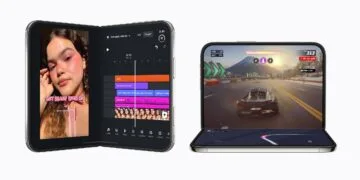
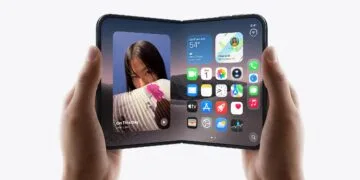
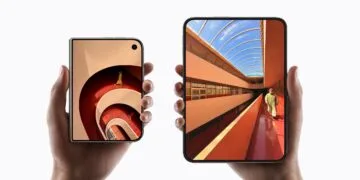
This isn't the first hint of this kind in the same beta generation. Previously, text snippets regarding battery health had surfaced, mentioning multiple batteries in an iPhone – consistent with reports of two separate cells in the two halves of the foldable model's casing. How these snippets fit into the overall picture is explained in our overview of the iPhone Ultra.
Where the discovery reaches its limits
The code confirms that Apple is preparing the car key function for an iPhone with a fingerprint sensor and ultra-wideband. It doesn't name a specific model, release date, or sensor technology. The conclusion that it's the foldable iPhone is inferred from the fact that no existing device combines these features – and inferences based on absence are weaker than direct evidence.
Another explanation remains conceivable: Text snippets are maintained across devices in Apple's systems, and a formulation can be prepared for a class of devices without being tied to a specific model. The question will likely be resolved by Wednesday anyway.
Touch ID never completely disappeared
Face ID was introduced in 2017 with the iPhone X and has remained the standard authentication method in Apple phones ever since. The fingerprint sensor survived in the iPhone SE series until its discontinuation, and in the iPad Air, where Apple moved it to the power button.
With the iPad Air, this solution served a purpose beyond mere technology: the device lost its home button and gained a nearly bezel-less front, while Face ID remained exclusive to the more expensive iPad Pro. The sensor thus marked a price point. This logic doesn't apply to the iPhone Ultra. The foldable model will be the most expensive iPhone Apple has ever sold – the fingerprint sensor wouldn't be a cost-cutting measure there, but rather a consequence of its design.
| Device | Proceedings | Sensor position |
|---|---|---|
| iPhone 17 Pro | Face ID | TrueDepth camera on the front |
| iPhone SE (3rd generation) | Touch ID | Home button |
| iPad Air (M3) | Touch ID | Standby button on the side |
| iPhone Ultra (expected) | Touch ID | – |
What the switch means for Vision Pro users
In one instance, the fingerprint sensor would not be a step backward, but rather the better solution – and this concerns a device combination that has not played a role in previous reporting on the topic.
Since iOS 26 and visionOS 26, it's possible to unlock the iPhone while wearing an Apple Vision Pro. The feature is located in Settings under "Face ID & Passcode" in the "Unlock with Nearby Devices" section; Apple describes it in its support document as a way to... To display and unlock iPhone with headset on. We have explained how to set it up in a described own tip.
That's precisely where its functionality ends. I use the combination of iPhone and Vision Pro very often, and the process is always the same: The lock screen unlocks reliably, but as soon as an app requests its own Face ID – banking, password management, protected notes – the function no longer works. The TrueDepth camera sees the headset instead of a face, and the only option left is to enter the passcode. Apple's Face ID covers not only unlocking but also payments, filling in passwords, and accessing protected apps; the headset-based unlocking feature only handles the first of these.
A fingerprint sensor doesn't have this problem. It works regardless of what's in front of the face.
Why the return of the sensor, in particular, could be convincing
The common misconception is that buyers of the most expensive iPhone ever would have to make do with older technology. This is too simplistic, because it compares Touch ID to Face ID rather than the situation in which it's used. A sensor in the side button works with sunglasses, in the dark, with the device lying flat on a table, and also with a headset on.
My expectation: If the foldable iPhone actually comes with Touch ID, the lack of Face ID will be mentioned as a compromise in initial reviews – and will hardly bother anyone in everyday use after a few weeks. Anyone who has used both methods in parallel for an extended period knows the situations where a finger is faster than a glance.
The final note before the show
Until tomorrow, the discovery remains what it is: strong evidence from the delivered code, not a data sheet. For a device that has been circulating in reports for years, a text snippet in the car key's menu is a remarkably unspectacular final clue.
Do you use both Face ID and Touch ID in everyday life – and would you consider the fingerprint sensor on the foldable iPhone a step backwards or the more practical method? Let us know in the comments which one gets in your way more often.