
This article may contain affiliate links. Learn more on our Partner Program page.
Apple waited for Qualcomm to develop its 5G system. With its successor, Apple intends to use its own modem from the outset, and the team working on it is currently expanding. New job postings reveal what's being worked on in California and Munich.
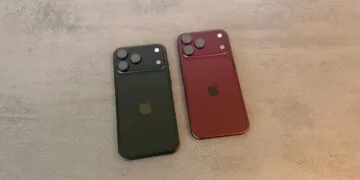
Apple advertised a position for a 6G Cellular Modem Systems Engineer on October 19th. This position is part of the team that, according to the job posting, defines and builds the next generation of mobile communications, specifically during the transition to 6G. This role aligns with Apple's shift to its own radio chips: Since the C1 in the iPhone 16e, Apple has relied on its own modems, and in Germany, both current Pro models already feature Apple's C2 modem. Anyone building their own modem must also be proficient in the next mobile communications standard.
Key Facts at a Glance
- Apple is looking for a systems engineer for San Diego and Sunnyvale to define features for next-generation modems with a focus on 6G.
- There is also a vacancy in Munich related to 6G: Layer 1 software for a 5G/6G mobile communications system.
- The requirements for 6G are to be formally approved by the International Telecommunication Union on December 1, 2026, with the first specifications planned for early 2029.
- The first commercial 6G networks are expected around 2030.
- In the EU, the relevant advisory body recommends reserving most of the upper 6 GHz band for mobile communications.
What the tender requires
According to Apple, the position combines the requirements of the 3GPP standards with algorithms, hardware and firmware architecture, all the way to the commissioning of the chips. The goal is to achieve noticeable improvements in throughput, latency, battery life, and connection stability. At least ten years of professional experience and sound knowledge of 4G, 5G, and the emerging 6G standard are required, particularly within the 3GPP working group that defines the physical radio layer.
The preferred qualifications are revealing. Apple lists three research areas currently being investigated for 6G: artificial intelligence directly in the radio interface, radio signals that also serve as sensors, and surfaces that selectively redirect radio waves. The base salary for the two US locations ranges from $175,000 to $308,500 per year.
This job posting is not an isolated case. In August and September, Apple also advertised for test engineers to work with 5G and 6G devices on mobile networks, also in San Diego and Sunnyvale.
Munich is working on the 6G modem with
Since September 30th, Apple in Munich has been advertising a position for embedded software in the area of Layer 1 control. The role involves developing control software for a 5G/6G mobile communication system, specifically for the layer that directly regulates transmission power, antenna selection, and scheduling above the radio hardware. The position is part of the Wireless Technologies and Ecosystems division.
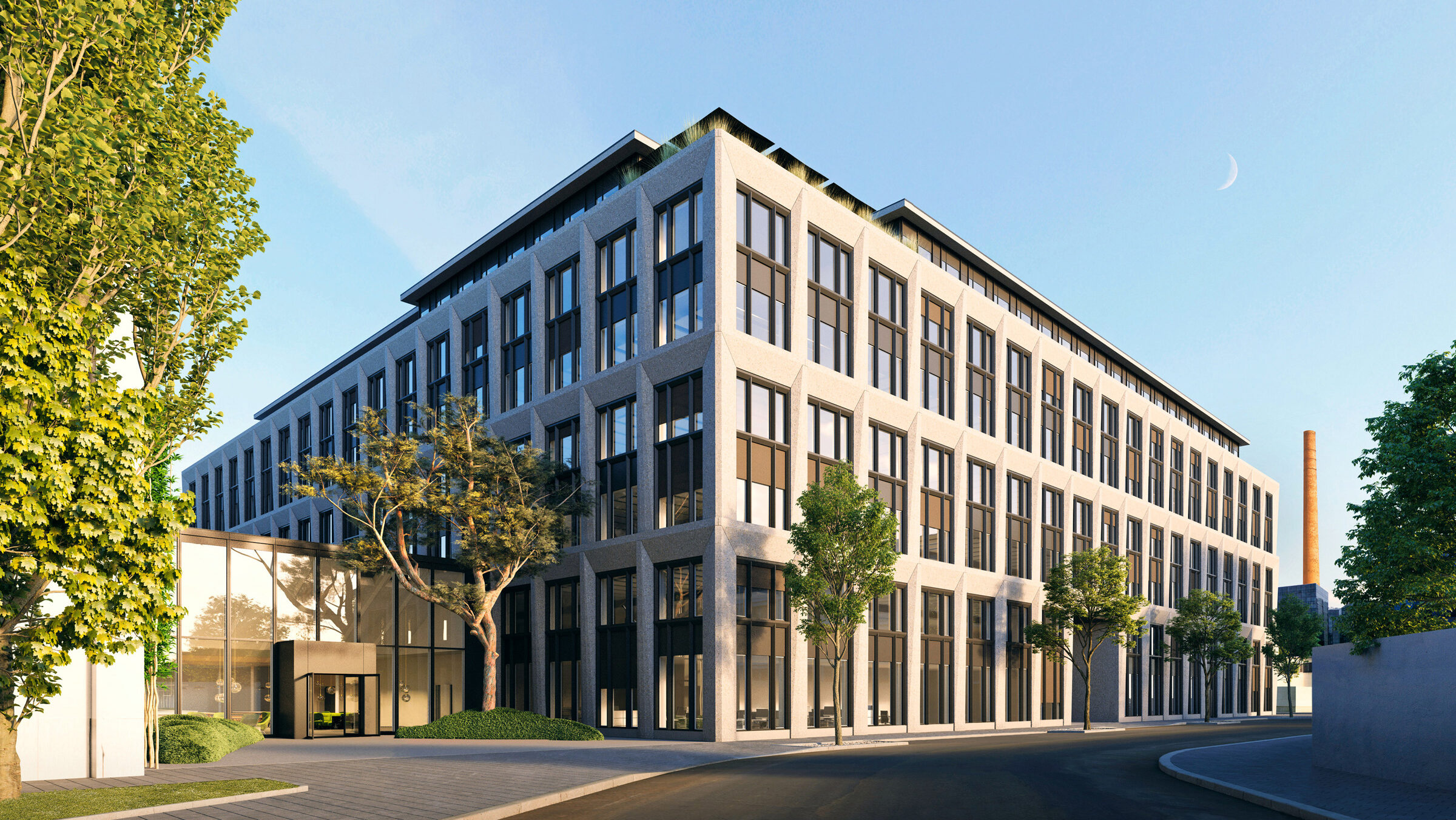
Munich is not a secondary location for this work. Apple announced its European Silicon Design Center there in 2021, focusing on connectivity and wireless technologies and investing more than one billion euros. In March 2023, Apple added another billion euros, spread over six years, explicitly also for future wireless technologies. At that time, more than 2,000 engineers worked for Apple in Bavaria.
The timeline for 6G
6G is not yet a finalized standard. In February 2026, the International Telecommunication Union's working group adopted a draft of the minimum technical requirements for 6G, comprising 20 performance criteria, seven of which are new. Formal approval is scheduled for December 1, 2026.
According to Ericsson's overview of its June meeting, studies by 3GPP, the body that writes the actual specifications, will continue until the first half of 2027. The specifications themselves will then be finalized by the end of 2028, with the first 6G specifications expected in early 2029. Ericsson anticipates the first commercial 6G systems in 2030.
| Date | Step |
|---|---|
| 12.11.2020 | Apple becomes a founding member of the NextG Alliance for 6G in North America |
| March 2021 | Apple announces its silicon design center in Munich |
| February 2025 | Apple's first proprietary modem, C1, is featured in the iPhone 16e |
| February 2026 | Draft of the 6G minimum requirements at the Telecommunications Union |
| September 2026 | C2 modem in iPhone 18 Pro and Pro Max (in Germany in both) |
| 19.10.2026 | Job posting "6G Cellular Modem Systems Engineer" |
| 01.12.2026 | Planned approval of the 6G minimum requirements |
| Early 2029 | First 6G specifications at 3GPP |
| around 2030 | First commercial 6G networks (Ericsson's expectations) |
The NextG Alliance is an industry group of the US association ATIS; Apple has been a founding member since November 2020. This means that roughly two years will pass between the current tender and the first specifications, and about three and a half years until the first networks are operational.
Which frequencies 6G should receive in the EU
For users in Germany and Austria, 6G also hinges on a frequency issue. The Radio Spectrum Policy Group, the advisory body to the European Commission, recommended in November 2025 that the upper 540 megahertz of the upper 6 GHz band be prioritized for mobile communications. A decision on the remaining 160 megahertz at the lower end of the band is expected after the 2027 World Radiocommunication Conference. This band is considered the most important new spectrum for 6G in Europe.
The German government had previously also spoken out in favor of mobile communications, against the resistance of broadband associations, which had demanded more bandwidth for Wi-Fi. Within the EU, only the lower part of the 6 GHz band is currently allocated for Wi-Fi.
Why Apple itself must be ready this time
The first 5G iPhone, the iPhone 12, arrived in 2020 with a Qualcomm modem. At the time, Apple could wait until a supplier had finalized the technology. This buffer no longer exists once Apple's own modem is integrated into all devices: then Apple must implement the standard itself in a timely manner, otherwise the next generation of iPhones will be missing.
I therefore interpret these tenders less as a signal for a specific product and more as the formation of a team that needs to grow into the standardization process. Based on specifications from 2029 onwards and the first networks around 2030, I don't expect a 6G iPhone before the end of the decade. Until then, 5G remains the network that matters, and it's worth taking a look at the 5G settings on the iPhone.
Do you think Apple will be at the forefront of the 6G rollout with its own modem, or do you expect the first 6G iPhone to arrive some time after the first networks are available? Share your prediction in the comments.