
This article may contain affiliate links. Learn more on our Partner Program page.
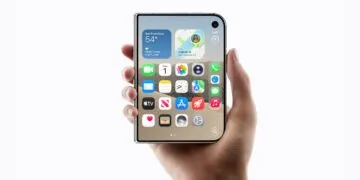
Two days before its release, the first reviews of the iPhone Duo have been published. The verdict is significantly more positive than is typical for a first foldable device. Nevertheless, criticism persists, and it repeatedly focuses on the same points.
Apple's first foldable iPhone goes on sale on Friday, October 23, including in Germany, Austria, and Switzerland. US outlets had about a week with the device in everyday use. This overview is based on four full reviews: by Chance Miller at 9to5Mac, Sam Rutherford at Engadget, Lance Ulanoff at TechRadar, and Abrar Al-Heeti at CNET. Technical specifications, prices, and dates are collected in the iPhone Duo overview.
Key Facts at a Glance
- All four tests praise the hinge, workmanship and the matte inner display, which largely makes the crease disappear during normal use.
- The most frequent criticisms are the lack of Face ID, the lack of a telephoto camera, the heavy weight, and many apps that are not yet adapted.
- Engadget gives it 8.8 out of 10 points, CNET 8.7 out of 10 including Editors' Choice.
- Battery life results range from a good 13 hours in lab tests to almost 29 hours of video playback.
- In Germany, the iPhone Duo costs from €2,299 and comes with iOS 27.1.
Overview of the ratings
| Medium | Tester | Rating |
|---|---|---|
| 9to5Mac | Chance Miller | no point rating |
| Engadget | Sam Rutherford | 8.8 out of 10 |
| TechRadar | Lance Ulanoff | Individual ratings between 4 and 5 out of 5 |
| CNET | Abrar Al-Heeti | 8.7 out of 10, Editors' Choice |
The conclusions are similar in all four tests. Chance Miller believes the design is the future of the iPhone after a week, but advises most buyers to stick with a classic model for now. Sam Rutherford calls the duo a "first-class foldable," while Abrar Al-Heeti says he doesn't want to go back to a conventional smartphone anytime soon. Lance Ulanoff sees no better choice for Apple users who have been waiting for a foldable device, but points to the lighter Galaxy Z Fold 8 as a serious alternative.
Hinge and housing
Everyone agrees on the hinge. Rutherford calls it one of the best he's used on a foldable device, while Ulanoff says it reminds him of a fidget spinner. The hinge holds securely at almost any angle, and when unfolded, it lies flat. Miller describes opening it as requiring two hands, and Al-Heeti mentions a slight springiness when unfolding.
The weight of 254 grams is the most frequent complaint about the device. This makes the Duo 5 grams heavier than the iPhone 18 Pro Max and 53 grams heavier than Samsung's Galaxy Z Fold 8. Miller finds it more comfortable to hold than the Pro Max due to its shorter, wider shape, but he does feel the extra weight in his wrist during extended one-handed use. Two testers point out the volume buttons on the top edge, which Al-Heeti got used to after a few days.
Everyone highlights the IP68 rating because it's rare for foldable devices. The Galaxy Z Fold 8 only achieves IP48 and is therefore not protected against fine dust like sand. Apple's EU data sheet states that the device can withstand at least 140 drops, plus 35 drops while fully unfolded.
The crease is there, but it's hardly noticeable
None of the testers claim the crease is invisible. It can be found from a side angle; Miller only noticed it in everyday use under bright light on dark content such as a black loading screen. From the front and during normal use, it largely disappears in all four tests. It can be felt when scrolling in portrait mode, but Miller doesn't consider this a problem after getting used to it.
Everyone attributes this to the matte nanotexture of the internal display, which scatters light instead of reflecting it. Ulanoff finds that images on it look almost printed, while Rutherford notices slightly lower color saturation in bright rooms. According to Miller, fingerprints are more difficult to remove than on a glossy display.
The top layer is replaceable. Rutherford criticizes Apple for not warning users during setup against removing it themselves. In Germany, Apple's cost calculator lists the replacement cost as €55 without AppleCare and €19 with AppleCare.
Software and apps
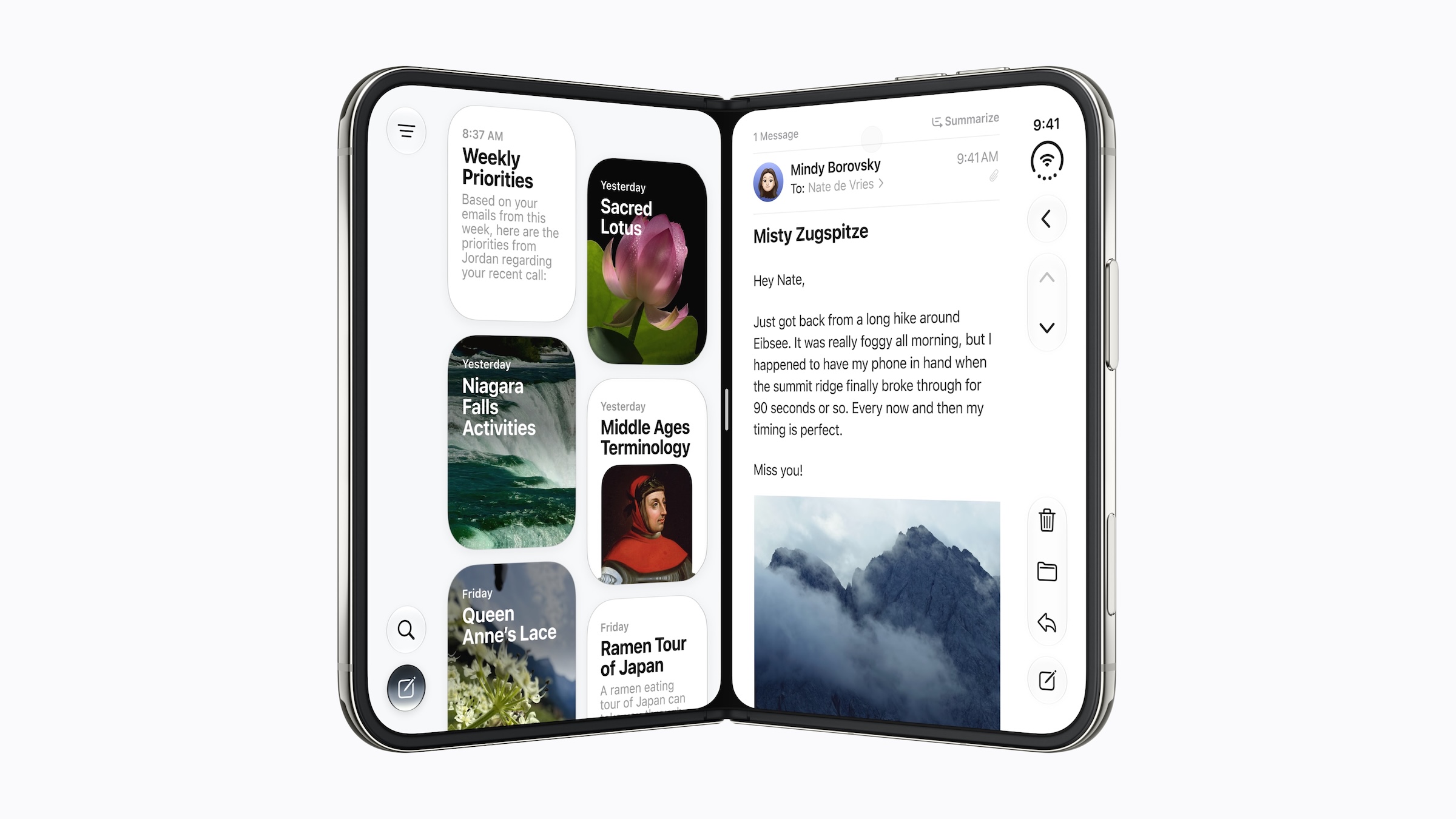
The Duo runs iOS 27 with its own interface: the dock, status bar, and many controls are located on the right edge. Miller and Al-Heeti got used to it after a few days, but both point out that left-handed users cannot switch sides. Ulanoff and Miller find Safari cramped on the outer display because the right sidebar takes up space and many websites are not optimized for the wide format.
The biggest weakness is non-adapted apps. Miller distinguishes three levels: Apps with older SDKs run with black borders, apps with the iOS 27 SDK fill almost the entire display, and only apps with the iOS 27.1 SDK fully utilize both displays. Since the beginning of October, the App Store has been accepting adapted apps; in tests, Netflix, Instagram, and OpenTable were already running adapted, while Telegram, Gmail, LinkedIn, and the Kindle app were not. Ulanoff discovered that the tilt control on the inner display did not work in a racing game.
Two apps can only be used side-by-side on the unfolded display, each occupying half of the screen without resizing. Testers describe the experience differently in portrait mode: Rutherford mentions a split screen at the top and bottom, while Al-Heeti only describes a video as picture-in-picture overlaid on a second app. Two apps can be paired and then opened together. Miller would like to see more features from the iPad, such as drag-and-drop functionality in split-screen view and Slide Over.
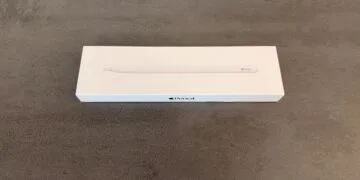
Support for the Apple Pencil with USB-C was not yet enabled during the testing period. Engadget and CNET expect it to be available sometime in October.
Touch ID instead of Face ID
The lack of Face ID is the point most criticized in all four tests. According to Al-Heeti and Miller, the sensor in the side button works quickly and reliably, but the switch after years of using Face ID is still difficult. Ulanoff calls its absence "almost unforgivable" in a device costing nearly $2,000.
Miller has enabled unlocking with his Apple Watch and describes it as significantly more convenient for everyday use. He also misses the attention features that, with Face ID, automatically open notifications when looking at the display. Rutherford reiterates Apple's reasoning: Touch ID provides a consistent experience across iPad and Mac and is more practical for a device with so many holding positions than internal and external sensors.
Cameras: good, but not a pro model
On the back are a main camera and an ultrawide camera, each with 48 megapixels; a telephoto camera is missing, as is ProRAW. Miller considers the main camera to be on par with the iPhone Air, one step below the iPhone 18 Pro, but not by much. Rutherford found the photos taken in low light, in direct comparison with the Galaxy Z Fold 8, to be sometimes better exposed and more color-accurate. Al-Heeti stated that he hardly missed the telephoto camera.
The camera below the inner display is only suitable for video calls on all four models. Apple doesn't specify a resolution for it. Testers praised the features that utilize the design: selfies using the main cameras and the outer display as a viewfinder, a preview of people being photographed, and an automatic shutter function that takes the picture as soon as all cameras are ready. For photos of children, a feature called Kid Cue displays a Snoopy animation on the outer display to encourage children to look at the camera.
Battery and Charging
Apple claims up to 31 hours of video playback on the indoor display and 44 hours on the outdoor display for the Duo, with up to 24 hours of typical use. Testers measured different battery life:
| Medium | Test | Result |
|---|---|---|
| 9to5Mac | Everyday life, around 60 percent of the time on the internal display | about 20 percent remaining in the evening |
| Engadget | Video loop | 28 hrs 48 mins (Galaxy Z Fold 8: 28 hrs 14 mins) |
| TechRadar | Laboratory test | 13 hours (Galaxy Z Fold 8: 14.33 hours) |
| CNET | 3 hours of streaming, full brightness, indoor display | 100 to 84 percent (Galaxy Z Fold 8: 86 percent) |
In everyday use, all testers got through the day; Rutherford regularly had 40 percent or more battery remaining in the evening. According to Apple, the two batteries, one in each half, function like a single unit. Apple only specifies the capacity in the EU data sheet, where it is listed as 4,883 mAh.
When charging, CNET achieved a 67-watt power adapter, charging from 0 to 65 percent in 30 minutes, and wirelessly via MagSafe to 39 percent. TechRadar reached 60 percent in half an hour with 45 watts. Apple itself states 50 percent in about 20 minutes with at least 60 watts; a power adapter is not included.
Power, heat and speakers
The Duo uses the A20 Pro chip from the iPhone 18 Pro, and all testers confirm this. TechRadar measured 4,007 points in single-core and 11,363 in multi-core Geekbench 7.1, close to the results from the initial Geekbench test a week ago. Miller found the Duo to be slightly warmer than the 18 Pro, without any impact on performance. Apple distributes the heat across both halves using a vapor chamber and flexible graphite, which runs as a tube through the hinge.
Opinions differ regarding the speakers. Miller finds them thinner and quieter than those of the iPhone 18 Pro, while Al-Heeti praises the more balanced sound compared to the Galaxy Z Fold 8, because the speakers are located on both halves of the device. Miller and Al-Heeti also point out that MagSafe accessories such as wallets and batteries protrude from the bottom due to the shorter design.
What the tests mean for buyers in this country
In Germany, the iPhone Duo costs €2,299 with 256 GB, €2,549 with 512 GB, €3,049 with 1 TB, and €3,799 with 2 TB. It ships with iOS 27.1, but during setup, it downloads a newer build of the same version. The Duo does not have a card slot in any market, including Germany, Austria, and Switzerland.
Some of the features praised in US tests are still missing here. Ulanoff describes in detail how Siri AI on the Duo incorporates personal data such as emails. Siri AI is not yet available on the iPhone in the EU. The feature is available in Switzerland, but not yet in German.
My interpretation of the four tests is that the Duo fulfills its most important task: the hinge, display, and battery function without the weaknesses of earlier foldable devices. The compromises lie in Face ID, the telephoto camera, and apps - precisely where the iPhone 18 Pro remains the obvious alternative. Those who buy the Duo are primarily paying for the form factor and should be prepared for some apps not to utilize it during the first few weeks. All information about the device is compiled on the iPhone Duo topic page.
Would the lack of Face ID be a reason for you to wait for the second generation, or does the new design outweigh that? Tell us in the comments where you draw the line.