This article may contain affiliate links. Learn more on our Partner Program page.
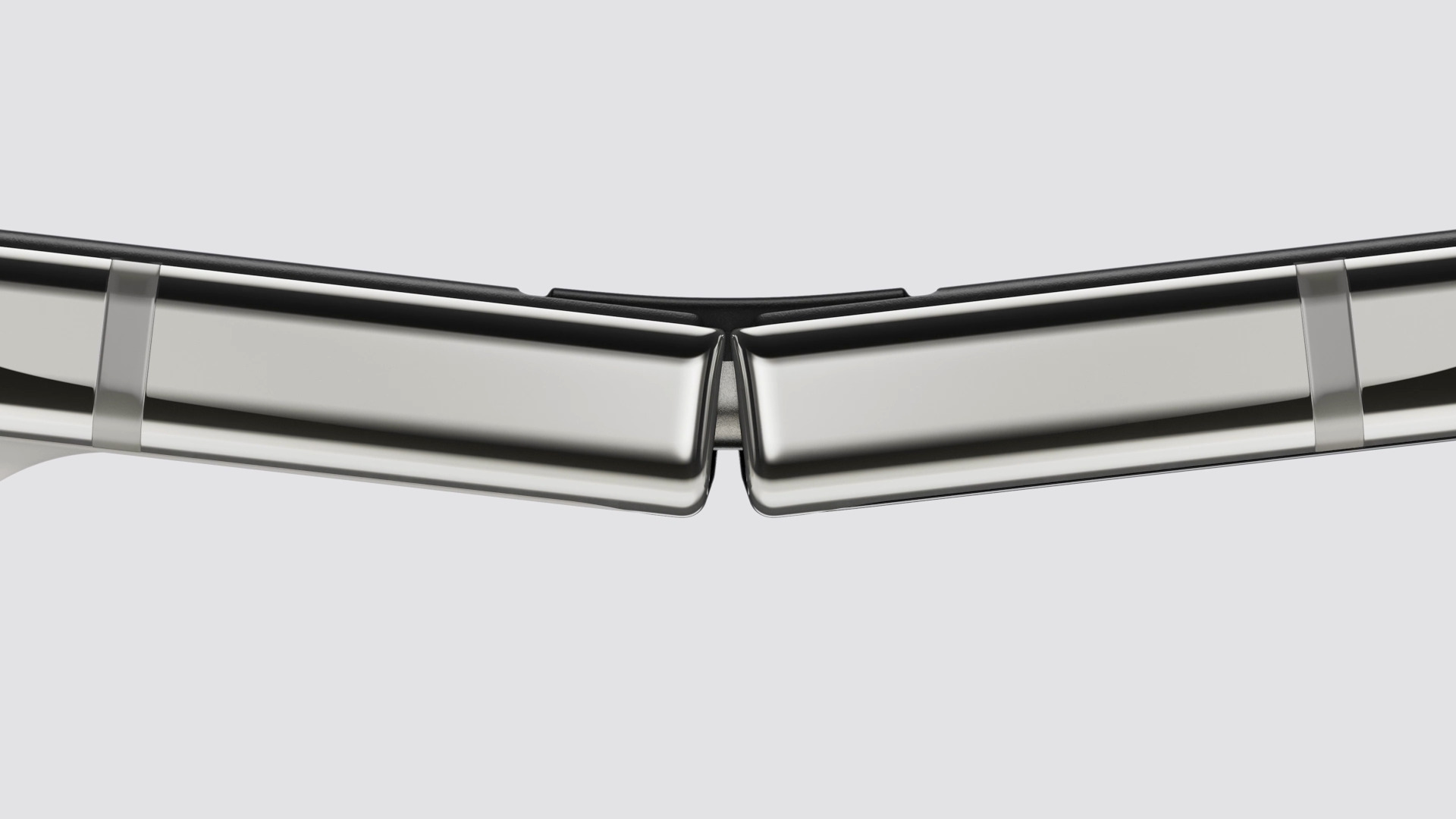
A foldable casing is thin and consists of two halves – for cooling a smartphone chip, this is arguably the worst possible starting point. Apple solves this in the iPhone Duo with a component that one would hardly expect to find there: a flexible graphite tube that runs right through the hinge.
The details come from a PCMag interview with two Apple engineers: Dan Murray, Vice President of Chip Design, and Banafsheh Barabadi, who is responsible for the thermal design of the devices. Both describe how Apple cools the A20 Pro in the iPhone Duo – the same chip found in the iPhone 18 Pro and Pro Max. The foldable iPhone will go on sale in Germany on October 23rd; its specifications and pricing have been known since its unveiling in September.
Key Facts at a Glance
- A flexible graphite tube in the hinge conducts heat between the two halves of the iPhone Duo, thus increasing the surface area through which the device dissipates heat.
- In the Duo, the vapor chamber also serves as a supporting platform to which the battery and logic board are attached.
- A new intermediate layer, which Apple calls "metal over foam", couples the chip directly to the vapor chamber.
- For the Duo, Apple added a second display engine to the A20 Pro so that the inner and outer displays can run simultaneously.
Why the hinge becomes a thermal bridge
In a conventional iPhone, the chip and cooling system are housed in a single, continuous casing. In the Duo, the device is split into two halves, and without a connection, the chip's heat would concentrate in one half. The graphite tube bridges this gap: it conducts heat through the hinge to the other half, allowing both sides to contribute to cooling.
According to the engineers, the thermal and mechanical engineering teams had to develop the component together. The pipe must withstand thousands of folding cycles without losing thermal conductivity or stability.
The engineers did not specify how many folding cycles the tube can withstand. According to Apple, the hinge itself consists of over one hundred parts and features a 3D-printed titanium cover.
Vapor chamber as a load-bearing component
Apple redesigned the vapor chamber for the A20 Pro. According to Apple, it's three times larger than the one in the iPhone 17 Pro, but the Duo shares the basic principle with the Pro models. In the Duo, however, it takes on an additional function: Barabadi describes it as the central supporting layer of the device, to which the battery and logic board are mounted.
Between the chip and the vapor chamber sits a layer that Apple internally calls "metal over foam." According to Barabadi, it establishes direct thermal coupling and simultaneously provides mechanical flex. The development of this layer took months.
This direct coupling is made possible by a modified chip layout. In the A20 Pro, the RAM is located next to the processor instead of on top of it, a design Apple adopted from its Mac chips. This means the chip sits directly on the cooling system, whereas in the A19 Pro, the RAM was in the way.
Second display engine for two screens
Besides the cooling system, Murray mentions a modification to the chip itself. Apple has added a second display engine to the Duo, allowing the inner and outer displays to operate simultaneously. This enables features where both screens display content at the same time, such as two-page PDF viewing.
The rest of the chip's features are the same as the Pro models: six CPU cores, of which two are performance cores and four are efficiency cores, plus a graphics unit with hardware ray tracing.
What cannot be checked before the sales launch
How well the cooling performs in everyday use can only be measured after October 23rd. Results are already available for the Pro models: In a stress test with 20 runs, the iPhone 18 Pro Max maintained 79.4 percent of its peak performance, while the smaller iPhone 18 Pro maintained 62.8 percent. The smaller device therefore cools noticeably less effectively than the larger one.
I expect the Duo to lean more towards the Pro Max than the Pro in this comparison. When unfolded, it measures 164.6 by 117.8 millimeters, and this is precisely the area the graphite tube is intended to utilize for cooling. However, this expectation will only be confirmed by the first measurements.
Cooling and repair are closely linked
I also see this design as a sign of a focus on repairability. If the vapor chamber simultaneously serves as a carrier for the battery and logic board, and a tube runs through the hinge, any internal work becomes more complex. During battery replacements in iPhone 18 Pro teardowns, the display frame broke in three out of four cases, and iFixit suspects the improved cooling system is the cause, dissipating heat too quickly when the adhesive is removed.
For buyers in Germany investing €2,299 or more, repairability becomes a real cost issue. One bright spot is the replaceable cover layer of the foldable display, which can be replaced with AppleCare for €19. The condition of the battery and hinge will only be revealed by the first teardowns after the sales launch.
Would you prioritize strong, sustained battery life in the iPhone Duo over easy repairs – or would a complicated battery replacement deter you from buying it? Share your thoughts in the comments.