
This article may contain affiliate links. Learn more on our Partner Program page.
For five years, Apple barely changed the MacBook Pro's casing. Now comes the major overhaul all at once: a tandem OLED display that can be operated with a finger for the first time, a Dynamic Island instead of the notch, and a noticeably lighter casing. The chips, however, remain unchanged.
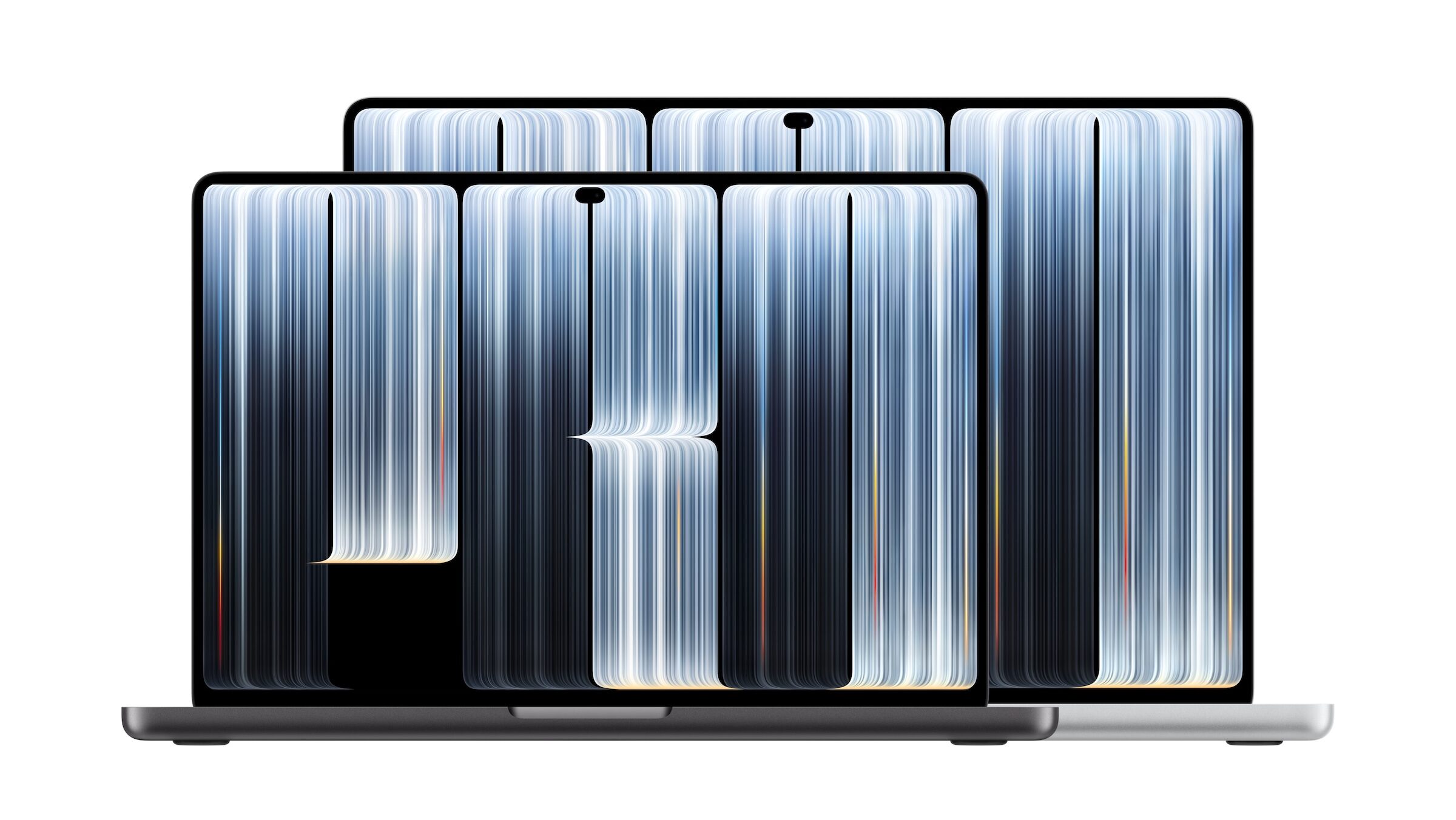
Apple unveiled the new MacBook Pro with a ProLED XDR display this evening, in 14-inch and 16-inch versions. The press release appeared in the Apple Newsroom at the start of the "Pro and Tell" event in Los Angeles. This officially confirms the device, which had been rumored for months as the MacBook Ultra – the name is now off the table; the device remains a MacBook Pro.
This is already the second new MacBook Pro this week. On Tuesday, Apple introduced the 14-inch model with the M6 as the new entry-level model in the series. The OLED models sit atop this and run on the M5 Pro and M5 Max, the chips Apple already introduced in March. Pre-orders are available starting today, with deliveries beginning Friday, November 6.
Key Facts at a Glance
- The MacBook Pro will for the first time feature a tandem OLED display with up to 2000 nits and a contrast ratio of 10,000,000:1.
- The screen is the first Mac screen that can be operated via touch; the notch gives way to a Dynamic Island.
- The 14-inch model will be approximately 220 grams lighter, the 16-inch model approximately 320 grams lighter.
- The chipset remains the M5 Pro and M5 Max; the new feature is SSD storage up to 16 TB.
- Pre-orders start today, delivery from November 6th; in Germany the series starts at 3,299 euros.
PROLED XDR: What makes the new display different
The core of the update is the display. Apple is using tandem OLED, meaning two superimposed light-emitting layers, as already used in the iPad Pro. Peak brightness reaches up to 2000 nits, explicitly including SDR content. Apple specifies the contrast ratio as 10,000,000:1.
The color gamut is also new. In addition to P3, the display now covers Adobe RGB, the standard in photography and prepress. For HDR video editing, Apple cites more than 80 percent coverage of Rec. 2020. Both color spaces are available in a single preset, eliminating the need to switch between them. ProMotion controls the refresh rate between 10 and 120 Hz.
The magnitude of the leap is demonstrated by comparing it to the Liquid Retina XDR display of previous Mini-LED models:
| Liquid Retina XDR (Mini-LED) | PROLED XDR (Tandem OLED) | |
|---|---|---|
| Contrast ratio | 1.000.000:1 | 10.000.000:1 |
| Peak brightness HDR | 1600 nits | 2000 nits |
| Brightness SDR | 1000 nits (outdoors) | 2000 nits |
| Color space | P3 | P3 and Adobe RGB |
| Screen diagonal | 14.2 / 16.2 inches | 14.2 / 16.3 inches |
The nanotexture option is still available. It is now etched directly into the cover glass. Reference modes have also been added, including new DICOM modes for medical images, which Apple explicitly releases for non-diagnostic purposes only.
Apple's hardware chief, Johny Srouji, accordingly puts the display in the spotlight:
PROLED XDR is the world's best laptop display. It combines state-of-the-art tandem OLED technology with advanced algorithms in our display engine to deliver the image fidelity professionals have dreamed of.
Touch on the Mac and the Dynamic Island
For the first time, a Mac screen responds to touch. According to Apple, the touch sensor is integrated into the panel itself, rather than placed on top, which should reduce latency. Scrolling by swiping, zooming with two fingers, and resizing windows with a double-tap – the gestures are similar to those on the iPhone and iPad, but complement the keyboard and trackpad instead of replacing them. A newly designed hinge is intended to keep the screen more stable when tapped.

Many existing apps work immediately because macOS automatically translates touches into clicks. Apple has expanded its gesture interfaces for its own touch controls. Among those that have committed are Adobe Lightroom, DaVinci Resolve, Blender, Cinema 4D, and Microsoft Office; these apps are expected to follow by the end of the year. In Apple Creator Studio, for example, software instruments in Logic Pro can be played directly on the display.
The notch replaces the Dynamic Island. It consolidates Live Activity, calls, and music controls, and serves as the new home for Spotlight and Siri AI. One limitation is noted in Apple's footnotes: Spotlight only moves to the Dynamic Island if Siri AI is available and enabled.
Lighter, thinner, more storage
The new casing is thinner and, above all, lighter. According to Apple's specifications, the 14-inch model with the M5 Pro weighs 1.38 kilograms instead of 1.60 kilograms, while the 16-inch model is 0.7 pounds lighter, or roughly 320 grams. The 16-inch model is almost a millimeter thinner, and the 14-inch model half a millimeter thinner. Thanks to narrower bezels, the large diagonal screen size increases from 16.2 to 16.3 inches.
The performance remains unchanged from March: M5 Pro and M5 Max with up to 128 GB of combined RAM. New is the storage option up to 16 TB; previously, the maximum was 8 TB. Apple states a battery life of up to 24 hours, with half an hour on the fast charger supposedly enough for 50 percent charge.
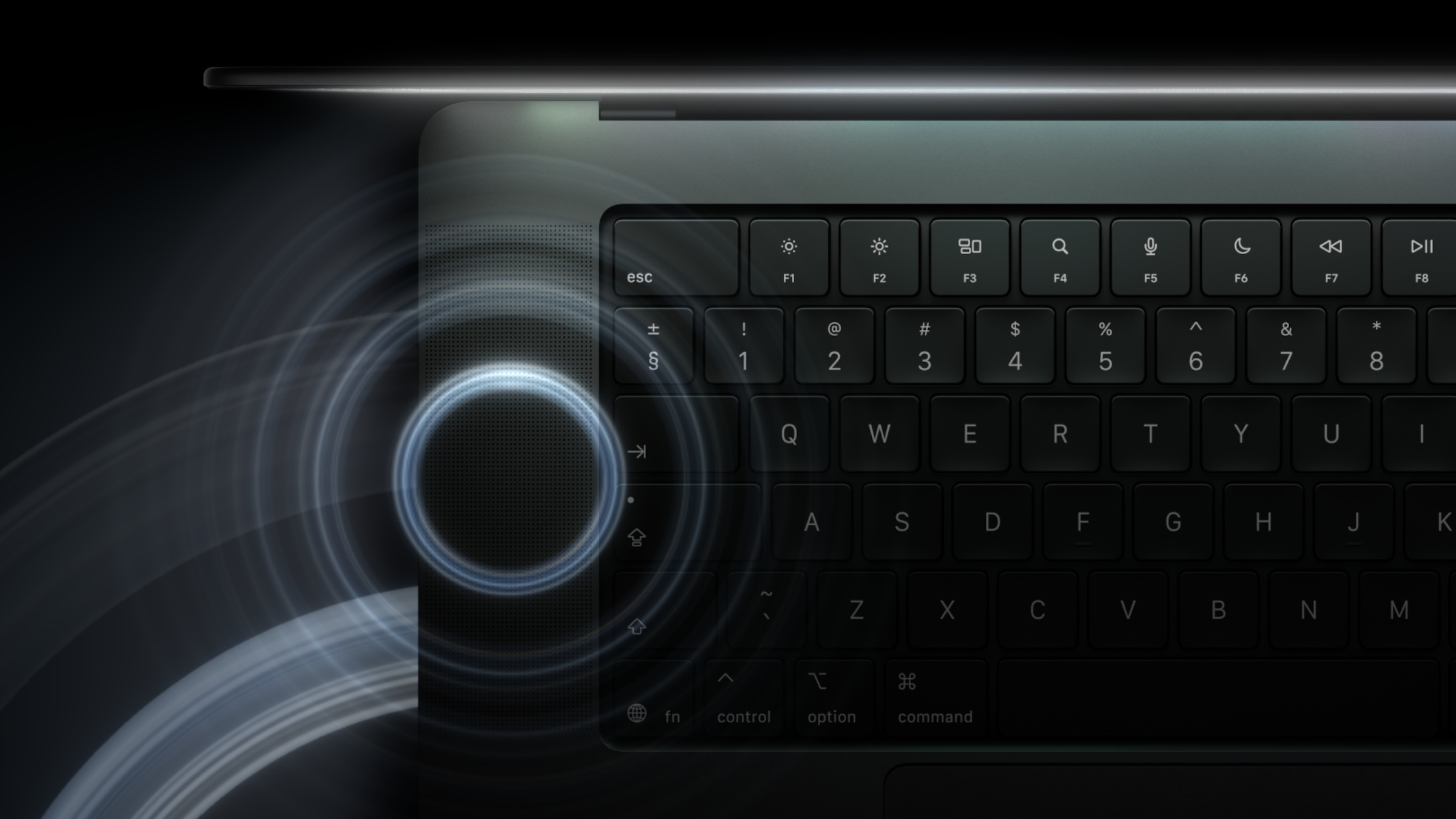
The ports are the same as on previous Pro models: three Thunderbolt 5 ports, HDMI, an SDXC card reader, MagSafe, and a headphone jack. The M5 Pro can connect up to three external displays, while the M5 Max can connect up to four. The speaker system features new woofers with, according to Apple, 50 percent more bass and, for the first time, a dedicated tuning for use with the lid closed.
Pricing and market launch
Pre-orders are available starting today in 30 countries and regions, with delivery beginning on November 6th. The following starting prices apply in the German Apple Store:
| Model | Chip | Price (Germany) | Price (USA) |
|---|---|---|---|
| 14 inch | M5 Pro | from 3,299 euros | from US$2,899 |
| 16 inch | M5 Pro | from 3,899 euros | from US$3,399 |
| 14 inch | M5 Max | from 5,199 euros | from US$4,499 |
| 16 inch | M5 Max | from 5,599 euros | from US$4,799 |
The nanotexture display costs an extra 165 euros, and as with its predecessor, a power adapter is not included. The Mini-LED models remain available alongside the new models: the 16-inch MacBook Pro with the M5 Pro continues to be priced from 3,399 euros, and the OLED version with the same chip from 3,899 euros.
A Mac for image professionals, not yet a Mac for everyone
I believe the display is the real reason to buy this MacBook Pro – Touch and Dynamic Island are the more visible innovations, but 2000 nits for SDR content and Adobe RGB out of the box truly change the daily workflow for photographers and colorists. Those primarily seeking processing power, however, will find the exact same chips from March in a new enclosure.
For German-speaking users, Apple's footnotes reveal a limitation. Siri AI runs as a beta on the Mac in English, French, Japanese, Korean, Portuguese, and Spanish – German is still missing. Those who have set their Mac and Siri to German will therefore currently be using Dynamic Island without Siri AI and without Spotlight in this area. I expect that this particular aspect of the new user interface will only truly become available in Germany once the German language version is released.
The touchscreen is likely to be the most discussed new feature: In which tasks would you actually tap the screen on your MacBook instead of using the trackpad? Tell us in the comments where your finger would be faster.