This article may contain affiliate links. Learn more on our Partner Program page.
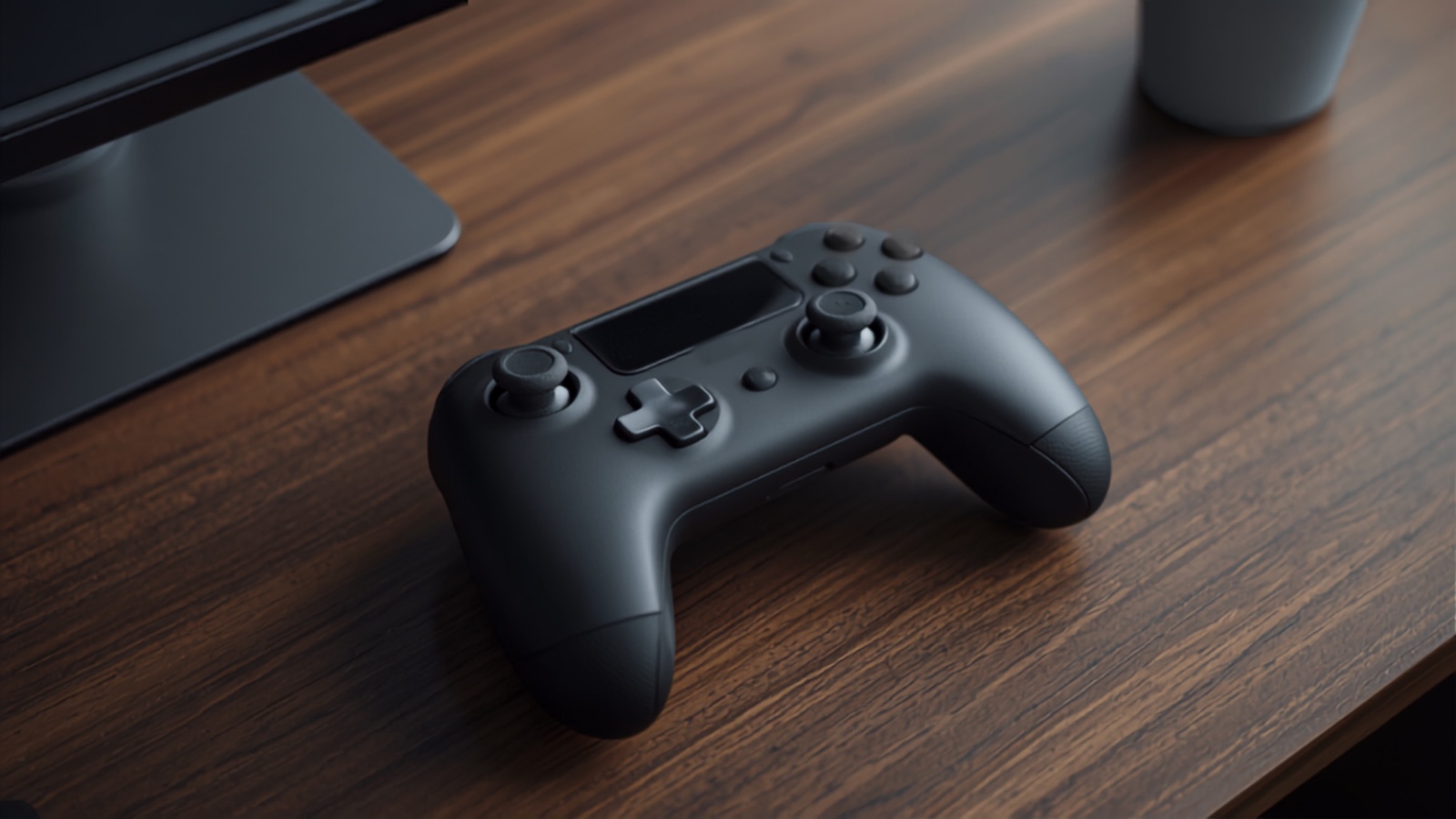
The first release candidate of macOS 26.7 contained driver profiles for two game controllers that identified themselves to the system as Apple hardware. Both had a D-pad, two joysticks, shoulder buttons, and analog triggers. The code was missing from the second release candidate.
The first release candidate of macOS Tahoe 26.7, released in mid-August, has already been scanned multiple times. References to unreleased Apple devices - iPhones, Macs, and home accessories - appeared during the initial scan. Now, a category has been added that Apple has never offered as a product.
The profiles were discovered by the same user who previously noticed the surround sound tuning for four HomePods; he documented his findings in the MacRumors forum and provided the relevant links. This can be verified using the public system comparisons on GitHub, which detail the differences between the Apple builds.
Key Facts at a Glance
- macOS 26.7 briefly included driver profiles for two game controllers.
- Both devices identify themselves to the system as Apple hardware.
- The features are in line with what console controllers offer today.
- Only one of the two models has position and acceleration sensors.
- The code was no longer included in the second release candidate.
What the profiles describe
Both controllers feature the standard layout: a D-pad, two analog sticks, shoulder buttons, analog triggers, and a home and menu button. The feel of the controls differs – the profiles describe a unique vibration pattern for each device.
The more noticeable difference lies in the sensors. Only one of the two models can detect position and acceleration; the other cannot.
| Feature | Model with motion sensors | Model without |
|---|---|---|
| Directional pad | Yes | Yes |
| Two analog sticks | Yes | Yes |
| Shoulder buttons | Yes | Yes |
| Analog triggers | Yes | Yes |
| Home and Menu buttons | Yes | Yes |
| Feel | own vibration profile | deviating vibration profile |
| Position and acceleration sensor | Yes | no |
This configuration suits two different applications. Motion control is needed for tilting or aiming a device; a controller without these sensors is cheaper to manufacture.
Why this looks like real hardware
Both devices contain their own hardware extensions in the code, meaning device-specific software components. A mere placeholder in the test system would function without such components – they indicate that Apple is working with actual, existing devices.
However, this doesn't explain what these devices are intended for. Apple maintains its own reference devices for certification and software testing, which are never commercially available. Both of these practices are consistent with the discovery.
There briefly, then gone again
What happened next is remarkable: The code was no longer present in the second release candidate of macOS 26.7. Whether Apple deliberately removed it or whether it had simply been included in the first version by mistake is not clear from the system comparisons.
This makes a difference when evaluating the find. Code that only exists in a preliminary version for a few weeks and then disappears is less reliable as evidence of an imminent product than code that evolves over several versions – as is the case with the HomePod voting.
A controller from Cupertino is not a new idea
In November 2025, an Apple patent for a magnetic game controller for iPhone and iPad was made public. The described accessory attaches to the side of the device and transforms it into a kind of handheld.
The current discovery describes something different: a standalone controller with a full range of buttons, the kind you hold in your hand and place in front of a screen. The two concepts are not mutually exclusive, but they address different devices.
There were plenty of opportunities. With Apple TV, the launch of Apple Arcade, the release of the Vision Pro – each time, a proprietary controller would have been the obvious choice. Instead, Apple expanded support for third-party controllers and even used Sony's Sense controller for the Vision Pro. At GDC 2026, the company promoted Mac gaming without showcasing its own input devices. Gaming on Apple platforms is now bundled in the Games app, which includes a library, leaderboards, and friend activity – so the software is there, but the proprietary hardware is missing.
What a dedicated controller would need to be able to do
We don't expect Apple to introduce a controller anytime soon. The documented basis for this is their practice of recent years: consistently expanding support for devices from Microsoft, Sony, and Nintendo instead of developing their own hardware – and a piece of code that disappeared after a preliminary version was released.
If so, an Apple controller would have to offer something that the existing ones don't. Ergonomically, there's little to be gained from console controllers. However, features like pairing without having to go through settings, seamless switching between iPhone, iPad, Mac, and Apple TV without reconnecting, and location tracking via "Find My" would be conceivable. If you already use an Xbox or PlayStation controller with your Apple devices, these are precisely the points that would justify switching.
What would an Apple controller need to offer for you to replace your current one – seamless switching between devices, location tracking if lost, or would price be a deal-breaker anyway? Let us know in the comments what you're missing in your current controller.