This article may contain affiliate links. Learn more on our Partner Program page.
Apple is reportedly working on its own surveillance camera and accompanying service. The approach will use AI to analyze the environment instead of storing video footage. Both are expected to be released in 2027.
Shortly before Apple's September 9th event, Mark Gurman published an overview of Apple's product planning on Bloomberg. One section concerns the connected home: a security system and a related service are reportedly planned for 2027. Gurman is among the most reliable sources on Apple's product planning; while his claims aren't definitive, his accuracy is high.
The report follows a previously known roadmap. Apple's plans for the connected home extend to 2028, and a proprietary camera was already rumored for release in the summer of 2025. What's new is the description of how the device is supposed to work.
Key Facts at a Glance
- A security camera and a related service are being discussed for 2027.
- The camera is designed to analyze the environment using AI instead of storing video footage.
- The report provides no further information about the service itself.
- The smart home hub is expected to be released before the end of the year.
- Camera features in the Home app are already tied to the iCloud+ plan.
What the report says about the camera
The described approach reverses the usual functionality. Instead of continuously recording video footage and evaluating it later, the camera analyzes its surroundings in real time. What it detects is processed; the image itself does not need to be permanently stored.
This would place the camera closer to a sensor than to a recording device. This makes a difference regarding data privacy: where nothing is stored, nothing can leak. The report doesn't specify how far Apple actually takes this approach.
The service remains a void
The report mentions nothing about the announced security and surveillance service beyond its existence. Neither its scope, price, nor initial markets are described.
This is the crucial open question, because a service of this kind differs greatly depending on its design: a purely software-based function in the home app would be something different from a connection with a reaction to alarms, as operated by traditional security providers.
How does that fit with headquarters?
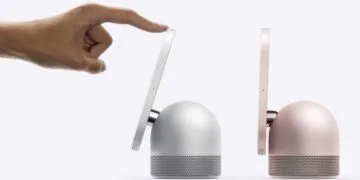
The smart home hub is expected to be released later this year. As it stands, it will include a built-in camera that automatically switches between user profiles. A separate security camera would therefore not be a replacement, but rather a supplement – hub in the living room, camera at the door, driveway, or garden.
Both devices originate from the same plan. The roadmap to 2028, which the same report outlines for the iPhone line, shows the same pattern: Apple now thinks in terms of product lines with an annual cycle rather than individual devices.
How much camera features cost in this country today
One point can already be quantified, and it is likely to be crucial for the upcoming service: Apple is linking camera functions to the amount of storage purchased. HomeKit Secure Video already requires a paid iCloud+ subscription, and the new AI features of the Home app in iOS 27 require at least the 2TB plan.
| iCloud+ plan | Price in Germany | Cameras with HomeKit Secure Video | AI features of the Home app |
|---|---|---|---|
| 50 GB | €0.99 per month | 1 | no |
| 200 GB | €2.99 per month | up to 5 | no |
| 2 TB | €9.99 per month | unlimited | Yes |
The recordings themselves do not count towards the storage quota. Those who wish to compare the storage plans in detail will also find the larger tiers there.
Why the service reveals more about Apple's intentions than the camera
A camera alone would be just one accessory among many. The interesting aspect is the combination: hardware plus an ongoing service, along with the existing integration of camera functions with iCloud+. We therefore expect Apple to offer a subscription service to which the camera is linked, rather than a standalone product.
The documented starting point for this is shown in the table above: Apple already considers the analysis of camera footage a feature of its storage subscription, not of the device itself. A dedicated security service would be a continuation of this approach.
What would an Apple camera need to do for you to replace your existing one? Is the prospect of no longer saving video footage enough for you, or would an additional subscription be a deal-breaker? Tell us in the comments what your current camera setup looks like.