apple patient
  • Home
  • News
  • Rumors
  • Tips & Tricks
  • Reviews
  • Insights
No Result
View All Result
  • iPhone 18
  • iOS 27
  • iPadOS 27
  • macOS
  • MacBook Neo
  • iPhone 17e
  • AirTags
  • iOS 26
  • iPhone 17
  • MacBook Pro
  • iPadOS
  • iMac
  • Mac mini
  • HomePod
  • Apple TV
  • iPad Pro
  • iPhone Air
  • Apple Vision Pro
  • iPhone 16
  • AirPods 4
  • Apple Watch Ultra
  • HomePod Mini
  • MacBook Air
  • iPad
  • AirPods Max
  • AirPods Pro 3
  • Apple Watch Series 3
  • Mac Studio
  • Studio Display
  • iPad Air
  • iPad mini
  • watchOS 27
  • Apple CarPlay
  • Apple Pay
  • watchOS 26
  • Home
  • News
  • Rumors
  • Tips & Tricks
  • Reviews
  • Insights
No Result
View All Result
apple patient
No Result
View All Result
  • iPhone 18
  • iOS 27
  • iPadOS 27
  • macOS
  • MacBook Neo
  • iPhone 17e
  • AirTags
  • iOS 26
  • iPhone 17
  • MacBook Pro
  • iPadOS
  • iMac
  • Mac mini
  • HomePod
  • Apple TV
  • iPad Pro
  • iPhone Air
  • Apple Vision Pro
  • iPhone 16
  • AirPods 4
  • Apple Watch Ultra
  • HomePod Mini
  • MacBook Air
  • iPad
  • AirPods Max
  • AirPods Pro 3
  • Apple Watch Series 3
  • Mac Studio
  • Studio Display
  • iPad Air
  • iPad mini
  • watchOS 27
  • Apple CarPlay
  • Apple Pay
  • watchOS 26

iPhone Ultra (iPhone Fold): All rumors and facts at a glance

Milan Jovicic by Milan Jovicic
September 3, 2026 - 2:35 p.m. CEST
in Apple Insights, iPhone news, rumors and tips
1
Concept design of the iPhone Ultra in its unfolded state with a large inner display

Image: FrontPageTech x Asherdipps

WhatsAppFacebookEmail
Threads

Apple is launching its first foldable iPhone – and doing so as a perfectionist, not a pioneer. The iPhone Ultra is designed to unfold into a book-like form, feature an inner display the size of an iPad mini, and address the shortcomings of its competitors. It will be unveiled in September 2026, with a price tag exceeding $2,000.

Foldable smartphones have been around for years; Samsung and Huawei established the form factor. Apple has watched – not a sign of backwardness, but rather their usual strategy: wait until the technology is viable and then enter the market with a device that redefines the category. Current reports suggest that Apple is addressing the three issues that have hampered existing foldables: the visible crease, the durability of the hinge, and battery life. The device is expected to be unveiled alongside the iPhone 18 Pro models.

Bloomberg reporter Mark Gurman calls the device the most significant overhaul in iPhone history, placing it on par with the iPhone 4, iPhone 6, and iPhone X. Whether Apple can live up to this hype remains to be seen. The technical specifications certainly sound promising.

Key Facts at a Glance

DetailExpectation
NameiPhone Ultra – mentioned by two Weibo accounts, one of which has since retracted the claim.
Form factorFoldable in book format, large internal display – no clamshell
DisplaysExternal dimensions approximately 5.3–5.5 inches, internal dimensions approximately 7.7–7.8 inches (about the size of an iPad mini)
ThicknessUnfolded: 4.8 mm, folded: 9–9.5 mm
Folding displaySamsung OLED (M16), Dual-Layer UTG, significantly reduced crease
CamerasFour lenses: 2× 48 MP (wide + ultrawide, no telephoto), front external camera, camera under the internal display
UnlockSide Touch ID button, no Face ID
Chip / ModemA20, Apple's C2 modem (mmWave in the US)
SIMWorldwide only eSIM, no SIM card slot
Memory / RAM256GB, 512GB, 1TB; 12GB RAM
Battery / CoolingApproximately 4,800–5,000 mAh (dual-cell); vapor chamber despite thin casing
MagSafeAccording to a Bloomberg report, it is present; the ring is missing on dummy models, leaked cases have one.
ColorsThe launch is expected to be in two colors; silver and dark blue were recently under discussion.
PriceOver $2,000; estimates range from around $2,060 to over $3,000.
IntroductionSeptember 2026, alongside the iPhone 18 Pro models
Sales launchSame release date as the Pro models or a few weeks later; a launch only in late autumn is now considered unlikely.

Name: iPhone Ultra instead of iPhone Fold

For a long time, Apple's foldable iPhone was referred to in media reports as the "iPhone Fold." The Weibo-based leaker Digital Chat Station claimed the device would be released as the "iPhone Ultra." Shortly afterward, Instant Digital confirmed this assessment, listing the fall lineup as iPhone 18 Pro, iPhone 18 Pro Max, and iPhone Ultra.

The decision fits into Apple's brand strategy. The term is already used for the Apple Watch Ultra, the M1 Ultra and M3 Ultra chips, and CarPlay Ultra. It had previously been reported that Apple would extend the designation to other product lines. The foldable iPhone would thus not be a niche product, but rather the premium flagship of the entire iPhone line.

Since mid-August, this association has been called into question again – ironically, by the same source. Instant Digital now considers the name unlikely and expects Apple to reserve the suffix for the anniversary model and its successors. The post provides no evidence, relying instead on Apple's previous use of the term. An account that retracts its own earlier statement without new evidence weakens both claims. Details can be found in the report on the latest comments regarding the market launch and name. The name is therefore not confirmed until the official unveiling.

Design: Book format instead of clamshell

Form factor and dimensions

The iPhone Ultra follows a book-like design, opening like a book to reveal a large inner display. This makes it similar to the Samsung Galaxy Z Fold and fundamentally different from the compact clamshell design of the Galaxy Z Flip. According to Instant Digital, Apple initially considered a flip design but abandoned the plans because the form factor would not have offered compelling new uses.

Analyst Ming-Chi Kuo provides specific figures regarding the dimensions: 9 to 9.5 mm when folded, and 4.5 to 4.8 mm when unfolded. Instant Digital recently clarified that the minimum thickness when unfolded is 4.8 mm – making the device at least 1.1 mm thinner than the iPhone Air. Leaked dimensions indicate a height of approximately 120.6 mm and a width of around 83.8 mm when closed, making the device significantly more compact but wider than current iPhones.

Dummy models confirm the format

In early April 2026, leaker Sonny Dickson published the first photos of dummy models alongside the iPhone 18 Pro and iPhone 18 Pro Max. The non-functional prototypes confirmed the wider, almost square format when closed and matched earlier CAD drawings. A subsequent video showed the devices in motion, confirming the aspect ratio reminiscent of a mini-tablet.

Size comparison of the outlines of iPhone 18 Pro Max, iPhone Ultra and iPhone 18 Pro side by side
Image: Sonny Dickson / X

Button layout and camera control

The iPhone Ultra's button layout differs from current models. The volume buttons are positioned at the top right, similar to the iPad mini, while the power button remains on the right side. A camera cutout, similar to the iPhone Air, is located on the left side of the back.

Despite the extremely slim design, the camera control button remains. Apple sees a practical problem with existing foldable devices: due to the device's size, many users find adjusting camera settings cumbersome. Internally, the company admits that the implementation of the button on the slim iPhones was a mixed bag – but its usefulness is significantly greater in the foldable design, which is why it remains at the expense of valuable internal space.

Display: Two screens for two usage modes

Outdoor and indoor screen

When folded, an external screen is available, resembling a classic iPhone display and intended for everyday tasks. Unfolded, a large, iPad-style internal display unfolds. A report from The Information cites 5.3 inches on the outside and 7.7 inches on the inside, while other sources report 5.5 and 7.8 inches respectively – it's currently unclear which figure is correct. Sources agree, however, that the unfolded display is roughly the size of an iPad mini.

When unfolded, an iPad-like interface will be activated, including multitasking with two apps side-by-side. iOS 27 is specifically optimized for this form factor. However, it won't be a full-fledged iPadOS with a windowing system, but rather a modified iPhone version.

Resolution and screen protection

Rumors suggest the internal display will be roughly the size of an A6 sheet of paper with a resolution of 2,713 × 1,920 pixels. The external display is said to have a resolution of 2,088 × 1,422 pixels. Apple is reportedly using a transparent polyimide film as a protective layer on ultra-thin glass.

Digital Chat Station describes a dual-layer structure made of ultra-thin glass (UTG): The display is sandwiched between two layers of glass and thus does not come into direct contact with the hinge mechanism. This arrangement distributes the mechanical stress across multiple layers, which is intended to improve both durability and reduce the risk of crease buildup.

Samsung supplies the foldable display exclusively

The display question has been settled: According to The Elec, Apple has signed an exclusive contract with Samsung Display for foldable OLED panels. The contract runs for three years and excludes other suppliers, as there are currently no comparable alternatives. Samsung is relying on its latest M16 OLED panel, which offers improvements in brightness, color reproduction, lifespan, and energy efficiency – earlier reports had expected the iPhone 17 Pro Max to use the M14 materials.

The panel also utilizes CoE technology: the polarizer is eliminated, and the color filter layer is applied directly to the encapsulation. This is standard for foldable devices because the polarizer can cause cracks at bending points.

Production has moved beyond the contractual level. Samsung Display has received approval for module production – a qualification step that presupposes mass production readiness. Apple's threshold was a yield of at least 70 percent; over 80 percent has been achieved. Back-end manufacturing is taking place at the Vietnamese factory, where around 50 of the approximately 80 production lines are active; the initial order comprises around three million panels, which are expected to revitalize the market for foldable displays overall.

Visibility of the crease: Apple's technical trick

The visible crease in the middle of the inner screen is one of the most persistent problems with foldable smartphones. Ming-Chi Kuo initially promised a virtually crease-free inner display. Mark Gurman later qualified this, stating that Apple would significantly reduce the crease but not eliminate it completely. In early September, he clarified that the remaining crease would be roughly on par with current Samsung foldables and possibly even slightly less pronounced due to the more durable hinge.

More concrete figures come from production sources. The folding depth is said to be less than 0.15 mm, the folding angle less than 2.5 degrees – a significant improvement over the competition. The solution consists of two components: a metal plate that distributes the stress generated during bending, and liquid metal in the hinge, which is intended to improve both durability and the folding appearance.

Housing and hinge: Durable materials

Titanium, stainless steel or liquid metal

Titanium is being discussed for the casing, and a combination of titanium and stainless steel for the hinge. The frame is said to be made of a titanium alloy to prevent deformation – the same solution used in the iPhone Air. Analyst Jeff Pu, however, expects a combination of aluminum and titanium; the exact material mix is therefore not definitively settled among analysts.

The hinge material has been subject to some back and forth recently. At the beginning of 2025, there was talk of liquid metal with Dongguan EonTec as the exclusive supplier – an amorphous alloy with a high strength-to-weight ratio, suitable for a component that opens hundreds of thousands of times over the device's lifespan. In April, this plan was reversed in favor of a 3D-printed titanium alloy, and the latest production report supports this option.

The use of liquid metal would certainly be noteworthy: Apple has held the worldwide exclusive license for such alloys since 2010, but has so far only used the material in very small parts such as the SIM card eject tool. A load-bearing hinge would be by far the most demanding application. In mass production, the hinge is expected to have a retail price of around 70 to 80 US dollars, significantly below the original market expectations of 100 to 120 US dollars – Kuo attributes this to an optimized assembly design and Foxconn's influence on scaling.

Hinge problems apparently solved

For a long time, the hinge was considered the riskiest component. A report by The Elec identifies the specific weaknesses: After millions of durability tests, a faint noise was heard from the mechanism, and tolerances in some assembly steps were larger than expected, increasing the reject rate. This is consistent with additive manufacturing, which allows for more complex geometries but places higher demands on dimensional accuracy in series production.

These problems are now considered largely resolved. The hinge modules come from two suppliers: the Taiwanese company Shinjuxing and the US manufacturer Amphenol. This removes what is likely the last major technical obstacle to an autumn launch.

iOS 27 paves the way for the foldable format

Tell-tale strings in the code

At WWDC on June 8, 2026, Apple didn't showcase a foldable device, but several signals from iOS 27 point in that direction. Two strings appeared in the frameworks that directly reference foldable hardware: "foldState" and "angleDegrees," meaning the folding state and opening angle. A third finding, a new key for the total number of built-in displays, suggests that the software foundation is being prepared for more than one integrated screen. These references were not present in iOS 26.

With iOS 27 Beta 4, another piece of code was discovered. For the first time, battery health status messages contained phrases referring to the batteries of an iPhone in the plural – one message confirms the normal operation of the cells, while another warns of declining health in multiple batteries. This means that the information previously only known from supplier registrations is now included in the operating system as delivered.

Apple's appeal to developers

The call to move away from apps designed for fixed devices and orientations, and instead aim for a dynamic range of sizes and aspect ratios, was particularly strong at the Platforms State of the Union. Specifically, Apple introduced scalable iOS apps for iPhone mirroring and iPad: anyone building against the latest SDK automatically activates scalability. In addition, there's a scalable simulator and previews in Xcode that allow users to test layouts across different screen sizes.

Landscape format for significantly more apps

Another key element is the expanded landscape mode support. A whole range of pre-installed apps now run in landscape mode under iOS 27, including Apple Music, Podcasts, Fitness, Health, Reminders, Home, Shortcuts, Find My, Weather, and Voice Memos. Many of these display a left-aligned sidebar – precisely the iPad-like layout that would be used on the large inner display.

Apple Music on iOS 27 in landscape mode with playing track and left-aligned sidebar
Image: Apfelpatient

Live activities in the Dynamic Island also support landscape mode, so timers, delivery status, and sports scores remain usable when the device is held sideways. None of these steps would be proof on their own. Taken together, they paint a picture of a company that is adapting its software to the new form factor long before the hardware's debut.

Cameras: Four lenses without telephoto zoom

The iPhone Ultra is expected to have four cameras. On the back are two 48-megapixel lenses – a wide-angle and an ultra-wide-angle camera. A telephoto camera is missing, meaning the setup is on par with the iPhone 17, not the Pro models. In addition, there's a front-facing camera on the outer display and a camera under the inner display.

Another leak suggests that Apple is systematically analyzing the competition: The US imaging team reportedly traveled to Shenzhen to test the cameras of competing foldable phones – with a particular focus on telephoto zoom. Devices like the Samsung Galaxy Z Fold 7 typically offer three rear cameras, including a telephoto lens. A telephoto camera in later Ultra generations is therefore conceivable, but not planned for the first.

The front-facing camera of the outer screen is said to be a punch-hole design. However, reports differ on its position: The Information placed it in the upper left corner, while screen protectors that surfaced in August showed a cutout on the right side. US reports also mentioned a central position at one point. The conflict remains unresolved – accessories reflect the dimensions manufacturers use, but this is not confirmation.

The screen protectors reveal a second detail: they have sharp edges on the hinge side and are rounded on the opposite side. Leaker Ice Universe explicitly clarified after the initial release that this asymmetry refers to the cover glass and not the display area: the screen itself should remain a symmetrically rounded rectangle with even edges. All the details can be found in the report about the leaked screen protectors for the iPhone Ultra.

Regardless of the exact position, the arrangement on the external screen allows for taking photos and making phone calls in both states without a camera interrupting the valuable internal display.

MagSafe: The signs now point to yes

For a long time, the available images contradicted this. No MagSafe ring is visible on the back of the leaked dummy models, while it is clearly visible on the dummies of the iPhone 18 Pro and Pro Max. Leaked protective cases for the device, however, do indeed have a ring – two contradictory component groups.

This was clarified in an interview with Mark Gurman at the beginning of September. According to him, all the evidence he has points to MagSafe in the foldable iPhone. His reasoning is practical: Apple has already incorporated the magnets into the iPhone Air, which, at 5.6 millimeters, is also very thin.

For buyers, this would be a tangible advantage over the competition. Foldable Android devices typically require a case for magnetic charging, which adds extra bulk. An integrated magnetic ring would mean that chargers, card holders, and stands would attach directly to the device – not a given for a device costing over $2,000, but a reasonable expectation.

According to the supplier's report, some uncertainty remains: dummy models do not represent every detail, and confirmation from Apple is not expected until September 9th.

Authentication: Touch ID instead of Face ID

One of the most surprising design decisions concerns the unlocking method. Both Ming-Chi Kuo and Mark Gurman report that the iPhone Ultra does without Face ID. Instead, it uses a side-mounted Touch ID button, similar to those Apple uses on the iPad, iPad Air, and iPad mini.

The reason is practical: Space is extremely limited inside a foldable device, and the sensors required for Face ID would take up too much of it. Furthermore, a TrueDepth system would require space on both sides of the screen, which a foldable device simply doesn't offer.

The decision has a visible consequence for the external display. Without the dot projector, infrared camera, and floodlight, only the selfie camera remains, which can be accommodated in a single circular cutout. This would be a first: Since the removal of the home button, every iPhone has featured either a notch or the Dynamic Island, because multiple sensors are located side by side there. Apple has never used a single hole in the screen before.

Mobile communications: Apple's second-generation modem

For its cellular connection, the iPhone Ultra uses Apple's second-generation C2 modem. The C1 was first used in the iPhone 16e, followed by the C1X in the iPhone Air. The C2 is said to be faster overall and, for the first time in the US, supports mmWave.

There will be no SIM card tray in any region. The supply chain contains no indication of tools or stockpiles for SIM modules – the device supports only eSIM worldwide, including in China. This follows the iPhone Air, which was the first iPhone to do without a tray globally. For users in Germany, Austria, and Switzerland, this isn't a major change, as all major providers support eSIM.

Battery: Efficiency instead of record capacity

The battery capacity is expected to be between 4,800 and 5,000 mAh – solid for a foldable, but not an iPhone record. Apple aims to achieve usable battery life primarily through efficiency: high-density cells, slimmer internal components, and a more compact display driver that frees up space for battery cells. Combined with the energy-efficient C2 modem, this promises decent battery life on paper.

A supply chain leak reveals specific figures: Apple's battery supplier is said to have registered two cells with capacities of 1,921 mAh and 2,962 mAh, together offering a minimum nominal capacity of 4,883 mAh. Dual-cell configurations are common in foldable devices because the battery is distributed across both halves of the casing.

In a foldable comparison, the iPhone Ultra would thus be roughly on par with the Google Pixel 10 Pro Fold and above the Samsung Galaxy Z Fold 7. Within its own product line, it ranks above the iPhone 18 Pro, but below the iPhone 18 Pro Max.

ModelBattery capacity
iPhone Ultraapproximately 4,883 mAh (dual-cell)
iPhone 18 Pro4,288 mAh
iPhone 18 Pro Max5,567 mAh
Google Pixel 10 Pro Fold5,015 mAh
Samsung Galaxy Z Fold 74,400 mAh

An earlier rumor mentioned an even larger test battery of 5,400 to 5,800 mAh. However, that figure explicitly described a test configuration and is possibly outdated.

Cooling: Vapor chamber despite thin casing

For the first time, a source attributes a vapor chamber cooling system to the iPhone Ultra. This technology is already familiar from the iPhone 17 Pro and iPhone 17 Pro Max: a small amount of deionized water conducts heat away from the chip and distributes it across the frame. According to Apple, this enables approximately 40 percent higher sustained performance during demanding tasks compared to the previously used graphite solutions.

The solution is remarkable because of its slim design: When unfolded, the device measures as little as 4.8 millimeters, and even the similarly thin iPhone Air manages without a vapor chamber. Furthermore, titanium is used as the frame material, which dissipates heat less effectively than aluminum. The A20 chip should benefit most from this.

The fact that the cooling solution is in place is supported by a supply chain clue: Apple is said to have significantly increased orders for vapor chamber components – a step that usually only takes place shortly before mass production.

Repairability: Modular design as an industry standard

Foldable devices have been considered a problem child in repair shops for years: nested ribbon cables, multi-layered adhesive connections, and hard-to-reach battery packs. The iPhone Ultra aims to take a different approach and become the most easily repairable foldable device in the industry.

The focus is on the internal layered design. The main components are stacked in such a way that no long ribbon cable run across the display is necessary: volume buttons at the top edge of the casing, mainboard on the right, with the connection running directly upwards. In many current foldable devices, these cables run between buttons on one side and the logic board on the other – a detail that makes repairs particularly tricky. This also explains why the left side of the casing remains button-free.

Repairability in foldable devices depends not only on battery replacement, but primarily on the display and hinge. Reports on these aspects remain limited. What is clear, however, is that the components are largely decoupled, reducing the risk of damaging other parts when replacing one assembly. The first teardowns after the sales launch will provide definitive proof.

Since August 26th, images have been circulating that supposedly show exactly this setup. X user LusiRoy7 published a short video, a photo, and an annotated diagram allegedly depicting the device's mainboard; labeled components include the processor, a hinge connector, and a ribbon cable connector. Simultaneously, a diagram from the repair parts supplier MIJING on the Chinese forum Baidu shows the same components using the standard numbering system used in the repair industry there.

@tim_cook iPhone fold hardware good I hope next year updated pic.twitter.com/BWgwewLVxy

— Lusi Roy (@LusiRoy7) August 24, 2026

This doesn't prove anything. The authenticity of the images can't be verified, nor does either source provide a verifiable origin. LusiRoy7 has no publicly available hit record, and diagrams from repair parts dealers are based on preliminary information from the supply chain, which can still change before series production begins. The timing is more significant than the content: Experience shows that component images from this source only surface once production is already underway and parts are entering the repair channel. This fits the picture of completed production preparation without confirming a single technical detail.

Storage options and RAM

Three storage options will be offered: 256 GB, 512 GB, and 1 TB. A 2 TB option, like the one available for the iPhone 17 Pro Max, will not be offered initially. According to the Korean tech website The Bell, the RAM will be 12 GB, the same as the iPhone Air and iPhone 17 Pro.

Colors: two shades, but which one is open

In the spring, it was reported that Apple was testing exclusively black and white versions with suppliers. Mark Gurman explicitly pointed out at the time that such plans could change before the market launch – which has since happened. The only constant across all reports has been the number: two colors at launch, making it the smallest selection in the entire iPhone lineup.

In June, the picture changed. A supply chain report mentioned an indigo tone, close to the deep blue of the iPhone 17 Pro, for the second finish, alongside classic silver or white options. This cast doubt on black as a possible choice for the first time. The mock-ups that had surfaced up to that point were all light colors, which would fit the white or silver versions, but said nothing about the darker tone.

In early August, physical components were added to the mix. Sonny Dickson published pictures of two camera protective rings, one silver and one deep blue. Accessory manufacturers match such parts to the camera body colors, using data from the supply chain, which is why the rings serve as a color indicator – a clue pointing to silver and dark blue, supporting the June description.

The contradiction is not resolved. The early depiction with dark gray or black and the later one with indigo still exist side by side, and neither side is confirmed. Furthermore, there's a caveat from last year: At that time, comparable accessories listed five colors for the iPhone 17 Pro, but only three were released. The color families were correct, but the number was not – so the two rings confirm the colors, not the number of variants.

Price: The most expensive iPhone ever

The iPhone Ultra won't be a cheap device. Instant Digital cites a price range of 15,000 to 20,000 yuan, roughly equivalent to $2,060 to $2,750. The current most expensive model, the 2TB iPhone 17 Pro Max, costs $1,999. Mark Gurman confirms that the price will exceed $2,000.

Recently, several voices have pointed to an even higher price. Given the exploding storage costs, which have already prompted Apple to raise prices for the Mac, iPad, and Vision Pro, leaker Fixed Focus Digital expects prices to be 10 to 20 percent higher than previous estimates. A larger storage configuration could thus exceed the $3,000 mark; Ming-Chi Kuo considers more than $2,500 conceivable anyway. Whether Apple will pass on the savings on the hinge costs to the sales price or add them to its profit margin remains to be seen.

Two opposing effects are emerging in the resale market. In the short term, limited availability at launch could drive up prices – Kuo considers a premium of 50 to 100 percent above the official price at launch to be conceivable. In the medium term, foldable smartphones depreciate more rapidly than traditional devices, which, with a purchase price exceeding $2,000, translates into a significant absolute loss.

Market launch: Autumn 2026 with limited availability

Production: from delay to finished line

Production was under considerable time pressure. A Digitimes report postponed mass production from July to August, whereas it typically begins in June for new iPhones, to ensure sufficient stock by September. This was due to delayed engineering validation tests, which still required design and production validation tests.

In early July, the picture brightened: Several supply chain sources reported that the design was finalized and mass production had begun. Further evidence came from contract manufacturer Foxconn's significant staff expansion. At the same time, Apple reportedly instructed its suppliers to prepare approximately 10 million foldable iPhones – considerably more than the previously rumored 7 to 8 million.

Sources disagree on the bottleneck. A leak from May attributed the difficulties to yield problems with SMT assembly during pre-assembly, contradicting an earlier report that identified the hinge as the primary cause. At the end of July, another report again highlighted hurdles with the hinge and display.

This contradicts the latest information: at the beginning of August, it was stated that an initial problem with ramping up production volumes had been resolved and that the construction of the production line was completed at the end of July. This is the latest date that would still be compatible with a September presentation.

Two camps on the start date

On the one hand, the Chinese leaker Fixed Focus Digital firmly rejects the delay rumors: He calls them false and the assumption of a 2027 launch far-fetched. He believes a launch alongside the iPhone 18 series is likely; even a delay would be no more than about a month. He reaffirmed this position in an accompanying Weibo post in early August.

The account's track record helps in weighing the information. He was correct about the name of the iPhone 16e, wrong about its sales figures, and predicted a fixed 120Hz panel without adaptive refresh rate for the iPhone 17 and iPhone Air – the opposite was delivered. His reaffirmation of his own June position is consistent, but not independent confirmation.

Since mid-August, a second point of contention has emerged: no longer the when, but the where. An exclusive report from Australia suggested that while the device would be unveiled in September, it would initially be sold only in the US; other markets would follow over two to three months. Fixed Focus Digital contradicts this: According to its sources, Apple never indicated any delays to Chinese suppliers, and mass production is running smoothly despite difficulties with hinge assembly. It therefore expects at least a partially global launch. Both accounts rely on unverifiable contacts, one on Australian network operators and a retailer, the other on the supply chain. They are not mutually exclusive: A launch in several countries with very small quantities would ultimately look similar outside the US to a later release date.

Mark Gurman also spoke out against the scenario of a significantly delayed sales launch in early September. He stated that he would be very surprised if the foldable model didn't hit the market simultaneously with the Pro models or very shortly thereafter – a simultaneous launch, a two-stage release, or a gap of just a few weeks are all conceivable. He considers the idea of a launch only at the end of October or in November to be inaccurate, as well as the assumption of massive supply chain problems. This leaves not two, but three opposing scenarios: the early dual launch, the sales start postponed to the fourth quarter, and the US scenario with staggered markets.

On the other hand, several voices are predicting a later launch date. An investor note by Barclays analyst Tim Long in March suggested a market launch as late as December. A report by Nikkei Asia raised concerns about technical development issues that could delay the launch until early 2027 – the hinge being considered a key problem, as its durability at times did not meet Apple's standards.

Ming-Chi Kuo's latest forecast paints a middle ground, clearly separating the unveiling from the sales. According to him, the iPhone Ultra will be presented in September, but won't be available for regular sale until the fourth quarter of 2026. He cites assembly volumes as evidence: Kuo anticipates 0.5 to 1 million units for the third quarter of 2026, roughly one-tenth of the expected volume for the second half of the year. The iPhone 18 Pro and Pro Max, by comparison, are projected to reach 20 to 22 million units in the same period.

The iPhone X from 2017 serves as a blueprint. Apple presented it on September 12th together with the iPhone 8 and iPhone 8 Plus, but pre-orders only began on October 27th and sales on November 3rd – simply because the stock levels were insufficient for a September launch.

MilestoneiPhone X (2017)iPhone Ultra (expected)
IntroductionSeptember 12September 2026
Pre-orderOctober 27fourth quarter of 2026
Sales launchNovember 3fourth quarter of 2026

Limited quantities available at launch

Ming-Chi Kuo anticipates around seven to eight million assembled units for the entire second half of 2026 – a fraction of what Apple achieves with a regular iPhone launch, and far below the approximately 30 million units sold of the iPhone X in its first six months. Long delivery times and configurations selling out quickly are therefore likely, similar to the launch of the Apple Vision Pro.

A timeframe was added in mid-August. Fixed Focus Digital describes the first batch as extremely limited and anticipates it will take three to five months to reach the ordered quantity of approximately ten million units. This would mean the supply situation wouldn't ease until the first quarter of 2027 at the earliest – coinciding with the launch of the second generation, the development of which has already been approved.

Despite the high price, Kuo remains optimistic about demand: he expects it to remain strong until the end of the year, even with an entry price of $2,300 to $2,500. Delivery times could climb to four to six weeks shortly after pre-orders begin and remain at that level until December. A reliable assessment of sustained demand will only be possible between the end of 2026 and the first quarter of 2027. In the longer term, market observers predict Apple will capture around a quarter of the foldable phone market.

Further evidence of an advanced stage of development is the fact that initial prototypes have reportedly already been sent to network operators worldwide. Devices typically only reach this stage when they are sufficiently complete for network compatibility and mobile network certification.

Why timing is the real risk

Technically, the iPhone Ultra appears largely complete: display suppliers have qualified, hinge issues have been resolved, software is prepared, and prototypes are with network operators. The remaining risk no longer lies in the design, but in the production schedule. A production line completed at the end of July offers little buffer, and Apple itself has warned of significantly larger supply bottlenecks in its outlook for the September quarter.

This has two practical consequences for the German-speaking market. First, regular availability is likely to follow the September launch with a delay of several weeks, and markets outside the initial launch wave will, based on experience, wait even longer. Second, a price increase in Germany, due to VAT, will have a greater impact than is reflected in the US dollar forecasts.

Who is the iPhone Ultra intended for?

The iPhone Ultra isn't a device for the masses, and Apple doesn't intend it to be. It makes sense for people who actually use the large screen: those who regularly need two apps side-by-side, read a lot, edit documents on the go, or already carry an iPad mini, will save themselves a device with the foldable design.

The calculation is less convincing for those who primarily take photos. Without a telephoto camera, the setup is on par with an iPhone 17, while the iPhone 18 Pro Max offers more focal lengths and a larger battery for a fraction of the price. Those accustomed to Face ID will also notice a significant loss of convenience when switching to the side-mounted Touch ID button.

If you belong to the first group and want the device at launch, the pre-order day is realistically the only way to avoid a wait. For everyone else, there's little reason not to wait for the second generation – its development has already been approved, and first generations of foldables are traditionally the most expensive and least refined.

  • M6 vs. M5: All the differences between the Apple chips
  • Mac mini vs. Mac Studio: Which desktop Mac is right for you?
  • Watch the iPhone 18 Pro event live: stream, time, date
Make Apfelpatient a preferred source One click – and you'll see us more often on Google
Was this article helpful?
YesNo
Tags: iPhoneiPhone 18iPhone 2026
SendShareSend
Share

Our Amazon Storefront

A handpicked selection of products for iPhone, Mac and more – sorted by topic and updated regularly.

Shop Now

This post contains affiliate links (including Amazon). We earn a small commission on qualifying purchases – at no extra cost to you. Learn more on our Partner Program page.

Previous Post

iPhone 18 Pro: All the rumors at a glance

Next Post

MacBook Roadmap: Apple cancels two planned models

Milan Jovicic

Milan Jovicic

Milan founded Apfelpatient in 2016 and has been responsible for all editorial content since 2018 — news, rumors, guides, and product reviews. Apple devices here are not test units on loan for two weeks but everyday tools: from the iPhone through MacBook Pro, MacBook Air, and iMac to the Apple Vision Pro, at least one device from nearly every product category is in daily use, many of them replaced annually. Every menu path in a guide is verified on the device before it is published.

Related posts

Apple event overview: unfolded iPhone Duo held in two hands showing the home screen on the inner display
Apple Insights

Apple Event: All the important information from the September keynote

September 9, 2026 - 11:08 p.m. CEST
iPhone showing the Longevity tab of the Health app with the Health Age value, next to an Apple Watch with health apps
Apple News

Health app is being rebuilt: Longevity and Health Age

September 9, 2026 - 10:06 p.m. CEST
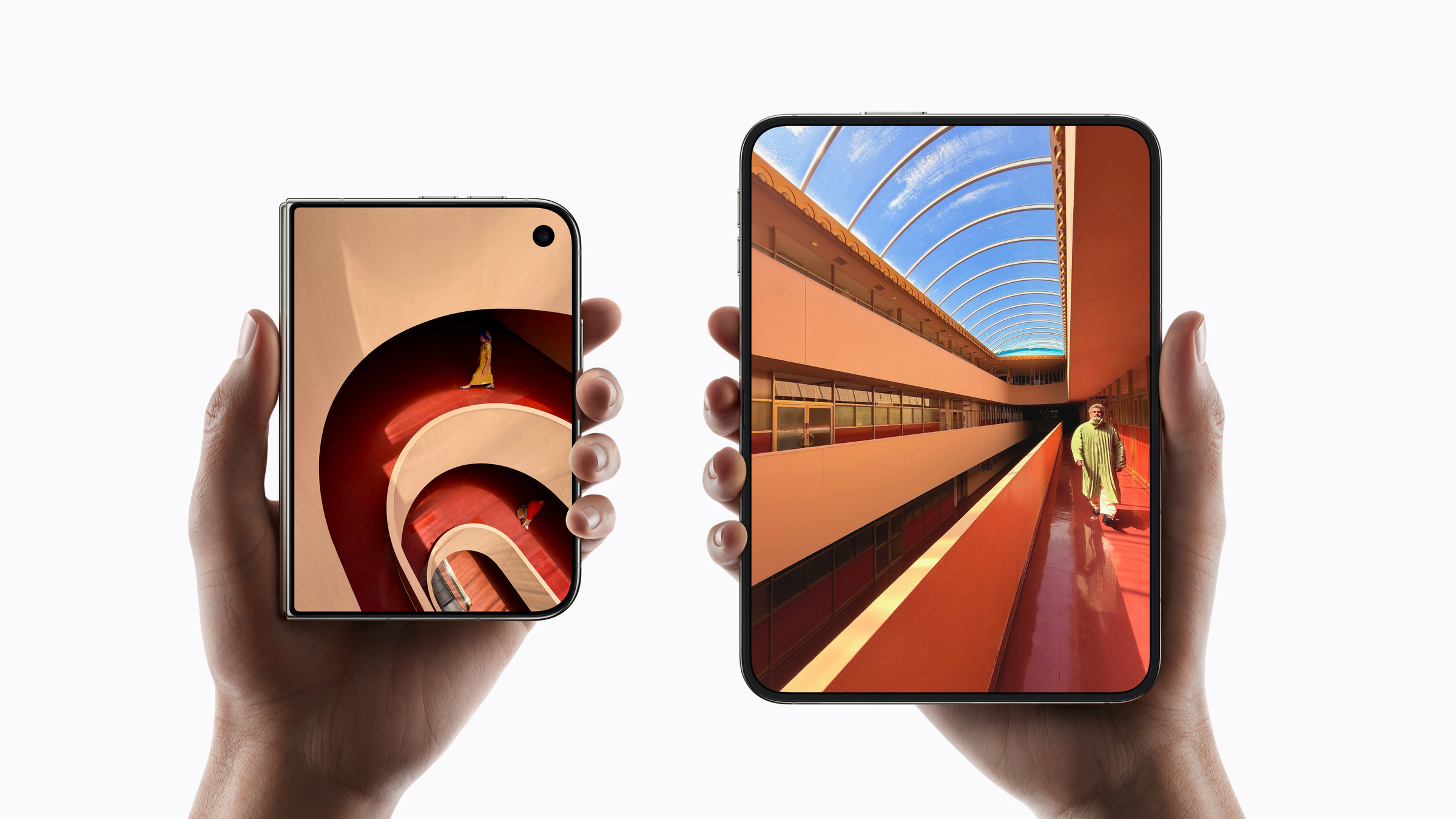
iPhone Duo held in two hands, folded with the outer display on the left and opened with the large inner display on the right
Apple News

iPhone Duo: Apple unveils its first foldable iPhone

September 9, 2026 - 9:01 p.m. CEST

Comments 1

  1. Milan Jovicic says:
    1 week ago

    Would you be willing to forgo the telephoto camera and Face ID in exchange for the larger internal display – or are these precisely the two points where the extra cost isn't worth it for you?

    Reply

Leave a Reply Cancel reply

Required fields are marked with * marked.

By submitting, you consent to the storage of your comment along with your name, email address and IP address. Details are available in our privacy policy.

Categories

  • Apple Insights
  • Apple Rumors
  • Apple News
  • Apple Tips & Tricks
  • iPhone news, rumors and tips
  • Mac and MacBook News
  • Reviews

About APFELPATIENT

APFELPATIENT brings you the latest Apple news, product updates, guides, reviews and tips across the entire Apple ecosystem — from the iPhone to the Mac to the Apple Vision Pro. From the first rumors to confirmed news: researched responsibly.

Follow Apfelpatient

Facebook Instagram YouTube Threads Threads

Company

  • About Apfelpatient
  • Contact
  • Author Profiles

Community

  • Netiquette
  • Push Notifications
  • RSS feed

Legal

  • Legal Notice
  • Privacy Policy
  • Terms of Use
  • Cookie Settings
  • Affiliate Program

Resources

  • Sitemap

© 2026 Apfelpatient. All rights reserved.

No Result
View All Result
  • Home
  • News
  • Rumors
  • Tips & Tricks
  • Reviews
  • Insights

© 2026 Apfelpatient. All rights reserved. Page Directory

Change language to Deutsch