Apfelpatient
  • Home
  • News
  • Rumors
  • Tips & Tricks
  • Reviews
  • Insights
No result
View All Results
  • iPhone 18
  • iPhone 18 Pro
  • iPhone Duo
  • Apple Home
  • Siri AI
  • HomePod
  • HomePod mini
  • HomePod mini 2
  • MacBook Pro
  • Apple TV 4K
  • Apple Watch Series 12
  • Apple Watch Ultra 4
  • AirPods 5
  • iOS 27
  • iPadOS 27
  • macOS
  • MacBook Neo
  • iPhone 17e
  • AirTags
  • iOS 26
  • iPhone 17
  • iPadOS
  • iMac
  • Mac mini
  • Apple TV
  • iPad Pro
  • iPhone Air
  • Apple Vision Pro
  • iPhone 16
  • AirPods 4
  • Apple Watch Ultra
  • MacBook Air
  • iPad
  • AirPods Max
  • AirPods Pro 3
  • Mac Studio
  • Studio Display
  • iPad Air
  • iPad mini
  • watchOS 27
  • Apple CarPlay
  • Apple Pay
  • watchOS 26
  • Home
  • News
  • Rumors
  • Tips & Tricks
  • Reviews
  • Insights
No result
View All Results
Apfelpatient
No result
View All Results
  • iPhone 18
  • iPhone 18 Pro
  • iPhone Duo
  • Apple Home
  • Siri AI
  • HomePod
  • HomePod mini
  • HomePod mini 2
  • MacBook Pro
  • Apple TV 4K
  • Apple Watch Series 12
  • Apple Watch Ultra 4
  • AirPods 5
  • iOS 27
  • iPadOS 27
  • macOS
  • MacBook Neo
  • iPhone 17e
  • AirTags
  • iOS 26
  • iPhone 17
  • iPadOS
  • iMac
  • Mac mini
  • Apple TV
  • iPad Pro
  • iPhone Air
  • Apple Vision Pro
  • iPhone 16
  • AirPods 4
  • Apple Watch Ultra
  • MacBook Air
  • iPad
  • AirPods Max
  • AirPods Pro 3
  • Mac Studio
  • Studio Display
  • iPad Air
  • iPad mini
  • watchOS 27
  • Apple CarPlay
  • Apple Pay
  • watchOS 26

Siri AI is based on Gemini – but is not Gemini

Milan Jovicic by Milan Jovicic
June 11, 2026 - 23:37 CEST
in Apple Insights
0
Siri AI Apple

Image: Apple

WhatsAppFacebookEmail
Threads

This article may contain affiliate links. Learn more on our Partner Program page.

Make Apfelpatient a preferred source One click – and you'll see us more often on Google

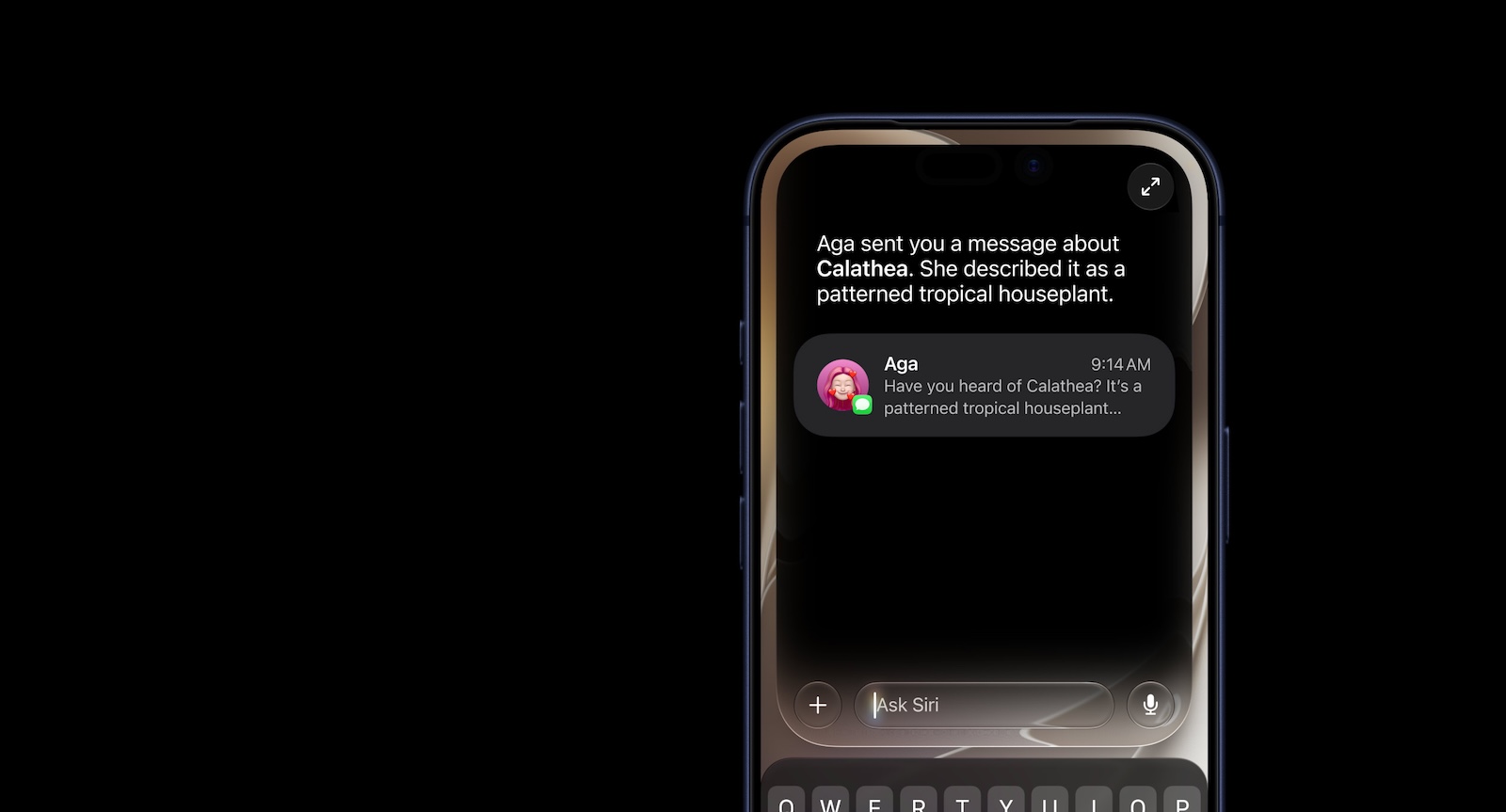
It's well known that the new Siri and other Apple intelligence features are based on Google's Gemini models. However, Apple emphasizes that this is not the same as running Gemini on the iPhone. Meanwhile, a much clearer picture is emerging of what lies behind this distinction.

With the The new Siri was presented at WWDC Apple is abandoning its previous approach of relying exclusively on its own models. Instead, it's using Google technology – albeit in a form that Apple is carefully distinguishing from a simple "Gemini on the iPhone." While some details remain unclear, the underlying architecture is now fairly easy to understand: it involves custom-designed models, a special server infrastructure, and the question of what all this means for privacy.

Siri AI is not Gemini Assistant

What causes confusion is that Google uses the term "Gemini" for quite different things. On the one hand, Gemini is the name of a whole range of AI models. On the other hand, Google's counterpart to Siri is called "Gemini Assistant"—although Google often omits the "Assistant" part and simply refers to it as Gemini.

One thing is clear: Even though both assistants are based on Gemini models, they are completely separate. Siri AI is therefore not a rebranded version of Gemini Assistant, but an independent system.

Built on Gemini – but rebuilt for Apple

Apple itself refers to this as the third generation of its Apple Foundation Models, a family of five base models custom-designed in collaboration with Google. Google had already officially confirmed that the new Siri is based on Gemini technology – including its role as the preferred cloud provider.

An analysis by Macworld writer Jason Snell clarifies what Apple has and hasn't said. According to Snell, four of the five models are customized versions of Gemini running on Apple Silicon, while the fifth and most powerful model is essentially Google's standard model on Google servers – presumably with different training data. Siri AI doesn't access Google's web search or its Knowledge Graph, but instead uses its own sources. Craig Federighi openly states that the four models running on Apple Silicon were trained with Apple's own data, refined using reinforcement learning, and further sharpened with outputs from the top-tier Gemini models. The most powerful model was likely trained with both Google's and Apple's data.

In simpler terms, this means: Apple started with Gemini's base models, optimized and rebuilt them for Apple Silicon and the required model sizes, and then retrained them with its own data, weightings, and protection rules.

What this means for data protection

Crucial to Apple's brand promise is where the processing takes place. Two of the four smaller models run directly on the device – meaning the data never leaves your iPhone, which offers the highest possible level of protection. Two others run on Apple Silicon chips in Apple's own Private Cloud Compute Infrastructure (PCC). This infrastructure is designed so that neither Apple nor Google can withhold or view data – and this can be independently verified by security researchers, instead of simply having to take Apple's word for it.

The most powerful model, in turn, runs on Google servers. However, these are servers reserved exclusively for Apple, and although NVIDIA GPUs are used here instead of Apple Silicon, Apple states that the same PCC principles apply: stateless processing, enforceable guarantees, no privileged runtime access, non-addressability of individual users, and verifiable transparency. How Apple implements these guarantees on third-party hardware - including NVIDIA Confidential Computing, Intel TDX processors, and Google's Titan chip - is revealed by examining the PCC infrastructure extended to Google Cloud.

A shred of trust remains

PCC on Google servers is technically not the same as PCC on Apple's own hardware. This is precisely where the boundary lies of what can be independently verified today: On the device and in Apple's own cloud, security researchers can trace the protection mechanisms, whereas with the variant on Google servers, the configuration is comparatively new and less tested. This doesn't contradict Apple's assurances, but it does call for sober caution – new architectures can contain vulnerabilities that simply haven't been discovered yet. The fact that Apple is running its most powerful AI model on third-party infrastructure..., It also shifts the balance of power in relation to Google. —and explains why the distinction between "runs on Gemini" and "is Gemini" is so important to the company. (Image: Apple)

  • WWDC 2026: Apple's keynote breaks with an old tradition
  • Why the DMA Stops Siri AI on iPhone and iPad
  • Apfelpatient Weekly #9
  • iPhone 18 Pro: All the rumors at a glance
  • iPhone Ultra (iPhone Fold): All rumors and facts at a glance
  • WWDC 2026: All expectations, rumors and hardware hopes at a glance
  • Apple TV in June 2026: All the highlights at a glance
  • Apfelpatient Weekly #8
  • New Apple TV 4K: All the rumors about the update
  • HomePod 3 & HomePod mini 2: All the rumors at a glance
  • Apple Glasses: All the rumors at a glance
  • Apfelpatient Weekly #7
  • iPhone 2027: All the rumors about the anniversary model
  • MacBook Ultra: All the rumors at a glance
  • Apple Watch Ultra 4: All the rumors at a glance
  • Apfelpatient Weekly #6
  • Apple Watch Series 12: All the rumors at a glance
  • Apfelpatient Weekly #5
  • AirPods Ultra: All the rumors at a glance
  • Apple TV in summer 2026: The strongest lineup yet
  • Siri strategy: Why AI choice is Apple's most important step in years
  • Mac Studio M5: All the Rumors at a glance
  • iPhone 18: All the rumors at a glance

Was this article helpful?
YesNo
Tags: Apple ServicesApple IntelligenceiOSiOS 27iPadOSiPadOS 27macOSmacOS 27Siri AItvOS 27visionOSvisionOS 27watchOSwatchOS 27
SendShareSend
Share

Our Amazon Storefront

A handpicked selection of products for iPhone, Mac and more – sorted by topic and updated regularly.

Shop Now

This post contains affiliate links (including Amazon). We earn a small commission on qualifying purchases – at no extra cost to you. Learn more on our Partner Program page.

Previous Post

iOS 27: Wi-Fi Assist becomes Connectivity Assist

Next Post

WhatsApp is bringing multi-account support more broadly to the iPhone

Milan Jovicic

Milan Jovicic

Milan founded Apfelpatient in 2016 and has been responsible for all editorial content since 2018 – news, rumors, how-to guides and product reviews. Here, Apple devices aren't review units kept for two weeks, they're everyday tools: from iPhone to MacBook Pro, MacBook Air and iMac all the way to Apple Vision Pro, at least one device from every product category is in daily use, many of them replaced every year. Every menu path in a guide is checked on the device before it goes live.

Related posts

iPhone 18e: All the rumors at a glance

by Milan Jovicic
November 9, 2026 - 17:03 CET
Symbolic image for the iPhone 18e rumors: two entry-level iPhones stacked flat, the pink back with a single camera on top and a black housing with a glowing display below

iPhone 18e: Spring 2027, A20 chip, 6.3-inch display, larger battery, and Dynamic Island for the first time. All the rumors about the display, camera, and price.

Read moreDetails

Apfelpatient Weekly #31: Ternus Presents His First Results

by Milan Jovicic
November 8, 2026 - 4:18 PM CET
Cover image of the Apfelpatient Weekly showing illustrated stacked cards above the wordmark on a blue-to-cyan gradient

Record quarter under Ternus, iPhone Duo shortages, spyware warning in the Bundestag, and a Health app without German.

Read moreDetails

MacBook Neo 2: All the rumors at a glance

by Milan Jovicic
November 7, 2026 - 3:02 PM CET
MacBook Neo 2: the current MacBook Neo in Citrus seen from behind, opened on a grey table in front of a light wall

MacBook Neo 2: All the rumors about the A19 Pro, 12 GB RAM, colors, price and market launch – and why the touchscreen is off the table.

Read moreDetails

iPhone 18: All models, prices and release dates at a glance

by Milan Jovicic
November 7, 2026 - 13:17 CET
Five iPhone models side by side, one facing forward with visible Dynamic Island – the iPhone 18 generation launches in two waves

iPhone 18: Pro, Pro Max and Duo are available in stores, the base model will follow in spring 2027. All prices, dates and specifications of the series.

Read moreDetails

MacBook Pro vs. Studio Display XDR: OLED vs. Mini-LED

by Milan Jovicic
November 5, 2026 - 18:56 CET
MacBook Pro vs. Studio Display XDR: person using the touchscreen of a MacBook Pro at a desk, with large monitors in the background

MacBook Pro vs. Studio Display XDR: OLED vs. Mini-LED compared. Contrast, brightness, size, prices, and which is right for whom.

Read moreDetails
Load More

Categories

  • Apple Insights
  • Apple Rumors
  • Apple News
  • Apple Tips & Tricks
  • iPhone news, rumors and tips
  • Mac and MacBook News
  • Reviews
Make Apfelpatient a preferred source One click – and you'll see us more often on Google

About APFELPATIENT

APFELPATIENT brings you the latest Apple news, product updates, guides, reviews and tips across the entire Apple ecosystem — from the iPhone to the Mac to the Apple Vision Pro. From the first rumors to confirmed news: researched responsibly.

Follow Apfelpatient

Facebook Instagram YouTube Threads Threads

Company

  • About Apfelpatient
  • Contact
  • Author Profiles

Community

  • Netiquette
  • Push notifications
  • RSS feed

Legal

  • Legal Notice
  • Privacy Policy
  • Terms of Use
  • Cookie settings
  • Affiliate Program

Resources

  • Sitemap

© 2026 Apfelpatient. All rights reserved.

No result
View All Results
  • Home
  • News
  • Rumors
  • Tips & Tricks
  • Reviews
  • Insights

© 2026 Apfelpatient. All rights reserved. Site map

Change language to Deutsch