Apple's first smart glasses are slowly getting a date: unveiling at WWDC 2027, sales launch at the end of the year. Four designs, a chip from the Apple Watch family, and a camera question that remains surprisingly open – while in Europe, several sets of regulations will determine what aspects of the glasses will actually be available here.
With Apple Glasses, Apple is entering a completely new product category. The glasses won't be an AR headset like the Vision Pro, but rather lightweight, everyday smart glasses with microphones and Siri connectivity – comparable to the Ray-Ban Meta. Apple is testing four frame designs, but the market launch is now expected only at the end of 2027. In parallel, two issues have moved to the forefront that have little to do with technology: data privacy is considered the biggest hurdle before the launch, and in Germany and Austria, this has long since become an ongoing legal battle.
Key Facts at a Glance
| Detail | Expectation |
|---|---|
| Introduction | WWDC 2027 |
| Sales launch | End of 2027 |
| Chip | N401 (based on Apple Watch S series) |
| Cameras | Open – two cameras, pure AI analysis, or none at all |
| Steering | Language, gestures, buttons on the headband |
| Display | Not in the first generation |
| Health functions | Planned, but not for the start |
| Frame material | Acetate |
| Designs | Four are being tested |
| Colors | Black, Ocean Blue, Light Brown (previously) |
| iPhone addiction | Yes, primarily via Bluetooth |
| EU availability | Open, depending on data protection regulations |
| Code name | N50 |
Two dates for 2027
The timeline has recently become more concrete. The glasses are to be unveiled at WWDC 2027, but will not be available in stores until the end of the year.
The gap is intentional: Developers are given several months to build apps before the hardware goes on sale – a pattern Apple last used with the Vision Pro. Internally, the project is codenamed N50.
The software is considered the main reason for the long development time. While the revamped, LLM-based Siri is reportedly on track for release this year, the visual AI technology is a bigger challenge and might not reach the necessary level until the end of 2026. Added to this is the concern about the company's own data privacy image, which, according to reports, is affecting both development and marketing departments.
Four frame designs under testing
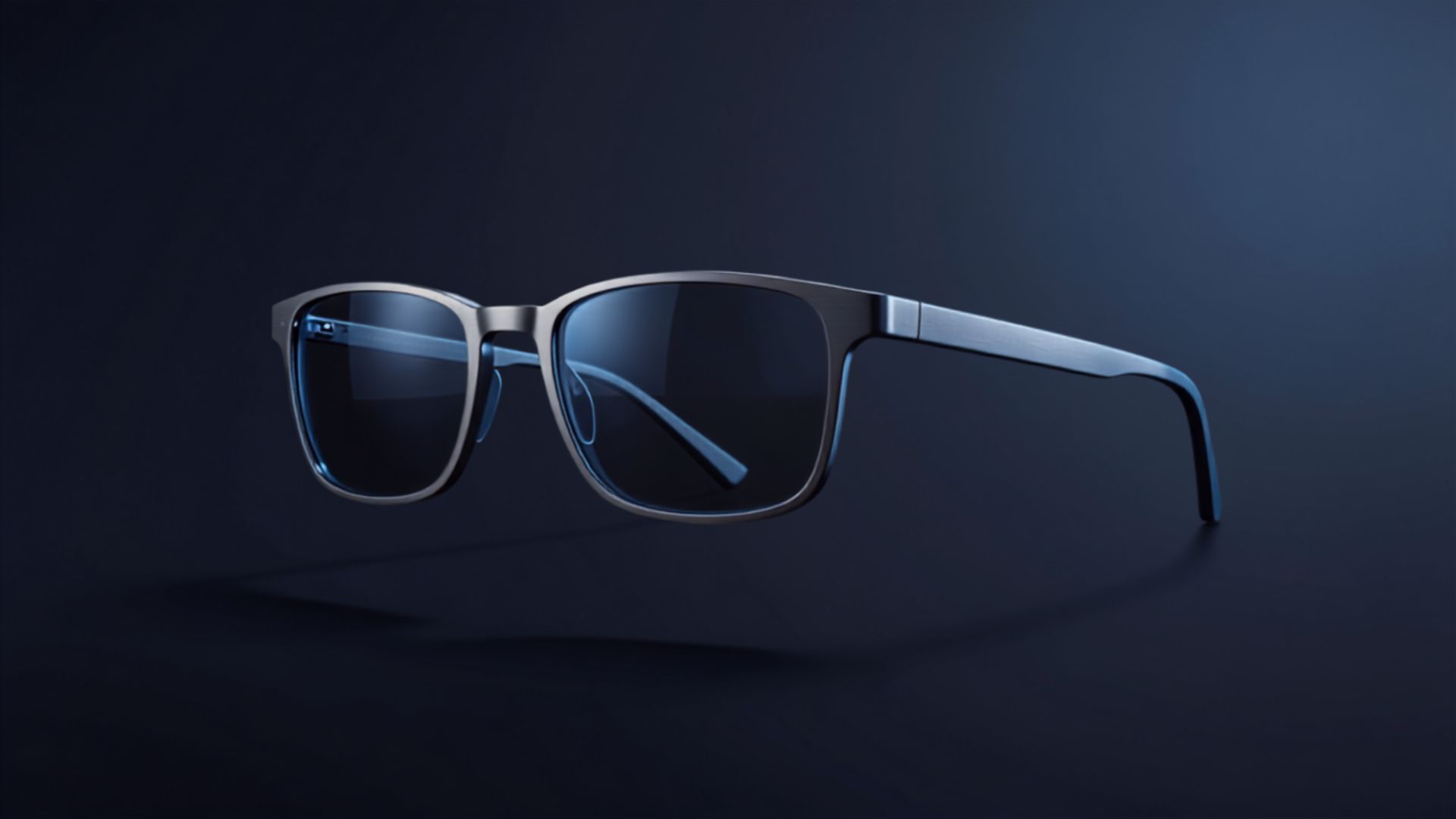
Apple is currently testing four different frame designs. The plan is to launch several of them simultaneously – similar to the wide range of options at the Apple Watch debut in 2015.
The four designs:
- A large rectangular frame in the style of Ray-Ban Wayfarer sunglasses
- A slimmer rectangular frame, similar to Tim Cook's glasses.
- A larger oval or round frame
- A smaller, more delicate oval frame
Various colors are also being tested: Black, Ocean Blue, and Light Brown have been confirmed, with more to follow. Acetate is used as the frame material – a lightweight, plant-based material that appears more flexible and higher quality than the plastic used by Meta.
The variety of designs underscores that Apple wants to position the smart glasses not as a tech gadget, but as a fashion accessory. Accordingly, Ternus is meant to put design back in the spotlight.
Distinctive camera design
If the first generation is equipped with cameras, the front lenses will be arranged in a vertical oval shape and surrounded by indicator LEDs. This arrangement differs significantly from the horizontal layout of the Meta glasses.
The LEDs indicate when recording is in progress. At Meta, an indicator light that switches off if tampered with is already standard – a detail that shows how much these components are now seen as a response to privacy concerns and less as a design element.
N401: A chip based on the Apple Watch
Inside, a custom-designed chip codenamed N401 is at work. This is based on the S-series of the Apple Watch and has been optimized for extreme energy efficiency.
The reason lies in the design: Smart glasses must deliver all-day battery life with minimal weight and passive cooling – a requirement for which the Apple Watch architecture has already proven itself.
The N401 handles AI processing on the device for visual intelligence and basic functions. Computationally intensive tasks are offloaded to the paired iPhone.
How many cameras will the first generation get?
For a long time, a dual-camera configuration was considered standard. The first would be a high-resolution main camera for photos and videos from the wearer's perspective – precisely the feature that makes the Ray-Ban Meta so appealing today. The second would be a low-resolution wide-angle lens that recognizes hand gestures and transmits visual information.
This question is now open again. Apple is said to have already built a prototype of a version without any camera at all, offering AI functions, telephony, and audio without visual capture. A middle ground is also being discussed: cameras whose images are solely analyzed by AI – without allowing for photography or video recording.
Both options would serve the same purpose. Glasses without a recording function circumvent much of the legal debate, but thereby lose precisely the feature that drives sales for competitors. Which path Apple chooses will likely be less a technical decision than a regulatory one.
Gesture control as a common thread in Apple's wearable strategy
The idea of gestures is a recurring theme throughout Apple's wearable strategy. Hand gestures are the primary input method for the Vision Pro, and low-resolution cameras with gesture support are also being discussed for future generations of AirPods. A code discovery in iOS 27 suggests another Apple wearable with cameras.
The logic behind this is understandable. If a device doesn't have a display, it needs an intuitive input method – voice alone is often insufficient. With glasses, there's the added factor that any touching of the frame disrupts the wearing experience.
The previously reported development halt for the camera-equipped AirPods has since been reversed: Apple is developing two parallel versions of these earbuds, one of which could be released significantly sooner than previously expected. All the details can be found in the overview of the AirPods Ultra.
First generation comes without a display
The first generation will have no display. Apple is deliberately foregoing integrated screens, LiDAR sensors, and 3D cameras. The reason is not a lack of technology, but rather energy consumption: such components would drastically reduce battery life and make the device heavier.
Apple is facing a dilemma. The glasses need to be light and slim, otherwise no one will wear them willingly. At the same time, they need enough battery life to last all day.
Augmented reality features are planned for later generations – when battery technology and components are small and efficient enough. The first generation is therefore clearly positioned as AI and voice glasses.
Siri as the central interface
Operation is primarily via the revamped, LLM-based assistant. Siri is expected to be significantly more powerful from iOS 27 onwards, capable of understanding complex contexts, analyzing visual information, and enabling hands-free interactions.
Typical applications:
- Have notifications from the iPhone read aloud
- Making phone calls, sending messages
- Take photos and videos, provided the hardware allows it.
- Control music, podcasts and navigation with voice commands
- Real-time translations
- Object recognition for landmarks, plants, products
Users will also be able to ask directly through the glasses what is in front of them. This feature builds on the image recognition that already works on the iPhone and which Apple also plans to integrate into the new Siri mode of the camera app – except that the iPhone no longer needs to be taken out of the pocket.
Health and fitness: planned, but not at the start
Apple plans to transform its glasses into a health and fitness platform in the medium term. According to the Bloomberg newsletter Power On, the responsible team is looking for a product design leader to define precisely this area for the Vision product line. However, these features will not be available in the first generation.
There was already an attempt. Apple developed a version of Apple Fitness+ for the Vision Pro that was intended to play classes in the headset and analyze the wearer's movements. It was never released – technical hurdles and the device's weight prevented its release.
Glasses without a display need to work differently. A course where participants can watch along is out of the question; that leaves sensors, a camera, and voice output. The building blocks for this already exist: AirPods Pro 3 measure heart rate via an optical sensor in the ear, and glasses sit close enough to the head for the same principle.
What Apple plans to do differently regarding data privacy
Camera glasses have developed a reputation over the past two years that Apple didn't create itself, but will inherit. It's now considered a given that data privacy is the biggest hurdle before their launch.
The processing is intended to take place primarily on the device – the same principle that underlies Apple Intelligence's privacy mechanisms. There will be no facial recognition, nor will there be an equivalent to the always-on recognition mode offered by Meta.
In addition, there are two commitments that address specific criticisms of the competition: recordings should not be used in the training of AI models, and external service providers should not be given any material for review.
Why the legal situation is stricter in Europe
What is described as a matter of public sentiment in the US is already a formal legal process in Germany and Austria. The Hamburg Commissioner for Data Protection and Freedom of Information has been examining Meta's Ray-Ban glasses for compliance with the General Data Protection Regulation (GDPR) since summer 2025; the Irish Data Protection Commission is the lead agency due to Meta's European headquarters.
Legally, the problem begins earlier than in the US. According to the General Data Protection Regulation (GDPR), even the recording of a recognizable person constitutes the processing of personal data, regardless of whether it is stored. Furthermore, the right to one's own image under Section 22 of the German Copyright Act prohibits the publication of such recordings without consent. Obtaining effective consent from passersby is considered practically impossible when using camera glasses.
The question remains open at the European level as well. Members of the European Parliament called on the Commission in March 2026 to clarify how the General Data Protection Regulation (GDPR) and the AI Act apply to AI-enabled glasses. The European Data Protection Board has announced its own report on this device category for this summer.
These regulations do not apply to Switzerland. There, the company has its own data protection law, and a potential market launch in Switzerland is therefore subject to different requirements than one in Germany or Austria.
The second EU hurdle: Siri AI is missing on the iPhone
One problem doesn't concern the glasses themselves, but the device they're connected to. Siri AI won't launch on iPhones and iPads in the EU for the time being because Apple and the Commission can't agree on the interpretation of the Digital Markets Act. Apple has explicitly not provided a timeline.
Since the glasses offload computationally intensive tasks to the iPhone and are operated via voice commands, their functionality is directly dependent on this. There is plenty of time for an agreement until the end of 2027 – but the issue remains unresolved.
Here too, Switzerland is on the other side: As a non-EU country, it is not covered by the DMA.
The mandatory replacement battery requirement and the deadline in February 2027
A third set of regulations affects eyeglasses independently of data protection. From February 18, 2027, batteries in many devices sold in the EU must be removable and replaceable by the user using standard tools. This deadline precedes the planned sales launch. The nuanced nature of the regulation is illustrated by the case of the iPhone, which is exempt from this requirement in 2027.
The all-clear is in sight for eyeglasses. On July 14, 2026, the European Commission, by means of a delegated act, exempted six further product categories from the requirement – including wearables such as smartwatches, fitness trackers, and explicitly also smart glasses. At the same time, the Apple Watch was exempted from the requirement, and shortly thereafter, AirPods were also added to the new list of exemptions.
The regulation is not yet fully in force. The legal act first goes to Parliament and the Council, and only if both raise no objections within the review period will it enter into force 20 days after its publication in the EU Official Journal.
The exemption does not completely release manufacturers from their obligations. Batteries must still be installed in such a way that independent specialist workshops can replace them without damaging the device; necessary specialist tools must be provided at reasonable prices.
How tough the previous regulations were is demonstrated by the competition: Meta's Ray-Ban Display is not even offered in the European Union, with the company citing battery and AI requirements as reasons in addition to supply bottlenecks.
The Vision Pro shadow over the project
The pivot away from expensive VR headsets towards lighter, more practical wearables is clearly evident. Too heavy, too expensive, too few compelling use cases – these three weaknesses of the Vision Pro should not be repeated in the smart glasses.
The project is also leaving its mark on personnel: OpenAI recently poached Apple's Vision Pro and glasses chief – right in the middle of the phase in which the course is being set for the first generation of glasses.
The question remains whether Apple can strike the right balance: building glasses that offer enough to convince buyers, but not so much that they fail at the same hurdles as the Vision Pro.
Price: No official information yet
There is no confirmed pricing information yet. A look at the competition provides a general idea of the range within which Apple is likely to operate.
| Product | Price |
|---|---|
| Meta Ray-Ban (Introduction) | approximately 300 US dollars |
| Meta Ray-Ban (Premium versions) | 380 to 500 US dollars |
| Apple Glasses (estimate from secondary sources) | approximately 499 US dollars |
| Apple Vision Pro | 3,499 US dollars |
Apple is likely to position itself in the premium segment. There is no official information available, and the aforementioned estimate did not originate from Apple.
Part of a larger AI wearables strategy
The Apple Glasses are part of a broader strategy for AI wearables. This also includes AirPods with integrated cameras, a wearable pendant with a camera, a slimmer Vision Air as the successor to the Vision Pro, and classic AR glasses with a display as a second phase starting in 2028.
The idea behind this is that Apple is simultaneously testing different ways in which users want to interact with AI in everyday life. Those who don't want to wear glasses could opt for camera-integrated AirPods. Those who don't want cameras on their heads could choose a head-mounted device.
How much of this lineup will remain has recently shifted. The Vision roadmap is shrinking to two headset models, and there are strong indications that the display project for a more affordable Vision Pro is being scrapped. The Vision Air is intended to eventually succeed the Vision Pro, but a market launch is not expected before the end of 2028 or 2029.
Apple's ambitions extend further in the long term. The glasses could integrate augmented reality features that improve the wearer's vision. This represents a huge market of people who already rely on corrective lenses, wear sunglasses, or use glasses as an accessory.
Who are the Apple Glasses intended for?
Apple Glasses are aimed at iPhone users who want a convenient extension of their Apple ecosystem – without the hassle and weight of a headset. For those already using AirPods and Apple Watch, the Glasses provide a third way to interact with their iPhone without having to pick it up.
Anyone expecting true AR glasses with a display and spatial content will have to wait: these are planned for 2028 at the earliest and will be significantly more expensive. The first generation is deliberately positioned as an entry-level device suitable for everyday use – more like a Meta Ray-Ban than a Vision Pro.
If you're planning to launch in Germany or Austria, it's also worth taking a look at the regulations. Whether the glasses will launch here with a camera, with pure AI analysis, or not at all, will be decided in the coming months less in Cupertino than in Brussels. (Image: Apfelpatient / Canva AI)
- AirPods Ultra: All the rumors at a glance
- Apfelpatient Weekly #17
- Password Manager Comparison: Apple, 1Password and Bitwarden