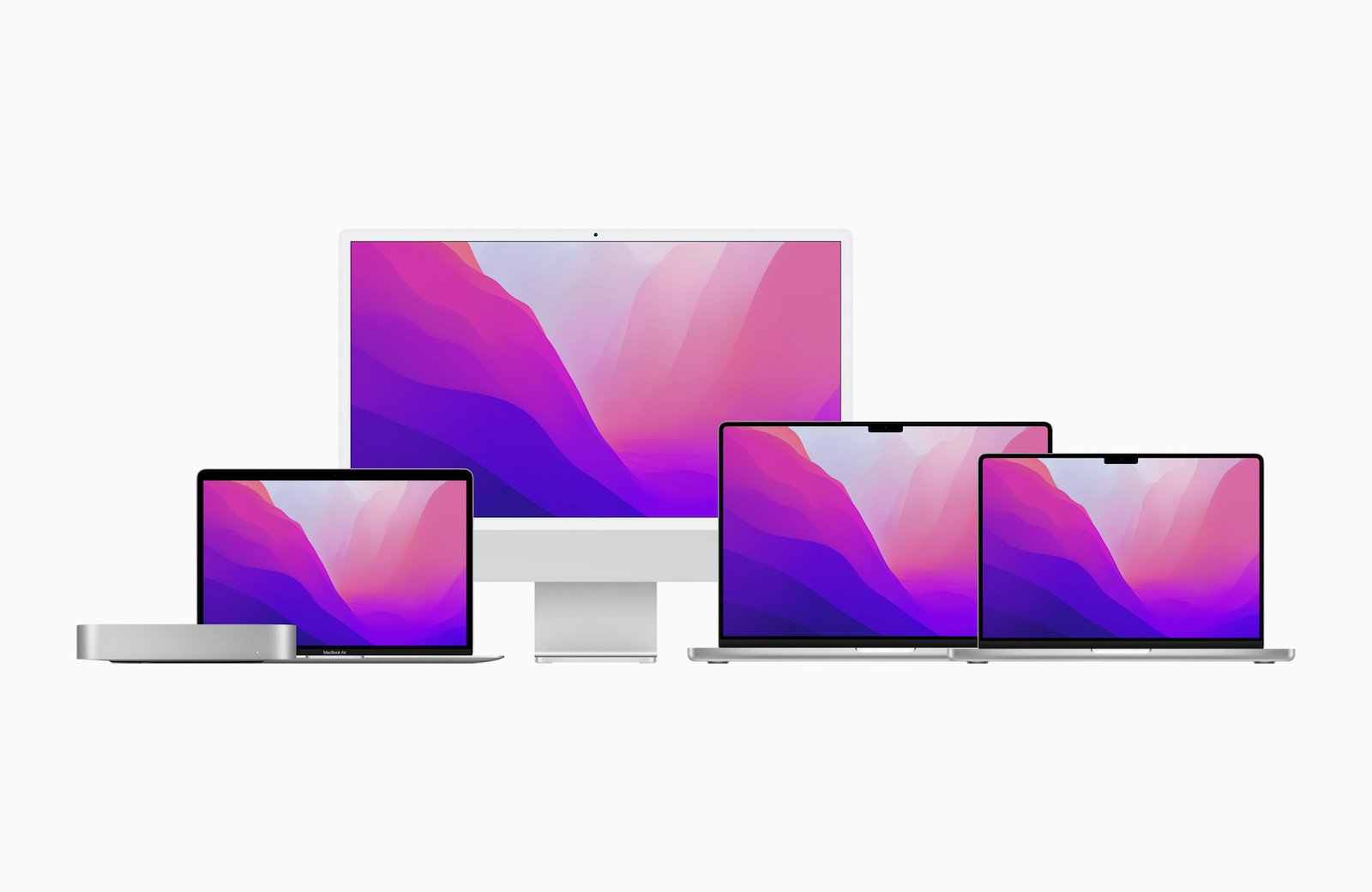
Five years ago, Apple fundamentally changed the Mac. With the launch of the M1 chip on November 10, 2020, a new chapter in the computer's history began. The first models with Apple Silicon hit the market on November 17, 2020, and immediately demonstrated the significant improvements in performance and efficiency that can be achieved when hardware and software come from a single source. Since then, the Mac has evolved considerably, a fact Apple itself emphasizes on this anniversary.
The decision to break away from Intel was the result of years of preparation. Apple had laid a solid foundation with over a decade of experience developing its own chips for the iPhone and iPad. The switch to Apple Silicon was therefore not a risky move out of the blue, but a logical progression. When the first three Macs with the M1 chip were released, it quickly became clear that this was more than just a processor upgrade. Five years later, Apple draws a clear conclusion, declaring that Apple Silicon has made the Mac stronger than ever.
Five years of Apple Silicon
To mark the anniversary, Apple's Chief Marketing Officer, Greg Joswiak, addressed the audience in a public statement . He emphasized how impressive the impact of the M1 chip and subsequent generations has been. The combination of performance, battery life, new designs, and features has unleashed a great deal of creative energy. According to Joswiak, the Mac has never been in a better position in its history.
The starting signal in 2020
The actual announcement was made at WWDC in June 2020. There, Apple unveiled its plan to transition the entire Mac product line from Intel processors to its own in-house designed chips over a multi-year process. The promise was to deliver industry-leading performance per watt. This promise was later fulfilled with the M1. The first models—a 13-inch MacBook Pro, a MacBook Air, and a Mac mini—immediately demonstrated the magnitude of the difference.
Thanks to the M1's high energy efficiency, Apple was able to build the MacBook Air without a fan. This resulted in less heat generation, quieter operation, and significantly longer battery life. For many tasks, the performance was not only sufficient but sometimes significantly surpassed comparable Intel devices.
Experience that made the change possible
A key reason for this success lies in the years of developing chips for iPhones and iPads. Apple had already spent a decade building custom SoCs and knew exactly which concepts could be transferred to the Mac. This experience enabled the optimizations in macOS and laid the foundation for the tight integration between hardware and software that characterizes Apple Silicon today.
The next step in the platform strategy
While Apple continues to develop its own chips, the transition from Intel is now officially coming to an end. Apple confirmed that macOS Tahoe will be the last version to support Intel-based Macs. This brings to a close the cycle that began in 2020. The future of the Mac is now entirely focused on Apple Silicon.
Five years of Apple Silicon and a look ahead
Five years after the introduction of the M1, it's clear how much the decision to use Apple's own chips has transformed the Mac. The devices have become faster, more efficient, and more modern. To mark the anniversary, Apple itself emphasizes that the Mac has reached a new level of excellence thanks to Apple Silicon. With the end of Intel support and the focus on a unified architecture, the direction is clear. The next few years of the Mac will be built on the foundation Apple laid with the M1 in 2020. (Image: Apple)
- Apple releases iOS 26.2 Beta 3: New testing phase underway
- Tim Cook could change roles instead of leaving Apple entirely.
- Apple expands Sneaky Sasquatch with a new sticker pack
- Tim Cook in focus: Apple tests market reaction to CEO change
- Apple must pay $634 million in the Masimo patent dispute.
- The iPhone 17 brings a noticeable recovery to Apple's China business.
- Apple COO Jeff Williams is now officially retired.
- Apple shortens MLS deal: New contract ends in 2029
- WhatsApp will soon enable cross-platform chats.
- ChatGPT launches test phase for new group chat feature
- Apple and the xAI lawsuit: Court allows proceedings to continue
- Apple TV will show all MLS games in 2026 at no extra cost.
- Apple rolls out new AirPods Pro firmware 8B21 & 8B25
- Tesla is working on Apple CarPlay integration.
- Apple launches new mini-apps program for developers
- Red Dead Redemption is coming to Netflix for iOS & Android
- Sci-fi hit Monarch: Season 2 premieres in February 2026 on Apple TV
- Apple opens up new revenue stream in China with WeChat deal
- Netflix subscriptions are getting more expensive: New tariffs are coming to Europe